
第六代移动通信

Search documents
“十五五”规划建议前瞻布局未来产业,如何理解?
Ren Min Wang· 2026-02-13 09:04
Core Insights - The "14th Five-Year Plan" emphasizes the strategic importance of future industries as new economic growth points, focusing on technology commercialization and market application [1][2][4] - Future industries are recognized for their potential to drive economic growth through technological innovation and new business models, marking a shift from purely research-focused strategies to market-oriented approaches [2][5] Group 1: Future Industries as Economic Growth Points - Future industries are positioned as key drivers of economic growth, relying on technological innovation to create new productive forces [2][4] - The strategic focus on future industries reflects a deeper understanding of their role in national security and economic competitiveness in the global landscape [4][5] Group 2: Development Pathways and Strategic Value - Specific future industries such as quantum computing, hydrogen energy, and nuclear fusion are identified as having transformative potential, guiding national investment and innovation efforts [3][4] - The development of future industries is seen as a means to create new market demands and disruptive business models, enhancing traditional industries and generating significant economic value [4][5] Group 3: Importance of Viable Business Models - Viable business models are crucial for ensuring sustained research and development in future industries, providing necessary funding and facilitating market entry [6][7] - Clear commercial pathways can attract diverse market participants, enhancing the ecosystem and driving innovation [7] Group 4: Societal Impact and Technological Integration - Future industries are expected to significantly alter everyday life, with technologies like AI and brain-machine interfaces enhancing efficiency and convenience [8] - The impact of future industries varies across sectors, with some technologies directly improving daily life while others focus on foundational advancements [8]
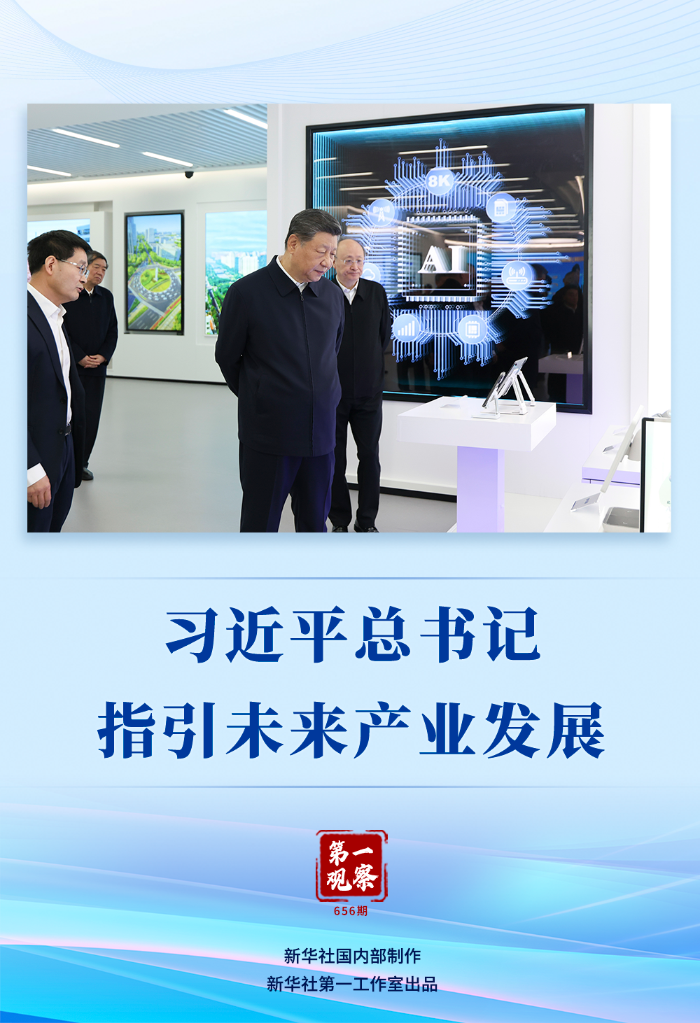
第一观察 | 习近平总书记指引未来产业发展
Xin Hua She· 2026-02-12 06:27
Core Insights - The articles emphasize the strategic importance of developing future industries driven by cutting-edge technologies such as artificial intelligence and quantum technology, highlighting the need for proactive planning and innovation to maintain competitive advantages in the global market [2][4][5]. Group 1: Strategic Importance of Future Industries - Future industries are seen as crucial for national development, with a focus on leveraging technological advancements to enhance productivity and improve living standards [4][5]. - The Chinese government is prioritizing the development of future industries as a response to global competition, aiming to establish a strong foundation for long-term growth [3][5][8]. Group 2: Technological Innovation and Breakthroughs - Emphasis is placed on the necessity of major technological breakthroughs to drive the development of future industries, with a call for increased investment in core technologies [10][12]. - The government is actively promoting the integration of technology and industry, aiming for seamless connections between innovation chains and industrial chains [13][14]. Group 3: Policy and Planning Framework - The articles outline a comprehensive policy framework that includes strategic planning for key sectors such as quantum technology, biomanufacturing, and hydrogen energy, ensuring a coordinated approach to industry development [17][19]. - The importance of a supportive ecosystem for enterprises is highlighted, with a focus on fostering innovation through government support and creating a conducive market environment [15][16]. Group 4: Implementation and Future Outlook - The articles stress the need for a balanced approach to industry development, combining stability with progress, and adapting strategies based on regional strengths and resources [16][18]. - The ongoing technological revolution is viewed as a critical opportunity for China to enhance its global standing, with a call for sustained efforts in research and development to achieve high-quality growth [8][20].
第一观察丨习近平总书记指引未来产业发展
Xin Hua Wang· 2026-02-12 03:29
Core Viewpoint - The article emphasizes the strategic importance of developing future industries driven by cutting-edge technologies, highlighting the need for innovation and proactive planning to secure a competitive edge in the global market [4][5][9]. Group 1: Strategic Importance of Future Industries - Future industries are characterized by their forward-looking, strategic, and disruptive nature, which are crucial for seizing technological and industrial high ground [5][6]. - The recent collective study by the Central Political Bureau underscores the necessity of advancing future industries to enhance national strength and achieve long-term development advantages [4][6][8]. - The focus on future industries is a response to the accelerating pace of technological revolution and industrial transformation, marking a shift from long-term planning to immediate necessity [6][9]. Group 2: Technological Innovation and Support - The development of future industries relies heavily on major original and disruptive innovations, with a strong emphasis on overcoming existing technological bottlenecks [10][11]. - The government is encouraged to integrate technological innovation resources and lead the development of strategic emerging industries [7][16]. - The article highlights the importance of aligning technological advancements with market needs, ensuring seamless integration between innovation chains and industrial chains [14][15]. Group 3: High-Quality Development and Stability - The cultivation of future industries is a long-term process that requires balancing stability and progress, with a focus on leveraging comparative advantages and regional strengths [17][18]. - The article stresses the need for a supportive ecosystem that fosters enterprise innovation, with government policies aimed at gathering various innovative resources around enterprises [16][21]. - It is essential to establish a mechanism that supports long-term research and development while ensuring effective regulation to mitigate risks [21].

今年推动人工智能产业集群增加值增长10%以上
Nan Fang Du Shi Bao· 2026-02-09 23:15
Economic Goals - Shenzhen aims to exceed a GDP of 5 trillion yuan during the "15th Five-Year Plan" period, with a target of achieving this by 2026 [4][6] - The GDP growth target for Shenzhen in 2026 is set at 5%, with efforts to achieve better results in practice [4][6] Industrial Development - The "14th Five-Year Plan" saw Shenzhen's GDP increase from 2.83 trillion yuan in 2020 to 3.87 trillion yuan in 2025, averaging a growth rate of 5.5% [4][6] - Shenzhen plans to increase the added value of strategic emerging industries by over 7% this year, focusing on sectors like new-generation electronic information, new energy vehicles, and semiconductors [5][6] - The city aims for a 10% growth in the artificial intelligence industry cluster's added value, emphasizing the development of a comprehensive AI ecosystem [5][6] Modern Service Industry - Shenzhen will implement actions to enhance the quality and capacity of the service industry, targeting a 10% revenue growth in software and information technology services [6] Internationalization and Trade - Shenzhen is set to host the APEC meeting in 2026, which will enhance its international profile and open up opportunities for global trade [7][8] - The city plans to expand the Qianhai-Shekou Free Trade Zone and optimize its global trade services [8] Innovation and Research - The report emphasizes the importance of innovation and a robust industrial foundation as key drivers of Shenzhen's economic resilience [9][10] - There is a focus on increasing R&D investment in critical areas such as basic research, technology transfer, and industrial upgrades [12][13]
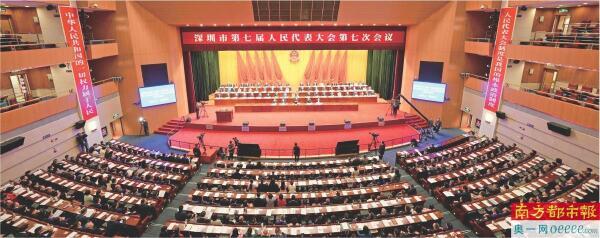
深圳:“十五五”时期目标GDP超5万亿元 2026年地区生产总值预期增长5% 规上工业增加值力争增长6%以上
Shang Hai Zheng Quan Bao· 2026-02-09 18:33
Group 1 - The core viewpoint of the news is that Shenzhen aims to significantly increase its GDP from 2.83 trillion yuan in 2020 to 3.87 trillion yuan by 2025, with an average annual growth rate of 5.5%, leading among first-tier cities [1] - Shenzhen's economic and social development goals for 2026 include a GDP growth target of 5% and a stabilization of fixed asset investment, aiming for a growth of 5% [1] - The long-term goal for the "15th Five-Year Plan" period is for Shenzhen's GDP to exceed 5 trillion yuan [1] Group 2 - Shenzhen plans to enhance its manufacturing sector, targeting a growth of over 6% in industrial added value for enterprises above designated size [2] - The city will implement a "20+8" industrial policy system 3.0 to boost the development of key industries such as new-generation electronic information, new energy vehicles, and semiconductor integrated circuits [2] - Shenzhen aims to establish itself as a global leader in artificial intelligence, with a target of over 10% growth in the added value of the AI industry cluster [2] Group 3 - The hosting of the APEC 2026 meeting in Shenzhen is seen as an opportunity to enhance the city's international service level [3] - Shenzhen will focus on optimizing its global trade service system and innovating in service trade, digital trade, and green trade [3] - The city aims to promote a vibrant market that facilitates cross-border trade and strengthens modern supply chain, port logistics, and foreign trade service enterprises [3]
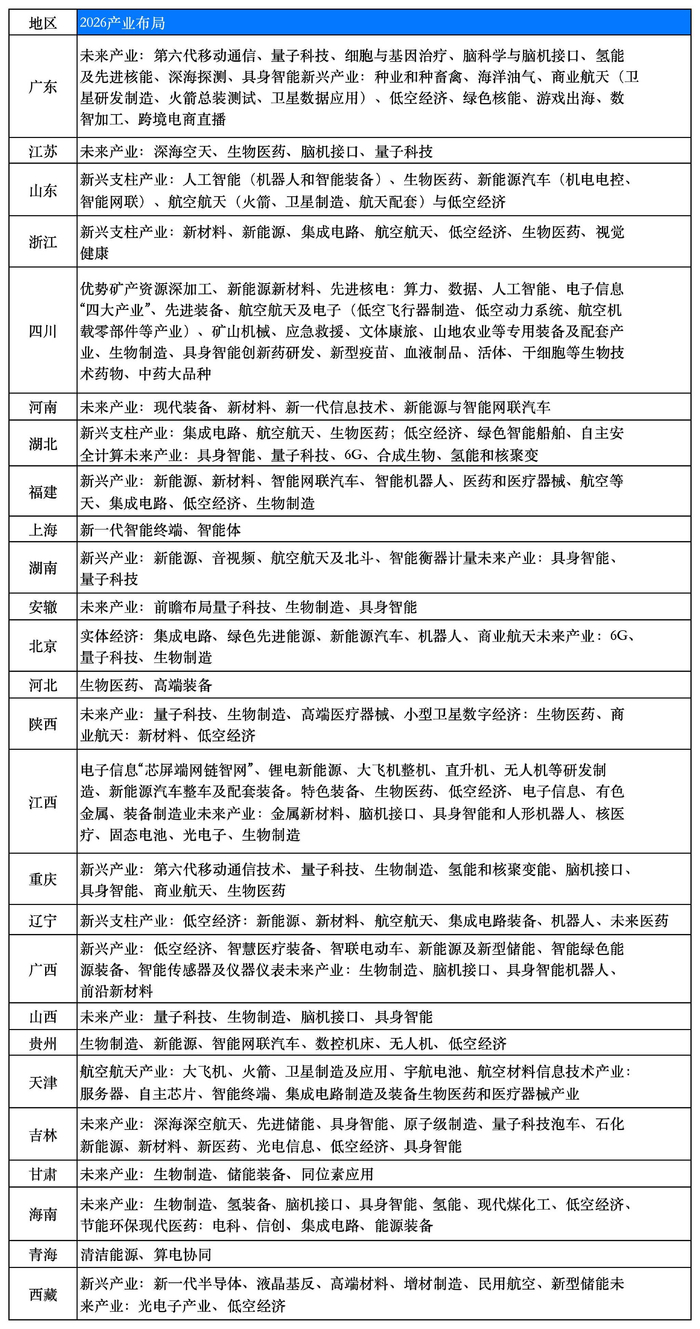
2026年31省“强产业”图景:传统、新兴、未来三维并进,推进智能化和绿色化
Xin Lang Cai Jing· 2026-02-09 03:24
Core Viewpoint - The "14th Five-Year Plan" emphasizes building a modern industrial system and strengthening the foundation of the real economy as a primary strategic task, with 2026 marking the beginning of this plan [1] Group 1: Industry Focus and Strategies - Local governments across 31 provinces are prioritizing "strong industries" with a focus on "new quality productivity," driven by technological innovation, while consolidating traditional industries and competing in AI and future industries [1] - Key emerging industries identified include artificial intelligence, biomedicine, commercial aerospace, robotics, and quantum technology, reflecting a commitment to the central government's directives [3][9] - Provinces are adopting a three-dimensional approach to industry development, focusing on upgrading traditional industries, nurturing emerging industries, and laying out future industries [3][4] Group 2: Technological Innovation and Investment - Technological innovation is seen as the primary driver for strong industries, with many provinces setting quantitative targets for R&D investment, such as Jiangsu aiming for a 7% annual increase in R&D spending [4][5] - Various provinces are investing significantly in core technology breakthroughs, with Beijing planning to invest over 1.5 billion yuan in high-tech industry technology research [7] - The establishment of innovation platforms and pilot zones is being prioritized to facilitate the transformation of technological achievements into production [7][9] Group 3: Differentiated Industrial Layout - Provinces are tailoring their industrial strategies based on local resources and advantages, with eastern coastal provinces focusing on global innovation hubs and western provinces targeting green energy and computing [11][12] - The northeastern provinces are revitalizing traditional industries and enhancing specialized equipment manufacturing, with specific initiatives to support local industrial clusters [12][13] Group 4: Talent and Policy Support - Local governments are launching new talent acquisition plans to attract high-level professionals, with Beijing implementing measures to support young innovators [13] - A comprehensive policy framework combining industrial planning, special policies, and financial support is essential for achieving the goal of strong industrial provinces [13]
布局未来产业赛道 地方竞相激活新引擎
Xin Lang Cai Jing· 2026-02-06 18:56
Core Viewpoint - The development of future industries is essential for building a modern industrial system and promoting high-quality development, as emphasized by the highest decision-making body in China during its collective study session on January 30, 2026 [1][2]. Group 1: National Strategy and Policy - The 14th Five-Year Plan has accelerated technological layout in future industries, achieving breakthroughs in fields such as artificial intelligence, biomanufacturing, quantum information, and hydrogen energy [2]. - The 20th Central Committee of the Communist Party of China has highlighted the importance of nurturing emerging and future industries, indicating a strategic focus on these sectors [1][2]. - The recent collective study session by the Central Political Bureau has set a clear direction for "steady progress and gradient cultivation" in future industries, emphasizing the need to balance current and long-term goals [2][4]. Group 2: Regional Development Initiatives - Major provinces like Zhejiang, Beijing, and Guangdong have incorporated future industry development into their 2026 government work reports, outlining specific measures to leverage local advantages [3][4]. - Zhejiang plans to establish 10 pilot zones for future industries, focusing on human-shaped robots, brain-machine interfaces, and quantum information, among others [3]. - Beijing aims to develop high-precision industries and promote pilot zones for future industries, targeting growth in 6G, quantum technology, and biomanufacturing [3]. - Guangdong is set to enhance its future industry layout, focusing on sixth-generation mobile communication, embodied intelligence, and advanced nuclear energy, among other sectors [3][4]. Group 3: Differentiated Development Strategies - The layout of future industries across the country is characterized by a differentiated development pattern that aligns with local resource endowments and comparative advantages [5][6]. - Experts suggest that local governments should adopt a collaborative innovation approach, combining government guidance with market leadership and industry-academia-research cooperation [6]. - Specific recommendations for provinces include leveraging digital economy foundations in Zhejiang, enhancing research and application in Beijing, and fostering cross-regional industrial chain collaboration in Guangdong [6]. Group 4: Challenges and Considerations - The development of future industries faces challenges such as technological bottlenecks and talent shortages, necessitating adjustments in educational systems and collaboration between enterprises and research institutions [7].
21社论丨打造有助于未来产业发展的创新生态
21世纪经济报道· 2026-02-04 01:51
Core Viewpoint - The article emphasizes the importance of cultivating and developing future industries in China, driven by cutting-edge technologies, to gain a competitive edge in the global landscape [1]. Group 1: Future Industry Development - The Chinese government is focusing on accelerating the cultivation of future industries as part of its "14th Five-Year Plan," highlighting the need for new economic growth points in areas such as quantum technology, biomanufacturing, hydrogen energy, and sixth-generation mobile communication [1]. - Future industries are characterized by their forward-looking, strategic, and disruptive nature, necessitating a strong emphasis on technological breakthroughs to drive their development [2]. Group 2: Innovation Paradigm - The development of future industries is driven by a demand-oriented innovation paradigm, where industry identifies technological challenges, prompting the scientific community to focus on key core technologies [2]. - Companies play a crucial role as the main innovators, responding to market demands and investing in new technologies and products to achieve competitive advantages [2]. Group 3: Ecosystem and Investment - A collaborative ecosystem centered around enterprises is essential for future industry growth, requiring the aggregation of various innovative resources and the provision of long-term capital [3]. - The development of future industries should align with objective laws of technology and industry, considering national strategic needs and technological maturity [3]. Group 4: Competitive Advantages - China possesses significant advantages in market scale, application iteration, and industrialization speed, establishing a leading global competitive position in several emerging technology fields [4]. - Continuous progress in various emerging technology sectors is crucial for maintaining momentum in future industry development [4].
21社论丨打造有助于未来产业发展的创新生态
Xin Lang Cai Jing· 2026-02-03 22:56
Group 1 - The core message emphasizes the acceleration of cultivating and developing future industries in China, signaling a strategic focus on modern industrial advantages to seize development opportunities [1] - The "14th Five-Year Plan" suggests promoting key areas such as quantum technology, biomanufacturing, hydrogen energy, nuclear fusion, brain-computer interfaces, embodied intelligence, and sixth-generation mobile communications as new economic growth points [1] - Future industries are characterized by being driven by cutting-edge technologies, which are essential for maintaining competitive advantages in global technology and industry [1] Group 2 - The development of future industries is driven by technological breakthroughs, necessitating a demand-driven and problem-oriented innovation paradigm where industry identifies challenges and technology provides solutions [2] - Companies play a crucial role as the main innovators, being sensitive to market demands and competing by offering new technologies, products, and services [2] - There is a need for a supportive environment for companies, including a collaborative industrial ecosystem that gathers various innovative resources around enterprises [3] Group 3 - Future industries require long-term capital investment, including government-guided funds, insurance funds, and private equity, to create a conducive environment for growth [3] - The development of future industries must align with objective laws of technology and industry, considering national strategic needs and technological maturity [3] - China has established a leading global competitive edge in emerging technology fields, and it is essential to maintain momentum in these areas for continuous breakthroughs in future industry development [3]
打造有助于未来产业发展的创新生态
2 1 Shi Ji Jing Ji Bao Dao· 2026-02-03 22:44
Group 1 - The core message of the articles emphasizes the importance of developing future industries in China, driven by cutting-edge technologies, to gain a competitive edge in the global landscape [1][2] - The "14th Five-Year Plan" suggests focusing on areas such as quantum technology, biomanufacturing, hydrogen energy, nuclear fusion, brain-computer interfaces, embodied intelligence, and 6G mobile communication as new economic growth points [1] - Future industries are characterized by their forward-looking, strategic, and disruptive nature, necessitating a robust approach to nurturing these sectors [1][2] Group 2 - The development of future industries is driven by a demand-oriented innovation paradigm, where industry identifies technological challenges, prompting scientific research to provide solutions [2] - Companies play a crucial role as the main drivers of innovation, being sensitive to market demands and willing to invest in new technologies and products to achieve profitability [2][3] - A supportive ecosystem centered around enterprises is essential, requiring collaboration among various stakeholders and the availability of patient capital to sustain long-term development [3] Group 3 - The development of future industries must align with objective laws of technology and industry, considering national strategic needs, technological maturity, and resource support [3] - China has established a leading global competitive advantage in emerging technology fields, particularly in areas that rely on system integration and rapid iteration [3] - Continuous progress in various emerging technology sectors is crucial for maintaining momentum in the development of future industries [3]