
美国2年期国债

Search documents
收盘后11分钟发帖!美股遭遇伊朗战争以来“最惨一天”,特朗普“立刻”延长10天“谈判时间”
华尔街见闻· 2026-03-27 00:40
Core Viewpoint - The article discusses the significant market reactions to the escalating Middle East conflict and President Trump's decision to extend the deadline for striking Iranian energy facilities, highlighting the volatility in the stock and bond markets as well as the implications for inflation and energy prices [2][4][10]. Market Reactions - The U.S. stock market experienced its most severe sell-off in months, with the S&P 500 index dropping 1.7%, marking its largest single-day decline since January 20, and reaching a six-month low [5]. - The Nasdaq Composite index fell 2.4%, entering a "technical correction" as it dropped over 10% from its late October peak [6]. - The bond market was also heavily impacted, with the 10-year Treasury yield rising by 7.95 basis points to 4.4117%, and the two-year yield increasing by 10.05 basis points to 3.9858%, reflecting investor fatigue amid rising inflation concerns [5]. Energy Prices and Inflation - Brent crude oil prices surged by 5.7% to $108.01 per barrel, the largest single-day increase since March 11, while WTI crude rose by 4.6% to $94.48 [5]. - The OECD warned that the Middle East crisis could push U.S. inflation rates to 4.2%, the highest among G7 countries [5]. Political and Economic Dynamics - Trump's administration is seen to oscillate between diplomatic efforts and military threats, with a recent extension of the deadline for military action against Iran, indicating a complex interplay of negotiation and military readiness [10]. - Observers note that Trump's rhetoric tends to soften when energy prices or borrowing costs reach certain thresholds, suggesting a strategic response to market conditions [9]. Investor Sentiment - Market reactions are characterized as rational responses to extreme uncertainty, with many investors opting to remain cautious and avoid sudden moves in light of potential policy shifts from the White House [11].


【UNFX财经事件】鹰派重定价压制美元 黄金高位维持强势
Sou Hu Cai Jing· 2026-02-25 09:24
Core Viewpoint - The current market dynamics indicate a shift in asset pricing, where gold prices are approaching recent highs despite rising short-term U.S. Treasury yields, suggesting that factors beyond interest rates are influencing valuations [1] Group 1: Gold Market Dynamics - Gold prices are hovering just below the $5200 mark, close to monthly highs, with the overall upward trend remaining intact despite not achieving a decisive breakout [2] - Geopolitical tensions in the Middle East and uncertainties surrounding trade policies are providing ongoing support for safe-haven assets like gold [2] - The market is experiencing a "dual-line game," where rising risk premiums from geopolitical and trade uncertainties are supporting gold prices, while the re-evaluation of Federal Reserve policy is exerting upward pressure on short-term yields [5] Group 2: U.S. Treasury Yields and Federal Reserve Policy - Market expectations for the Federal Reserve's policy have shifted towards a more hawkish stance, with the probability of a rate cut in June dropping to around 50%, reflecting a significant change in sentiment [3] - The 2-year U.S. Treasury yield has risen to 3.46%, while the 10-year yield remains stable around 4.03%, indicating increased confidence in maintaining restrictive short-term policies [3] - Recent statements from Federal Reserve officials emphasize the need for clearer evidence of inflation decline before considering any rate adjustments, reinforcing the current policy stance [3] Group 3: Currency and Risk Sentiment - The U.S. dollar index initially strengthened but later retreated to around 97.70, indicating a lack of sustained buying momentum [4] - The divergence in major currency pairs reflects mixed market sentiment, with the euro and pound showing resilience while the dollar struggles to maintain upward momentum due to trade policy uncertainties [4] - The current market environment is characterized by a structural differentiation in capital flows, with some funds returning to risk assets amid a rebound in equity markets, which diminishes the dollar's appeal as a safe haven [4]
美国2年期国债发行中标收益率创2022年以来最低
Xin Lang Cai Jing· 2026-02-24 18:44
Core Viewpoint - The U.S. Treasury issued $69 billion in 2-year notes with a high yield of 3.455%, marking the lowest yield since August 2022 [1] Group 1: Auction Results - The yield of 3.455% is slightly above the pre-auction trading level of 3.454% [1] - The short-end of the yield curve reacted mildly, with the yield increasing by over 2 basis points during the day [1] - The 2s10s spread flattened by approximately 1.5 basis points [1] Group 2: Bid Distribution - The allocation to primary dealers was 9.8%, which is higher than previous allocations [1] - The allocation to indirect bidders decreased to 55.9% [1] - The allocation to direct bidders increased to 34.2%, reaching one of the highest levels on record [1] Group 3: Bid Metrics - The bid-to-cover ratio was 2.63 times, matching the average of the previous six auctions [1]
美国30年期国债收益率涨至4.91% 创一周多以来最高
Xin Lang Cai Jing· 2026-01-30 10:24
Core Viewpoint - The U.S. 30-year Treasury yield has increased by 6 basis points, reaching 4.91%, the highest level since January 21, indicating a steeper yield curve as the market anticipates President Donald Trump's nomination of Kevin Warsh as the next Federal Reserve Chairman [1]. Group 1 - The U.S. 30-year Treasury yield has risen to 4.91%, marking a significant increase [1]. - The yield curve is becoming steeper, reflecting market expectations [1]. - The 2-year Treasury yield remains relatively unchanged, indicating a divergence in market sentiment across different maturities [1].
U.S. 10-year Treasury yields rise as investors weigh Fed decision
CNBC· 2026-01-29 08:43
Core Viewpoint - U.S. Treasury yields increased as investors reacted to the Federal Reserve's decision to maintain interest rates steady [1] Group 1: Treasury Yields - The 10-year Treasury yield rose more than one basis point to 4.267% [1] - The 2-year Treasury note yields remained steady at approximately 3.584% [1] - The 30-year Treasury yield increased by about three basis points to 4.89% [1]

油价下跌缓解通胀忧虑 美债结束连跌止跌回升
Ge Long Hui A P P· 2026-01-05 12:50
Core Viewpoint - US Treasury prices are expected to rise for the first time in a week due to a decline in oil prices following the US military's capture of the Venezuelan president, alleviating inflation concerns in the market [1] Group 1: Market Reactions - The yield on the US 10-year Treasury bond fell by 2 basis points to 4.17%, while the 2-year yield, which is more sensitive to monetary policy, decreased by 1 basis point to 3.46% [1] - The money market has fully priced in expectations for two 25 basis point rate cuts by the Federal Reserve this year, with a 25% probability assigned to a third cut [1] Group 2: Oil Market Dynamics - Concerns over global oversupply led to a decline in crude oil futures, which in turn caused most global bonds to rise [1] - Any recovery in Venezuelan oil production will follow a sustained decline over the past two decades, while OPEC+ and other oil-producing countries are increasing supply, leading to significant oversupply in the market this year [1] Group 3: Geopolitical Impact - Deutsche Bank strategist Henry Allen noted that geopolitical shocks historically do not have lasting impacts, as markets typically trade based on macro variables such as growth and inflation rather than the geopolitical events themselves [1]
2025年收官经济数据公布在即,10年期美债收益率小幅走低
Xin Lang Cai Jing· 2025-12-31 10:24
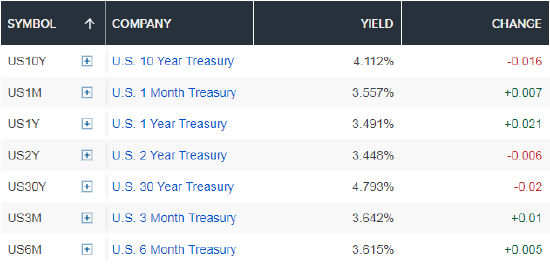
Group 1 - The U.S. 10-year Treasury yield decreased by 1 basis point to 4.112%, while the 2-year Treasury yield also fell by approximately 1 basis point to 3.446% [1][5] - The yield changes indicate a slight downward trend in bond yields, with the 30-year Treasury yield at 4.793%, down by 0.02% [2][6] - The bond yield and price have an inverse relationship, with 1 basis point equating to 0.01% [7] Group 2 - The initial jobless claims data for the week ending December 27 is set to be released, which is considered a significant economic indicator for 2025 [3][7] - Investors are looking for clues regarding the Federal Reserve's future monetary policy path based on this economic data [3][7] - Following the release of the Federal Reserve's meeting minutes, U.S. stocks maintained a slight downward trend, with traders slightly increasing bets on another rate cut in April next year [4][7]
新美联储主席人选或在圣诞前宣布,白宫国家经济委员会主任哈塞特是“头号热门”
华尔街见闻· 2025-11-26 01:07
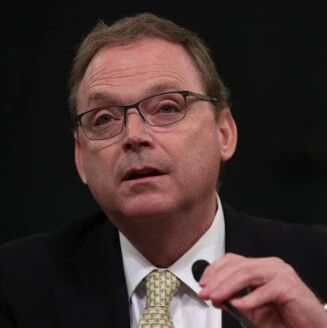
Core Viewpoint - The article discusses the potential nomination of Kevin Hassett as the next Chair of the Federal Reserve, highlighting his alignment with President Trump's economic views and the implications for monetary policy [2][3]. Group 1: Nomination Process - Kevin Hassett is viewed as the leading candidate for the next Federal Reserve Chair, with strong support from Trump and his allies [2]. - Hassett has publicly stated that he would immediately lower interest rates if appointed, criticizing the Fed for allowing inflation to spiral out of control post-pandemic [2][3]. - Trump's decision on the nomination is expected to be announced before December 25, with speculation that Hassett's candidacy has been leaked intentionally [2][3]. Group 2: Market Reactions - The potential for a "dovish successor" to the Fed Chair has led to positive market reactions, with U.S. stock prices rising and a decrease in 10-year Treasury yields [6]. - The 10-year Treasury yield has stabilized around 4.0018%, while the 2-year yield has dropped significantly, indicating a steepening yield curve [6]. Group 3: Historical Context - Historically, the nomination of the Fed Chair is a direct way for the President to influence the Federal Reserve, with Trump previously expressing regret over his appointment of Jerome Powell due to differing views on interest rate cuts [3][4]. - The next Fed Chair will serve a 14-year term starting February 1, with the current seat held by Stephen Miran, who is on unpaid leave [4].
美股期货拉升,金价创新高,美国就业人数远低于市场预期
2 1 Shi Ji Jing Ji Bao Dao· 2025-09-05 13:51
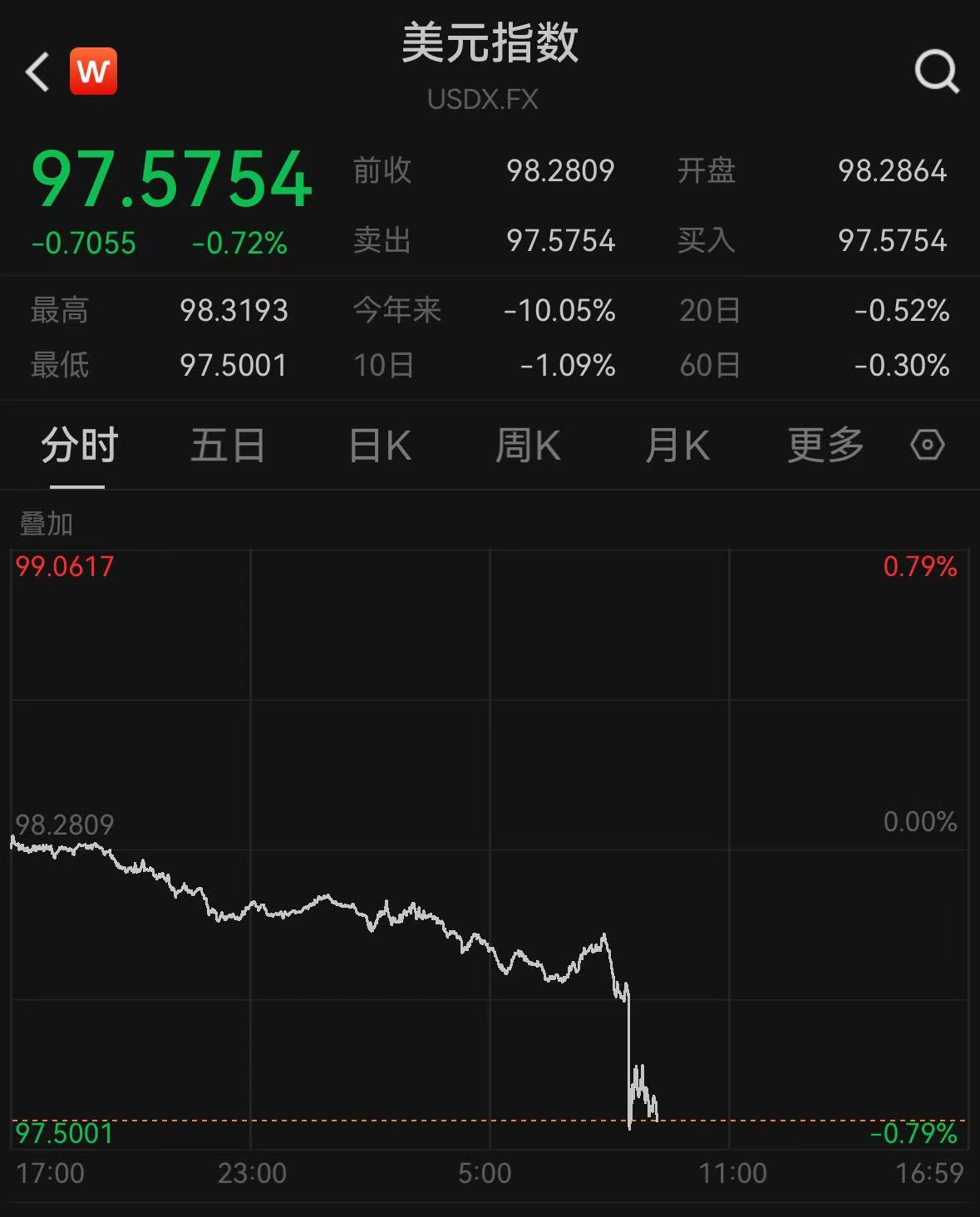
Group 1 - The core point of the article indicates that the U.S. labor market is showing significant signs of cooling, with August job growth falling short of expectations, leading to increased bets on the Federal Reserve initiating rate cuts starting this month [1] - In August, the seasonally adjusted non-farm payrolls recorded an increase of only 22,000 jobs, significantly below the market expectation of 75,000 jobs, while previous months' data were revised downwards [1] - The CME FedWatch Tool shows an 88.3% probability of a 25 basis point rate cut in September, with a 11.7% chance of a 50 basis point cut [1] Group 2 - Following the employment data release, the U.S. dollar index dropped approximately 35 points, while spot gold prices surged nearly $30, reaching a record high of $3,586 per ounce [1] - The 2-year U.S. Treasury yield fell by 10.74 basis points to 3.474%, and the 10-year yield decreased by 9.03 basis points to 4.070% after the non-farm payroll data was published [3] - U.S. stock futures saw a short-term increase, with the Nasdaq 100 futures rising by 0.86% [5]
美国5年期国债收益率跌至3.66% 为4月7日以来的最低水平-美股-金融界
Jin Rong Jie· 2025-09-04 12:24
Core Points - The yield on the 10-year U.S. Treasury bond has dropped to 4.18%, marking the lowest level since May 1 [1] - The yield on the 5-year U.S. Treasury bond has decreased to 3.66%, the lowest since April 7 [1] - The yield on the 2-year U.S. Treasury bond has fallen to 3.60%, also the lowest since May 1 [1]