
美妆个护

Search documents
2026年新消费行业年度策略:新消费三大引擎,AI+消费、情绪经济、新质零售
Shanghai Securities· 2026-03-12 12:17
Core Insights - The report identifies three main engines driving the transformation of the new consumption sector: AI + consumption, emotional economy, and new quality retail [2][3][4] AI + Consumption - AI technology is seen as a catalyst for consumption, with the potential to become a market hotspot. By the first half of 2025, the user base for generative AI products in China is expected to reach 515 million, a growth of 266 million from December 2024, with a penetration rate of 36.5% [2] - AI technologies such as large models, chips, embodied intelligence, and digital innovations are expected to comprehensively upgrade consumer goods across production, supply chain, and operational selection [2] Emotional Economy - Changes in economic demographics are giving rise to an emotional consumption market projected to reach 4.5 trillion yuan. The emotional consumption market in China is expected to grow from 1.63 trillion yuan in 2022 to 2.72 trillion yuan in 2025 and exceed 4.5 trillion yuan by 2029 [3] - Emotional consumption scenarios are rapidly expanding, with trends in collectibles, shopping, cultural tourism, pets, technology, and dining gaining traction among younger consumers [3] New Quality Retail - The shift from traditional retail to new quality retail focuses on enhancing consumer experience and value reconstruction. New quality retail includes aspects like quality-price ratio consumption and instant retail, optimizing supply-side offerings [4] - For instance, Sam's Club in China is projected to achieve sales of over 140 billion yuan by 2025, with online business accounting for about 50% of its sales [4] Investment Opportunities - Key companies to watch in the AI + consumption sector include Luxshare Precision, Goertek, DJI, and Xiaomi in various AI product categories [5] - In the emotional consumption space, companies like Laopuhuangjin and Chaohongji are highlighted, along with brands in outdoor sports and beauty sectors [5] Market Overview - The overall consumption industry in 2025 is expected to show structural changes, with a focus on upgrading consumption quality and enhancing consumer experiences [19][29] - The report emphasizes the importance of policies aimed at boosting domestic demand and consumption, which are expected to continue into 2026 [28][29] Economic Context - The contribution of final consumption expenditure to GDP growth in China is projected to remain significant, with a contribution rate of 53.5% in the first three quarters of 2025, reflecting a 9 percentage point increase from the previous year [18][36] - The report notes that the consumer market in China still has substantial growth potential, with the final consumption expenditure expected to rise from approximately 57% to 60% of GDP by the end of the 14th Five-Year Plan [28][36] Demographic Trends - The report highlights the aging population and declining birth rates in China, with the Z generation gradually becoming the main consumer force. This demographic shift is expected to drive new consumption patterns focused on emotional value and sustainability [40][41] Future Outlook - The report anticipates that 2026 will be a pivotal year for the integration of AI technology into the consumption sector, creating new market opportunities and innovative products [45][46] - The AI + consumption landscape is expected to evolve with advancements in AI-powered products, including smart home devices and wearables, which are projected to reshape consumer lifestyles [62][63]



海外看中国:高端消费复苏启示录-华泰证券
Sou Hu Cai Jing· 2026-02-26 09:25
Group 1 - The high-end consumption market in China shows initial signs of recovery in 2025, characterized by rational recovery and structural differentiation, with the domestic personal luxury goods market's year-on-year decline narrowing to 3%-5% [1][21] - The market recovery follows a "J-shaped" pattern, with sales expected to turn positive in Q4 2025, showing a year-on-year growth of 1%-3% [1][21] - The recovery is driven by multiple factors, including a significant narrowing of the price gap between domestic and international luxury goods to around 12%, and the implementation of consumption-promoting policies [1][8] Group 2 - Consumer preferences are shifting from "material possession" to "experience first," with high-end service consumption, such as luxury hotels and health care, showing strong performance [1][31] - The luxury goods sector is experiencing a K-shaped differentiation, with beauty and personal care products growing by 4%-7%, while categories like leather goods and watches are declining by 8%-11% and 14%-17%, respectively [1][34] - The high-net-worth population is increasingly concentrated in eastern regions, with business owners now making up 54% of this demographic, becoming a core consumer force [2][9] Group 3 - The recovery in high-end consumption is attributed to a combination of factors, including consumer confidence restoration, policy support, and the adaptation of foreign brands to local market needs [1][8] - The average spending on luxury goods is expected to decrease slightly by about 4%, reflecting a more cautious consumer sentiment [28] - The high-end service sector, particularly in health and wellness, is projected to see increased spending, with intentions to spend on travel and health rising significantly among high-net-worth individuals [43][44]





京东:大多数被盗物资已顺利追回
券商中国· 2026-02-14 10:48
Core Viewpoint - JD.com faced a significant theft incident at its warehouse in the Paris region, with over 50,000 electronic devices stolen, valued at approximately €37 million, equivalent to around 306 million RMB. The company is cooperating with local authorities to recover the stolen goods and enhance its logistics network in Europe [1][2][3][4]. Group 1 - The theft occurred on December 22, with the Paris police and the Chinese embassy in France actively involved in the investigation, leading to the recovery of most stolen items [1][2]. - JD.com is accelerating its "Global Network Plan," having established over 130 overseas warehouses in 23 countries and regions, and recently launched its logistics network JoyExpress in Europe [2]. - The company plans to enhance its investment in France and Europe, aiming to provide more efficient and stable services through a robust supply chain [2]. Group 2 - The stolen items primarily included smartphones, computers, and tablets, with the theft being executed by breaking into the warehouse and disabling security systems [3][4]. - The incident highlights the vulnerabilities in the logistics and security measures of international e-commerce companies operating in foreign markets [3][4].


巴黎仓库失窃折合超3亿元,京东:绝大多数被盗物资已顺利追回
Bei Jing Qing Nian Bao· 2026-02-14 08:05
Core Viewpoint - JD.com has successfully recovered most of the stolen goods from its warehouse in the Paris region, following a theft incident that occurred on December 22 last year, with significant support from the French police and the Chinese embassy in France [1] Group 1: Theft Incident and Recovery - The theft involved over 50,000 units of 3C digital devices, including smartphones, computers, and tablets, with a total value of approximately €37 million, equivalent to about 306 million yuan [1] - JD.com is fully cooperating with the Paris police for the recovery and handover of the stolen goods [1] Group 2: Global Expansion and Logistics - JD.com is accelerating its "Global Network Plan," having established over 130 overseas warehouses across 23 countries and regions [1] - The company's logistics network, JoyExpress, has recently launched in Europe, and the retail brand Joybuy will offer same-day delivery for a wide range of products in multiple countries, including France, the UK, the Netherlands, and Germany, starting in March [1] Group 3: Commitment to France - JD.com plans to deepen its investment in France and operate in compliance with local regulations, aiming to build a more robust super supply chain to provide efficient, stable, and high-quality services to consumers and businesses in France and Europe [1]
京东巴黎仓库盗窃案告破
Mei Ri Jing Ji Xin Wen· 2026-02-14 07:04
Group 1 - The core incident involves a theft at JD.com's warehouse located in the Paris region, which occurred on December 22, 2025, and has seen significant progress in recovery efforts with most stolen goods being retrieved [1] - JD.com’s European online retail brand, Joybuy, is set to officially launch in March this year, focusing on a wide range of products including electronics, home appliances, beauty and personal care, and daily household items [1]

京东巴黎仓库盗窃案侦破,绝大多数被盗物资顺利追回
Mei Ri Jing Ji Xin Wen· 2026-02-14 03:55
Group 1 - JD's warehouse in the Paris region was robbed on December 22, 2025, but most of the stolen goods have been successfully recovered with the help of the Paris police and the Chinese embassy in France [1] - JD's European online retail brand, Joybuy, is set to officially launch in March this year, focusing on a wide range of products including electronics, home appliances, beauty and personal care, and daily household items [1]
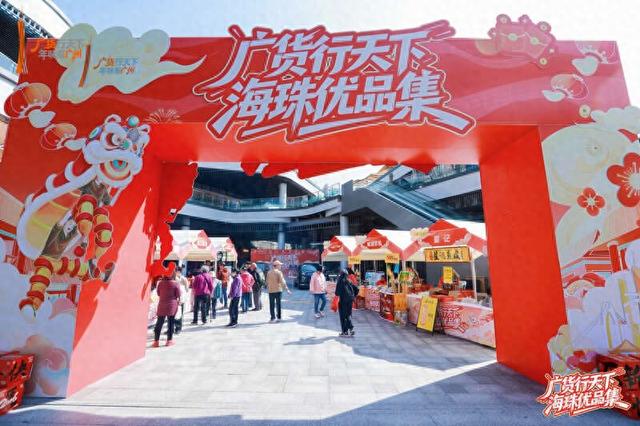
解锁“年味”新体验,广州海珠启动“政务闪送”
Xin Lang Cai Jing· 2026-02-06 14:47
Group 1 - The event "Government Services Delivered to the Frontline, Guangdong Goods Benefit the People" was launched in Haizhu District, Guangzhou, aiming to create an immersive new spring consumption and government service experience for citizens [1] - The Haizhu District Market Supervision Administration provides full-process support for enterprises participating in the "Haizhu Quality Products" initiative, facilitating business operations and ensuring a faster service process [3] - The "Guangdong Goods Tide Collection" exhibition platform features over 60 time-honored enterprises from Guangzhou, covering various categories such as health food, Cantonese cuisine, digital products, beauty and personal care, and fashion [5] Group 2 - The Haizhu District plans to deepen the "Government Services + Consumer Benefits" model and promote the "Guangdong Goods Go Global" annual plan, focusing on government empowerment, scene innovation, and brand strengthening [7] - The initiative aims to enhance the quality of the business environment and activate regional consumption potential through community, park, and business circle activities [8]
2025年中国个人奢侈品市场:在“价值回归、认知升级”的时代重塑方向、稳步复苏
BAIN· 2026-02-01 06:28
Investment Rating - The report indicates a cautious recovery in the Chinese personal luxury goods market, with an overall decline expected to narrow to 3%-5% in 2025 [9][11]. Core Insights - The Chinese luxury goods market is gradually recovering, but consumers remain cautious, leading to a decline in non-essential spending. There is a growing preference for high-value luxury items that combine quality, uniqueness, and practicality [8][10]. - The market is witnessing a shift towards experiential luxury consumption, particularly in travel and health, as consumers favor emotional and sensory satisfaction over physical goods [8]. - Brands focusing on affordable luxury and ultra-high-end segments are gaining market share by providing "real value" to affluent young consumers and ultra-high-net-worth individuals [8][10]. - The share of overseas luxury consumption has decreased compared to 2024, driven by a weaker RMB and ongoing domestic promotions, which encourage luxury spending to return to mainland China [8][10]. Summary by Sections Market Overview - The Chinese personal luxury goods market is projected to shrink by 3%-5% in 2025, with signs of recovery in the third quarter. Different categories show varied performance, with beauty and personal care recovering, while watches continue to face pressure [10][11]. - The second-hand luxury market is growing robustly, with an expected increase of 15%-20%, although it still represents a small portion of the overall market [10][36]. Consumer Behavior - Consumers are becoming more discerning, leading to a cautious approach in luxury purchases. The market is transitioning into a slow growth phase, with expectations for continued recovery into 2026 [10][49]. - The report identifies three main consumer segments driving market dynamics: high-end consumers, middle-aged middle-income consumers, and a new generation of luxury seekers [28]. Category Performance - Beauty and personal care categories are showing strong recovery, with growth rates of 4%-7%. In contrast, the leather goods category is expected to decline by 8%-11% due to insufficient innovation and rising prices [18][20]. - Jewelry is expected to see a reduced decline of 0%-5%, while the watch category is under significant pressure, with an anticipated decline of 14%-17% [20]. Second-Hand Market - The second-hand luxury market is expected to grow significantly, driven by increased supply and changing consumer behavior towards value and sustainability [35][36]. - The second-hand market is primarily concentrated in leather goods and watches, with leather goods accounting for 50%-55% of the market [40]. Local Brand Competitiveness - Chinese local luxury brands are emerging as significant competitors by integrating innovative designs with local culture, thus attracting consumer attention [45]. - These brands are leveraging a deeper understanding of local consumer preferences to create unique product aesthetics and marketing strategies [45][48]. Future Outlook - The luxury market is expected to continue facing volatility and uncertainty in 2026, but there are signs of sustained recovery, supported by domestic policy and geopolitical factors [49][50]. - The second-hand luxury market's low penetration rate compared to global averages indicates substantial growth potential [49].
贝恩:2026年中国个人奢侈品市场将适度增长
Guo Ji Jin Rong Bao· 2026-01-29 15:16
Core Insights - The 2025 China Personal Luxury Goods Report by Bain & Company indicates a contraction of 3% to 5% in the mainland personal luxury goods market, showing a significant easing compared to the sharp decline in 2024 [1] - The report highlights a shift in consumer behavior towards high-cost performance products that balance quality, uniqueness, and practicality, with a preference for experiential consumption such as travel and health [1] - The report notes that the high-value customer (VIC) group remains the core driver of the luxury goods market, while younger potential consumers are entering the luxury market with a more cautious and delayed approach [1] Market Performance - Different luxury categories show varied performance: beauty and personal care products are recovering with a growth of 4% to 7%, while apparel is declining by 5% to 8%, leather goods by 8% to 11%, watches by 14% to 17%, and jewelry is expected to decline by 0% to 5% compared to 2024 [1] Consumption Trends - The share of overseas luxury goods consumption has significantly decreased in 2025, with 65% of luxury consumption occurring in mainland China and 35% abroad, indicating an increase in consumption return [2] - Mainland consumers' enthusiasm for outbound travel has not diminished their willingness to purchase luxury goods domestically, aided by reduced price gaps between mainland and major overseas markets [2] - The rise of local Chinese luxury brands, particularly in beauty and personal luxury categories, is emphasized, with these brands leveraging culturally relevant product designs and competitive pricing strategies [2] Competitive Advantages - Local brands are building differentiated advantages through a deeper understanding of local consumer preferences, implementing a "China-first" customer outreach strategy, and enhancing access to local quality resources and materials to establish price advantages [3] - Despite ongoing market volatility and uncertainty, Bain forecasts moderate growth for the Chinese personal luxury goods market in 2026, supported by the expanding middle-income group and improving consumer confidence [3]
贝恩:2025年中国奢侈品消费回流程度有所增加
Bei Ke Cai Jing· 2026-01-29 14:29
Core Insights - The 2025 China personal luxury goods market is projected to contract by 3% to 5%, showing a significant easing compared to the sharp decline in 2024 [1] - 65% of luxury consumption is expected to occur within mainland China, with 35% taking place overseas, indicating an increase in consumption return [1] - The market is beginning to stabilize, with early signs of recovery noted in the second half of 2025, although consumer confidence still needs improvement [1] Luxury Goods Performance - The beauty and personal care category is expected to perform the best, recovering growth to 4% to 7% [1] - The apparel category is projected to decline by 5% to 8%, while leather goods and bags are expected to decrease by 8% to 11% due to price increases and lack of innovation [1] - The watch category faces severe pressure, with an anticipated decline of 14% to 17%, as consumers become more rational in their purchasing decisions [1] - The jewelry category is expected to see a smaller decline of 0% to 5%, benefiting from considerations of value retention and rising gold prices [1] Resale Market Trends - The resale market for luxury goods in China is projected to grow by 15% to 20% in 2025, although its penetration remains low at under 10% [2] - This growth is attributed to increased supply of second-hand goods, higher consumer acceptance, especially among younger price-sensitive consumers, and the widespread use of live-streaming platforms [2] - The resale market is becoming an essential part of the luxury ecosystem in China, reflecting a shift in consumer attitudes and market maturity [2] Rise of Local Brands - Local Chinese luxury brands are continuing to rise, particularly in beauty and skincare, leveraging culturally relevant product designs and competitive pricing supported by local supply chains [2] Future Outlook - Despite ongoing volatility and uncertainty, moderate growth is expected in the Chinese personal luxury goods market by 2026, maintaining its foundational role in the global luxury market [3] - The growth will depend heavily on specific product categories and brands, driven by the expanding middle-income group, improved consumer confidence, and favorable policies [3]