
节能冰箱

Search documents
国补百吋电视“爆单”,电梯难题何解?
Guan Cha Zhe Wang· 2026-01-31 12:35
Core Insights - The new "National Subsidy" policy for home appliances has significantly boosted the market, with major appliances seeing a nearly 30% year-on-year increase in consumption and a nearly 90% month-on-month surge [1][4] - The policy has led to a structural shift in consumer preferences towards high-end products, such as 100-inch televisions and energy-efficient refrigerators, indicating a trend of consumption upgrading [1][6] Group 1: Market Trends - The implementation of the new subsidy policy has resulted in a clear structural change in the home appliance market, with a focus on larger and higher-quality products [5][6] - High-end products, including smart and energy-efficient appliances, are driving innovation and sales, reflecting a shift in consumer demand towards quality and experience [6][7] - The market is experiencing a polarization effect, where leading brands with core technologies and comprehensive high-end product lines are gaining market share, while low-cost competitors may struggle [7][9] Group 2: Delivery and Service Challenges - The rise of 100-inch televisions has highlighted significant delivery and installation challenges, as only about 5% of elevators can accommodate these large products without removing packaging [9][10] - To address these challenges, logistics companies have developed integrated delivery and installation services, improving the success rate of home delivery for large appliances to over 95% [10][13] - The integration of delivery, installation, and old appliance recycling services is becoming a key competitive advantage for brands and platforms, enhancing customer satisfaction [13][14] Group 3: Future Outlook - The home appliance market is expected to see the emergence of new product categories that cater to specific consumer needs, driven by ongoing consumption upgrades and technological innovations [14] - The focus is shifting from merely selling products to providing comprehensive service experiences, which will shape the future landscape of the home appliance industry [14]



政策聚力活力涌,消费蓝海起新潮
Xin Lang Cai Jing· 2026-01-13 08:23
Group 1 - The core viewpoint of the articles emphasizes the transformative impact of the "National Subsidy" policy on consumer behavior and market dynamics, shifting from traditional consumption to a more experience-driven and value-oriented approach [1][2][3] - The "National Subsidy" policy targets major consumer sectors such as automobiles and home appliances, while also extending to new markets like smart wearables and products for the elderly, facilitating access to high-quality goods at more affordable prices [2] - The policy is designed to create a virtuous cycle where demand drives supply and vice versa, encouraging companies to innovate in green technology and smart products while making it easier for consumers to upgrade their goods [2][3] Group 2 - The integration of various sectors such as culture, tourism, sports, and technology is reshaping the consumer landscape, leading to a more immersive and comprehensive shopping experience [3] - The "National Subsidy" policy is seen as a catalyst for unlocking consumer potential, which in turn stimulates economic growth by enhancing the domestic circulation of goods and services [3] - The combination of policy incentives and market innovations is expected to ignite a significant surge in consumer activity, contributing to high-quality economic development in China [3]
【好评中国】政策聚力活力涌,消费蓝海起新潮
Xin Lang Cai Jing· 2026-01-13 08:23
Group 1 - The core viewpoint of the articles emphasizes the transformative impact of the "National Subsidy" policy on consumer behavior and market dynamics, shifting from traditional consumption to a more experience-driven and value-oriented approach [1][2][3] - The "National Subsidy" policy targets major consumer sectors such as automobiles and home appliances, while also extending to new markets like smart wearables and products for the elderly, facilitating access to high-quality goods at more affordable prices [2] - The policy is designed to create a virtuous cycle where demand drives supply and vice versa, encouraging companies to innovate in green technology and smart products while making it easier for consumers to upgrade their goods [2][3] Group 2 - The integration of various sectors, such as "consumption + culture and tourism" and "consumption + technology," is reshaping the consumer landscape, allowing for deeper cultural experiences and making smart home devices more accessible [3] - The "National Subsidy" policy is seen as a catalyst for unlocking consumer potential, which in turn stimulates economic growth by connecting production, distribution, and consumption [3] - The combination of policy incentives and market innovations is expected to ignite a significant surge in consumer activity, contributing to high-quality economic development in China [3]
视频丨产业链升级+制度护航 绿色贸易成我国外贸发展新动能
Yang Shi Xin Wen· 2025-11-24 23:28
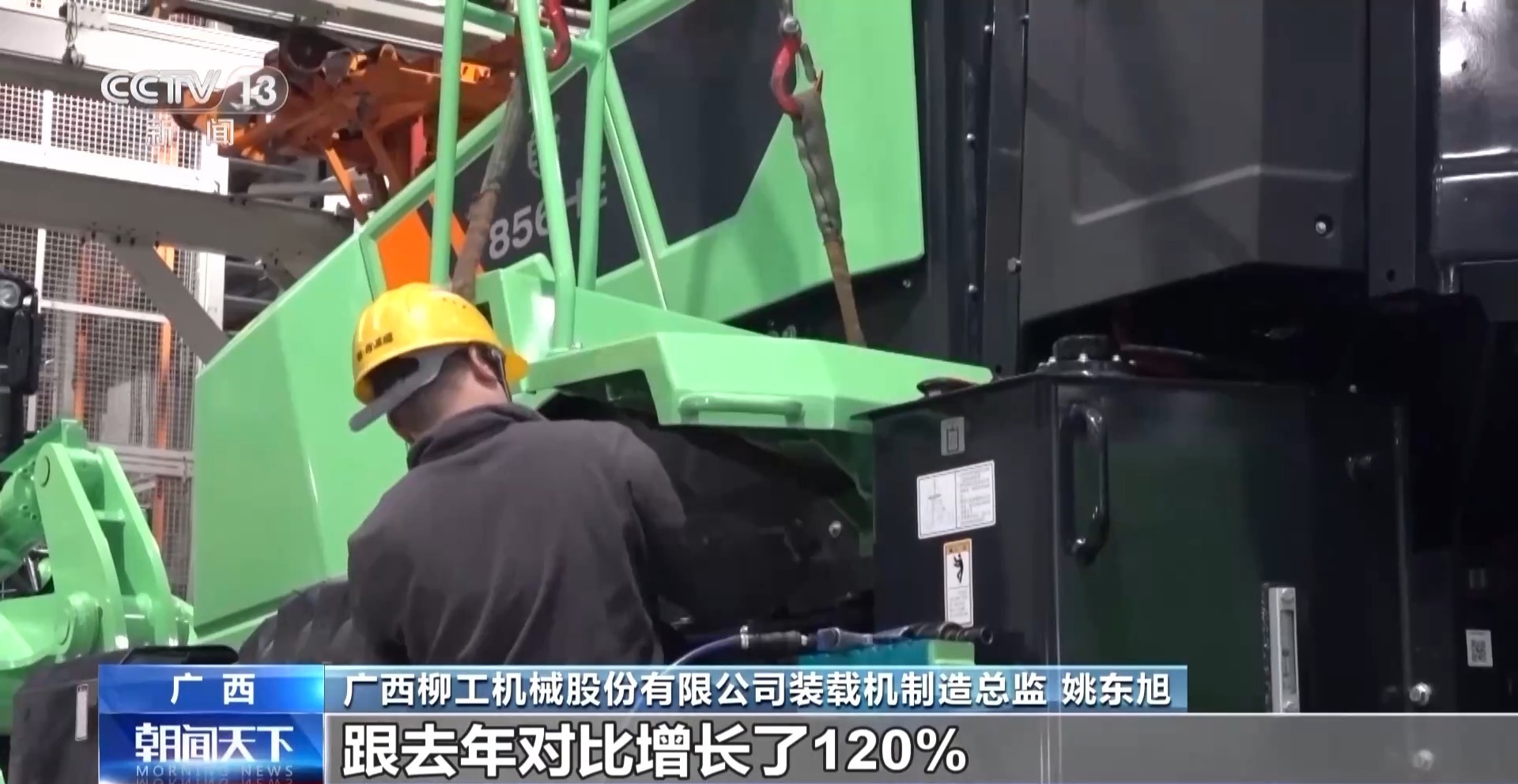
Core Viewpoint - China is actively expanding green trade to support its "dual carbon" goals, with green trade becoming a new driving force for foreign trade development as more green low-carbon products and services enter the international market [1][10]. Group 1: Green Product Export Growth - The export volume of electric loaders from Guangxi Liugong Machinery Co., Ltd. has increased by 120% compared to last year, with production capacity expanded from one to three production lines [3]. - In Zhejiang, a company is producing eco-friendly trademark belts made from recycled plastic bottles, showcasing the shift towards sustainable materials [5][8]. - In the first three quarters of this year, exports of wind turbine units and parts from China grew by over 30%, while photovoltaic products have maintained an export value exceeding 200 billion yuan for four consecutive years [10]. Group 2: Comprehensive Green Transformation - China's green product appeal in international markets stems from a comprehensive green transformation across the entire industrial chain, covering design, manufacturing, operation, and recycling [12]. - A refrigerator factory in Qingdao is producing energy-efficient refrigerators for the European market, with over 80% of its buildings equipped with solar panels, generating over 50 million kWh of green electricity annually [16][18]. - The factory expects to produce over 2 million refrigerators this year, saving approximately 10,000 tons of standard coal and reducing carbon dioxide emissions by over 26,000 tons [18]. Group 3: Institutional Support for Green Trade - The establishment of a green trade public service platform in Hubei aims to help export companies understand international carbon rules, addressing challenges in green transformation [28][31]. - China has accelerated the development of its green trade system, issuing 49 national standards for greenhouse gas emission accounting and 13 standards for carbon footprints [33]. - The Ministry of Commerce plans to promote high-quality development of green trade and enhance the green low-carbon development capabilities of enterprises [35].
昌吉州“双节”54家重点企业销售额破5800万
Sou Hu Cai Jing· 2025-10-10 05:09
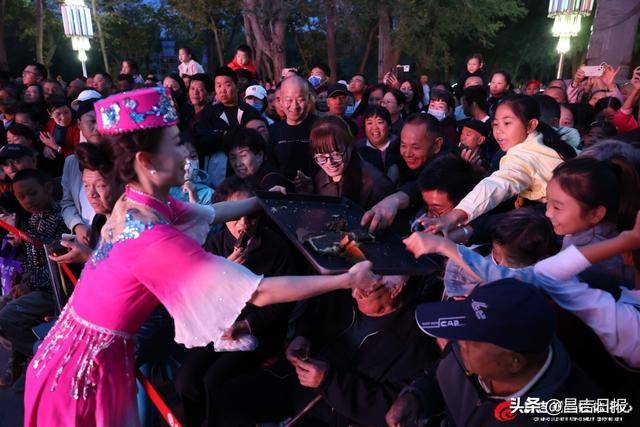
Core Insights - The combined National Day and Mid-Autumn Festival holiday significantly boosted consumer activity in Changji Prefecture, with total sales reaching 58.42 million yuan and foot traffic hitting 230,000 visitors during the 8-day period [1][3]. Group 1: Consumer Market Performance - The automotive sector accounted for over half of the total sales, driven by government financial support and promotional events [1][3]. - A total of over 10 million yuan was invested by local governments to stimulate consumption in key areas such as retail, dining, and automotive, resulting in over 30 promotional events [3][5]. - The retail environment showed a variety of discounts and promotions, with significant consumer interest in home appliances and vehicles, leading to a 30% increase in sales for certain categories [5][7]. Group 2: Promotional Activities and Consumer Engagement - The "government subsidies + corporate discounts" strategy was pivotal in enhancing consumer spending, with targeted activities like consumption vouchers and trade-in subsidies [3][5]. - Specific promotional events, such as the "National Day Car Purchase" event, attracted multiple brands and offered various incentives, leading to concentrated consumer purchasing [5][7]. - Electronic consumption vouchers worth 1 million yuan were distributed in Jimsar County, effectively stimulating consumer engagement and spending [5][7]. Group 3: Tourism and Experience Economy - The tourism sector also saw a notable increase, with attractions like the Kengsawat Scenic Area experiencing a 25% rise in daily visitor numbers compared to the previous year [5][7]. - The integration of unique experiences and natural scenery in tourism offerings contributed to the overall growth in visitor numbers, with a significant portion of tourists coming from outside the region [5][7]. Group 4: Future Outlook - The Changji government aims to continue fostering a robust consumption ecosystem through policy guidance and market-driven initiatives, promoting a collaborative environment among government, businesses, and consumers [7].
首届中德城市峰会在法兰克福举行 让友谊连接城市 以合作促进发展
Ren Min Ri Bao· 2025-06-24 21:45
Core Points - The first China-Germany City Summit was held in Frankfurt, focusing on "jointly addressing global challenges and creating a sustainable future" with over 100 representatives from more than 20 cities from both countries participating [1] Group 1: Local Cooperation - Frankfurt and Guangzhou have deepened cooperation in trade, culture, and sustainable development, benefiting local citizens [2] - The establishment of friendly city relationships is crucial for bilateral relations, with 105 pairs of friendly provinces and cities established between China and Germany [2] - The signing of an agreement between Jinhua City and Dillenburg City to upgrade their relationship to a national-level friendly city highlights the potential for further cooperation in industrial development and energy transition [3] Group 2: Green Development - The Sino-German Ecological Park in Qingdao and the battery production base established by CATL in Erfurt are examples of successful green development initiatives [4] - Discussions at the summit emphasized that green development is a new link connecting Sino-German city cooperation, with a focus on low-carbon and climate-adaptive urban development [4] - The collaboration between cities like Kunming and Ditzingen in low-carbon initiatives reflects a mutual learning experience and contributes to global climate governance [4] Group 3: Mutual Benefits - The summit showcased various Chinese products, indicating the importance of China as a vital trade partner for Germany, contributing to economic growth and diversification [6] - The establishment of friendly city relationships, such as between Haikou and Rostock, demonstrates the potential for educational and cultural exchanges [6] - Local cooperation is seen as essential for achieving decarbonization goals and smart mobility, with opportunities for mutual learning and experience sharing [7]