
英伟达NVL72

Search documents
超节点互连技术落地 国产万卡超集群首次真机亮相
2 1 Shi Ji Jing Ji Bao Dao· 2025-12-19 13:32
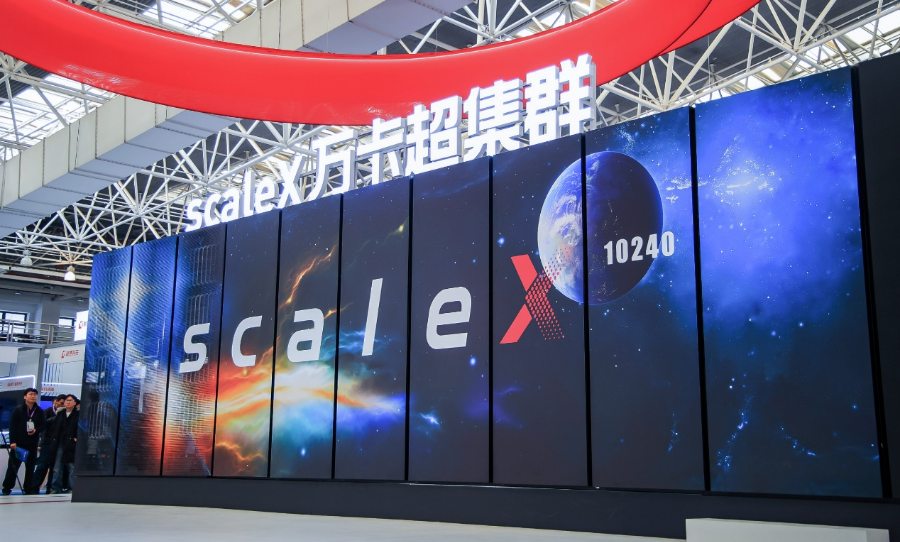
Core Insights - The article discusses the emergence of high-performance computing clusters, specifically the scaleX ultra-cluster developed by Sugon, which integrates 16 scaleX640 supernodes to achieve over 5 EFlops of computing power, marking a significant advancement in domestic AI computing infrastructure [4][5]. Group 1: Ultra-Cluster Development - The scaleX ultra-cluster is the world's first single-cabinet 640-card supernode, utilizing advanced technologies such as high-density blade servers and immersion cooling, resulting in a 20-fold increase in computing density and a PUE value as low as 1.04 [1][4]. - The scaleX ultra-cluster represents a shift from traditional scattered server deployments to a more integrated and efficient computing unit, showcasing the progress of domestic computing infrastructure from conceptual designs to tangible products [1][5]. Group 2: Demand for Computing Power - As mainstream AI models transition from hundreds of billions to trillions of parameters, the demand for computing power has surged, necessitating the development of EFLOPS-level and ten-thousand-card high-performance clusters as standard configurations for large models [2][3]. - The supernode architecture is becoming a preferred choice for new ten-thousand-card clusters due to its density and performance advantages, allowing for significant optimization in computing capabilities [3]. Group 3: Networking and Scalability - The scaleX ultra-cluster employs the scaleFabric high-speed network, which utilizes the first domestic 400G-class InfiniBand RDMA network cards, achieving 400 Gb/s bandwidth and under 1 microsecond communication latency, enhancing scalability to over 100,000 cards [7]. - The architecture allows for both Scale-up (vertical expansion) and Scale-out (horizontal expansion), addressing traditional communication bottlenecks and enabling the construction of large-scale intelligent computing clusters [6]. Group 4: Challenges and Considerations - The deployment of supernodes introduces systemic challenges, including heat dissipation from numerous chips, stability issues from mixed optical and copper interconnects, and reliability concerns from long-term operation of multiple components [8]. - As the scale of intelligent computing clusters expands, key challenges include ensuring scalability, reliability, and energy efficiency, necessitating breakthroughs in power supply technology and advanced software management for sustainable operation [8].


超节点互连技术落地,国产万卡超集群首次真机亮相
2 1 Shi Ji Jing Ji Bao Dao· 2025-12-19 13:24
Core Insights - The launch of the scaleX万卡超集群 marks the first physical appearance of a domestic万卡级 AI cluster system in China, showcasing significant advancements in AI computing capabilities [1][3] - The scaleX640 super node, part of the scaleX万卡超集群, integrates 16 super nodes and achieves a total computing power exceeding 5 EFLOPS, highlighting the growing demand for high-performance computing in AI applications [3][5] - The industry is transitioning from traditional server architectures to super node designs, which offer higher density and performance, becoming the preferred architecture for new万卡级 clusters [2][5] Company Developments - 中科曙光's scaleX640 super node is recognized as the world's first single cabinet-level 640-card super node, emphasizing the company's leadership in high-density computing solutions [2][3] - The scaleX万卡超集群 utilizes the scaleFabric high-speed network, which can achieve 400Gb/s bandwidth and less than 1 microsecond communication latency, significantly enhancing inter-node communication efficiency [7][8] - The company is addressing challenges related to system cooling, stability, and reliability as it scales up its super node architecture to meet the increasing demands of AI workloads [6][8] Industry Trends - The demand for computing power is rapidly increasing as AI models evolve from hundreds of billions to trillions of parameters, necessitating the development of万卡级 and beyond computing clusters [1][5] - Major international players like Meta, Microsoft, and OpenAI are also investing in the construction of 100,000-card clusters, indicating a global trend towards larger-scale AI computing infrastructures [6] - The industry is facing critical challenges in scalability, reliability, and energy efficiency as computing centers grow from megawatt to gigawatt levels, necessitating innovative power supply technologies and advanced management software [8]
中信证券:看好超节点服务器整机环节 建议关注产业链相关公司
智通财经网· 2025-12-19 00:55
Core Insights - The report from CITIC Securities indicates that the supernode solution is expected to scale rapidly, serving as a fundamental computing unit for future AI infrastructure, with advantages such as efficient communication bandwidth and native memory semantics [1][2] Group 1: Supernode Development - The MoE (Mixture of Experts) architecture imposes new hardware requirements, leading to the emergence of scale-up supernodes [2] - Supernodes face complex systemic challenges compared to traditional eight-card servers, including heat dissipation, stability issues from mixed optical and copper interconnects, and long-term reliability concerns [2][3] - The current phase of supernode solutions is characterized by a variety of competing technologies, with domestic solutions like Huawei's CloudMatrix384 and Alibaba's Panjiu emerging [3] Group 2: Technical Challenges and Solutions - As computing density increases, liquid cooling solutions with a PUE closer to 1, such as phase change immersion cooling, may see greater development opportunities if stability issues can be resolved [4] - The complexity of supernode servers has significantly increased, requiring deep consideration of chip integration, heat dissipation, and interconnects, transforming server manufacturers into core system integrators [5] Group 3: Investment Strategy - The supernode technology is in its early stages, with the MoE architecture likely to become mainstream, presenting new adaptive requirements for hardware development [7] - The report suggests that companies with customization capabilities and supply chain management skills in the server manufacturing sector are likely to see significant growth opportunities [7]

功率器件在AI数据中心电源中的应用
2025-09-11 14:33
Summary of Key Points from Conference Call Industry Overview - The conference call discusses the application of power devices in AI data center power supplies, focusing on high-end AI servers like NVIDIA's NVL72, which utilize multiple 5.5 kW power modules, achieving a total cabinet power of 132 kW [1][3][6]. Core Insights and Arguments - **Power Supply Units (PSUs)**: The current architecture of server power supplies can be categorized into embedded power supplies and cabinet power supplies. High-end AI servers like the NVIDIA NVL72 utilize multiple 5.5 kW modules, with each kW priced around 2,100 RMB [3][6]. - **Future Trends**: The development of 800V High Voltage Direct Current (HVDC) technology is expected to increase PSU power from 5.5 kW to 12 kW or even 19 kW in the coming years, necessitating the use of advanced semiconductor materials like silicon carbide (SiC) and gallium nitride (GaN) to enhance efficiency and reduce size [1][7]. - **Material Applications**: SiC is primarily used in high-voltage applications, while GaN is favored for lower voltage applications due to its higher efficiency and lower thermal loss. The next-generation Ruby solution will support 800V HVDC input [1][10][11]. - **Cost Considerations**: SiC devices are more expensive, with 650V SiC devices priced around 50 RMB each, while 1,200V SiC devices cost about 90 RMB. GaN devices are similarly priced between 50 to 60 RMB [23][24]. Additional Important Content - **Domestic Market Development**: Domestic manufacturers like Great Wall Electronics are beginning to adopt GaN technology in their 7.5 kW or 8 kW power modules, bridging the gap between standard servers and high-end AI servers [25]. - **Current Usage of IGBT and SiC**: IGBT remains dominant in current server power systems, but there is a gradual shift towards SiC in future 800V HVDC systems [15]. - **Market Dynamics**: The power market is still in an experimental phase, with high reliability requirements leading to lower price sensitivity among customers [40]. - **Competition and Supply Chain**: Domestic suppliers like Dongwei Semiconductor and SIDA Semiconductor are providing products for local enterprises, but they have not yet entered the core supply chain dominated by international players like NVIDIA [38][39]. Conclusion - The conference highlights the ongoing transition in power supply technology for AI servers, emphasizing the importance of advanced materials like SiC and GaN, the evolving market dynamics, and the competitive landscape in both domestic and international contexts. The future of server power supplies will likely see increased efficiency and power capacity driven by technological advancements and market demands.

银行股突发跳水!
证券时报· 2025-06-27 09:33
A股今日(6月27日)走势分化,沪指弱势下探,上证50指数跌逾1%;深证成指、创业板指相对强势;港股午后回落,两大股指双双翻绿。 具体来看,沪指午后在银行、保险等板块的拖累下快速下探,创业板指等震荡上扬。截至收盘,沪指跌0.7%报3424.23点,深证成指涨0.34%报10378.55点,创 业板指涨0.47%报2124.34点,北证50指数涨约1%,上证50指数跌1.13%,沪深北三市合计成交15759亿元,较此前一日减少476亿元。 港股方面,截至发稿,百济神州跌约8%,阿里健康涨超6%;小米集团涨逾4%,该股盘中一度大涨8%续创历史新高。 银行板块下挫 场内近3400股飘红,有色板块强势,电工合金、北方铜业等涨停;半导体板块拉升,龙芯中科涨超13%,芯原股份涨约6%;CPO概念活跃,联特科技一度涨停, 源杰科技涨近7%;券商板块再度上扬,天风证券盘中涨停;多元金融股再度爆发,弘业期货、爱建集团分别斩获4连板和3连板;银行、保险板块回调,青岛银 行、杭州银行、重庆银行等跌逾4%。 近期强势的银行板块今日大幅下挫,截至收盘,青岛银行、杭州银行、重庆银行跌超4%,江苏银行、招商银行、中国银行、农业银行等均跌逾 ...






金融IT重要性凸显!仅靠银行、券商无法达成,还需金融软件提供技术支持!
Xin Lang Ji Jin· 2025-06-26 02:23
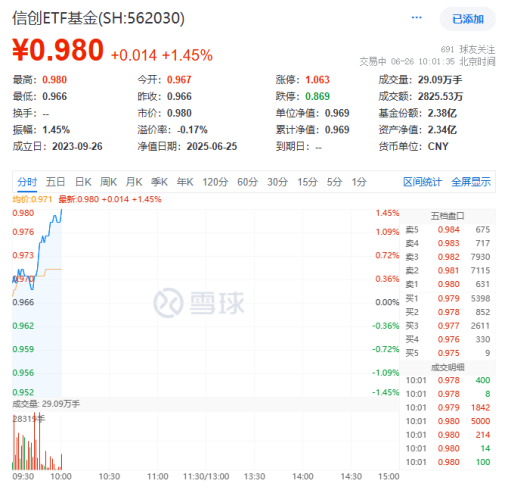
Group 1: ETF Performance and Market Trends - The Xinchang ETF (562030) experienced a rapid increase, rising by 1.45% on June 26, marking a four-day consecutive gain [1] - Key constituent stocks such as Geer Software and Hengsheng Electronics saw significant gains, with Geer Software hitting the daily limit and Hengsheng Electronics rising over 6% [1] - The ETF's trading volume reached 290,900 hands, with a total transaction value of approximately 28.26 million CNY [2] Group 2: Industry Insights and Developments - The digital currency and cross-border payment sectors require robust support from data, cloud computing, and software service providers, as traditional brokers or banks cannot complete the closed loop alone [3] - The demand for AI model training and inference is growing, with a shift towards larger cluster infrastructures, indicating potential for domestic GPU chip companies to catch up with overseas products [3] - The "golden triangle" of the Xinchang industry is formed by policy support, AI empowerment, and the urgent need for domestic alternatives, with significant growth in orders from the financial and government sectors [3][5] Group 3: Investment Logic in Xinchang Industry - The Xinchang ETF covers core segments of the Xinchang industry chain, including hardware, software, application software, information security, and external devices, showcasing high growth and elasticity [5] - The urgency for self-sufficiency in the Xinchang field is driven by geopolitical tensions and the need for national, information, and industrial security [5] - The macroeconomic environment is expected to improve government procurement in the Xinchang sector, while domestic manufacturers are achieving breakthroughs in new technologies [5] Group 4: Data Security and Technological Independence - The big data industry ETF (516700) focuses on data centers, cloud computing, and big data processing, with leading stocks including Zhongke Shuguang and Keda Xunfei [6] - The call for "technology to take the lead" from higher authorities is expected to drive new productivity directions [6] - The acceleration of the domestic replacement process is anticipated as part of the digital China initiative, with a broad outlook for technological self-reliance [6]
今日投资参考:系统级算力有望成为下一代AI算力基础设施
Zheng Quan Shi Bao Wang· 2025-06-26 02:13
Market Overview - Major stock indices in China experienced a narrow fluctuation in the morning, followed by a strong rally in the afternoon, driven by the financial and real estate sectors. The Shanghai Composite Index rose by 1.03% to 3455.97 points, the Shenzhen Component Index increased by 1.72% to 10393.72 points, and the ChiNext Index surged by 3.11% to 2128.39 points. The total trading volume in the Shanghai and Shenzhen markets reached 16402 billion yuan, an increase of over 1900 billion yuan compared to the previous day [1] Brokerage Sector - Guotai Junan International saw a significant increase of 198% due to the Hong Kong Securities and Futures Commission approving its upgrade to a virtual asset trading license, making it the first Chinese brokerage to offer comprehensive virtual asset services. This aligns with the current market interest in "stablecoin" themes, leading to a corresponding rise in the A-share brokerage sector [2] - Donghai Securities noted that the sustainability of the brokerage sector's performance depends on the pace of policy benefits realization and the maintenance of market activity levels. The actual impact of capital market reform policies is a key focus for investors, which is crucial for the recovery of brokerage performance [2] Semiconductor Industry - The memory market, particularly DDR4, has seen a significant price increase due to production cuts announced by storage wafer manufacturers. This price surge is attributed to strong supply-demand dynamics, with expectations of continued revenue growth for major storage manufacturers in the second quarter of 2025 [3] - Citic Securities recommends focusing on storage chip design firms and distributors, as well as module manufacturers, due to the rising prices of DDR4 memory. The increasing penetration of DDR5 is also anticipated as some DDR4 prices exceed those of DDR5 [3] AI Infrastructure - The demand for AI model training and inference is driving the evolution of system-level computing infrastructure. The focus is shifting towards larger clusters, as single-chip performance improvements are expected to slow down. System-level nodes are seen as a critical direction for AI computing development [4] - Citic Securities suggests monitoring the shipment of system-level products from leading companies and the progress of domestic system-level products represented by Huawei's CloudMatrix384, indicating potential growth in the domestic supply chain [4] Dairy Industry - The Ministry of Agriculture and Rural Affairs is actively promoting high-quality development in the dairy industry, emphasizing the implementation of industry relief policies and support for dairy farmers. Efforts are being made to boost dairy consumption and enhance the processing of dairy products [5][6] Foreign Investment - The Ministry of Commerce announced a pilot program to promote the reporting of domestic investment information by foreign-invested enterprises, with the first pilot regions being Jiangsu, Shanghai, Tianjin, Liaoning, Hebei, Hunan, Shaanxi, and Chongqing. This initiative aims to attract more foreign investment [7] Smart Transportation - The Ministry of Transport is focusing on the development of smart transportation, planning to compile a comprehensive transportation plan and promote innovative projects in this area. The goal is to secure diverse funding and resources to enhance the overall development of smart transportation [8]