西贝小牛焖饭与拌面

Search documents
西贝命悬一线:贾国龙卸任CEO、大幅关店裁员丨36氪独家
36氪· 2026-03-06 09:56
Core Viewpoint - The article discusses the significant challenges faced by Xibei, a Chinese restaurant chain, including leadership changes, layoffs, and store closures, as well as the need for strategic adjustments to survive in a competitive market [7][12][24]. Group 1: Leadership Changes - Before the Spring Festival, Jia Guolong stepped down as CEO of Xibei, with former CEO Dong Junyi returning to the position, indicating a shift back to experienced leadership [7][8]. - Dong Junyi is perceived as more in touch with frontline operations, which may stabilize the company during turbulent times [7]. Group 2: Layoffs and Store Closures - Xibei announced significant layoffs due to a sharp decline in business volume, with plans to reduce the number of headquarters employees from over 500 to around 200 [9][10]. - The company has closed approximately 150 out of 350 stores, with discussions ongoing about further closures to ensure survival [11][12]. Group 3: Financial Strategies - Xibei is implementing cost-cutting measures, including reducing employee salaries and downsizing office space, as part of a broader effort to stabilize finances [14][19]. - The company is seeking to raise funds from investors, offering more favorable valuations than in the past, and has initiated internal fundraising among employees with profit-sharing incentives [19][22]. Group 4: Operational Adjustments - Xibei is shifting its operational focus, reducing the average customer spending by 20% and moving food preparation from central kitchens to individual stores to enhance service quality [23]. - The company is also adjusting its menu and marketing strategies to better align with consumer preferences, although challenges remain in achieving positive results [23][24]. Group 5: Market Position and Consumer Perception - Xibei's pricing strategy has come under scrutiny, with consumers perceiving the brand as expensive compared to competitors, which has affected customer satisfaction [34][45]. - The company has historically maintained high-quality ingredients, but this has not translated into consumer loyalty, highlighting a disconnect between cost and perceived value [39][46]. Group 6: Future Outlook - Investors express cautious optimism about Xibei's potential for recovery, noting the need for the company to focus on core business operations and improve cost management [63][64]. - The company faces a critical juncture where it must adapt to changing consumer demands and market conditions to ensure long-term viability [65][66].


西贝命悬一线:贾国龙卸任CEO、大幅关店裁员|独家
36氪未来消费· 2026-03-06 08:51
Core Viewpoint - The article discusses the challenges faced by Xibei, a Chinese restaurant chain, highlighting its significant operational struggles, management changes, and the need for strategic adjustments to survive in a competitive market [5][11][29]. Group 1: Management Changes - CEO Jia Guolong stepped down, and former CEO Dong Junyi returned to stabilize the company, indicating a shift towards experienced leadership [5][6]. - Xibei announced layoffs and a reduction in headquarters staff from over 500 to approximately 200, reflecting the company's dire financial situation [7][9]. - The company is closing stores aggressively, with reports indicating that 150 out of 350 stores have already shut down, and further closures are anticipated [10][11]. Group 2: Cost-Cutting Measures - Xibei is implementing cost-saving strategies, including reducing employee salaries and downsizing office space, as part of its efforts to manage expenses [12][13]. - The company is also seeking to raise funds from investors, offering more favorable terms than in previous rounds, indicating a desperate need for capital [20][21]. - Xibei's operational adjustments include a focus on reducing menu prices by 20% and shifting food preparation from central kitchens to individual stores to cut costs [28]. Group 3: Financial Struggles - The company has faced significant cash flow issues, with expenditures such as a 300 million yuan consumer voucher program exacerbating its financial strain [26]. - Xibei's net profit margin is reported to be between 3% and 5%, which is considerably lower than competitors like Haidilao and Yum China, indicating challenges in cost management [44][45]. - The company has been criticized for high operational costs, including expensive ingredients and employee wages, which have not translated into higher customer satisfaction or sales [46][56]. Group 4: Market Position and Consumer Perception - Xibei's pricing strategy has come under scrutiny, with consumers perceiving the brand as expensive without corresponding value, leading to declining customer traffic [52][59]. - The company has struggled to adapt to changing consumer preferences, particularly in a market increasingly focused on value and affordability [78][79]. - Despite past successes, Xibei's inability to align its offerings with current market demands has led to a significant decline in its competitive position [36][38].
主业做大,副牌做小,海底捞们集体开启“第二战场”
3 6 Ke· 2025-11-10 01:43
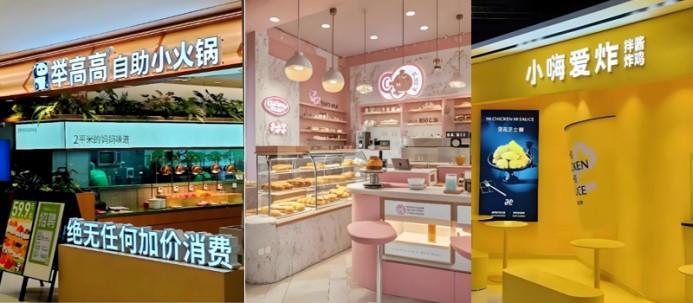
Core Insights - Major restaurant chains are increasingly focusing on smaller business models, diversifying their offerings beyond traditional large-scale operations [1][3][5] - The trend of "miniaturization" in the restaurant industry is gaining momentum, with companies like Haidilao and MoMo exploring niche markets [1][19] Group 1: Industry Trends - Haidilao has launched several new brands targeting smaller segments, including "SHUA BAKERY" and "小嗨爱炸hiburger," indicating a strategic shift towards smaller business models [1][6][19] - Other companies, such as Xibei and MoMo, are also experimenting with smaller store formats and focused product offerings, reflecting a broader industry trend [3][10][14] - The traditional emphasis on large-scale operations is being challenged by more agile and precise "small" models, which are seen as a new competitive advantage [5][19] Group 2: Business Strategies - The "small business" approach allows for reduced operational costs and increased efficiency, as seen in Haidilao's "举高高自助小火锅," which has achieved high table turnover rates [23][24] - Companies are focusing on fewer products to strengthen brand identity and consumer recognition, exemplified by MoMo's "软虎虎" brand, which centers on a single product [25][27] - The branding strategy is shifting towards creating relatable and youthful identities, making it easier for consumers to connect with new sub-brands [29][31] Group 3: Competitive Landscape - The move towards smaller business models is not just a trend but a strategic necessity for companies to explore new markets and build competitive barriers [34][35] - Companies are transitioning from being "super brands" to creating a "brand fleet," allowing for diversified offerings and shared resources across different brands [36][38] - The ability to test new concepts with lower investment risks is a significant advantage, enabling companies to innovate while maintaining their core business [39][40]

贾国龙推出的快餐子品牌都“凉”了
Xin Lang Cai Jing· 2025-09-18 02:38
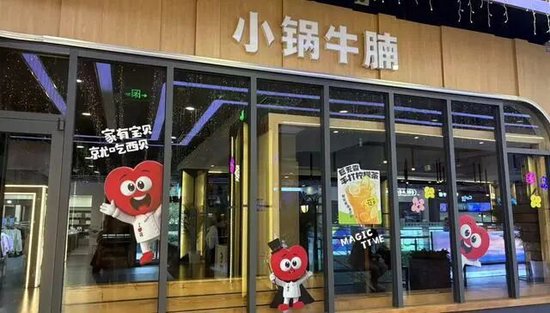
Core Viewpoint - The recent controversy surrounding the well-known restaurant brand Xibei, triggered by a social media post from Luo Yonghao, has led to significant operational adjustments and the closure of several sub-brands, indicating challenges in the fast-food segment and a shift in strategic focus for the company [1][2]. Company Adjustments - Xibei announced it would complete nine adjustments by October 1, aiming to shift from centralized kitchen operations to on-site processing at stores [1]. - The sub-brand "Xibei Little Beef Braised Rice and Noodles," launched last year, has been closed, with remaining inventory being sold off [1][2]. - The founder, Jia Guolong, has faced setbacks with multiple fast-food sub-brands, including "Jia Guolong Chinese Burger," which was expected to open over 100 stores but was closed within a year [2][4]. Market Position and Competition - The fast-food market has seen rapid expansion from competitors like Tastin, which opened 3,772 new stores in 2023, contrasting with Xibei's struggles [2]. - Xibei's new brand "Jia Guolong Little Beef" is being developed from the former "Jia Guolong Chinese Burger" locations, with a goal of exceeding 100 stores [4]. Consumer Insights - The average price point for the new "Xibei Little Beef Braised Rice" is set at 35.9 yuan, significantly lower than the previous 80 yuan for "Jia Guolong Little Beef," indicating a strategic move to attract more price-sensitive consumers [5]. - Consumer feedback highlights concerns over pricing and portion sizes, with many feeling that even the reduced prices are still too high for the target demographic [5]. Industry Trends - The restaurant industry is experiencing low growth and intense competition, leading to a focus on cost-effective offerings, with over 60% of brands targeting a consumer spending range of 10-30 yuan [6]. - The trend of consolidating resources into main brands while eliminating underperforming sub-brands is becoming a common strategy in the industry, as seen with other companies like Jiumaojiu Group [7].
专访西贝贾国龙:我现在陷入自证清白循环
商业洞察· 2025-09-14 09:23
Core Viewpoint - The article discusses the ongoing crisis faced by the company Xibei, led by CEO Jia Guolong, due to public criticism from influencer Luo Yonghao, which has significantly impacted the company's revenue and customer traffic [4][5][6]. Group 1: Impact of Luo Yonghao's Criticism - Luo Yonghao's social media posts and live broadcasts have led to a drastic decline in Xibei's daily revenue, with estimates of a drop of 1 million yuan on September 10 and 11, and projections of 2 to 3 million yuan on September 12 [9][12]. - The company is experiencing a "cliff-like" decrease in customer traffic, which Jia Guolong describes as the most significant external crisis in the company's history [31][32]. Group 2: Company Response and Legal Action - Jia Guolong has expressed a firm decision to pursue legal action against Luo Yonghao, stating that even if the business suffers, the truth must be clarified [13][16]. - Despite receiving advice to take a softer approach, Jia insists on confronting the issue head-on, emphasizing the importance of integrity and accountability [17][18]. Group 3: Company Operations and Strategy - Xibei operates over 370 stores and employs more than 18,000 staff, with a reported revenue of 6.2 billion yuan in 2023 [4][6]. - The company has been focusing on improving its management and operational efficiency, with Jia Guolong returning to the CEO position to lead these efforts [34][35]. Group 4: Clarification on Pre-prepared Dishes - Jia Guolong clarifies that while Xibei utilizes pre-preparation techniques, it does not serve pre-prepared dishes as defined by industry standards [40][42]. - The company has previously operated a fast-food brand that included pre-prepared items, but this brand has since been closed, and no pre-prepared dishes are currently offered in Xibei's main operations [37][38].

西贝贾国龙:哪怕生意不做了,和罗永浩的官司一定要打
创业家· 2025-09-13 10:05
Core Viewpoint - The article discusses the ongoing conflict between Jia Guolong, CEO of Xibei, and Luo Yonghao, a prominent internet celebrity, highlighting the impact of Luo's criticism on Xibei's business and the subsequent legal actions taken by Jia to defend the company's reputation [6][7][19]. Group 1: Impact on Business - Xibei's daily revenue dropped significantly, with a reported decrease of 1 million yuan on September 10 and 11, and an estimated drop of 2 to 3 million yuan on September 12 due to Luo's online attacks [14][19]. - The conflict has led to a drastic reduction in customer traffic, which Jia describes as a "cliff-like decline" [14][33]. - Jia expressed his determination to recover customer trust, stating that he believes loyal customers will return despite the current challenges [19][21]. Group 2: Legal Actions and Responses - Jia confirmed that he intends to pursue legal action against Luo, emphasizing that the decision is not impulsive but a necessary step to clarify the truth [19][20]. - Despite receiving advice to take a more conciliatory approach, Jia remains firm in his decision to confront Luo directly, indicating a strong commitment to defending Xibei's reputation [21][22]. - Jia's approach contrasts with typical customer service responses, as he prioritizes addressing the issue publicly rather than offering apologies or discounts [17][22]. Group 3: Crisis Management - Jia characterized the situation as the largest external crisis Xibei has faced, primarily due to the negative publicity generated by a high-profile individual [28][33]. - He noted that previous crises were mostly internal, related to management or strategic errors, making this external attack unprecedented for the company [33][35]. - Jia believes that overcoming this crisis will ultimately strengthen Xibei's organizational capabilities [34]. Group 4: Clarification on Product Offerings - In response to accusations of serving pre-prepared dishes, Jia clarified that while Xibei employs pre-preparation techniques, it does not serve pre-prepared meals as defined by industry standards [39][45]. - He explained that the company focuses on quality and freshness, using pre-preparation methods to enhance efficiency without compromising on the quality of the dishes served [42][46]. - Jia emphasized the importance of distinguishing between pre-preparation and pre-prepared meals, asserting that Xibei maintains high standards in its food offerings [45][46].