铂智4X Robotaxi

Search documents
小马智行与如祺出行共建Robotaxi车队,首批交付超百辆第七代无人车
IPO早知道· 2026-03-19 02:18
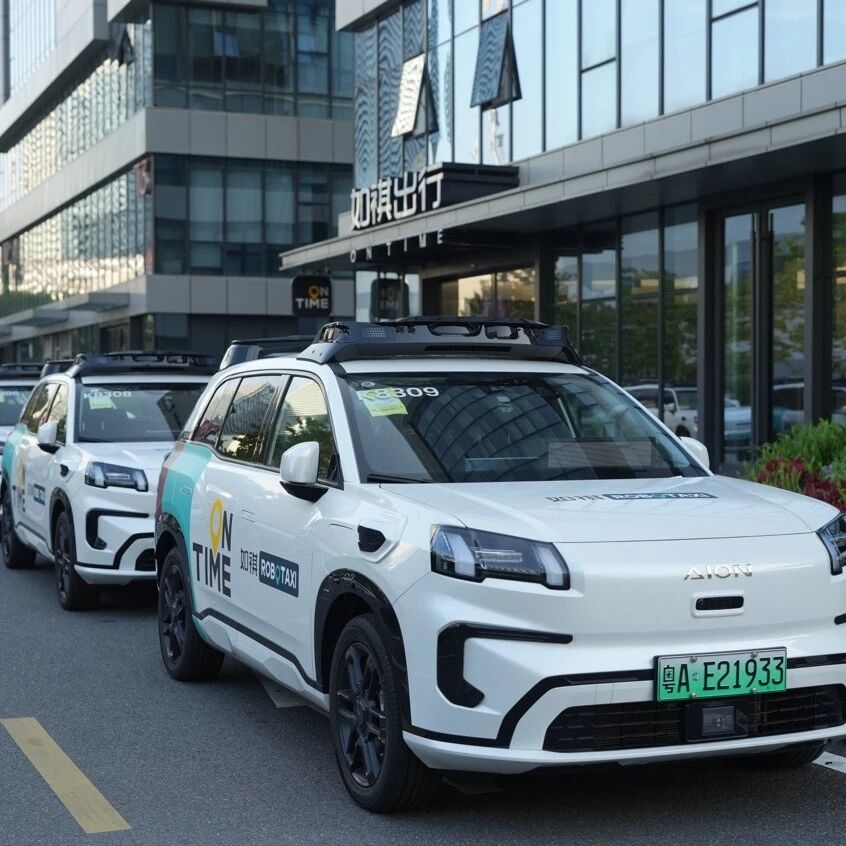
Core Viewpoint - The collaboration model of "technology + operations" is a significant innovation for the marketization of Robotaxi on a large scale [3]. Group 1: Delivery and Collaboration - On March 19, the company Xiaoma Zhixing delivered over 100 units of the new GAC Aion Robotaxi equipped with its seventh-generation autonomous driving system to Ruqi Mobility, marking a key step towards the marketization of Robotaxi [3]. - Xiaoma Zhixing and Ruqi Mobility will deepen their strategic cooperation to build a larger Robotaxi fleet and efficiently conduct broader operations [3]. - This delivery provides a replicable model for the collaborative development of "technology + operations" in the industry [3]. Group 2: Technological Advancements and User Experience - The seventh-generation Robotaxi features enhanced safety performance, cost control, and user experience, with a total cost reduction of 70% compared to the previous generation [5]. - The vehicle supports various user-friendly features such as Bluetooth unlocking, voice interaction, online music, and pre-conditioning of air conditioning, significantly improving passenger comfort [5]. - The optimized acceleration and deceleration control reduces bumps during travel, lowering the risk of motion sickness for passengers [5]. Group 3: Commercial Viability and Market Expansion - The seventh-generation Robotaxi has achieved profitability in single-vehicle operations in first-tier cities like Guangzhou and Shenzhen, indicating a promising commercial outlook [5]. - The long-standing partnership between Xiaoma Zhixing and Ruqi Mobility, which began in 2022, has led to successful regular operations of Robotaxi in Guangzhou, accumulating valuable collaborative experience [5]. - The upgrade of this cooperation signifies a transition from the technical validation phase to large-scale market operations in the autonomous driving industry, reflecting both parties' confidence and long-term commitment to the future of autonomous driving [5].

Robotaxi可以放心坐了吗
Jing Ji Guan Cha Wang· 2026-02-25 11:09
Core Insights - The Robotaxi industry is experiencing accelerated commercialization and safety controversies since 2025, with 2026 anticipated as a pivotal year for large-scale deployment [2] - Major automotive companies and tech firms are expanding their Robotaxi operations, while safety incidents raise public concerns about the reliability of these services [2][8] Industry Developments - Tesla plans to remove safety drivers in Austin by 2025 and aims for mass production of its CyberCab by Q1 2026 [3] - Xiaopeng Motors will launch three Robotaxi models in 2026 and has partnered with Gaode for a global ecosystem collaboration [3] - Baidu's Robotaxi service, "Luo Bo Kuaipao," operates in 22 cities with over 250,000 fully autonomous orders weekly, serving more than 17 million users [3] - Waymo's total order volume reached 15 million in 2025, doubling from previous figures, with plans for global expansion following a $16 billion funding round [3] Collaborations and Strategies - GAC Toyota's Robotaxi, the Platinum Smart 4X, has been launched, with plans for 1,000 units by 2026 in collaboration with Pony.ai [4] - Geely's strategy aims to expand Robotaxi services to 100 cities, with a target of 1 billion yuan in revenue by 2026 [5] - Didi and GAC Aion have launched their first Robotaxi, R2, set to operate in major cities starting Q2 2026 [5] - Pony.ai has achieved profitability for its Robotaxi in Guangzhou, indicating a shift towards sustainable operations [7] Safety and Regulatory Challenges - Safety incidents involving Robotaxis have raised significant concerns, including a fire in Beijing and accidents in Chongqing and Hunan [8][9] - The industry faces challenges in technology adaptation, regulatory frameworks, and operational practices, with calls for improved safety standards and accountability [9][10] - The lack of unified safety regulations and the rapid expansion of services without adequate safety measures have been highlighted as critical issues [9][10] Future Outlook - The Robotaxi sector is expected to reach a tipping point in 2026, driven by technological advancements, supportive policies, and increased capital investment [6][10] - The industry must balance rapid growth with safety considerations to gain public trust and ensure sustainable development [10]

机器人春晚表现亮眼,我国首次完成一级箭体海上回收
Huaxin Securities· 2026-02-24 15:05
Investment Rating - The report maintains a "Buy" rating for the automotive industry and highlights the potential of the humanoid robot sector [2][8]. Core Insights - The humanoid robot segment has shown strong performance, with a 2.23% increase in the Huaxin Humanoid Robot Index from February 9-13, 2026, and a cumulative return of 117.3% since 2025 [16]. - The report emphasizes the significance of the recent Spring Festival Gala showcasing humanoid robots, which demonstrated advanced capabilities in cluster control and dynamic movement, indicating a positive outlook for the sector [5][6]. - The commercial aerospace sector is experiencing a dual acceleration phase, marked by technological breakthroughs and substantial capital inflows, particularly following the successful recovery of the Long March 10 rocket's first stage [7]. Summary by Sections Humanoid Robot Sector - The humanoid robot index's trading volume accounted for 17.5% of the CSI 2000 index, indicating a high level of market engagement [16]. - Key components such as actuators, sensors, and lightweight materials are highlighted as critical areas for investment, with specific companies recommended for each component [9][10]. - Notable performers in the humanoid robot sector include Wanlong Magnetic Plastic, Rifa Precision Machinery, and Tianqi Co., with significant price increases observed [24]. Automotive Sector - The automotive index rose by 1.7% from February 9-13, 2026, outperforming the broader market by 1.4 percentage points [34]. - The commercial vehicle index saw a notable increase of 6.3%, while the passenger vehicle index rose by 1.2% [37]. - The report identifies key companies such as Jingzhu Technology and Changyuan Donggu, which have shown substantial price increases, while others like Guansheng Co. have faced declines [42]. Industry Data Tracking - Retail sales of passenger vehicles in China increased by 54% year-on-year during the first week of February 2026, indicating strong consumer demand [56]. - Wholesale figures also reflect a 46% year-on-year increase, suggesting robust supply chain performance [60]. - The report notes fluctuations in commodity prices, with copper, aluminum, and rubber prices decreasing during the reporting period [63].


【联合发布】商用车周报(2026年2月第2周)
乘联分会· 2026-02-14 08:39
Group 1: Low-altitude Economy and Digital Infrastructure - The Ministry of Industry and Information Technology and four other departments aim to establish a "digital foundation" for the low-altitude economy, targeting a 90% coverage of the national low-altitude public air route communication network by 2027 [4][5] - Key tasks include enhancing 5G network coverage below 300 meters and integrating satellite communication to support logistics and urban governance applications [5] - The low-altitude economy is projected to reach a scale of 3.5 trillion yuan by 2035, with over 200 billion yuan in new investments anticipated [5] Group 2: Electric Vehicle Market and Policy Changes - The establishment of a national unified electricity market is transforming electric vehicles from mere "electric terminals" to "mobile energy storage units," enhancing grid flexibility and creating new revenue models for vehicle owners [6][7] - Canada plans to eliminate the 100% additional tax on Chinese electric vehicles, allowing an annual quota of 49,000 vehicles to enter the market, which will gradually increase to 70,000 [18][21] - The Canadian government will also restart subsidy programs, investing 2.3 billion CAD to assist consumers with new vehicle costs and 1.5 billion CAD for charging infrastructure [21] Group 3: Automotive Industry Developments - FAW Jiefang is expanding its strategic cooperation and local production overseas, including a partnership with Cainiao Group to build a global auto parts e-commerce platform [8][9] - The company has launched its first locally produced LN 4×4 truck in Indonesia, with plans to invest up to 10 billion yuan in wealth management to enhance capital efficiency [9] - Shaanxi Automobile has officially changed its name to Shanxi Tongxi New Energy Vehicle Co., with a shift in control to Xi Heavy Automobile, marking a strategic pivot towards becoming a leader in new energy heavy trucks [10][11] Group 4: Autonomous Driving Collaborations - Autonomous driving companies are shifting from technology development to large-scale deployment through partnerships with automotive and mobility platforms, focusing on markets in China, the US, and the Middle East [12][13] - Notable collaborations include Pony.ai with Toyota for mass production of autonomous vehicles and Baidu's partnership with Uber for commercial operations in Dubai [13] - Waymo is expanding its autonomous taxi services in Nashville and plans to deploy 1,200 self-driving taxis in the Middle East by 2027 [13] Group 5: New Energy Heavy Trucks and Market Trends - The latest product announcements indicate a significant increase in the proportion of new energy heavy trucks, which now account for 40.3% of the market, with a notable rise in battery-swappable models [17] - The shift in purchasing decisions among light commercial vehicle users is moving towards a comprehensive evaluation of total cost of ownership (TCO) rather than just initial purchase price [23][24]

小马智行获MSCI纳入指数 与摩尔线程合作推进自动驾驶
Jing Ji Guan Cha Wang· 2026-02-13 22:45
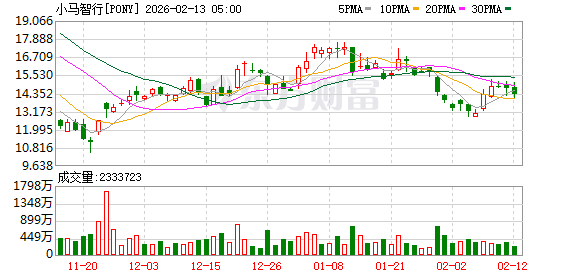
Core Insights - Pony.ai has been included in the MSCI China Index, becoming the first autonomous driving stock in the index, which is expected to attract passive investment and signifies recognition from the international capital market [1] - The company has entered a strategic partnership with domestic GPU firm Moore Threads to enhance L4 autonomous driving world model training using domestic AI computing power [1] - The first mass-produced model of the Robotaxi, the Platinum Smart 4X, has been launched, with plans to deploy a fleet of 1,000 vehicles by 2026 [1] - Pony.ai has also been included in the Hang Seng Composite Index, potentially broadening its investor base [1] Stock Performance - Over the past week (February 6 to 13, 2026), Pony.ai's stock price increased by 10.61%, reaching a high of 119.60 HKD on February 11 and a low of 108.40 HKD on February 9 [2] - The closing price on February 13 was 114.70 HKD, with a single-day decline of 0.35% and a trading volume of approximately 72.68 million HKD [2] - Stock price fluctuations were primarily driven by the MSCI inclusion and partnership announcements, with a notable 5.79% increase following the strategic partnership announcement on February 9 [2] Financial Analysis - Pony.ai's 2025 earnings forecast indicates a reduced annual loss of 69 to 86 million USD, a significant decrease of 68.7% to 74.9% compared to 2024, mainly due to increased investment fair value changes [3] - The gross margin for Q3 2025 is projected to rise to 18.4%, a 2.2 percentage point increase quarter-over-quarter [3] - The Robotaxi fleet is expected to reach 1,159 vehicles by December 31, 2025, with the seventh-generation model achieving positive unit economics in Guangzhou, laying the groundwork for expanding the fleet to 3,000 vehicles in 2026 [3] Institutional Perspectives - According to a report by Zhongyou Securities, Pony.ai is recognized as a leader in intelligent driving, with its Robotaxi commercialization path showing initial validation [4] - The report highlights a light-asset model and cost optimization, such as a 70% reduction in the cost of autonomous driving suite BOM, supporting long-term growth [4] - Revenue projections for 2025 to 2027 are estimated at 81.92 million, 122 million, and 236 million USD, respectively, although net profit is expected to remain negative during this period [4]
小马智行跻身MSCI中国指数,成首家自动驾驶成分股
Nan Fang Du Shi Bao· 2026-02-13 07:41
Core Insights - MSCI announced its quarterly index adjustments for February 2026, adding 63 stocks and removing 61, including 9 A-shares [2] - The MSCI China Index added 37 constituent stocks, comprising 4 Hong Kong stocks and 33 A-shares, focusing on sectors like hard technology, semiconductors, digital economy, and strategic resources [2] - Pony.ai became the first and only autonomous driving company included in the index, indicating recognition of its business model and long-term value by international capital markets [2] Company Highlights - Pony.ai completed its listing on the Hong Kong Stock Exchange in November 2025, and its inclusion in the MSCI index occurred just three months post-listing, marking a significant milestone in operational performance and investor interest [5] - Following its inclusion, passive funds tracking the MSCI index will be required to invest in Pony.ai, providing a continuous influx of capital and establishing a long-term connection with international capital markets [5] - The CEO of Pony.ai stated that the Robotaxi industry has entered a new phase of large-scale production and commercialization, with the company focusing on operational capabilities and capital efficiency [5] Industry Developments - Pony.ai is the first company in China's four major first-tier cities to obtain full autonomous Robotaxi operation licenses, demonstrating steady progress in commercialization [5] - As of December 31, 2025, Pony.ai's Robotaxi fleet reached 1,159 vehicles, exceeding its annual deployment target [5] - The recent launch of the mass-produced Platinum Smart 4X Robotaxi marks a significant breakthrough in the company's scaling and operational capabilities, supporting future service network expansion and operational efficiency [5]

小马智行跻身MSCI中国指数 成首家自动驾驶成分股
Nan Fang Du Shi Bao· 2026-02-13 07:40
Core Insights - MSCI China Index has added 37 new constituent stocks, including 4 Hong Kong stocks and 33 A-shares, focusing on sectors like hard technology, semiconductors, digital economy, and strategic resources [1] - Pony.ai is the first and only autonomous driving company included in the MSCI China Index, indicating recognition of its business model and long-term value by international capital markets [1] - The MSCI China Index serves as a key reference for global investment institutions allocating Chinese assets, with over $100 billion tracking the index [1] Company Developments - Pony.ai's founder and CEO, Peng Jun, stated that the Robotaxi industry has entered a new phase of large-scale production and commercialization, with the company achieving dual listings in the US and Hong Kong [2] - The inclusion in the MSCI China Index is expected to enhance communication with global institutional investors and provide more capital support [2] - As of December 31, 2025, Pony.ai's Robotaxi fleet has reached 1,159 vehicles, exceeding its annual deployment target [4] - The company has recently launched its first mass-produced Robotaxi, the Platinum Smart 4X, marking a significant breakthrough in scaling production and operational capabilities [4]
小马智行纳入MSCI中国指数,与丰田、广汽丰田合作Robotaxi量产下线
Jing Ji Guan Cha Wang· 2026-02-12 21:46
Core Insights - The company Xiaoma Zhixing (stock code: 02026) is currently involved in several significant events, focusing on strategic partnerships, index inclusion, and business progress [1] Group 1: Recent Events - MSCI announced on February 11, 2026, that Xiaoma Zhixing will be included in the MSCI China Index, with the adjustment taking effect after the market close on February 27, 2026 [2] Group 2: Business Progress - On February 6, 2026, Xiaoma Zhixing formed a strategic partnership with domestic GPU company Moore Threads to advance L4-level autonomous driving world model training and simulation, utilizing the MTT S5000 intelligent computing card and "Kuaguo" cluster for the first large-scale application of domestic AI computing power in critical areas [3] - On February 9, 2026, the first mass-produced Platinum 4X Robotaxi, a result of collaboration with Toyota China and GAC Toyota, officially rolled off the production line, marking the transition of the strategic partnership into large-scale production, with plans to deploy a fleet of over 1,000 vehicles in 2026 [3] - In early February 2026, Xiaoma Zhixing partnered with Aitebo to jointly build a fully autonomous driving service fleet, expanding into high-end market scenarios of "AI + mobility" [3] Group 3: Performance and Operations - On February 4, 2026, the company released a performance forecast for 2025, expecting an annual loss to narrow to between $69 million and $86 million, a significant reduction of 68.7% to 74.9% compared to 2024 [4] - In terms of business metrics, the gross margin for Q3 2025 increased to 18.4%, with the Robotaxi fleet size surpassing 1,159 vehicles, and the seventh-generation model achieving a positive unit economic model in Guangzhou, with a daily net income of 299 RMB, laying the groundwork for expanding the fleet to 3,000 vehicles in 2026 [4]
小马智行被纳入MSCI中国指数|公司头条
Sou Hu Cai Jing· 2026-02-12 03:28
Group 1 - The core point of the article is that Xiaoma Zhixing has been included in the MSCI China Index, becoming the first and only autonomous driving company in this index, reflecting the recognition of its business model and long-term value by the international mainstream capital market [1][3] Group 2 - The MSCI China Index is considered an important reference for global investment institutions to allocate Chinese assets, with over $100 billion in funds tracking this index [3] - Xiaoma Zhixing was included in the index just three months after its Hong Kong IPO, providing a significant foundation for establishing long-term connections with the international capital market and attracting passive funds that track the MSCI index [3] - The founder and CEO of Xiaoma Zhixing, Peng Jun, stated that the Robotaxi industry has entered a new stage of large-scale production and commercialization, and the company is further solidifying its operational capabilities and capital efficiency [3] - As of December 31 of the previous year, Xiaoma Zhixing's Robotaxi fleet has expanded to 1,159 vehicles, exceeding its annual target, and the company announced the rollout of its first mass-produced Platinum Smart 4X Robotaxi, marking a significant breakthrough in large-scale deployment and operational capabilities [3]
今日新闻丨丰田Robotaxi量产下线!首款L3级量产车即将上市?极狐公布问道高端产品系列!
电动车公社· 2026-02-10 16:02
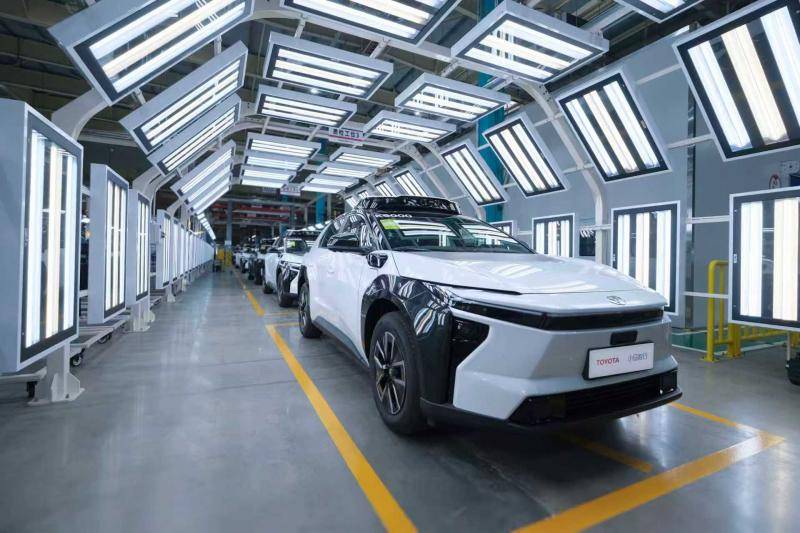
Core Insights - The article highlights significant developments in the electric vehicle (EV) industry, focusing on advancements in autonomous driving technology and new product launches by various companies [2][4]. Group 1: Toyota's Robotaxi - Toyota's Robotaxi, developed in collaboration with Pony.ai, has officially entered mass production as of February 9, with plans to deploy over 1,000 units in major Chinese cities by 2026 [2][4]. Group 2: Lantu's Black Warrior SUV - Lantu Automotive announced that its first mass-produced L3-level SUV, the Black Warrior, will be launched in March 2023 [6][7]. - The Black Warrior features aesthetic and interior modifications, including a fully blacked-out design and advanced technology such as Huawei's latest lidar perception system [9][11]. - Current regulations for L3-level autonomous driving are still in the pilot phase, allowing only select companies to test on public roads, indicating that the Black Warrior may be the first mass-produced SUV with L3 capabilities [11]. Group 3: Arcfox's High-End Product Series - Arcfox has unveiled its "Wenda" high-end product series, focusing on flagship models such as mid-to-large MPVs and SUVs, with the first product being the MPV model Wenda V9 [12][14]. - The new product series will maintain the Arcfox branding but will introduce different design languages and technical standards, reflecting the industry's trend towards high-end offerings [14].