铝及其衍生制品

Search documents
日本汽车、钢铁等制造业利润暴跌
Zhong Guo Qi Che Bao Wang· 2025-09-05 01:14
Core Points - Japan's manufacturing sector has experienced a significant decline in profits due to the impact of U.S. tariff policies, with overall regular profits dropping by 11.5% year-on-year for two consecutive quarters [1][4][7] - The non-manufacturing sector, particularly in tourism and services, has shown resilience with a profit increase of 6.6% compared to the previous year [3][4] Manufacturing Sector Impact - The manufacturing sector's regular profits fell sharply, particularly in the transportation machinery sector, which includes the automotive industry, with a decline of 29.7% [4][7] - Other affected industries include steel, which saw a profit drop of 48.2%, and metal products, which experienced a 36.6% decrease [4][7] - The overall regular profit for the manufacturing sector was recorded at 35.8338 trillion yen, marking a historical high for the quarter, but the decline in specific sectors overshadowed this achievement [3][4] Tariff Effects - U.S. tariffs imposed on imported automobiles and key components have significantly impacted Japanese exports, with tariffs on passenger cars rising from 2.5% to 27.5% [7][9] - The steel industry faced additional challenges as U.S. tariffs on steel and aluminum products increased from 25% to 50%, leading to losses in the Japanese steel sector [7][8] - In July, Japan's exports to the U.S. fell by 10.1% year-on-year, with automotive exports specifically declining by 28.4% [8][9] Company-Specific Impacts - Major Japanese automakers reported substantial profit losses due to U.S. tariffs, with Honda's net profit plummeting by 50.2% in the latest quarter [11] - Toyota estimated a loss of 450 billion yen in operating profit due to tariffs, with an expected total loss of 1.4 trillion yen for the fiscal year [11] - Other automakers, including Mazda, Nissan, Subaru, and Mitsubishi, also reported significant losses, prompting them to revise their profit forecasts downward [11]






关税突发,今日生效!
证券时报· 2025-08-18 00:23
Group 1 - The Trump administration announced an expansion of tariffs on steel and aluminum imports, increasing the tariff rate to 50% on hundreds of derivative products, effective August 18 [1] - The U.S. aluminum company reported that the tariff policy increased its production costs by $20 million in Q1 and $115 million in Q2 due to tariffs on Canadian products [2] - The current steel and aluminum tariffs are the highest since the 1930s, leading to increased prices for these materials and potentially higher costs for manufacturers and consumers [2] Group 2 - The latest data from the U.S. Labor Department shows a significant increase in the Producer Price Index (PPI), rising 0.9% in July, the largest increase since June 2022, driven mainly by the service sector [4] - The core PPI, excluding food and energy, also rose by 0.9% month-on-month and 3.7% year-on-year, indicating persistent inflationary pressures [4] - Chicago Fed President expressed concerns about inflation due to the uncertainty surrounding tariffs, suggesting that service prices may not be temporary and are on the rise [4]


美宣布扩大对进口钢铁和铝征收关税范围
Yang Shi Xin Wen· 2025-08-18 00:16
Core Points - The U.S. Department of Commerce announced the addition of 407 product codes to the U.S. Harmonized Tariff Schedule, which will incur additional tariffs due to their steel and aluminum content [1] - Non-steel and aluminum products will be subject to tariffs based on rates imposed by President Trump on specific foreign goods [1] - The expanded tariff list will officially take effect on August 18 [1] - President Trump announced an increase in tariffs on imported steel and aluminum and their derivatives from 25% to 50%, effective June 4, 2025 [1]
特朗普政府:关税清单扩大!8月18日生效
Shang Hai Zheng Quan Bao· 2025-08-16 06:01
Core Viewpoint - The U.S. government has announced an expansion of tariffs on steel and aluminum imports, increasing the tariff rate to 50% on hundreds of derivative products [1] Group 1: Tariff Expansion Details - On August 15, the U.S. Trump administration announced the inclusion of 407 product codes in the tariff list due to their steel and aluminum content [1] - The expanded tariff list will officially take effect on August 18 [1] - The tariff on imported steel and aluminum was previously raised from 25% to 50% as announced on June 3 [1] Group 2: Regulatory Framework - The U.S. Department of Commerce published an announcement in the Federal Register regarding the new tariffs [1] - Non-steel and aluminum components of the products will be subject to the tariff rates imposed by President Trump on specific countries [1]
美国宣布扩大对钢铁和铝进口征收50%关税的范围
第一财经· 2025-08-16 03:42
Core Viewpoint - The article discusses the expansion of tariffs on steel and aluminum imports by the Trump administration, which now includes hundreds of derivative products, indicating a significant shift in trade policy aimed at protecting domestic industries [4]. Group 1: Tariff Expansion Details - On August 15, the Trump administration announced a 50% tariff on steel and aluminum imports, expanding the range to include hundreds of derivative products [4]. - The U.S. Department of Commerce published a notice adding 407 product codes to the tariff list, which will incur additional duties due to their steel and aluminum content [4]. - The expanded tariff list is set to take effect on August 18, 2025 [4]. Group 2: Previous Tariff Changes - On June 3, the White House announced an increase in tariffs on imported steel and aluminum and their derivative products from 25% to 50% [4]. - This new tariff policy became effective on June 4, 2025, at 00:01 Eastern Time [4].

关税突发!美国宣布:23日起加征!
证券时报· 2025-06-12 22:55
Group 1 - The U.S. Department of Commerce announced a 50% tariff on various steel-based household appliances starting June 23, which includes dishwashers, washing machines, and refrigerators [1][2] - The increase in tariffs is expected to impact the import of these steel products, potentially leading to a rise in consumer prices, with industry stakeholders closely monitoring the situation [2] - On June 3, the White House stated that President Trump raised tariffs on imported steel and aluminum and their derivatives from 25% to 50% [3] Group 2 - The UK’s GDP data for April showed a decline of 0.3% compared to March, marking the largest monthly drop since October 2023, with economists previously predicting a decrease of around 0.1% [5] - The UK’s National Statistics Office reported a record drop in exports to the U.S. across multiple product categories in April, attributed to the recent U.S. tariff increases [6] - The confidence of large Japanese enterprises has deteriorated in the second quarter due to the impact of U.S. tariff policies, with the confidence index for large companies dropping from 2.0 to -1.9 [7] - The manufacturing sector in Japan experienced a significant decline in confidence, with the index falling from -2.4 to -4.8, and the steel industry index plummeting to -29.1 [7]

关税加至50%,哪些产品受影响
Mei Ri Shang Bao· 2025-06-04 23:02
Core Points - The U.S. government has announced an increase in Section 232 tariffs on imported steel and aluminum products from 25% to 50%, effective June 4, 2025 [1][2] - Specific guidelines have been issued regarding the application of these tariffs, including exemptions and conditions for imports from certain countries [2][4] Tariff Details - The new tariff rate of 50% applies to steel and aluminum products imported for consumption or withdrawn from bonded warehouses starting June 4, 2025, unless modified or terminated [2] - Steel and aluminum products imported from the UK will maintain a 25% tariff, with potential adjustments based on trade agreements starting July 9, 2025 [2] - Aluminum products from Russia and those containing Russian-sourced aluminum will incur a 200% tariff under the existing Section 232 provisions [2] Exemptions and Special Cases - Certain steel and aluminum products processed in other countries but made from U.S.-sourced materials will be subject to a 0% tariff [3] - Goods qualifying for the USMCA preferential treatment will not be affected by the IEEPA tariffs imposed on Canada or Mexico [2] Tariff Priority Order - A priority order for tariff payment has been established, with automotive tariffs taking precedence over aluminum and steel tariffs, followed by IEEPA tariffs for Canada and Mexico [4][5] - Importers must determine the applicable tariffs based on this priority order to ensure compliance [5]
50%!美将钢铝进口关税翻倍,引加拿大、墨西哥和欧盟愤怒
Huan Qiu Shi Bao· 2025-06-04 22:35
Group 1 - The U.S. has increased tariffs on imported steel and aluminum from 25% to 50% to protect domestic industries and address national security threats, effective from June 4 [1][3][4] - Canada and Mexico are expected to be the most affected by the tariff increase, with Canada being the largest supplier of steel and aluminum to the U.S. [5][6] - The OECD has downgraded the U.S. economic growth forecast for 2023 to 1.6% due to the impact of the tariffs and retaliatory measures from trade partners [1][4] Group 2 - The U.S. steel import volume decreased by 17% from March to April 2023, and further declines are anticipated following the new tariffs [4] - The Canadian government has expressed strong opposition to the tariffs, labeling them as illegal and unfair, and plans to support affected workers and businesses [5][6] - The broader impact of the tariffs is expected to increase production costs for U.S. manufacturers that rely on steel and aluminum, potentially leading to higher prices for consumers [7]
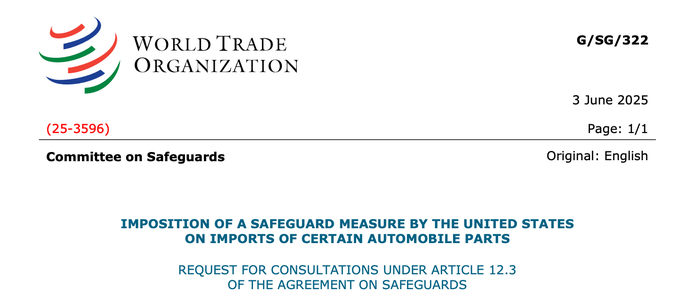
态度趋于强硬,印度就汽车关税问题挑战美国
Hua Er Jie Jian Wen· 2025-06-04 11:55
Core Viewpoint - India has formally challenged the U.S. automotive tariffs at the World Trade Organization (WTO), indicating a tougher trade stance amid ongoing bilateral trade negotiations with the U.S. [1][3] Group 1: Trade Challenge - India has submitted a complaint to the WTO, claiming that the 25% tariffs on imported passenger cars, light trucks, and certain auto parts constitute "safeguard measures" that adversely affect its exporters [1][6] - The timing of India's challenge coincides with a visit from the U.S. trade team to New Delhi, aimed at advancing bilateral trade discussions [3][6] Group 2: U.S. Tariff Policy - The U.S. has labeled India's tariffs as "very unfair and high," and recently increased tariffs on steel and aluminum products from 25% to 50%, effective June 4, 2025 [3][6] - Following the announcement of the increased tariffs, Indian stock markets saw a slight uptick, with the NIFTY and SENSEX indices rising approximately 0.3% [3] Group 3: India's Trade Negotiation Strategy - India has proposed a "zero-for-zero" tariff arrangement for specific goods, including steel, auto parts, and pharmaceuticals, based on reciprocity and limited to a certain quantity of imports [3][6] - The complaint reserves all rights under the WTO agreements, allowing India to suspend equivalent trade concessions to the U.S. if no agreement is reached within 30 days of consultations [7]
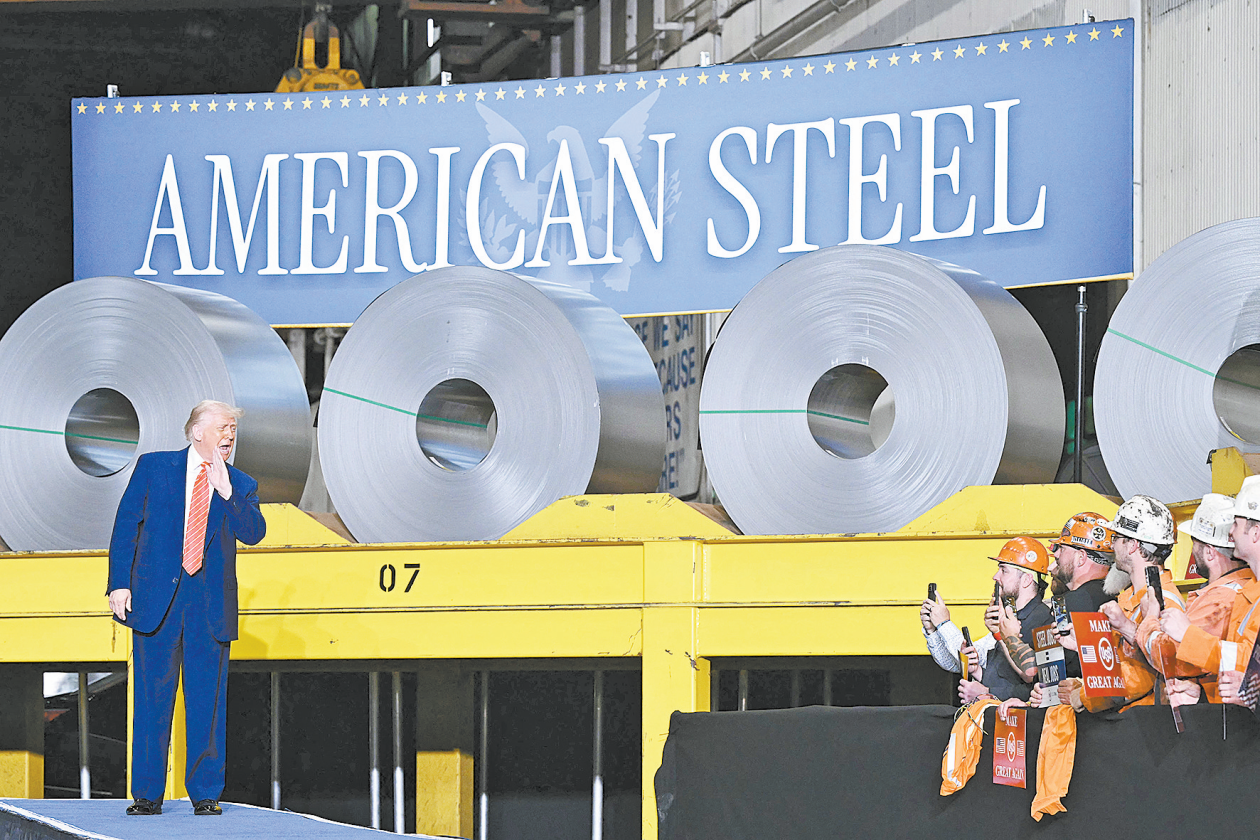
美国白宫宣布提高进口钢铝关税至50%
21世纪经济报道· 2025-06-03 23:17
Group 1 - The U.S. government announced an increase in tariffs on imported steel and aluminum from 25% to 50%, effective June 4, 2025 [1] - Tariffs on steel and aluminum imports from the UK will remain at 25%, with potential adjustments based on compliance with the Environmental Policy Statement starting July 9, 2025 [1] - The decision to raise tariffs was initially communicated by President Trump during a rally in Pennsylvania on May 30, 2025 [1] Group 2 - The U.S. government proposed its first spending cut plan, seeking to reclaim $9.4 billion [2] - The Trump administration is facing challenges in advancing its tariff policy and is seeking assistance from appellate courts [2] - Elon Musk expressed reluctance to take responsibility for actions taken by the U.S. government, indicating that the Department of Efficiency has become a scapegoat [2]