
手包

Search documents
大年初一的人潮里是热腾腾的中国年
Xin Lang Cai Jing· 2026-02-17 12:14
Group 1 - The article highlights the vibrant celebrations across China during the Lunar New Year, showcasing various traditional activities such as shopping, visiting temple fairs, and enjoying festive events [1] - In Beijing, the Changdian Temple Fair opened on the first day of the Lunar New Year and will run for seven consecutive days, featuring a variety of cultural products that blend auspicious meanings with traditional craftsmanship [1] - In Putian City, Fujian Province, the main commercial street has been transformed with hundreds of stalls offering thousands of traditional New Year goods, including auspicious items like Putian red dumplings and Xinghua rice noodles, along with new creative products themed around the Year of the Horse [1] Group 2 - The unique lantern festival in Guanshanhu Park, Guiyang, has attracted numerous visitors, indicating a strong interest in local cultural events during the holiday season [1]
美媒称美国皮革制品或将涨价22%
Xin Lang Cai Jing· 2025-12-27 12:30
Group 1 - The core viewpoint of the article highlights that U.S. tariff policies and supply chain disruptions are expected to increase the prices of leather goods, such as boots and handbags, by nearly 22% in the next one to two years due to inflation, supply chain bottlenecks, and high tariffs [1] - The American company Tapestry, which owns brands like Coach, has indicated that its tariff-related expenses could total approximately $160 million, warning that the negative impacts of tariffs will be greater than anticipated [1]

【环球财经】美媒:关税将推动美国皮革制品价格显著上涨
Xin Hua She· 2025-12-26 09:20
Core Insights - The article discusses the impact of U.S. tariff policies and supply chain disruptions on leather product prices, predicting significant price increases for boots, handbags, and other leather goods in the coming years [1]. Group 1: Price Increases - U.S. leather product prices are expected to rise significantly due to tariffs and a decrease in domestic cattle numbers over the next two years [1]. - The Yale University Budget Lab forecasts that leather product prices in the U.S. will increase by nearly 22% in the next one to two years due to inflation, supply chain bottlenecks, and high tariffs [1]. Group 2: Company Challenges - Texas-based footwear company, Texas Boot Company, faced chaos after the tariff announcement, with increased import costs and disrupted logistics affecting profit calculations [1]. - Other leather product retailers are experiencing similar challenges, with Coach's parent company, Tapestry, estimating tariff-related expenses could reach $160 million, impacting profits more than previously anticipated [1]. Group 3: Industry Responses - Industry experts indicate that as pre-tariff inventory is depleted, products on shelves will require more expensive leather materials, alongside rising foreign processing and shipping costs [1]. - Companies in the leather industry must decide whether to pass increased costs onto consumers or consider workforce reductions due to the financial strain caused by tariffs and supply chain issues [2].
全球瞭望|美媒:关税将推动美国皮革制品价格显著上涨
Xin Hua Wang· 2025-12-26 08:55
Group 1 - The article highlights that U.S. tariff policies and supply chain disruptions are expected to significantly increase the prices of leather goods such as boots and handbags by 2025, with further increases anticipated in the next two years due to tariffs and a decrease in domestic cattle numbers [1] - Texas-based footwear company, known for its Western-style boots, faced chaos after the tariff announcement in April, with rising import costs and logistics disruptions forcing employees to constantly recalculate profit margins [1] - The parent company of Coach, a handbag brand, reported that tariff-related expenses could reach $160 million, indicating that the negative impact on profits would be greater than previously expected [1] Group 2 - Experts predict that as pre-tariff import inventories are depleted, products on shelves will require more expensive leather materials, alongside rising foreign processing and shipping costs, leading to higher retail prices for leather goods that are unlikely to decrease in the short term [1] - The Yale University Budget Lab forecasts that U.S. leather goods prices will rise by nearly 22% in the next one to two years due to inflation, supply chain bottlenecks, and high tariffs [1] - The price impact on the leather industry is expected to be more pronounced in 2026, prompting companies to decide whether to pass on increased costs to consumers or reduce workforce [2]
全球南方国家链接“进博机遇”
Zhong Guo Qing Nian Bao· 2025-11-07 02:05
Core Points - The China International Import Expo (CIIE) serves as a significant opportunity for Tanzanian SMEs to access international markets, with a focus on establishing long-term partnerships with China [1] - The CIIE has introduced a dedicated section for products from least developed countries (LDCs), attracting 163 companies from 37 LDCs, marking a 23.5% increase in participation [1] - The event has also seen substantial growth in participation from African countries and Belt and Road Initiative (BRI) partner countries, with increases of 80% and 23.1% respectively [1] Group 1 - The CIIE is expanding its exhibition areas to support products from global South countries, enhancing their integration into the world economy [2] - The event emphasizes its role as an international public good, with forums addressing the resilience of global South economies and sustainable agricultural development [2] - The CIIE reflects China's commitment to multilateralism and cooperation, providing significant trade opportunities for developing countries [2] Group 2 - The increase in participation from BRI countries indicates their economic vitality and highlights China's role as a bridge in regional cooperation [3] - The CIIE is a platform for enhancing trade balance between China and BRI countries, facilitating a positive interaction in imports and exports [4] - The event has transformed the business landscape for companies from developing countries, such as Bangladesh, which has upgraded its jute products to higher value items [3][4] Group 3 - The CIIE is a crucial initiative for China's open cooperation strategy, promoting products from BRI and LDCs while deepening economic ties [4] - The introduction of new products and technologies at the CIIE aims to provide global innovation and stimulate economic growth [5] - The consensus among participants is that engaging with China equates to seizing opportunities, reinforcing China's commitment to expanding its market [5]
广西烟火 | 长夜惊鸿粘膏染
Guang Xi Ri Bao· 2025-10-11 04:03
Core Viewpoint - The article highlights the traditional craft of "粘膏染" (sticky paste dyeing) practiced by the Bai Ku Yao ethnic group, emphasizing its cultural significance and economic impact in modern times [1][4]. Group 1: Craft Process - The sticky paste dyeing process involves four main steps: making the sticky paste, painting, dyeing, and removing the paste, with the sticky paste serving as a resist dyeing agent [2][3]. - The collection of sticky paste from trees is labor-intensive, requiring careful harvesting and processing, which reflects the deep-rooted traditions of the Bai Ku Yao community [1][2]. Group 2: Economic Impact - The workshop established by the community has generated over 4 million yuan in revenue last year, providing employment for 110 Bai Ku Yao women, with monthly earnings ranging from 1,500 to 3,500 yuan per person [4]. - The products created, including traditional clothing and accessories, have gained popularity at various exhibitions, indicating a strong market demand for these culturally significant items [4]. Group 3: Cultural Significance - The intricate designs and techniques used in sticky paste dyeing are not only a form of artistic expression but also a means of preserving the cultural heritage of the Bai Ku Yao people [2][3]. - The craftsmanship involved in creating these textiles is described as a form of spiritual practice, emphasizing the connection between the artisans and their cultural roots [3].
新疆库车老巷变新景 客逐“花帽”来
Zhong Guo Xin Wen Wang· 2025-08-30 05:41
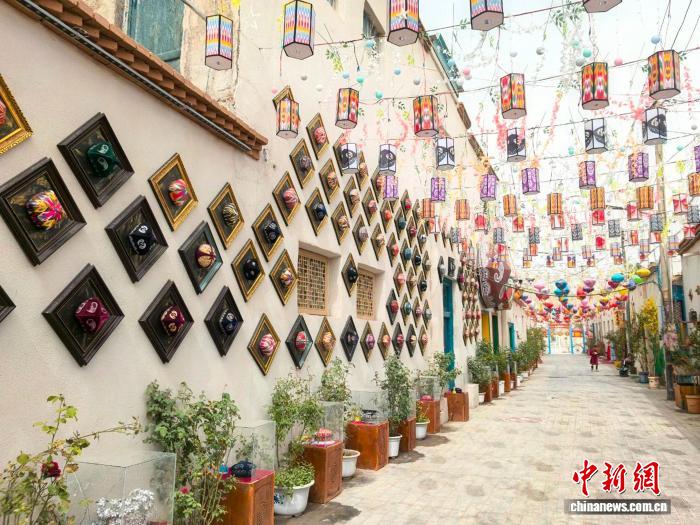
Core Insights - The article highlights the transformation of Huamao Alley in Kuqa City into a popular cultural and tourism destination, showcasing traditional Uyghur flower hats and modern design elements [2][4]. Group 1: Cultural and Tourism Development - Huamao Alley has been developed into a cultural tourism street that integrates intangible cultural heritage display, experience, and sales [2]. - The alley attracts a significant number of young tourists, with modern adaptations of traditional flower hats and related cultural products like brooches and handbags [2][4]. - In the first seven months of this year, the street received over 7 million visitors, indicating its growing popularity as a national-level tourism destination [4]. Group 2: Local Artisans and Craftsmanship - Local artisans, such as Aihamiti Moleke, continue to practice traditional craftsmanship, producing over 200 flower hats monthly, reflecting the skill and heritage behind the craft [2]. - The alley features a blend of traditional and modern elements, appealing to a younger demographic and enhancing the cultural experience [2][4]. Group 3: Future Development Plans - The local government plans to further enhance the cultural significance of Huamao Alley by improving facilities and enriching tourism experiences to attract more visitors [4].

京东汽车亮相iCAR玩车嘉年华 30天免费试用让汽车改装有保障、更划算
Cai Fu Zai Xian· 2025-07-22 02:38
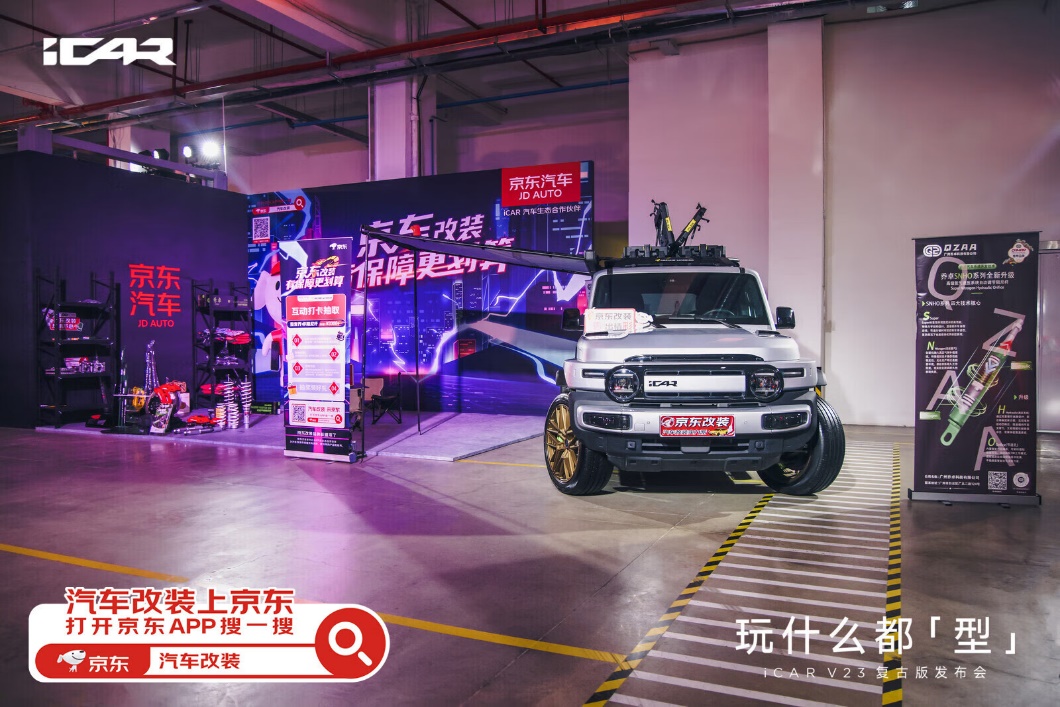
Core Insights - The event "iCAR Carnival and V23 Retro Edition Launch" was held in Guangzhou, showcasing JD Auto's collaboration with various modification brands, emphasizing a strong supply chain and new modification service options for consumers [1][4] - JD Auto's exhibition featured a "Urban Outdoor Modification Laboratory," highlighting its commitment to meeting personalized modification needs, with a focus on the iCAR V23 vehicle [3][4] - The automotive modification market is transitioning from a niche hobby to a mainstream consumer trend, driven by increasing consumer demand for personalized automotive experiences [4] Group 1 - JD Auto partnered with brands like Qiaozhuo, TTSPORT, and AW to present a comprehensive modification culture event [1] - The iCAR V23 vehicle, modified by Qiaozhuo, attracted significant attention due to its unique design and performance features [3] - The event included immersive experience zones where attendees could learn about performance enhancements and participate in engaging activities [4] Group 2 - JD Auto aims to promote modification culture and support the standardization of the modification industry, having established the "JD Modification Brand Alliance" with over 50 brands [4] - The alliance introduced a "30-day free trial" service for modification parts, covering all categories and brands, to enhance consumer trust and engagement [4] - Future collaborations between JD Auto and iCAR will focus on user co-creation and ecosystem development to provide innovative and practical modification experiences [4]

培养一人,带动一方!非遗传承人助力乡村振兴,残疾匠人“雕”“绘”出幸福人生|非遗研培调研行
Hua Xia Shi Bao· 2025-06-27 20:38
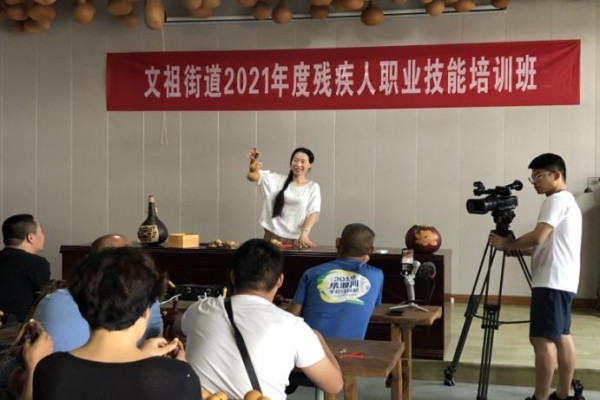
Core Insights - The innovation in the protection of intangible cultural heritage (ICH) in China is significantly driven by ICH workshops, which play a crucial role in rural revitalization and employment for disabled individuals [1] - Since the implementation of the training program for ICH inheritors in 2015, over 149 institutions have participated, training more than 100,000 inheritors, creating a ripple effect in talent development [1][11] - The "non-heritage + employment" model has enabled special groups, including the disabled, to find new life paths through skill development and job opportunities [1] Group 1: ICH Workshops and Employment - There are over 11,000 ICH workshops across 2,005 county-level administrative regions in China, creating jobs for more than 1.2 million people, including 670 poverty-stricken counties [1] - Workshops focus on training disabled individuals through various methods, including centralized and on-site training, to enhance their skills and provide job opportunities [3][4] - The workshops have developed over 50 types of ICH products suitable for disabled individuals, providing home-based employment solutions [4] Group 2: Success Stories and Impact - The "Hulu King" Ma Youyi has transformed his workshop into a comprehensive cultural space, attracting over 30,000 visitors annually and training 76 apprentices, including disabled individuals [2][3] - Disabled employees in Ma Youyi's workshop have reported annual income increases of approximately 15,000 to 60,000 yuan, contributing to the economic uplift of their families [4] - The case of a deaf couple illustrates the effectiveness of ICH workshops in helping disabled individuals achieve financial independence through craft production [3] Group 3: Educational Initiatives - The training program for ICH inheritors has been recognized as a strategic initiative under the national cultural development plan, with over 1,400 training sessions held, benefiting more than 51,000 inheritors [11] - The program emphasizes the importance of integrating traditional skills with modern innovation, fostering a new generation of inheritors who can drive rural employment and poverty alleviation [11] - Educational institutions play a vital role in enhancing the skills of disabled individuals, enabling them to combine practical experience with theoretical knowledge [13]
新华全媒+|高原产品上“云”端——西藏电商发展一线观察
Xin Hua She· 2025-06-04 09:41
Group 1 - The article highlights the growth of e-commerce in Tibet, particularly in rural areas, enabling local farmers to sell their products online and connect with broader markets [1][2][3] - The integration of a "supply and marketing cooperative + e-commerce + enterprises (cooperatives) + farmers" model in Achang County has addressed the issue of unsold quality products [2] - The online sales of agricultural products in Shannan City are projected to reach 76.9 million yuan in 2024, indicating a shift from "producing to sell" to "planting according to demand" [2] Group 2 - The article discusses the establishment of a community factory model in Lhasa, where local artisans are trained and provided with orders to create traditional handicrafts, thus generating income [3] - E-commerce has significantly expanded the market for Tibetan cultural products, with online retail sales in Tibet reaching 10.84 billion yuan in the first four months of 2025, a year-on-year increase of 36.7% [3] - The director of the e-commerce department in Tibet emphasizes the need to enhance logistics in rural areas, reduce costs, and cultivate e-commerce talent to further promote local products [4]