黄金商品ETF

Search documents
金价,再度飙上历史新高!相关ETF一年吸金1800亿,现在还能跟吗?
Sou Hu Cai Jing· 2025-12-24 13:45
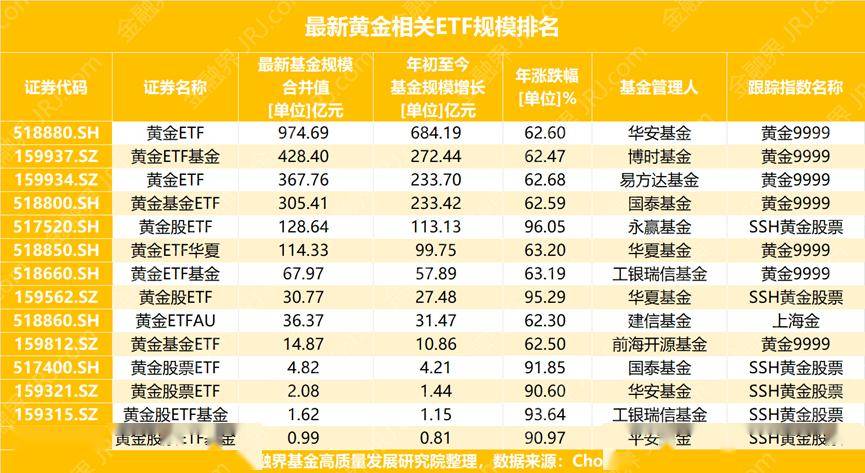
Core Viewpoint - International spot gold prices have surpassed $4,500 per ounce for the first time, marking a year-to-date increase of over 71%, setting a new historical record [1] Group 1: Gold Market Performance - The surge in gold prices is part of a broader rally in precious metals, with silver prices increasing over 90%, palladium nearly 80%, and platinum around 50% since August [1] - The increase in gold prices is primarily driven by anticipations surrounding the Federal Reserve's interest rate cuts, amplified by thin market liquidity towards the year-end [1] Group 2: Gold ETFs and Investment Trends - Domestic gold-themed exchange-traded funds (ETFs) have seen significant growth, with two main types: those tracking gold industry stocks and those tracking spot gold prices [1] - As of December 23, mainstream gold commodity ETFs have collectively risen over 62% this year, while gold stock ETFs have increased by more than 90% [2] - The total scale of all gold-related ETFs has grown by 177.1 billion yuan, reaching a total of 247.8 billion yuan, with six ETFs exceeding 10 billion yuan in scale [2] Group 3: Future Outlook and Demand - Analysts from JPMorgan predict that gold prices may have over 10% upside potential in the coming year, with global gold ETF net additions expected to reach approximately 250 tons in 2026 [3] - The current bull market in gold is characterized by its unique features, including the simultaneous rise of gold and risk assets like stocks, and gold outperforming traditional safe-haven assets such as U.S. Treasuries and the dollar [3] Group 4: Investment Strategies - Investors are advised to avoid heavy short-term investments in gold and maintain a rational allocation, suggesting a 5% to 10% allocation of household financial assets to gold as reasonable [4] - The focus should be on long-term trends rather than precise price predictions, as the underlying logic supporting gold remains intact amid global geopolitical changes and the trend of de-dollarization [4]

杀疯了!史诗级新高。。
Ge Long Hui· 2025-12-23 09:25
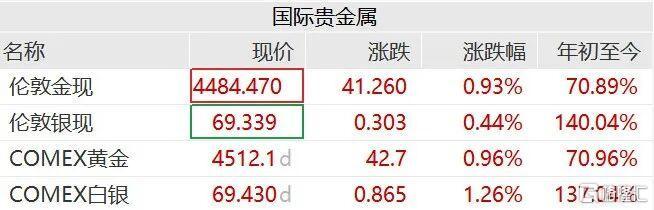
Group 1: Precious Metals Market - Gold and silver prices have reached historic highs, with spot gold nearing $4,500 and spot silver surpassing $70, marking annual increases of 70% and 140% respectively, potentially the largest annual gains since 1979 [1][2] - The current price of London gold is $4,484.47, reflecting a 0.93% increase, while London silver is priced at $69.339, up 0.44% year-to-date [2] - Domestic gold prices have also crossed 1,000 yuan per gram, with gold jewelry prices exceeding 1,400 yuan per gram, and gold-related ETFs have seen significant gains, with some rising over 90% this year [2] Group 2: Gold ETFs - There are two main types of gold-themed ETFs in the A-share market: gold stock ETFs and gold commodity ETFs, with the former tracking the SSH gold stock index and offering higher elasticity [2] - Six ETFs have assets exceeding 10 billion yuan, including Huaan Gold ETF, Bosera Gold ETF, and E Fund Gold ETF [2] - The management fees for some gold ETFs are as low as 0.2% per year, indicating a competitive fee structure in the market [3] Group 3: AI Market Concerns - The AI sector is experiencing significant growth, with concerns about a potential bubble; if AI is proven to be a bubble, it could lead to a global market collapse [7][8] - The current investment in AI infrastructure is substantial, and the year 2026 is seen as a critical point for determining the profitability of AI applications [7][8] - The AI industry is at a pivotal moment, with rapid advancements in model training and application, but there are concerns about over-investment and the sustainability of current valuations [10][14]
国际金价突破历史高位!天花板在哪?
Jing Ji Wang· 2025-08-11 03:04
Core Viewpoint - The recent surge in gold prices is driven by multiple factors, including expectations of a Federal Reserve interest rate cut, weak U.S. economic data, and increased market risk aversion [3][6]. Group 1: Factors Driving Gold Price Increase - The immediate cause for the spike in gold prices is the market's anticipation of the Federal Reserve initiating a rate cut cycle [3]. - Weak economic indicators from the U.S. in July, including poor job market growth and underperforming manufacturing and service sectors, have contributed to rising gold prices [3]. - The depreciation of the U.S. dollar and heightened market risk aversion are also significant factors pushing gold prices higher [3]. - Over the past decade, three main drivers have influenced gold prices: global monetary easing, rising geopolitical risks, and central bank gold purchases [3][5]. Group 2: Future Support for Gold Prices - The diversification of gold market participants, particularly the increased allocation by institutional investors such as banks and hedge funds, is a core driver of the current price increase [4]. - Structural factors like ongoing geopolitical conflicts and the expansion of global government debt are expected to continue supporting gold prices in the medium to long term [5]. Group 3: Price Projections and Risks - In the medium to long term, gold prices are likely to maintain an upward trend, with a first target of $4,000 per ounce and potential to exceed $5,000 [6]. - However, technical corrections may occur following the breach of historical highs, leading to increased market volatility [6]. - The Federal Reserve's interest rate policy is a critical variable; a decision to maintain rates could limit gold's upward potential [6][7]. Group 4: Investment Strategies - Investors are advised to prioritize risk control and consider non-leveraged investment methods, such as purchasing gold bars or gold ETFs [8]. - Setting clear stop-loss levels is crucial for non-professional investors to manage potential losses effectively [9]. - A focus on liquid gold assets and avoiding speculative investments is recommended to ensure flexibility in trading [10].
黄金风云再起
雪球· 2025-06-16 07:49
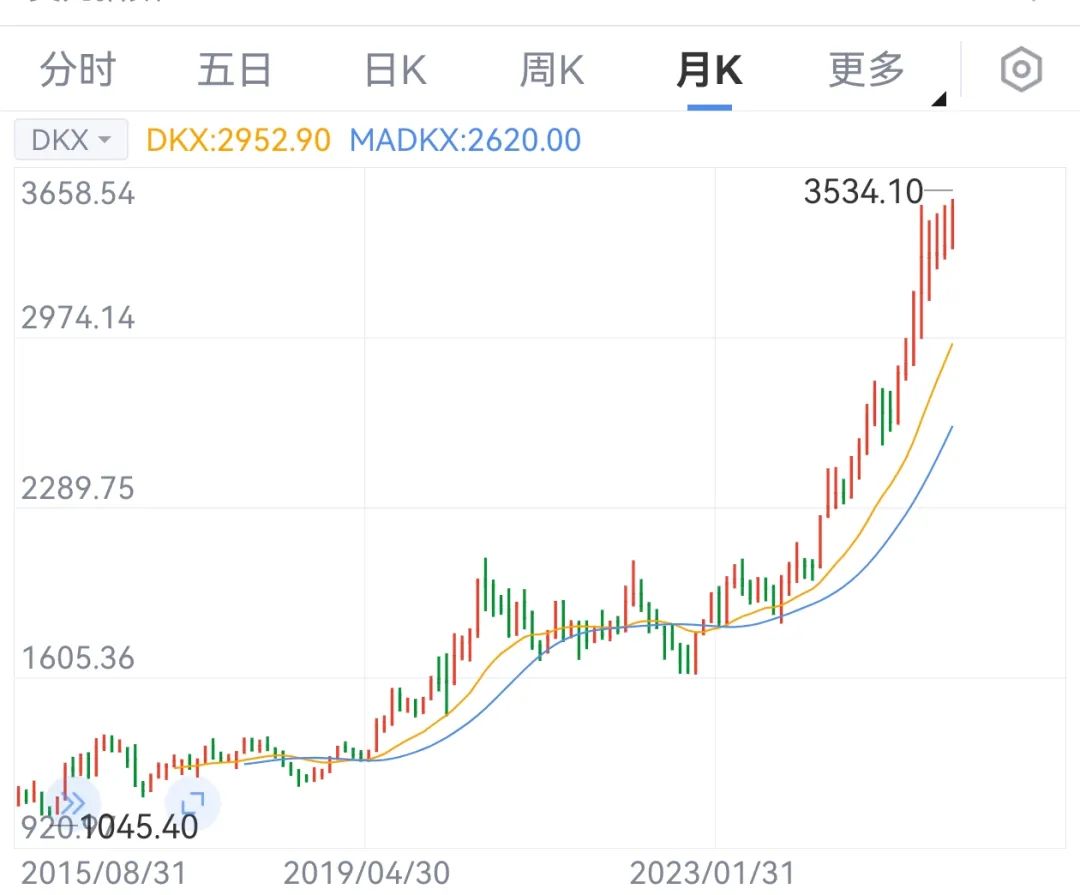
Core Viewpoint - The article emphasizes the long-term bullish outlook for gold, driven by continuous money printing by central banks and the inherent value of gold as a hedge against inflation and currency devaluation [3][21][57]. Group 1: Historical Performance of Gold - From December 1990 to June 2025, gold prices increased from $388 to $3452.60 per ounce, representing a total increase of 789.85% over 34.51 years, with an annualized return of 6.54% [4]. - Gold experienced two significant drawdowns: a maximum drawdown of -39.12% from February 1996 to July 1999 and -44.36% from September 2011 to December 2015 [7][10]. - After each major drawdown, gold prices eventually reached new highs, indicating resilience in the long-term trend [8]. Group 2: Recent Trends in Gold Prices - From July 2015 to June 2025, gold prices rose by 228.76%, continuing an upward trend for 9.5 years [14]. - Since January 2024, gold prices have increased by 66.65%, from $2071.8 to $3452.60 [18]. - In 2024, gold prices rose by 27.39%, and in 2025, they have already increased by 30.81% [21]. Group 3: Factors Influencing Gold Prices - The relationship between the US dollar index and gold prices is often negative, with periods of both strong and weak correlation observed [22]. - Key factors affecting gold prices include Federal Reserve interest rate decisions, US debt creditworthiness, economic recession risks, trade wars, geopolitical tensions, and demand for gold in jewelry and industrial applications [24][26][29][30]. - Central banks globally are increasing their gold reserves, with notable purchases from countries like Poland and China [41][44]. Group 4: Market Dynamics and Future Outlook - The article discusses the potential impact of US debt ceiling negotiations on market stability and gold prices, highlighting the risks associated with political gridlock [38][40]. - The ongoing trend of central banks accumulating gold is expected to support long-term price increases, as seen in recent data showing significant purchases [41][46]. - The overall sentiment remains bullish for gold, with the expectation that even if short-term fluctuations occur, the long-term upward trajectory will prevail [57].