黄金ETF(159934)

Search documents
全球疯抢,价格一浪高过一浪
Ge Long Hui· 2025-12-23 12:17
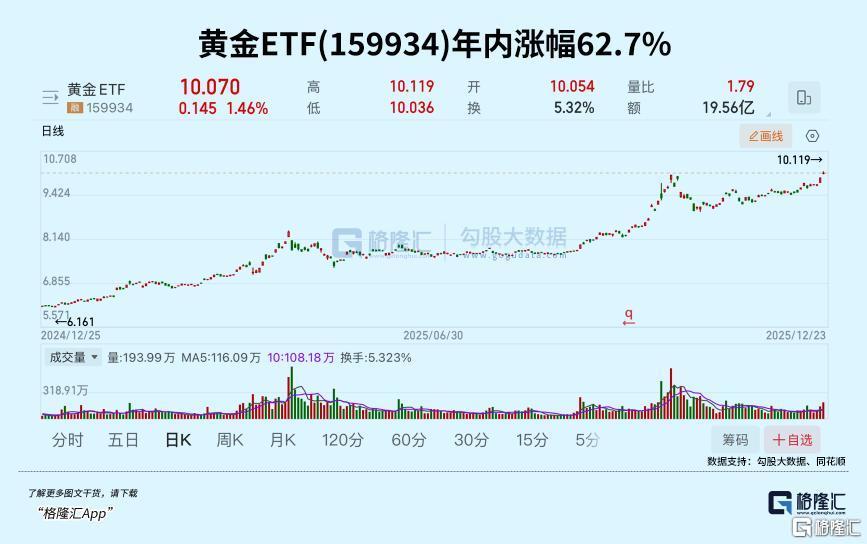
Core Viewpoint - The recent surge in gold prices, reaching a historical high of $4,490 per ounce, is attributed to multiple factors including geopolitical tensions, monetary easing expectations, and a structural shift in gold investment paradigms [1][3][22]. Geopolitical Tensions - The rise in gold prices is closely linked to escalating geopolitical tensions, particularly the conflict between Thailand and Cambodia, and the situation in Venezuela, where U.S. military actions have raised concerns about global oil trade and energy security [4][5][6]. - The ongoing Russia-Ukraine conflict continues to create a persistent source of geopolitical risk, contributing to increased demand for gold as a safe-haven asset [7]. Monetary Easing - The macroeconomic environment is characterized by expectations of interest rate cuts and a weakening U.S. dollar, with inflation rates declining and unemployment remaining relatively high [8][9]. - Historical data indicates that shifts in U.S. Federal Reserve policy from tightening to easing are significant drivers of gold bull markets [10]. Central Bank Gold Purchases - Central banks have been increasing their gold reserves, with a notable rise in purchases over the past three years, indicating a structural demand for gold [11][12]. - The inflow into gold ETFs has also been substantial, with a net inflow of over 12.68 billion yuan this year, reflecting a growing interest in gold as an investment vehicle [13][14]. New Investment Paradigm - The investment landscape for gold is undergoing a transformation, with a shift from being viewed solely as a cyclical asset to a strategic asset, driven by factors such as geopolitical risks and concerns over currency devaluation [16][18]. - The redefinition of gold's role includes its use as a hedge against extreme monetary and geopolitical risks, leading to a reassessment of its value in the market [21]. Future Price Expectations - Major financial institutions have raised their gold price forecasts significantly, with Goldman Sachs projecting a target price of $4,900 per ounce by the end of 2026, driven by strong structural demand and central bank purchases [22]. - Other institutions like JPMorgan and Morgan Stanley have also adjusted their long-term price expectations, reflecting a consensus on gold's strategic importance in the current economic climate [22]. Conclusion - The current gold market dynamics are a result of a confluence of factors including concerns over monetary credit, strategic central bank allocations, the onset of a rate-cutting cycle, and geopolitical conflicts, indicating profound changes in the global macroeconomic and financial landscape [23].

最猛资产!突然引发热议
Ge Long Hui A P P· 2025-12-03 09:05
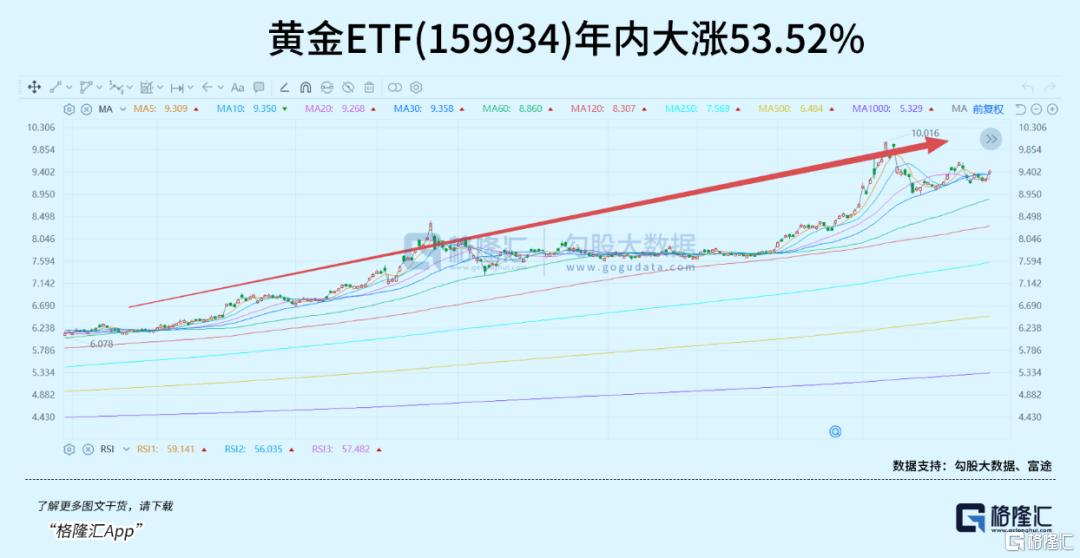
Core Viewpoint - Recent fluctuations in gold prices have sparked significant market discussions, with some investors strategically exiting while others are buying against the trend [1][2]. Group 1: Gold Market Dynamics - International gold prices have rebounded to around $4,300, with Comex gold showing a year-to-date increase of over 60% [2]. - Gold ETFs have seen substantial inflows, with the popular gold ETF (159934) rising 53.52% this year and net inflows reaching 12.64 billion yuan [2]. - The ongoing geopolitical tensions, particularly the Russia-Ukraine conflict, have heightened market concerns about global energy and food supply chains [6][7]. Group 2: Geopolitical and Economic Factors - The potential for U.S. military actions adds to market uncertainty, as recent statements from Trump suggest new military engagements could arise [8]. - The macroeconomic landscape is also shifting, with speculation about a dovish candidate for the next Federal Reserve chair, which could create significant discrepancies in market expectations regarding monetary policy [10][11]. - The intertwining of geopolitical conflicts and central bank policy directions points to a future of potential macroeconomic volatility [12]. Group 3: Investment Trends and Demand - The demand for gold is supported by structural factors, with central banks expected to purchase over 800 tons of gold by the third quarter of 2025, continuing a strong trend since 2022 [16]. - The strategic motivations behind central bank gold purchases have evolved from merely diversifying foreign exchange reserves to a focus on risk mitigation [16]. - The ongoing demand for gold as a neutral asset amidst geopolitical tensions and financial sanctions enhances its strategic value [17]. Group 4: Future Outlook - The market is at a critical juncture, with traditional asset pricing models failing under high debt, volatility, and policy uncertainty, increasing the demand for reliable value storage tools like gold [19]. - Geopolitical conflicts are expected to continue driving demand for gold, as unresolved issues will sustain the need for hedging against risks [22]. - The outlook for gold remains positive, supported by expectations of a potential recession and the likelihood of rapid interest rate cuts by central banks [29][30]. Group 5: Investment Vehicles and Performance - Gold ETFs are becoming increasingly popular due to their low costs and liquidity, with the latest scale of gold ETF (159934) reaching 34.7 billion yuan [32]. - Gold stocks have also performed well, with the E Fund CSI Hong Kong-Shenzhen Gold Industry Index (A: 021362; C: 021363) showing a year-to-date increase of over 79% [33]. - The index focuses on key companies in the gold and copper sectors, including major players like Zijin Mining and Shandong Gold [33].




投资黄金,一定能保值吗?
Sou Hu Cai Jing· 2025-10-27 01:43
Core Viewpoint - The discussion around gold investment has intensified, with physical gold transactions and gold ETFs gaining market attention, but recent price corrections raise questions about gold's ability to preserve value [1][4]. Group 1: Historical Performance of Gold - Gold is traditionally viewed as a "safe-haven asset," but historical data shows significant price volatility, with potential for substantial losses during bear markets [1][4]. - From 2000 to present, gold has delivered an annualized return of approximately 11%, but it has also experienced prolonged bear markets lasting over a decade [1]. - Major bear markets since the collapse of the Bretton Woods system include a notable 66% decline from early 1980 to mid-1985, with other bear markets showing declines of 45%-49% [1][3]. Group 2: Factors Influencing Gold Prices - The factors driving gold prices are complex and vary across different market cycles, with each bull and bear market influenced by unique economic conditions [3]. - Historical data indicates that gold prices can rise significantly during periods of economic instability and high inflation, while they tend to decline during economic recoveries and strengthening currencies [3]. Group 3: Investment Strategy and Risk Awareness - Investors are encouraged to educate themselves about gold's attributes, recognizing its roles as a currency, investment, and commodity, and its low correlation with stocks and bonds [4]. - Acknowledging the risks associated with gold investment is crucial, as price fluctuations can be severe, and losses are possible, contradicting the notion of gold being a "100% safe" asset [4]. - Investment in gold should be based on individual financial situations, risk tolerance, and investment horizons, promoting rational investment and scientific allocation [4].
突发逼空!业内大佬:几十年没见过
Ge Long Hui· 2025-10-13 07:45
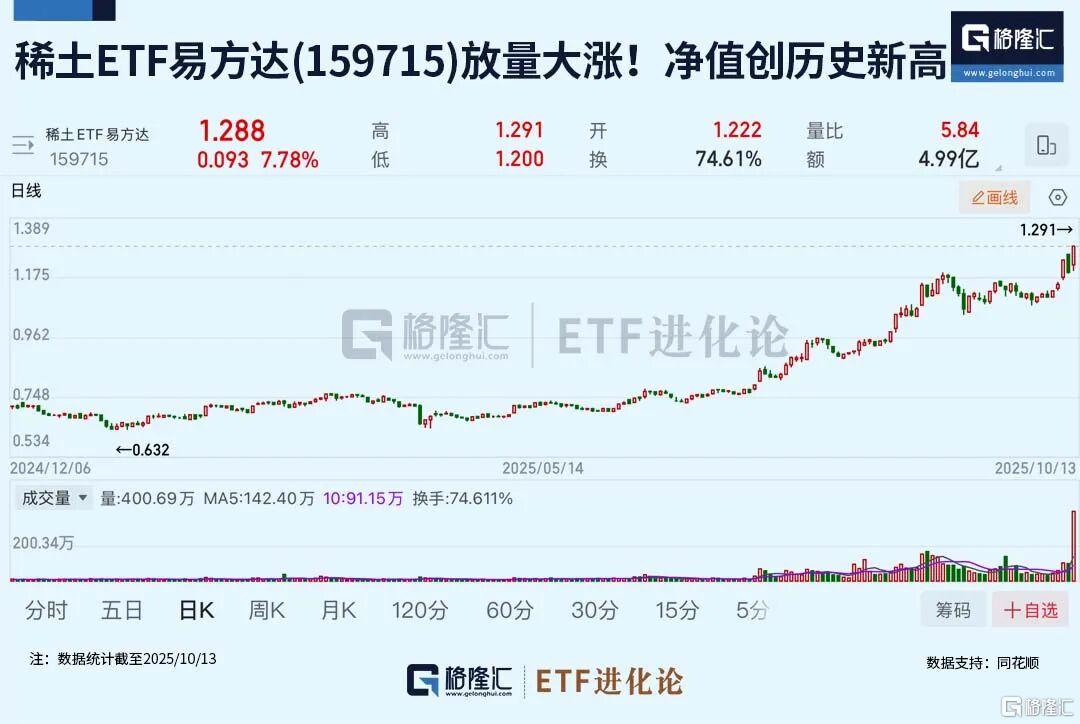
Market Overview - A-shares and Hong Kong stocks opened lower but rebounded during the trading session, with 73 stocks hitting the daily limit up and 10 stocks hitting the limit down by the end of the day [2][6]. Rare Earth Sector - The rare earth sector saw significant gains, with companies like Baotou Steel Rare Earth and Northern Rare Earth experiencing substantial price increases. The rare earth ETF from E Fund surged by 7.78%, marking a 93.39% increase year-to-date, reaching a historical net asset value high [3][5]. - The Ministry of Commerce announced export controls on certain rare earth materials and equipment, contributing to the price surge. Northern Rare Earth and Baotou Steel Rare Earth raised their prices, with rare earth concentrate prices increasing by 37% month-on-month, the highest since Q2 2023 [6]. - Northern Rare Earth projected a net profit of 1.51 billion to 1.57 billion yuan for the first three quarters, representing a year-on-year increase of 272.54% to 287.34% [6]. Gold Market - Gold prices reached a new historical high, with spot gold exceeding $4,060 per ounce. The gold ETF saw a 2.96% increase, with a year-to-date rise of 49.4% and net inflows exceeding 6.9 billion yuan [7][10]. - The demand for gold as a safe-haven asset has increased due to geopolitical tensions, expectations of interest rate cuts by the Federal Reserve, and political instability in various countries [9]. - Since the end of July, gold prices have risen over 20%, with a year-to-date increase of more than 50% [10]. Silver Market - Silver prices have outperformed gold, with London silver prices soaring above $51.5, marking an increase of over 40% since August and over 78% year-to-date [11]. - A liquidity crisis in the London silver market has led to unprecedented premium levels, making it difficult for short sellers to find physical silver for delivery [12][13]. Trade Relations and Market Sentiment - Recent comments from U.S. Vice President Kamala Harris indicated a willingness for rational negotiations with China, which may influence market sentiment [16]. - Analysts suggest that the current trade tensions may have limited impact on the economic fundamentals, viewing recent market adjustments as potential buying opportunities for quality assets in China [17].