保值

Search documents
谈判结束,伊美双方发声!油价跳水,金银齐跌
Qi Huo Ri Bao· 2026-02-17 23:45
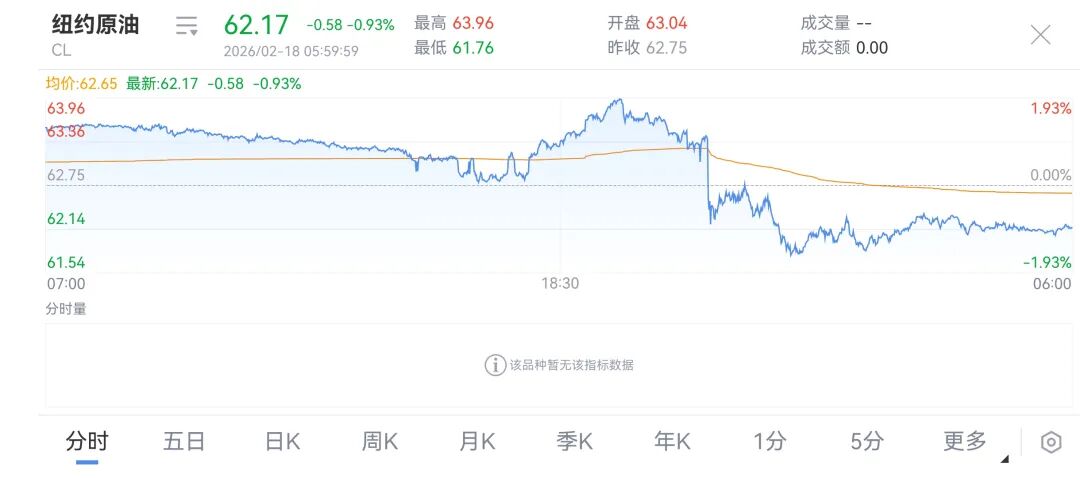
Group 1: Market Movements - International oil prices experienced a significant drop, with WTI crude oil down 0.93% to $62.17 per barrel and Brent crude oil down 1.79% to $67.42 per barrel [1] - Gold prices fell by 2.29% to $4878.57 per ounce, while silver prices decreased by 4.04% to $73.36 per ounce [1] - Major market institutions are taking profits, leading to consecutive reductions in holdings of gold and silver ETFs [3] Group 2: Iran-U.S. Negotiations - Recent indirect negotiations between the U.S. and Iran in Geneva showed signs of progress, reducing the risk premium on commodities [4] - Iranian Foreign Minister stated that both parties reached a general consensus on guiding principles for negotiations, although a final agreement is not imminent [6][8] - The U.S. Vice President noted that negotiations are progressing in certain aspects, but Iran has not yet agreed to some of the "red lines" set by the previous administration [10] Group 3: Gold Market Outlook - Analysts predict that gold prices may continue to rise due to ongoing demand for hedging and safe-haven assets amid a slowing U.S. economy and geopolitical tensions [20] - The global central banks' continued gold purchases and rising investment demand are expected to support gold prices [21] - Market experts anticipate a period of consolidation for gold prices, with potential for new upward momentum in the coming months [22]

金价“拉锯战”中的投资图谱:近六成受访者为“新玩家” 近七成不买黄金首饰
Sou Hu Cai Jing· 2026-02-14 00:15
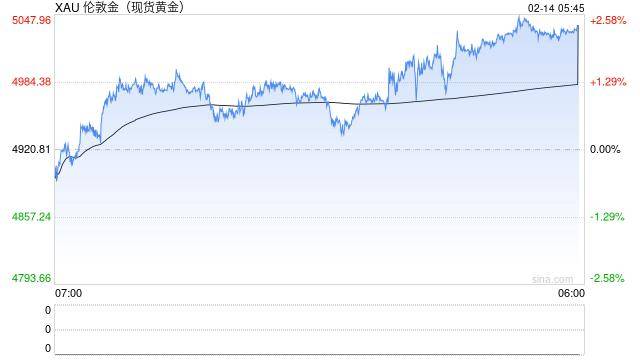
Core Viewpoint - The gold market is experiencing significant volatility, with prices fluctuating dramatically, indicating a shift from a peripheral asset to a core investment asset for many investors [2][4]. Group 1: Market Dynamics - Gold prices have shown extreme fluctuations, reaching nearly $5,600 per ounce before dropping to around $4,400, and then stabilizing around $5,000 [2]. - A recent survey indicates that 38.8% of respondents have over 10% of their investable assets in gold, with 57.17% being new investors who entered the market since last year [2][4]. - The average holding cost for new investors is relatively high, with many entering the market after significant price increases [3]. Group 2: Investor Sentiment and Behavior - The primary motivations for investing in gold include inflation protection (26.58%) and risk aversion (23.05%), which together account for nearly half of the responses [3]. - A notable 54.95% of respondents indicated they would not consider purchasing gold jewelry due to high prices and associated costs, reflecting a historical separation between gold's investment and consumption attributes [5]. - Despite the volatility, 48.76% of respondents remain bullish on gold prices in the short term, with a significant portion of investors expressing cautious optimism [8]. Group 3: Investment Strategies - The survey revealed a lack of strategic discipline among investors, with 14.39% admitting to trading without a clear strategy, which is higher than those engaging in short-term trading [4]. - The preferred investment vehicles include gold ETFs (32.5%) and physical gold (19.01%), indicating a trend towards more liquid and lower-cost investment options [6]. - The majority of respondents (37.13%) are choosing to hold their positions and observe market changes, suggesting a cautious approach amidst volatility [7]. Group 4: Future Outlook - Analysts predict that while the long-term trend for gold prices remains upward, volatility is expected to increase due to various macroeconomic factors and geopolitical risks [9]. - The consensus among investors leans towards a bullish outlook for gold, with many anticipating continued price increases despite recent market corrections [8].
以后的黄金会是以前的房子吗?
Sou Hu Cai Jing· 2026-02-02 04:02
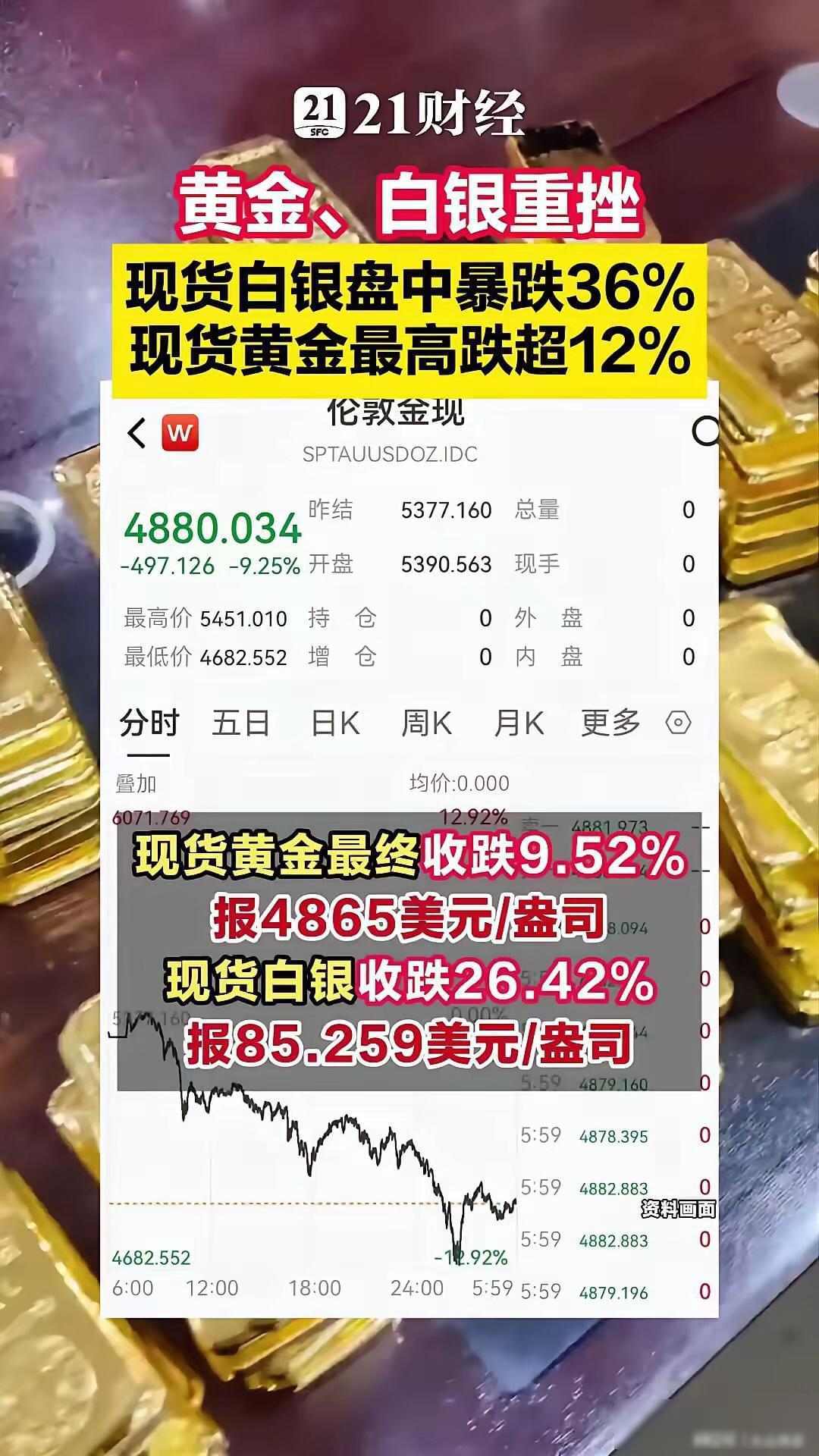
Core Viewpoint - The recent volatility in precious metal prices, particularly gold and silver, has led to significant financial losses for investors, raising questions about the future of gold as an investment compared to real estate [2][3][5][11]. Precious Metals Market - Gold prices experienced a dramatic drop, with a single-day decline of 9.25% on January 30, marking the largest drop since 1983, falling from $5,627 to $4,682 per ounce [3]. - Silver also saw a significant decline, dropping from a high of $122 to $74.28 per ounce [3]. - The global precious metals market lost over $3.4 trillion in value, equivalent to the total market capitalization of the cryptocurrency market [4]. Investor Impact - Approximately 220,000 investors faced liquidation, with total losses exceeding $900 million, leading to substantial financial distress for many [5]. Comparison of Gold and Real Estate - Gold is viewed as a financial and safe-haven asset, driven by global credit and demand for safety, while real estate is considered a tangible asset with value based on local supply and demand [7][9]. - The current trend shows a shift from a booming real estate market to a more differentiated one, while gold is experiencing increased demand due to central bank purchases [11][14]. Market Dynamics - Real estate prices are influenced by regional factors such as population movement and government policies, while gold prices are determined by global economic conditions, geopolitical risks, and monetary policies [16][19]. - The liquidity of gold is significantly higher than that of real estate, allowing for easier transactions and lower costs [20]. Investment Strategy - Investors are advised to view gold as part of a diversified asset allocation rather than a direct replacement for real estate investments [20].

黄金创40年最大跌幅!马光远道出真相:之前多疯狂,现在就多凄惨
Sou Hu Cai Jing· 2026-02-01 00:58
Core Viewpoint - The recent sharp decline in gold prices, marking the largest single-day drop since 1980, has raised concerns about the sustainability of gold as an investment, particularly for retail investors who may have been misled by speculative narratives [1][2][5]. Group 1: Price Movement and Market Reaction - On December 26, 2025, gold prices fell dramatically from over $5,500 to $4,865 per ounce, a drop of up to 12% in a single day, while silver experienced an even steeper decline of over 26% [1]. - Following the price drop, domestic gold ETFs and futures in the A-share market hit their daily limit down, leaving investors unable to sell their positions [1]. - Retail investors who entered the market at around $5,200 in early December faced losses of nearly 20% within a week, contradicting the notion of gold as a safe haven [1]. Group 2: Economic Insights and Expert Opinions - Economist Ma Guangyuan warned that gold is a poor investment choice for ordinary people, citing that the rapid price increase was driven by excessive liquidity and speculative behavior rather than actual demand [2]. - The factors influencing gold prices include U.S. Federal Reserve interest rates, the strength of the dollar, geopolitical conflicts, and central bank purchasing decisions, rather than retail investor actions [4]. - The accumulation of leveraged positions around the $5,500 mark made the market susceptible to forced liquidations, exacerbating the price decline [5]. Group 3: Psychological and Behavioral Aspects - Many investors confuse hedging with value preservation, with the former being about liquidity in crises and the latter about long-term stability [5]. - The proliferation of narratives promoting gold as a path to wealth, particularly through social media, has led to increased speculative buying, which has not materialized into actual demand [5]. - A recent incident involving a self-proclaimed "golden hundred times" influencer being investigated highlights the risks associated with speculative investment advice [7]. Group 4: Market Dynamics and Future Outlook - The current gold price fluctuates around $4,800, with uncertainty about future movements prompting some investors to consider buying at lower prices while others contemplate selling [8]. - The price of gold in RMB has decreased less than in USD, indicating that some capital may be returning to domestic markets as a temporary safe haven [7].
投资黄金,一定能保值吗?
Sou Hu Cai Jing· 2025-10-27 01:43
Core Viewpoint - The discussion around gold investment has intensified, with physical gold transactions and gold ETFs gaining market attention, but recent price corrections raise questions about gold's ability to preserve value [1][4]. Group 1: Historical Performance of Gold - Gold is traditionally viewed as a "safe-haven asset," but historical data shows significant price volatility, with potential for substantial losses during bear markets [1][4]. - From 2000 to present, gold has delivered an annualized return of approximately 11%, but it has also experienced prolonged bear markets lasting over a decade [1]. - Major bear markets since the collapse of the Bretton Woods system include a notable 66% decline from early 1980 to mid-1985, with other bear markets showing declines of 45%-49% [1][3]. Group 2: Factors Influencing Gold Prices - The factors driving gold prices are complex and vary across different market cycles, with each bull and bear market influenced by unique economic conditions [3]. - Historical data indicates that gold prices can rise significantly during periods of economic instability and high inflation, while they tend to decline during economic recoveries and strengthening currencies [3]. Group 3: Investment Strategy and Risk Awareness - Investors are encouraged to educate themselves about gold's attributes, recognizing its roles as a currency, investment, and commodity, and its low correlation with stocks and bonds [4]. - Acknowledging the risks associated with gold investment is crucial, as price fluctuations can be severe, and losses are possible, contradicting the notion of gold being a "100% safe" asset [4]. - Investment in gold should be based on individual financial situations, risk tolerance, and investment horizons, promoting rational investment and scientific allocation [4].
单克高达2600元,年轻人热捧的“痛金”值吗?
Bei Jing Ri Bao Ke Hu Duan· 2025-09-04 04:58
Core Viewpoint - The rising popularity of "pain gold" jewelry, which features designs inspired by anime and other pop culture elements, is driven by young consumers' willingness to pay for emotional value, but there are concerns about its long-term value retention as market hype may fade [1][9]. Group 1: Market Trends - "Pain gold" products are becoming the main attraction in gold stores, replacing traditional items like bracelets and charms [2]. - Major brands such as Chow Tai Fook, Lao Miao, and Chao Hong Ji are actively promoting "pain gold" items, with a significant portion of their displays dedicated to these collaborations [2][4]. - The emotional connection to characters from popular series like "Tian Guan Ci Fu" is a key driver for purchases, with consumers willing to spend large amounts on these items [4][5]. Group 2: Pricing and Valuation - "Pain gold" products are typically sold at fixed prices, often significantly higher than traditional gold pricing, with examples including a Chow Tai Fook Stitch bracelet priced at 5340 yuan and a Lao Miao "Tian Guan Ci Fu" bracelet at 1520 yuan [5][6]. - The pricing strategy often obscures the actual gold weight, leading to high premiums; for instance, a gold note weighing only 0.2 grams is priced at 520 yuan, equating to 2600 yuan per gram [6][10]. - The premium pricing is justified by sellers citing the complexity of production and the costs associated with IP licensing [8]. Group 3: Consumer Behavior and Risks - Consumers face significant depreciation when attempting to resell "pain gold" items, with buyback offers often being a fraction of the original price [10][11]. - The marketing of "pain gold" emphasizes emotional and investment value, but there are concerns about transparency regarding actual gold weight and resale conditions [12]. - Many consumers report feeling misled about the value retention of these products, leading to dissatisfaction when they attempt to sell them [10][12].





房子和黄金哪个更保值?从近十年的走势来分析
Sou Hu Cai Jing· 2025-08-06 17:00
Core Viewpoint - The article analyzes the value retention of real estate versus gold over the past decade, highlighting the recent decline in real estate prices and the rise in gold prices, suggesting a shift in asset allocation preferences among ordinary investors. Real Estate Price Trends - From 2011 to 2015, real estate prices in 70 major cities in China experienced a stable fluctuation, with limited significant changes in major cities like Beijing and Shanghai [1][2] - The period from 2015 to 2017 marked a rapid increase in real estate prices, with Shenzhen's average price soaring from 22,198 yuan/m² in 2014 to 51,935 yuan/m² in 2016 [3] - Between 2017 and 2019, government policies such as purchase and loan restrictions were implemented to stabilize the market, leading to a gradual narrowing of price increases [4] - The years 2020 to 2021 saw a resurgence in real estate prices, with 2021 recording a historical high in sales area at approximately 1.8 billion square meters [5] - Since 2022, the real estate market has entered a downward adjustment phase due to economic cycles and demographic shifts, resulting in declining sales and prices [6] Gold Price Trends - From 2011 to 2015, gold prices peaked at 327 yuan/gram in 2011, followed by a decline to 235 yuan/gram by 2015 [7] - The period from 2016 to 2020 saw a fluctuating increase in gold prices, reaching 386 yuan/gram in 2020 due to heightened investor risk aversion [8] - The trend from 2021 to 2025 indicates a continuous rise in gold prices, with projections suggesting prices could reach 768 yuan/gram or higher by 2025, driven by global economic instability and inflation expectations [9][10] Comparative Analysis of Real Estate and Gold - Over the past decade, real estate has appreciated approximately 68%, while gold has increased by 89.5% [13] - Real estate has low liquidity with long transaction cycles, whereas gold offers high liquidity with immediate cash realization [13] - The holding costs for real estate are high due to taxes and maintenance, while gold has lower holding costs [13] - The entry threshold for real estate is high, requiring substantial down payments, while gold can be purchased starting from 1 gram [13] Recommendations for Ordinary Investors - For those considering real estate, it is advisable to have stable cash flow, focus on core areas in first-tier or strong second-tier cities, and have a need for self-occupation or long-term rental [12] - For those leaning towards gold, it is suitable for individuals with smaller capital or those concerned about economic volatility, as well as those lacking the capacity to manage real estate [12] - A balanced investment strategy could involve prioritizing real estate for self-occupation while considering a combination of core city properties and gold for investment, with a suggested allocation of 70% real estate to 30% gold [12]