
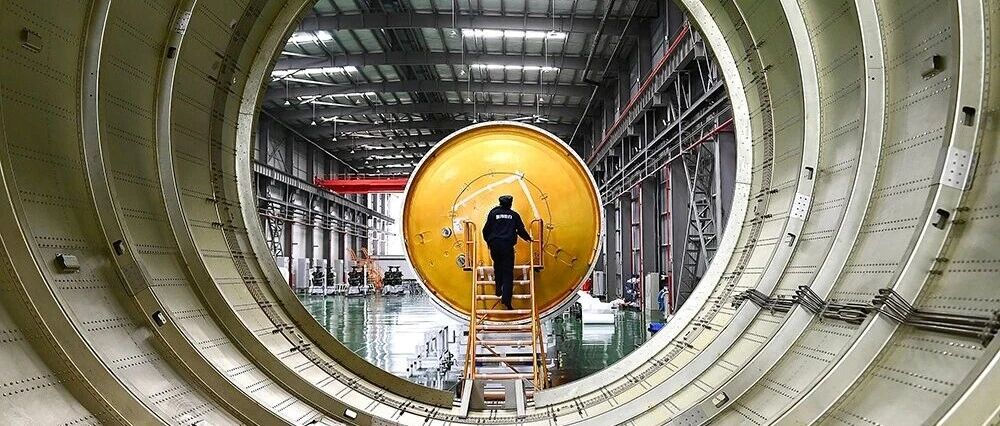
龙云液氧甲烷发动机

Search documents
群殴 “马保国”
债券笔记· 2025-12-26 14:41
Group 1: Equity Market - The U.S. follows a "private sector-led, government-assisted" approach, where the government acts as an "angel investor" and major customer, while companies drive their own growth [8] - SpaceX is highlighted as a leading player, with its Falcon 9 rocket achieving high recovery rates and the Starlink project amassing over 8 million users, showcasing its strong revenue potential [8][9] Group 2: Commercial Space Race - In the U.S., private companies like Blue Origin and Rocket Lab are competing in the commercial space sector, with Blue Origin focusing on space tourism and Rocket Lab targeting the small satellite market [10] - In China, state-owned enterprises lead the way in commercial space, with China Aerospace Science and Technology Corporation (CASC) and China Aerospace Science and Industry Corporation (CASIC) playing pivotal roles in various space missions and innovations [11] - The private sector in China is also emerging, with companies like Blue Arrow Aerospace and Tianbing Technology developing reusable rockets and innovative propulsion systems [12][13] Group 3: Market Dynamics and Challenges - Key areas of focus include reusable rockets, satellite internet, and AI-enabled space computing, which are seen as crucial for reducing costs and expanding market opportunities [14] - Challenges include the stability of reusable rocket technology and the need for breakthrough applications to create a commercial ecosystem in the space industry [14] Group 4: A-Share Market Performance - The A-share market shows positive momentum, with the Shanghai Composite Index rising by 0.47% and a total trading volume of 1.92 trillion yuan, indicating strong investor sentiment [15] Group 5: Macro and Fixed Income - The bond market is characterized by strong short-term bonds, with the 10-year government bond yield at 1.837% [16] - The central bank's operations include a net injection of 1 trillion yuan through MLF, ensuring ample liquidity in the market [16] Group 6: International Relations and Currency - The U.S. has announced the end of its trade investigation into Chinese chips, which is expected to ease trade tensions and positively impact the technology sector [16] - The Chinese yuan is strengthening, nearing the 7.0 mark against the dollar, supported by strong trade surpluses and favorable economic conditions [16]


正在崛起的万亿级市场,势成中美最大必争之地
财富FORTUNE· 2025-12-25 13:06
Core Viewpoint - The article highlights the burgeoning commercial space sector as a critical battleground for technological and capital supremacy between the U.S. and China, with significant IPOs and investments expected in the near future [1][3]. Group 1: U.S. Developments - A special purpose acquisition rights (SPARCs) proposal by investor Bill Ackman allows Tesla shareholders to invest directly in SpaceX, potentially leading to a historic IPO valued at $1.5 trillion [3]. - SpaceX has launched over 10,000 satellites for its Starlink project, aiming for a constellation of 42,000 satellites, dominating nearly 80% of low Earth orbit capacity [5]. - SpaceX's Falcon 9 rocket has a recovery success rate exceeding 91%, significantly reducing launch costs to approximately 20,000 RMB per kilogram [6]. Group 2: Chinese Developments - Chinese companies like Blue Arrow Aerospace and Star River Power are preparing for IPOs, marking 2025 as a pivotal year for the commercialization of space in China [3][10]. - China has applied for a total of 51,300 low Earth orbit satellites but has only deployed around 300, indicating a significant gap compared to SpaceX [5]. - The Chinese government has integrated commercial space into its national strategy, with policies supporting the development of reusable rocket technology [7]. Group 3: Technological Competition - The core engine of the new space race is reusable rocket technology, which is essential for reducing launch costs and unlocking a trillion-dollar market [6][8]. - SpaceX's Starship has a near-Earth orbit capacity of 150 tons, while China's Long March 5 can only carry about 25 tons, highlighting a substantial technological gap [6]. - The collaboration between state-owned enterprises and private companies in China aims to accelerate advancements in space technology, contrasting with the U.S. model that heavily relies on NASA and private capital [9]. Group 4: Market Potential - The Chinese commercial space market is projected to grow from approximately 0.38 trillion RMB in 2015 to 2.3 trillion RMB by 2024, with a compound annual growth rate of 22% [10]. - The market is expected to surpass 2.8 trillion RMB by 2025, driven by advancements in rocket and satellite manufacturing, as well as ground applications [10]. - The introduction of satellite mobile communication services by major telecom operators and the development of satellite-enabled smartphones signal the emergence of a consumer market for satellite internet [11]. Group 5: Strategic Implications - The competition in commercial space is fundamentally about controlling future global infrastructure in the digital age, with no definitive endpoint [12]. - The ongoing race reflects a broader struggle for technological and economic dominance between the U.S. and China, reminiscent of historical challenges faced during the space race [12].
中国商业航天迈入爆发期
21世纪经济报道· 2025-12-19 06:10
Core Viewpoint - 2025 is projected to be a pivotal year for China's commercial space industry, transitioning from technological accumulation to explosive growth, with multiple private aerospace companies completing rocket launch tests and accelerating satellite internet deployment [1] Group 1: Industry Developments - The Chinese government is providing strong support for commercial space through policies, including the "14th Five-Year Plan" emphasizing the construction of a "space power" and the establishment of a dedicated Commercial Space Administration [1] - Despite a promising outlook, the industry faces significant supply chain challenges, particularly in upstream infrastructure, with a consensus that the bottleneck is not in downstream applications but in launch capacity and costs [1] - The recent successful launch of the Zhuque-3 rocket and the upcoming maiden flight of the Long March 12甲 rocket are seen as significant milestones for China's commercial space sector, potentially reshaping market dynamics [3][4] Group 2: Technological Innovations - The Zhuque-3 rocket, developed by Blue Arrow Aerospace, is a new generation of low-cost, high-capacity, reusable rocket, utilizing a self-developed liquid oxygen-methane engine [3][7] - The Long March 12甲 rocket, developed by China Aerospace Science and Technology Corporation, emphasizes a stable supply chain by using a liquid oxygen-kerosene engine, reflecting a dual risk approach in China's aerospace strategy [8] - The ultimate goal of reusable rocket technology is to significantly reduce launch costs, with the Zhuque-3 aiming to lower the cost per kilogram to below 20,000 RMB, enhancing China's competitive edge in the global market [9][10] Group 3: Market Dynamics and Future Outlook - Predictions indicate that within three years, launch prices in China could approach those of SpaceX, with the potential to undercut SpaceX's Falcon 9 prices in about five years [11] - The competitive focus in the coming years will center on cost control, reliability, fulfillment capabilities, and service responsiveness, as companies strive to meet the growing demand for satellite deployment [11] - The challenges faced by Chinese rocket companies include not only technological hurdles but also the need for systematic engineering and industrialization to catch up with established players like SpaceX [11]
中国可回收火箭蓄力突围
2 1 Shi Ji Jing Ji Bao Dao· 2025-12-18 23:43
Core Insights - 2025 is projected to be a pivotal year for China's commercial space industry, transitioning from technological accumulation to explosive growth, with multiple private aerospace companies completing rocket launch tests and accelerating satellite internet deployment [1][11] - Policy support is intensifying, with the "14th Five-Year Plan" emphasizing the construction of a "space power," and the establishment of a dedicated Commercial Space Administration by the National Space Administration [1][11] - Despite a promising outlook, supply chain weaknesses remain evident, particularly in upstream infrastructure, which is seen as a critical bottleneck for the industry [1][11] Industry Developments - December marked significant advancements in China's reusable rocket technology, highlighted by the launch of the Zhuque-3 rocket, which, despite a recovery failure, provided valuable experience for future developments [2][12] - The Zhuque-3 rocket, developed by Blue Arrow Aerospace, is a new generation of low-cost, high-capacity, reusable liquid oxygen-methane rocket, showcasing advanced features such as a reaction control system and landing legs [2][12] - Following Zhuque-3, the Long March 12甲 rocket, developed by China Aerospace Science and Technology Corporation, is set for its maiden flight, indicating a rapid progression in China's commercial space capabilities [2][12][13] Market Dynamics - Currently, only the United States has mastered reusable rocket technology, with SpaceX leading the way, having completed over 500 launches and capturing 86% of the global orbital payload market in 2023 [3][13] - In contrast, China's commercial launch capacity remains limited, with a market share in commercial payloads only in the single digits, insufficient to support the ambitious deployment of satellite constellations [3][14] - The urgency for breakthroughs in reusable rocket technology is underscored by the need to address the significant launch capacity gap in the market [4][15] Technological Innovations - The Zhuque-3 rocket's development process emphasized a unique engineering approach, integrating market demand insights and innovative materials like stainless steel to reduce production cycles [6][16] - The Long March 12甲 rocket adopts a different strategy, focusing on stable supply chains and leveraging domestic resources to ensure reliable operations [7][17] - The Tianlong-3 rocket, set for its first flight, aims for high reliability and low-cost delivery, utilizing advanced materials and 3D printing technology [7][17] Cost Reduction Strategies - The ultimate goal of reusable rocket technology is to significantly lower launch costs, with a focus on recovering the first stage of rockets, which constitutes the highest cost component [8][19] - The Zhuque-3 is designed for 20 reuses, with operational costs expected to decrease by approximately 45% after five uses, reflecting a model of high initial investment followed by diminishing marginal costs [8][19] - The target cost for launching per kilogram is set below 20,000 RMB, which would enhance China's competitive edge in the global market [20] Competitive Landscape - The future competition in the rocket market will center on cost control, reliability, fulfillment capabilities, and service responsiveness [10][20] - Chinese companies face significant challenges in catching up with established players like SpaceX, which has spent over a decade refining its technology [10][21] - The ongoing developments in China's commercial space sector indicate a gradual resolution of previously deemed insurmountable challenges, as companies continue to innovate and validate their technologies [21]
如何防止股票被“深套“”? | 1214 张博划重点
Hu Xiu· 2025-12-14 09:24
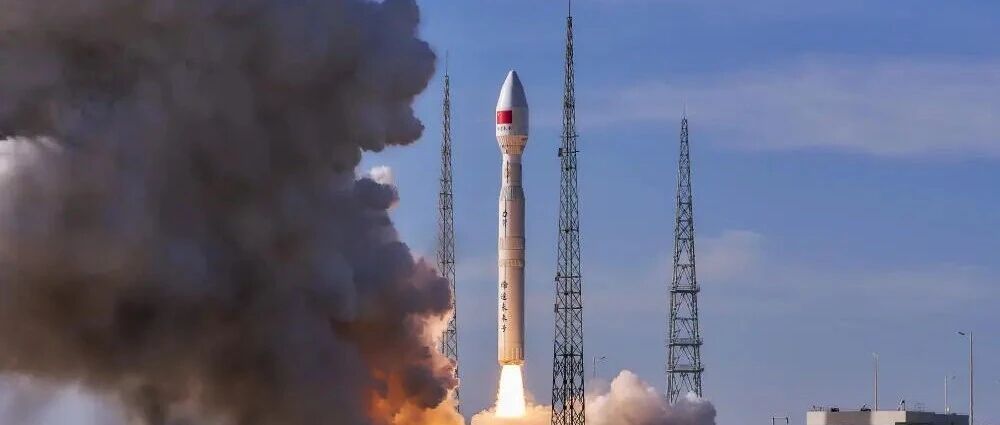
Core Insights - The article discusses the upcoming launch of China's Long March 12A rocket, which aims to achieve both "launch and recovery" goals using a reusable "Longyun" liquid oxygen-methane engine [1] - The commercial space sector is experiencing increased interest, with several stocks in the industry seeing significant gains due to positive news and expectations surrounding the Long March 12A rocket [1] - SpaceX's plans for an IPO and its recent valuation of $1.5 trillion are expected to further boost the valuation space for the entire commercial space industry, including related suppliers [1] Group 1: Launch Details - The expected launch window for the Long March 12A rocket is from December 15 to 17, 2025 [2] - The rocket is developed by the China Aerospace Science and Technology Corporation's Eighth Academy [2] - The core objective is to successfully place a satellite into orbit during its first launch and achieve vertical recovery of one of its stages [2] Group 2: Technical Specifications - The rocket features a two-stage configuration [2] - The first stage is powered by seven "Longyun" liquid oxygen-methane engines, which are designed for over 50 reuses [2] - The second stage is equipped with one vacuum version YF-209 liquid oxygen-methane engine [2] - The payload capacity is 12 tons to Low Earth Orbit (LEO) and 7.3 tons to Sun-Synchronous Orbit (SSO) [2] - The planned recovery site is located in Minqin County, Wuwei City, Gansu Province [2]
