
AI动画

Search documents
如何守好孩子的网络净土?“变味”的AI动画防不胜防
Xin Lang Cai Jing· 2026-01-23 00:20
Core Viewpoint - The rise of AI-generated animations has led to concerns about inappropriate content targeting children, with many products featuring bizarre characters, disturbing sound effects, and vulgar themes, prompting parental worries about their impact on youth [1][3]. Group 1: Nature of AI Animations - AI animations, such as "AI Shan Hai Jing," often contain strange imagery and illogical narratives, captivating children while distorting their understanding of classic stories [3]. - Some AI animations are labeled as "children's animations" and are accessible in youth modes, making it difficult for parents to monitor what their children are watching [3][4]. - The content generated by AI often distorts classic literature, which can negatively influence the moral development of adolescents [4]. Group 2: Challenges in Content Regulation - The ease of creating AI-generated videos has led to a proliferation of low-quality and potentially harmful content, as creators exploit children's curiosity for views [5]. - Existing content moderation systems struggle to keep up with the volume and complexity of AI-generated content, leading to increased costs and challenges in identifying harmful material [6][7]. - The mixed nature of AI-generated videos with regular content complicates the identification and regulation of inappropriate material [7]. Group 3: Recommendations for Improvement - Experts suggest enhancing regulatory measures for the AI video industry and holding platforms accountable for the content they promote to minors [9]. - Recommendations include implementing digital watermarks in AI generation tools for better content traceability and improving algorithmic recommendations to prioritize quality content for children [9]. - Emphasis is placed on the role of parents and educators in guiding children to develop critical thinking skills regarding online content and ensuring a supply of quality cultural products [9].
“变味”的AI动画
Xin Lang Cai Jing· 2026-01-22 17:07
Core Viewpoint - The rapid proliferation of AI-generated animation content, particularly among youth, raises significant concerns regarding the quality and appropriateness of such content, with many examples featuring bizarre, violent, or inappropriate themes that could negatively influence children's perceptions and behaviors [1][3][4]. Group 1: Concerns About AI Animation Content - Many AI-generated animations, such as "AI Shan Hai Jing," feature strange characters and dark themes, lacking coherent narratives, yet they captivate children, leading to discussions among peers about these distorted representations [3]. - Parents report that AI-generated content often distorts beloved children's characters, presenting them in inappropriate scenarios, which can confuse children and potentially encourage mimicking of harmful behaviors [3][4]. - The prevalence of AI animations labeled as "children's content" in youth modes raises alarms about the accessibility of inappropriate material to minors [3]. Group 2: Regulatory and Safety Measures - The upcoming 2024 guidelines on generative AI services will set clear standards for content aimed at minors, addressing the need for stricter oversight [5]. - A special action plan titled "Qinglang: Rectifying AI Technology Abuse" will be launched in April 2025, focusing on eliminating harmful content generated by AI, including violent and sexually explicit materials [5]. - Experts suggest enhancing regulatory measures across the AI video production industry, emphasizing the need for platforms to take responsibility for content targeting minors and to improve algorithmic recommendations [6]. Group 3: Challenges in Content Moderation - The ease of creating AI-generated videos has led to a surge in low-quality and potentially harmful content, as creators exploit children's curiosity for quick views [7]. - Platforms face significant challenges in moderating AI-generated content due to its hidden nature and the blending of harmful content with regular material, complicating the identification of inappropriate videos [8]. - Current moderation systems, which often rely on a combination of human and machine review, struggle to keep pace with the volume and complexity of AI-generated content, leading to increased operational costs [8].
新华视点丨“变味”的AI动画
Xin Lang Cai Jing· 2026-01-22 16:04
Core Viewpoint - The rise of AI technology in the film industry has led to the creation of AI-generated animations that are inappropriate for children, raising concerns among parents about the content's impact on youth [2][3]. Group 1: Concerns About AI Animation Content - Many AI animations popular among teenagers feature bizarre character designs, eerie sound effects, and vulgar content, with some even containing elements of pornography and horror [2][3]. - Parents have reported that AI-generated animations often distort familiar children's characters, leading to confusion and potential imitation by children [3][4]. - The prevalence of these AI animations is exacerbated by algorithms that continuously recommend similar content once a child engages with it [3]. Group 2: The Role of AI in Content Creation - AI technology has significantly lowered the cost and barriers to video production, enabling the rapid creation of content that can be crude or harmful [5]. - Some creators exploit the curiosity of young audiences by producing fast-paced, attention-grabbing AI animations, which can lead to high viewership and engagement [5]. - There are various monetization strategies for such content, including platform revenue sharing and selling related merchandise [5]. Group 3: Regulatory Challenges and Recommendations - Current content review mechanisms on platforms face challenges in effectively identifying and managing harmful AI-generated content due to its hidden nature and legal ambiguities [6]. - Experts suggest enhancing regulatory oversight of the AI video industry and holding platforms accountable for the content they promote to minors [8]. - Recommendations include implementing unalterable digital watermarks in AI generation tools for better content traceability and increasing the promotion of quality content for children [8].

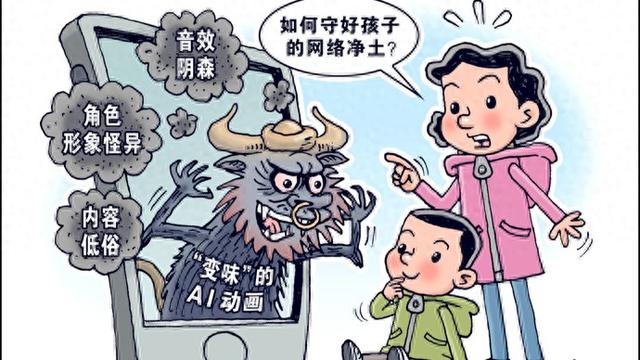
新华视点丨“变味”的AI动画——如何守好孩子的网络净土?
Xin Hua She· 2026-01-22 08:46
Core Viewpoint - The rise of AI-generated animation has led to the creation of content that is inappropriate for children, raising concerns among parents about the impact on youth and the need for better regulation of such content [1][2]. Group 1: Concerns About AI Animation - Many AI animation products feature bizarre characters, eerie sound effects, and vulgar content, with some even containing elements of pornography and horror, causing alarm among parents [1][2]. - AI animations often distort classic stories, leading to confusion among children who may imitate inappropriate behaviors depicted by trusted characters [2]. - The ease of creating AI-generated content has resulted in a flood of low-quality and harmful videos, which are often pushed to children through algorithms [3]. Group 2: Regulatory Challenges - The current regulatory framework struggles to effectively manage the rapid production of AI-generated content, as existing review mechanisms are often inadequate for identifying harmful material [3]. - Platforms typically use a combination of manual and automated reviews to monitor AI-generated content, but the complexity and volume of such content pose significant challenges [3]. Group 3: Recommendations for Improvement - Experts suggest enhancing regulatory oversight of the AI video industry and holding platforms accountable for the content they distribute, particularly for minors [5]. - Recommendations include implementing digital watermarks in AI tools for better content traceability and optimizing algorithms to prioritize quality content for young audiences [5]. - Schools and families are encouraged to provide life education to help children develop a strong value system to resist harmful online content [6].
杭州劳务品牌:让每个人都有“够得着”的未来
Mei Ri Shang Bao· 2025-12-24 22:18
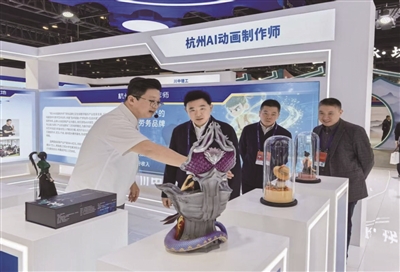
Core Viewpoint - The labor brand in Hangzhou is undergoing a significant transformation, evolving from traditional craftsmanship to new digital roles, reflecting the integration of technology and culture in the labor market [8][9][15]. Group 1: New Labor Brands - The emergence of new labor brands such as "Hangzhou AI Animation Maker," "Hangzhou AI Application Engineer," "JianDe Tofu Bun Master," and "ZhongTai Bamboo Flute Maker" showcases a path towards shared prosperity in the digital age [9][10]. - The "ZhongTai Bamboo Flute Maker" brand has a production ecosystem that includes R&D, manufacturing, sales, and training, with an annual sales volume of 4.5 million flutes, accounting for over 85% of the global market share, and generating an industry output value of 350 million yuan [9][10]. - The "JianDe Tofu Bun Master" brand has trained over 10,000 certified masters and created 50,000 jobs, with an annual output value exceeding 5 billion yuan through a standardized production and sales process [10]. Group 2: Digital Integration and Training - The "Hangzhou AI Animation Maker" brand utilizes AIGC technology, achieving a 10-fold increase in efficiency for animation production and a 70% reduction in costs for e-commerce advertising [11]. - The "Hangzhou AI Application Engineer" brand focuses on training professionals to develop AI applications, with over 1 million practitioners and more than 1 million AI applications generated [11][12]. - Hangzhou has cultivated 58 labor brands, involving over 320,000 enterprises and training more than 514,600 individuals annually, contributing to an industry output value exceeding 490 billion yuan [12]. Group 3: Ecosystem Development - Hangzhou has established a "four-dimensional integrated" ecosystem to support the growth of labor brands, leveraging policies, digital empowerment, brand development, and industry-education integration [13][14]. - The city promotes a collaborative approach to talent cultivation, bridging the gap between education and industry needs, and has initiated a digital skills talent training evaluation alliance [14][15]. - The ongoing development of labor brands in Hangzhou is redefining the concept of "skills" in the digital era, aiming for standardization, specialization, and branding of labor services [15].
当AI硬件开始“懂”意图、“有”温度:一场关于未来生活方式的对话
虎嗅APP· 2025-12-05 14:13
Core Viewpoint - The article discusses how AI hardware is evolving from mere tools to entities that understand human intentions, enhance emotional connections, and reshape experiences in daily life [4][5]. Group 1: AI Hardware Evolution - The transition of AI hardware is characterized by moving from simple recording to understanding human intentions and fostering emotional connections [5]. - Future AI hardware will integrate deeply into human narratives, creating richer experiences and connections [5]. Group 2: AI in Meeting and Recording - AI can now generate high-quality meeting minutes, enabling users to experience its value regardless of their familiarity with AI [8]. - The ability to conduct cross-meeting Q&A and generate structured reports from discussions is a significant advancement made possible by large language models [8][35]. Group 3: Immersive Recording Technology - The SLAMXCAM can recreate real-life visual experiences, providing emotional value that traditional photography cannot [11]. - This technology is particularly useful for capturing significant life moments, allowing users to relive them in a more immersive way [11][43]. Group 4: Breaking Down Barriers - Companies are focused on making complex technologies accessible to everyone, emphasizing ease of use and integration into daily life [14][44]. - The goal is to eliminate the technical barriers that prevent widespread adoption of AI technologies [14][44]. Group 5: Redefining Relationships with AI - AI products are being designed to foster emotional connections, acting as companions that understand and respond to users' needs [20][49]. - The concept of AI as a mirror or a friend is explored, emphasizing the importance of emotional intelligence in AI interactions [51][54]. Group 6: Market Strategies - The key to market entry for AI products lies in simplifying user experience and ensuring that products are relevant to everyday life [41][42]. - Companies are focusing on creating products that are not only functional but also aesthetically pleasing to enhance user engagement [57]. Group 7: Future Aspirations - The vision for AI products includes becoming integral parts of family life, enhancing emotional well-being and personal growth [59][64]. - The aim is to create AI companions that can support users in various aspects of life, from childhood development to elder care [62][64].
中国劳务品牌迈向“精工智造”
Zhong Guo Xin Wen Wang· 2025-11-20 02:23
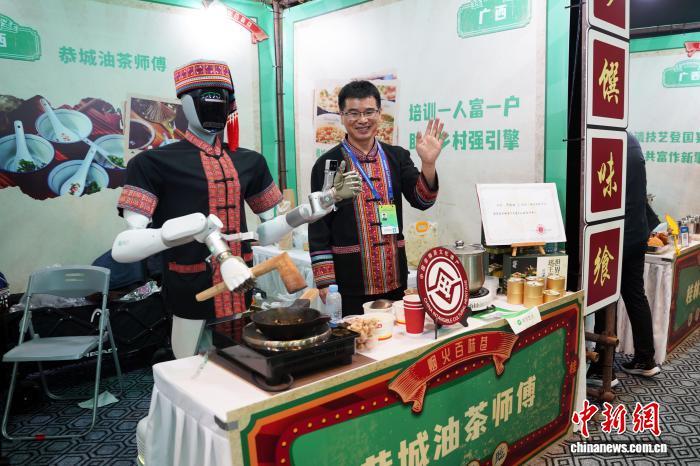
Core Insights - The low-altitude economy is identified as a future industrial direction for the country, with initiatives like the "Yangpu Low-altitude Flight Numerical Control Technician" labor brand aimed at cultivating talent in this emerging field [1][3] - The third National Labor Cooperation and Labor Brand Development Conference highlighted the importance of technology-driven labor brands in promoting industrial upgrades and integrating into the "intelligent manufacturing" wave [1][3] Industry Developments - The "Yangpu Low-altitude Flight Numerical Control Technician" labor brand focuses on addressing the talent shortage in the low-altitude sector, emphasizing skills such as installation, calculation, teaching, and operational capabilities [3] - The "Tianjin Intelligent Manufacturing Engineer" program has trained tens of thousands of engineers who are proficient in robotics and artificial intelligence, capable of solving real production issues [3] - The Hangzhou AI Animation Production Technician brand is a new labor brand that integrates AI animation technology with digital art creation, directly linked to an industry output value of 504.4 billion RMB and involving 647,000 practitioners [3] Labor Market Impact - Currently, there are nearly 2,500 labor brands in China, which have created millions of jobs. These labor brands are becoming crucial engines for high-quality development in "intelligent manufacturing" through skill upgrades and industry integration [4]
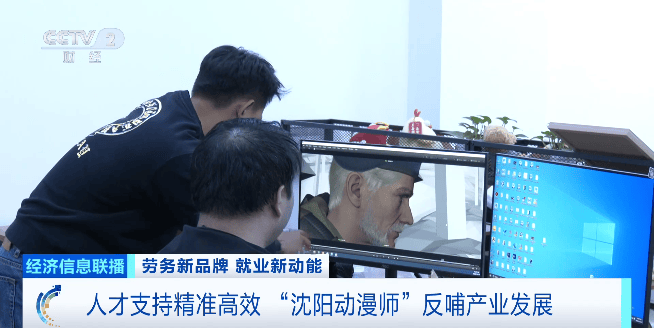
人才支持精准高效 “沈阳动漫师”反哺产业发展
Sou Hu Cai Jing· 2025-11-18 15:35
Industry Overview - The number of animation-related enterprises in China has exceeded 198,000, with the market size expected to reach 652.1 billion yuan this year [1] - Over 90% of animation creators primarily rely on self-study, leading to challenges in talent acquisition for companies [1] Talent Demand and Supply - A company in Shenyang reports that one-third of its employees are sourced from the "Shenyang Animation Master" training base, and plans to expand its workforce due to increasing project orders [3] - The hiring demand for animation professionals has increased by approximately 20% year-on-year, particularly for animation artists and those skilled in AI animation and UE animation technologies [5] - Another company highlights the growing demand for talent in immersive VR space tourism products, but faces challenges due to high employee turnover in the animation industry [7] Talent Matching and Support - The "Shenyang Animation Master" program has provided talent for major projects like "Nezha," "Black Myth: Wukong," and "Chang'an 30,000 Li," with over 3,000 participants involved in the production of "Nezha 2" [13] - A digital talent pool platform in Shenyang has established a feedback mechanism for employers, completing 4,200 job matches and improving production efficiency by 35% for local animation companies [13] Employment Initiatives - The Shenyang Human Resources and Social Security Bureau has facilitated the employment of over 4,000 individuals in the animation industry this year, with more than 50% being recent graduates [15] - Support measures for animation startups include entrepreneurial loans, social security subsidies, and skill enhancement subsidies, totaling 500,000 yuan disbursed to date [15]
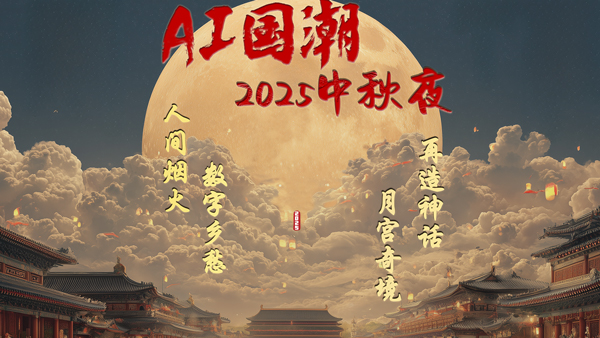
以AI为墨,绘中秋新韵 ——2025全球AIGC数字创作盛宴启幕
Yang Shi Wang· 2025-09-27 05:49
Core Viewpoint - The "AI National Tide Mid-Autumn Night 2025" global work collection event has officially launched, aiming to integrate AI technology with traditional Chinese culture to create a unique cultural and technological celebration [1][3] Group 1: Event Overview - The event is hosted by CCTV.com, with exclusive technical support from Hailuo AI, and collaboration with professional institutions such as WTA Production Studio, AIMWISE, and Saga.AI [1] - The goal is to promote the creative transformation and innovative development of the Mid-Autumn Festival through cutting-edge AIGC technology, presenting a celebration that showcases the intersection of technology and culture [1][3] Group 2: Creative Themes - Two core creative themes are established: "Moon Palace Wonderland: Recreating Myths" and "Human Fireworks: Digital Nostalgia" [3] - Participants are encouraged to utilize advanced technologies such as text-to-image, image-to-video, AI animation, and AI music generation to modernize and diversify classic mythological elements like Chang'e, the Jade Rabbit, the Moon Palace, and osmanthus trees [3] Group 3: Innovation and Cultural Expression - Creators are invited to break traditional frameworks by incorporating innovative elements such as cyberpunk, national tide aesthetics, and metaverse concepts into their works, aiming to produce digital art that retains the essence of traditional culture while being filled with futuristic imagination [3] - The event also welcomes creators to express modern sentiments related to the Mid-Autumn Festival, such as reunion, longing, and blessings, using AI technology to capture and convey contemporary emotional memories [3] Group 4: Call to Action - The initiative encourages global AI creators to actively participate, aiming to showcase the charm of Chinese culture and the strength of AI technology during the Mid-Autumn Festival [3] - The event emphasizes the importance of creativity in making this Mid-Autumn Festival more vibrant and engaging through innovative contributions [3]
第二十一届中国国际动漫节5月29日启幕
Mei Ri Shang Bao· 2025-05-29 02:06
Group 1 - The 21st China International Animation Festival showcased various interactive experiences and highlighted popular characters like "Lele" and "RUA RUA RED PANDA" [1] - The festival emphasized the integration of new technologies such as artificial intelligence in the animation and gaming sectors, showcasing the unique charm of cultural and technological innovation [2] - The main exhibition area featured six thematic zones, gathering nearly 350 domestic and international animation and gaming companies, presenting over 2000 IPs and licensed products [3] Group 2 - The festival introduced a series of activities aimed at enhancing cultural consumption, including the "Look at My Wukong 72 Transformations" series, which integrates various animation-related events in Hangzhou [4] - A focus on all-age sharing of animation culture was evident, with activities designed for youth and families, including a national defense education animation exhibition [6] - The festival also included the fourth Clean Animation Culture Exhibition, promoting the crossover between national trend animation and integrity culture [6]