
AI智能座舱平台

Search documents
德赛西威:成本管控优秀,探索智能驾驶技术外溢-20260307
GUOTAI HAITONG SECURITIES· 2026-03-07 07:45
Investment Rating - The report maintains a "Buy" rating for Desay SV [5][12] Core Views - Desay SV is expected to achieve a net profit margin of 7.6% in 2025, an increase of 0.3 percentage points year-on-year, demonstrating excellent cost control capabilities [2] - The company is exploring the spillover of intelligent driving technology across multiple product areas, including robotics, unmanned vehicles, and cockpit systems [2][12] - The target price is set at 139.27 CNY, reflecting confidence in the company's growth potential over the next three years [12] Financial Summary - Total revenue is projected to grow from 27,618 million CNY in 2024 to 55,300 million CNY in 2028, with a compound annual growth rate (CAGR) of 18.6% [4][13] - Net profit attributable to shareholders is expected to increase from 2,005 million CNY in 2024 to 4,837 million CNY in 2028, with a CAGR of 22.2% [4][13] - Earnings per share (EPS) is forecasted to rise from 3.36 CNY in 2024 to 8.10 CNY in 2028 [4][13] Market Data - The stock has a market capitalization of 69,419 million CNY and a price-to-earnings (P/E) ratio of 34.12 at the current price [6][12] - The stock price has fluctuated between 94.94 CNY and 151.23 CNY over the past 52 weeks [6] Strategic Initiatives - Desay SV has established an international operational system with 16 overseas branches, focusing on customer expansion and capacity building [12] - The company has secured new project contracts with major clients such as VW and Toyota, and is advancing its localization strategy in Europe with a new factory in Spain [12]
德赛西威(002920):成本管控优秀,探索智能驾驶技术外溢
GUOTAI HAITONG SECURITIES· 2026-03-07 07:26
Investment Rating - The report maintains a "Buy" rating for Desay SV Automotive (德赛西威) with a target price of 139.27 CNY [5][12]. Core Insights - Desay SV Automotive is expected to achieve a net profit margin of 7.6% in 2025, reflecting a year-on-year increase of 0.3 percentage points, showcasing excellent cost control capabilities [2]. - The company is exploring the spillover of intelligent driving technology across multiple product areas, including robotics, autonomous vehicles, and cockpit systems [2]. - The report highlights the company's strong revenue growth, with total revenue projected to reach 32.56 billion CNY in 2025, representing an 18% year-on-year increase [12]. Financial Summary - Total revenue projections for Desay SV Automotive are as follows: - 2024: 27.62 billion CNY - 2025: 32.56 billion CNY - 2026: 39.13 billion CNY - 2027: 46.63 billion CNY - 2028: 55.30 billion CNY - Net profit (attributable to shareholders) is projected to be: - 2024: 2.01 billion CNY - 2025: 2.45 billion CNY - 2026: 3.20 billion CNY - 2027: 3.96 billion CNY - 2028: 4.84 billion CNY - Earnings per share (EPS) estimates are: - 2024: 3.36 CNY - 2025: 4.11 CNY - 2026: 5.36 CNY - 2027: 6.63 CNY - 2028: 8.10 CNY [4][12]. Market Data - The stock has a 52-week price range of 94.94 to 151.23 CNY, with a total market capitalization of 69.42 billion CNY [6]. - The company has a net asset value per share of 25.83 CNY and a price-to-book ratio of 4.5 [7]. Strategic Developments - Desay SV Automotive has established an international operational system with 16 overseas branches, focusing on customer expansion and capacity building as part of its globalization strategy [12]. - The company has successfully secured new project allocations from major clients such as VW and Toyota, and has made significant progress in localizing production in Europe with its factory in Spain [12].
万字长文,探讨中国汽车最核心的15大趋势
3 6 Ke· 2026-02-09 07:08
Industry Overview - The Chinese automotive market has experienced significant changes, with over 30 million vehicles sold in 2025, but this success is overshadowed by price wars, high inventory levels, and pressure on per-vehicle profitability [1] - The era of rapid growth has ended, leading to a new phase characterized by complexity and uncertainty, where companies must seek new opportunities rather than relying on internal competition [1] - Bosch, a leading supplier in the industry, is investing over €2.5 billion (approximately 204.66 billion RMB) in AI to enhance automotive intelligence and is actively participating in events like CES to showcase new technologies [1] Market Trends - The automotive industry is expected to shift towards "stability through deceleration" in 2026, with ongoing consolidation among companies, but not replicating the unified model seen in the U.S. automotive industry [5] - Predictions indicate that around 15 automotive companies will remain in the market by 2030, with a mix of state-owned, private, and new entrants [6] - The sales ratio of pure electric, hybrid, and fuel vehicles is projected to stabilize at 4:4:2, reflecting a balanced coexistence of different powertrains in the market [7] Technological Developments - The development of intelligent driving capabilities is becoming a core competitive area for automotive companies, with a significant increase in the adoption of advanced driver-assistance systems (ADAS) [10] - By 2026, new models lacking intelligent driving features may struggle to gain market traction, as consumer demand for such capabilities grows [12] - The automotive industry is witnessing a shift towards AI-driven cockpit experiences, with dedicated AI chips and models being developed to enhance user interaction and service capabilities [35][36] Competitive Landscape - Domestic brands are currently leveraging intelligent cockpit and driving experiences to capture market share, but international brands are rapidly catching up [42] - The competitive landscape is expected to evolve as international brands, with their extensive safety and engineering expertise, begin to offer models that match the intelligent features of local brands by 2028 [44] - The future of intelligent driving technology in fuel vehicles is promising, with costs expected to drop below 5,000 RMB for advanced features, facilitating widespread adoption [31][33]


自动泊车系统安全要求强标公开征求意见;英伟达L4级自动驾驶出租车将于2027年上路 | 1月智驾热搜
Zhong Guo Qi Che Bao Wang· 2026-01-26 02:12
Core Insights - The global competition in automotive intelligence is accelerating in 2026, driven by policy breakthroughs and commercial implementations [2] Domestic News - The Ministry of Transport issued an implementation opinion to promote the development of public data resources to support intelligent driving and new energy vehicle industries, aiming to create typical demonstration scenarios through data integration [3][4] - The Ministry of Industry and Information Technology is soliciting opinions on seven mandatory national standards for intelligent connected vehicles, including safety requirements for automatic parking systems, which will provide clear standards for the industry [5] - Guangdong is exploring the development of intelligent driving liability insurance products to support the new energy vehicle industry, aiming to establish a risk-sharing and social trust system [6] - Hong Kong's Transport Department is promoting unmanned testing of autonomous vehicles, having issued six pilot licenses for testing in various regions [7][8] - Jiangsu Province is advancing the "vehicle-road-cloud integration" application pilot, focusing on the development of high-level autonomous driving systems and intelligent infrastructure [10][11] - Guangdong is strengthening pilot applications for intelligent connected vehicles, encouraging technological innovation and cross-city testing [12] - Shanghai is emphasizing the development of intelligent connected new energy vehicles as a key emerging industry, focusing on soft and hard collaboration and data-driven approaches [13] Overseas Developments - NVIDIA announced plans to test its first full-stack autonomous vehicle in the U.S. in early 2026, with a goal to launch L4 autonomous taxi services by 2027 [14] - Mobileye plans to acquire humanoid robot manufacturer Mentee for $900 million, aiming to enhance its capabilities beyond autonomous driving [15] - Hyundai appointed a former executive from NVIDIA and Tesla to lead its autonomous driving business, highlighting the importance of this sector [17] - Bosch unveiled a new AI smart cockpit platform at CES 2026, showcasing advancements in personalized vehicle experiences [19] - The U.S. House Committee is reviewing legislation to simplify the deployment of autonomous vehicles, potentially increasing the annual exemption limit for companies [21] Corporate Dynamics - GAC Group signed a comprehensive cooperation framework agreement with Huawei to deepen collaboration in intelligent vehicle technologies [22][23] - Black Sesame Intelligence's Huashan A2000 chip passed U.S. scrutiny, allowing for global sales and marking a significant milestone for Chinese autonomous driving technology [24][25] - Geely received a license for L3 autonomous driving road testing in Hangzhou, indicating progress in the competitive landscape for L3 vehicles [26] - BAIC's L3 model has begun large-scale pilot operations, marking a significant step towards commercial deployment of autonomous driving [28] - Lantu Motors and Yiwang signed a strategic cooperation agreement to jointly develop intelligent driving and cockpit technologies [29] - Geely and Qianli Zhijia launched a new brand for smart driving solutions, covering a range of autonomous driving capabilities [30][31] - Hesai Technology was selected by NVIDIA as a lidar partner for its autonomous driving platform, enhancing its role in the global supply chain [33][34] - Chery showcased its AI advancements, indicating a shift towards a more AI-driven automotive strategy [35][36] - WeRide announced that its Robotaxi fleet has surpassed 1,000 vehicles, achieving commercial viability in multiple cities [37]



企业竞相打出“全域AI”明牌造车下半场“含模量”飙升
Xin Lang Cai Jing· 2026-01-16 20:08
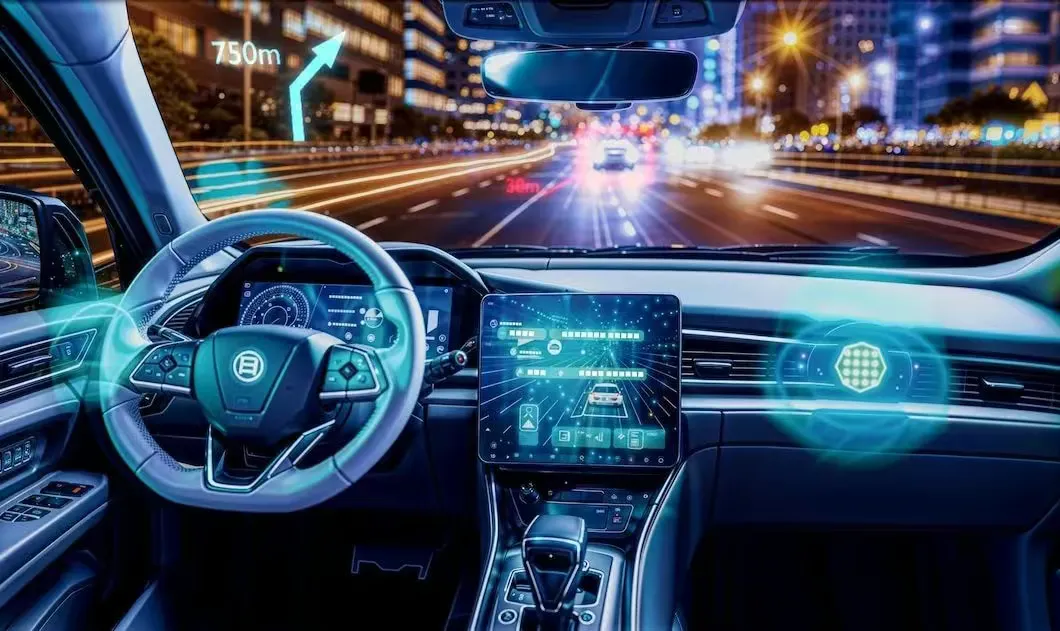
Core Insights - The automotive industry in China is experiencing significant growth, with vehicle sales reaching 34.4 million units in 2025, a year-on-year increase of 9.4% [1] - The shift towards "full-domain AI" is becoming prominent, with major automotive manufacturers and supply chain giants like Geely and Bosch increasing their investments in AI technologies [1][2] - Geely has introduced a comprehensive technology system that includes the WAM model for intelligent cockpits and the G-ASD platform for advanced driving assistance, indicating a trend towards AI-driven automotive solutions [2][5] - The automotive sector is transitioning from electric vehicle transformation to AI-driven innovations, with "model inclusion" becoming a key metric for evaluating future trends in vehicle manufacturing [1][4] Industry Developments - AI is evolving from peripheral features to a central role in automotive technology, with companies adopting "full-domain AI" strategies to enhance user experience and operational efficiency [2][3] - Geely's G-ASD system is noted for its advanced capabilities, utilizing a SmartAIAgent architecture and achieving a high level of model inclusion, making it one of the leading driving assistance systems globally [2][4] - Bosch has unveiled a new AI cockpit platform that integrates personalized features and real-time environmental interpretation, showcasing the trend towards highly customized user experiences in vehicles [3] Technological Advancements - The automotive industry is witnessing a shift towards data and model-driven approaches in intelligent driving technologies, with systems like Geely's G-ASD integrating multi-modal models to enhance performance [4][5] - The introduction of high-performance AI models is expected to increase computational demands, necessitating significant investments in data centers and computational resources for training and validation [6][7] - The development of autonomous driving systems requires extensive data input and ongoing algorithm training, which may lead to increased costs and resource allocation challenges for companies [6][7] Competitive Landscape - The year 2026 is anticipated to be a pivotal moment for the automotive industry's "model inclusion" competition, with companies possessing robust self-research capabilities likely to capture higher market segments [7] - Smaller manufacturers lacking sufficient R&D investment may face marginalization in the rapidly evolving technological landscape [7] - Geely is positioned as a leader in the full-domain AI landscape, being the first to establish a comprehensive ecosystem that includes automotive, chip, satellite, and AI technologies [8] Strategic Recommendations - The Chinese automotive industry is encouraged to maintain a "self-controllable" approach in AI technology development, focusing on core models and safety mechanisms to avoid dependency on external sources [7][9] - Collaboration with global standards and open-source communities is recommended to mitigate technological gaps and enhance innovation [9]
驭浪“十四五” 启航“十五五” 汽车供应链企业的新年心声
Zhong Guo Qi Che Bao Wang· 2026-01-09 01:13
Core Insights - The automotive industry is undergoing a significant transformation, with the supply chain demonstrating resilience and evolving from a follower to a leader in electric, intelligent, connected, and low-carbon technologies [2] - The "14th Five-Year Plan" period has seen various companies achieve notable advancements and innovations, setting the stage for the "15th Five-Year Plan" [3][4][5][6][8][9] Achievements and Experiences - Desay SV achieved a compound annual growth rate of 34% in R&D investment over the past five years, establishing 12 global R&D centers and successfully launching multiple innovative technologies [3] - MogoCar released the first deep understanding model, MogoMind, and secured a project for L4 autonomous buses in Singapore, marking international recognition of its technology [4] - Times Intelligent introduced an integrated intelligent chassis, achieving global-leading performance in energy management and safety [5] - Yuanrong Qixing delivered over 200,000 vehicles equipped with its urban NOA system, showcasing its mass production capabilities [6][7] - Pony.ai became one of the few companies to operate fully unmanned L4 Robotaxis, accumulating over 10 million kilometers of safe driving [8] - Baixinniu's L4 autonomous logistics vehicles are operational in over 170 cities, emphasizing the importance of understanding logistics scenarios for sustainable value creation [9] Challenges and Solutions - Desay SV faces challenges in integrating technology and brand value in diverse regional markets, implementing a "2+1+1" international organizational model to address this [10] - MogoCar's main challenge is adapting autonomous vehicles to complex urban environments, which it addresses by enhancing AI capabilities and real-time data integration [11] - Times Intelligent is working to establish trust in its innovative chassis technology amidst a lack of industry maturity [12] - Yuanrong Qixing focuses on the VLA model to handle complex urban scenarios, continuously optimizing its data collection and processing [13] - Pony.ai aims to overcome technical, policy, and market acceptance challenges through technology enhancement and collaboration [14] - Baixinniu has refined its logistics focus to address commercial viability and customer needs, establishing partnerships with major logistics companies [15] Technological Trends - Desay SV is focused on AI technology driving innovation in smart vehicles, anticipating 2025 as the year AI cockpit models will be widely adopted [17] - MogoCar emphasizes the scaling of L4 autonomous driving technology, particularly in public transport [18] - Times Intelligent is concentrating on L3 to L4 autonomous driving technology and integrated control systems [19] - Yuanrong Qixing is advancing the VLA model for enhanced understanding and reasoning in complex driving scenarios [20] - Pony.ai identifies AI as a key driver for industry development, leveraging advancements in integrated circuits and deep learning [21] - Baixinniu is focused on end-to-end architecture and world models for logistics vehicles, aiming for breakthroughs in safety and efficiency [22] Future Development Expectations - Desay SV plans to accelerate international market expansion and enhance user experience through technological innovation [23] - MogoCar aims to deepen AI model capabilities and expand its market presence, starting with Singapore [24] - Times Intelligent seeks to scale its products in passenger vehicles and promote international collaboration [24] - Yuanrong Qixing targets a cumulative delivery of 1 million vehicles by 2026, focusing on mass production of assisted driving [25] - Pony.ai aims for profitability while advancing core technology and industry collaboration [25] - Baixinniu anticipates significant growth in L4 autonomous logistics vehicles, aiming for a global market presence [25] Differentiated Competitive Advantage - Desay SV emphasizes an "open, full-stack, rapid realization" growth model to achieve resilient, high-quality growth [27] - MogoCar focuses on integrating AI capabilities with real-world data to adapt to complex urban scenarios [28] - Times Intelligent aims to build a high-barrier system capability through innovative technologies and a sustainable supply chain [28] - Yuanrong Qixing believes in a long-term, consistent technology roadmap combined with strong engineering and user understanding [29] - Pony.ai prioritizes continuous R&D investment to build a robust technological moat [30] - Baixinniu integrates various supply chain elements to create a comprehensive operational model for sustainable growth [31]

湍流中的裁员,关税影响和中国市场
汽车商业评论· 2025-05-10 15:05
Core Viewpoint - Bosch Group achieved a challenging performance in the 2024 fiscal year, with a sales revenue of €90.3 billion, a year-on-year decrease of 1.4%, and an EBIT margin dropping from 5.3% to 3.5% [4][6]. Group 1: Financial Performance - The automotive sector remains Bosch's largest segment, generating sales of €55.8 billion, maintaining the previous year's level [4]. - The home appliance business grew by 1.6% to €20.3 billion, while energy and building technology fell by 2.7% to €7.5 billion, and machinery and manufacturing saw the largest decline of 13% to €6.4 billion [4]. - In China, Bosch's sales reached ¥142.7 billion, a year-on-year increase of 2.7%, contributing 20% to the overall sales [6]. Group 2: Strategic Focus and Market Position - Bosch's Chairman emphasized the importance of the Chinese market, stating that without entering China, it is difficult to establish a foothold in the automotive supply industry [6]. - The company plans to invest approximately ¥6 billion in China in 2024, with cumulative investments exceeding ¥60 billion over the past decade [6]. - Bosch aims to become one of the top three suppliers in core markets within the next five years [8]. Group 3: Future Outlook and Challenges - Bosch anticipates a 1%-3% natural growth in sales for the 2025 fiscal year, with a significant improvement in EBIT margin expected by 2026 [12]. - The company is implementing structural and personnel adjustments to enhance competitiveness, with a projected reduction in global employee numbers [13]. - Bosch views electric mobility, hydrogen energy, and software-defined vehicles as key growth drivers in the smart mobility sector [15]. Group 4: Technological Development and Innovation - Bosch has supplied over 17 million powertrain components for electric and hybrid vehicles, including 5.5 million electric motors [18]. - The company is focusing on hydrogen internal combustion engines as a significant future technology, despite current market demand challenges [19]. - Bosch is actively developing advanced driver assistance systems (ADAS) and aims to capture a significant share in urban driving assistance [21][24]. Group 5: Impact of Geopolitical Factors - The impact of the U.S.-China trade war on Bosch's operations in China is relatively minor, as most products are locally sourced and produced [26]. - Bosch is increasing R&D investments in China to support local product development and procurement [26]. - The company has established a commercial vehicle group in China, focusing on traditional and emerging technologies [27].

今年将投产50个电动出行项目! 博世董事会主席史蒂凡·哈通:未来五年要在各关键市场跻身前三
Mei Ri Jing Ji Xin Wen· 2025-05-09 07:46
Core Insights - Bosch anticipates no significant turnaround in overall conditions for the year, but aims to rank among the top three suppliers in key markets within the next five years as part of its 2030 strategy [1] - For fiscal year 2024, Bosch projects sales of €90.3 billion, a decline of 1.4% year-over-year, with an adjusted decline of 0.5% after currency effects [1] - The company aims for an average annual sales growth of at least 6% and a profit margin of at least 7% by 2030 [1] Financial Performance - Bosch's EBIT for 2024 is projected at €3.1 billion, down from €4.8 billion in 2023, resulting in an EBIT margin of 3.5% [1] - Free cash flow is expected to be positive at €900 million, with working capital increasing to €8.2 billion from €7.4 billion in 2023 [1] - Sales by region for 2024 include €44.5 billion in Europe (down 5%), €16 billion in North America (up 5%), €1.8 billion in South America (up 6%), and €28.1 billion in Asia-Pacific (up 1%) [2] Market Challenges and Strategies - The automotive market is projected to decline, with global production expected to drop from 94 million units in 2023 to 93 million in 2024 [1] - Bosch plans to optimize costs and adjust its structure to maintain competitiveness in a rapidly changing market, particularly in China [1][3] - The company is focusing on localization strategies in key markets to enhance supply chain resilience and better serve local customers [3] Business Segments - The smart mobility segment is a significant part of Bosch's business, with projected sales of €55.8 billion for fiscal year 2024 [4] - Other segments include consumer goods with sales growth of 1.6% to €20.3 billion, industrial technology with a decline of 13% to €6.4 billion, and energy and building technology with a decline of 2.7% to €7.5 billion [4] Future Projects and Innovations - Bosch plans to launch 50 electric mobility projects this year, primarily in Europe and China [7] - The company is developing advanced driver assistance systems and AI-powered cockpit platforms, with significant contributions from its Chinese operations [7] - Bosch acknowledges the challenges of achieving profitability in new business areas, emphasizing the need for strong product development during transitional periods [7]
博世集团2024年在华营收1427亿元 中国市场成为重要创新基地
Xin Hua Cai Jing· 2025-05-08 15:47
Group 1 - Bosch Group announced a sales target of €90.3 billion for the fiscal year 2024, with an EBIT of €3.1 billion and an EBIT margin of 3.5% [1] - In the Chinese market, Bosch's sales reached ¥142.7 billion in 2024, representing a year-on-year growth of 2.7% [1] - The company aims for an annual sales growth of 6% to 8% by 2030 and plans to achieve a target profit margin of 7% by 2026 [1][2] Group 2 - Bosch's CFO Markus Forschner emphasized the need to maintain cost advantages and pursue growth through investment, innovation, and acquisitions [2] - The company expects electric mobility, hydrogen, and software-defined vehicles to drive significant business growth in the smart mobility sector [2] - Bosch plans to launch approximately 90 new cordless power tool products this year, focusing on expanding its product range in the consumer goods sector [2] Group 3 - Bosch announced plans to acquire Johnson Controls' global residential and light commercial HVAC business for $8 billion, marking its largest acquisition to date [3] - The acquisition is expected to contribute an additional 1% to 2% sales growth if completed by mid-year [3] - Bosch's R&D investment in China reached ¥11.9 billion in 2024, highlighting the country's role as an innovation hub for the company [3]
博世发布辅助驾驶新方案 新产品矩阵即将投放市场
Jing Ji Guan Cha Bao· 2025-05-01 00:54
Core Insights - Bosch has launched a new driver assistance brand "Bosch Horizon Driver Assistance" at the Shanghai Auto Show, which includes three product lines covering SAE Level 2 assistance systems [1][2] - The company emphasizes the rapid transformation of intelligent driver assistance in China and aims to leverage software and technology innovations to seize business opportunities in this sector [1][3] Group 1: Product Launches and Innovations - Bosch's new driver assistance solutions include the Supreme version aimed at urban driving, which is based on dual Orin-X chips and is set for mass production by the end of 2023 [2] - The company has also introduced a new generation multifunction camera and an upgraded version of the Bosch Horizon Driver Assistance, reinforcing its leadership in Advanced Driver Assistance Systems (ADAS) [2][3] - Bosch is developing a visual language model to enhance the understanding of complex traffic scenarios, such as tidal lanes and bus-only lanes [3] Group 2: Market Strategy and Collaborations - Bosch has established partnerships with five Chinese OEMs for high-speed and urban memory driving assistance, with most projects expected to go into mass production this year [3] - The company plans to expand its end-to-end model for urban driving assistance to high-speed roads and urban memory driving by the end of 2025 [2][3] Group 3: Business Performance and Future Outlook - Bosch's intelligent mobility business is the largest segment of the group, projected to generate €55.9 billion (approximately ¥462.5 billion) in sales for the fiscal year 2024, accounting for nearly 62% of total sales [4] - In 2024, Bosch's sales in China are expected to grow by 4%, reaching ¥116.6 billion, which represents a quarter of Bosch's global intelligent mobility sales [5] - The company has identified that 65% of new business opportunities in China over the next five years are related to intelligent and electrified solutions [5]