AI服务器集群

Search documents
美股巨头"抠门"了,中概却开始"撒钱":背后逻辑绝了
美股研究社· 2026-03-27 11:29
Core Viewpoint - The article discusses a significant shift in global capital markets, highlighting the divergence between U.S. companies focusing on AI investments and Chinese companies engaging in stock buybacks to support their valuations [2][3][4]. Group 1: U.S. Companies' Shift - Major U.S. companies are reducing stock buybacks in favor of investing in AI infrastructure, indicating a transition from shareholder returns to future growth investments [9][10]. - Microsoft has a $60 billion buyback authorization but executed only about $20 billion in 2025, reallocating funds towards data center development [9]. - Amazon has nearly ceased buybacks, with a capital expenditure forecast of $100 billion in 2026 focused on logistics and AI capabilities [9]. - Meta Platforms suspended buybacks in 2025, prioritizing cash for AI projects, while Google's buyback dropped over 60% year-on-year [9][10]. Group 2: Chinese Companies' Buyback Strategy - In contrast, Chinese companies are actively engaging in stock buybacks, with Tencent recently committing to a buyback of 300 million HKD, signaling confidence in their valuations [13][14]. - Other Chinese firms like Xiaomi, JD.com, and Alibaba are also participating in buybacks, establishing a trend of "normalizing market value management" [13][14]. - The buybacks serve as a signal of financial health and confidence in undervalued stocks, contrasting with the U.S. approach of prioritizing growth over immediate returns [14][15]. Group 3: Market Dynamics and Implications - The absence of buybacks in the U.S. is leading to increased market volatility and a shift towards fundamental-based pricing, as investors must now analyze growth potential rather than relying on buyback support [10][18]. - The contrasting strategies of U.S. and Chinese companies reflect a broader rebalancing of capital logic, with U.S. firms investing in AI as a "spear" and Chinese firms using buybacks as a "shield" to protect valuations [17][18]. - The article suggests that the current divergence in strategies may persist, influenced by the pace of AI commercialization and global liquidity changes [23][24].




AI基建大爆发 高盛重塑TMT投行版图! 押注“算力时代”的交易洪流
Zhi Tong Cai Jing· 2025-12-17 01:01
Core Insights - Major investment banks, including Goldman Sachs, Morgan Stanley, and JPMorgan, are restructuring their TMT investment banking teams to capitalize on the booming AI technology sector [1][2] - Goldman Sachs' recent report indicates strong demand for AI server clusters, expected to continue through 2026, with optical network equipment also showing robust demand [1][3] - The AI infrastructure investment wave is projected to reach $3 trillion to $4 trillion by 2030, driven by unprecedented demand for AI computing power [4] Investment Banking Restructuring - Goldman Sachs is creating a new global infrastructure technology business unit, integrating telecom and CoreTech teams, led by Yasmine Coupal and Jason Tofsky [1][2] - A separate global internet and media team will be led by Brandon Watkins and Alekhya Uppalapati, as part of the restructuring efforts [2] AI Market Dynamics - OpenAI plans to invest approximately $1.4 trillion in building large-scale AI infrastructure to support AI training and inference [2] - Demand for AI ASIC clusters, led by Google, is expected to grow faster than AI GPU shipments, which will also maintain strong growth [2][3] - The DRAM market is experiencing moderate supply growth, with demand significantly outpacing supply, leading to expectations of substantial price increases [3] Stock Market Outlook - Goldman Sachs' stock strategists predict that the S&P 500 index will reach around 7600 points next year, indicating a potential 10% upside from current levels, driven by AI technology adoption and resilient economic growth [3][4] - The overall earnings per share for S&P 500 companies are expected to jump by 12% next year, with a further 10% increase in 2027 [3] AI Infrastructure Investment - The AI infrastructure investment wave is still in its early stages, with significant investments in AI hardware expected to continue [4] - The recent launch of Google's Gemini3 has sparked a new wave of AI applications, further validating the ongoing demand for AI computing infrastructure [4]

美国芯片巨头狂泻8%,中国资产、金银集体拉升,比特币涨破92000美元
2 1 Shi Ji Jing Ji Bao Dao· 2025-12-12 15:15
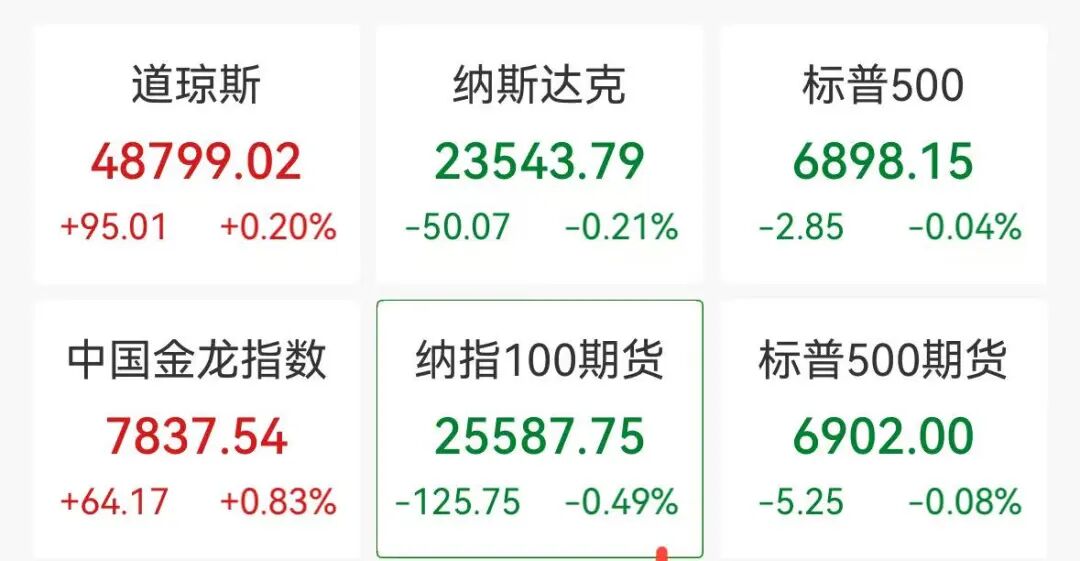
Group 1 - The performance of major US tech companies varied, with Tesla rising over 2%, Nvidia up 0.7%, and Apple increasing by 0.1%, while Google, Amazon, Facebook, and Microsoft all fell by less than 1% [2] - Nvidia is set to hold a closed-door summit next week to address the growing power shortage issues in the AI era, as Goldman Sachs highlighted that the power consumption of AI server clusters is outpacing the expansion of the power grid [2] - Broadcom's stock dropped over 8% after the company failed to meet investor expectations regarding its AI market sales outlook, with projections indicating a decline in gross profit margins due to AI products [2] Group 2 - The Nasdaq Golden Dragon China Index rose over 1%, with many popular Chinese concept stocks increasing, including Yixian E-commerce up over 19% and Kingsoft Cloud up over 4% [2] - Gold and silver prices both surged, with spot gold reaching $4,350, up 1.66%, and silver hitting a new high of $64.5 [3] - A report from Goldman Sachs predicts that gold prices could reach $4,900 by the end of 2026, with potential for even higher prices [3] Group 3 - Cryptocurrency markets saw a collective rise, with Bitcoin surpassing the $92,000 mark [5] - Ethereum (ETH) increased by 1.9% to $3,219, while other cryptocurrencies like SOL and XRP also saw gains of 5.4% and 2.55% respectively [6]


华为2024年专利收入达6.3亿美元
日经中文网· 2025-11-12 10:04
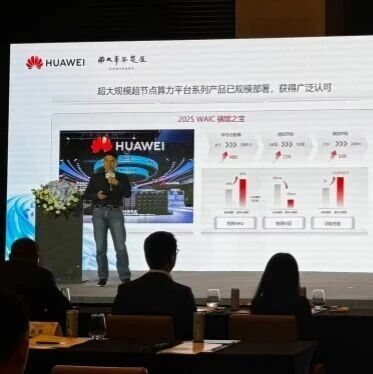
Core Viewpoint - Huawei has maintained its position as a leading innovator in the field of patents, with a strong focus on artificial intelligence and technology development, reflecting its commitment to open innovation and intellectual property protection [2][4][5]. Group 1: Patent Achievements - Since 2014, Huawei has ranked first globally in annual patent applications, except for 2016, with a total of approximately 150,000 international patents [5]. - In 2024, Huawei applied for 6,600 patents under the Patent Cooperation Treaty (PCT), showing a slight increase from the previous year [4][5]. Group 2: Financial Performance - In 2024, Huawei's patent licensing revenue is projected to reach $630 million, representing a year-on-year growth of about 10% [2]. - The company's research and development expenditure for 2024 is approximately $28.5 billion, which is a 9% increase year-on-year and accounts for about 21% of its sales revenue, up from around 10% in previous years [5]. Group 3: Technological Innovations - Huawei has introduced high-performance AI server clusters utilizing self-developed AI semiconductors and the Harmony operating system, which is integrated into its self-developed smartphones [5]. - The company emphasizes the importance of open innovation as a driving force for social development and technological advancement, while also respecting the intellectual property rights of others [4].
部分国产芯片闲置率高达80%?智算中心建设“点刹”背后
3 6 Ke· 2025-04-28 10:25
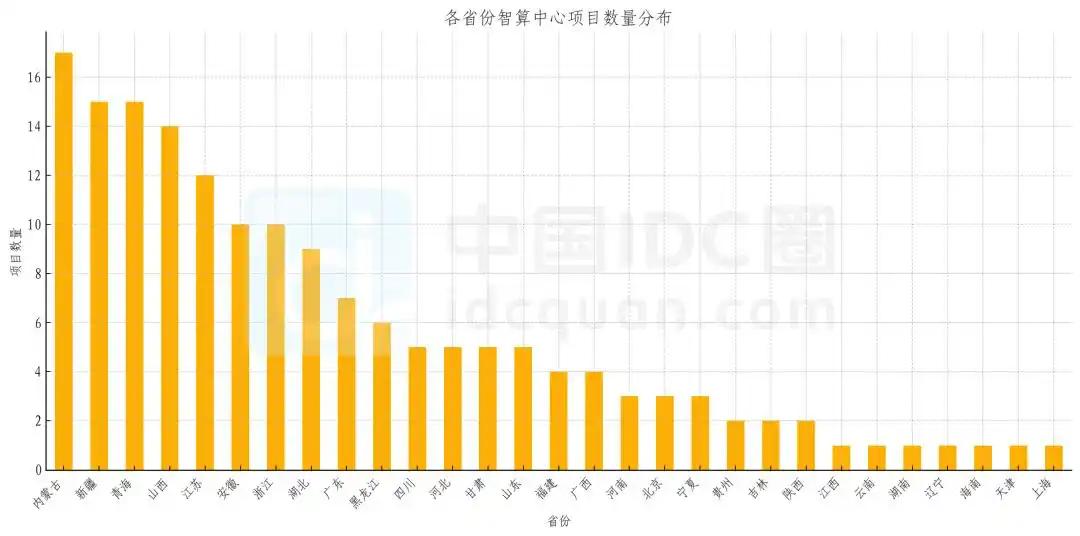
Core Insights - The rapid development of artificial intelligence (AI) technology has intensified global strategic competition, with intelligent computing centers becoming a new infrastructure in tech competition [1] - Investment in intelligent computing centers in China has surged from hundreds of billions to trillions, with nearly 150 operational projects and close to 400 under construction or planning as of November 2024 [2][3] Investment Trends - As of August 2024, the total number of intelligent computing center projects in China exceeded 300, with a computing power scale surpassing 500,000 PFlops, and over 50 new projects launched in 2024 alone [3] - The total investment in 128 disclosed projects reached over 430 billion yuan, but only 16 projects are in operation or trial phases, indicating a significant gap between planned and actual deployment [3][9] Structural Issues - The market is experiencing a "structural mismatch" rather than an outright surplus of computing power, with significant demand growth in AI inference driving the need for more efficient resource allocation [5][9] - Some intelligent computing centers report utilization rates as low as 10-15%, with certain centers having GPU utilization below 30%, leading to concerns about resource wastage [9][11] Management and Operational Challenges - The supply chain uncertainties, particularly regarding NVIDIA chips, pose challenges for intelligent computing centers, prompting a shift towards domestic chip manufacturers providing comprehensive solutions [12][14] - The industry is moving towards "refined management," with traditional leasing models becoming less profitable, necessitating mergers and resource reallocation to enhance efficiency [14][15] Future Outlook - The ongoing demand for AI inference and the acceleration of domestic chip development are critical for the industry's future, with a focus on building a sustainable computing power system [14] - The integration of AI technology with industry applications requires a skilled workforce, emphasizing the need for professionals who understand both AI and industry-specific needs [14]