AlphaFold 3

Search documents
计算机行业2026春季投资策略:把握AI主线,重视新科技
China Post Securities· 2026-02-25 07:09
Group 1: AI Development and Applications - The AI large model market is expected to mature by 2025, driving rapid growth with low-cost, high-performance technology as a foundation for sustainable commercialization [2] - AI applications are expanding across various sectors, with AI Agents being implemented in customer service, code development, marketing, data analysis, and financial services [2] - The Chinese AI market is projected to grow from 937 billion yuan in 2022 to 9930 billion yuan by 2030, with a compound annual growth rate of 35.5% from 2024 to 2030 [20][21] Group 2: Commercial Aerospace - The low Earth orbit and spectrum have become critical strategic resources in global aerospace competition, with China applying for frequency and orbital resources for 203,000 satellites [3] - The market for manufacturing and launching satellites is expected to reach 268 billion yuan in 2026 and 1279 billion yuan by 2030, with a compound annual growth rate of 48.1% from 2025 to 2030 [3] Group 3: Brain-Computer Interface (BCI) - The BCI technology has been included in China's national strategic planning, with significant clinical breakthroughs and a focus on developing a robust industry ecosystem by 2030 [55][58] - The global BCI market is projected to grow from 1.2 billion USD in 2019 to nearly 20 billion USD in 2023, with a forecast of 40 billion USD in the medical application sector by 2030 [75] Group 4: Quantum Computing - Quantum computing is recognized as a disruptive core technology that reshapes global technological competition, with significant advancements in China's industry layout [3][77] - The domestic quantum computing industry is rapidly developing, with a focus on hardware and software capabilities, aiming for a complete industrial chain [3]
生成式科学智能的新标杆:IntelliFold 2新近发布并开源,主要指标实现全面领先
机器之心· 2026-02-08 10:37
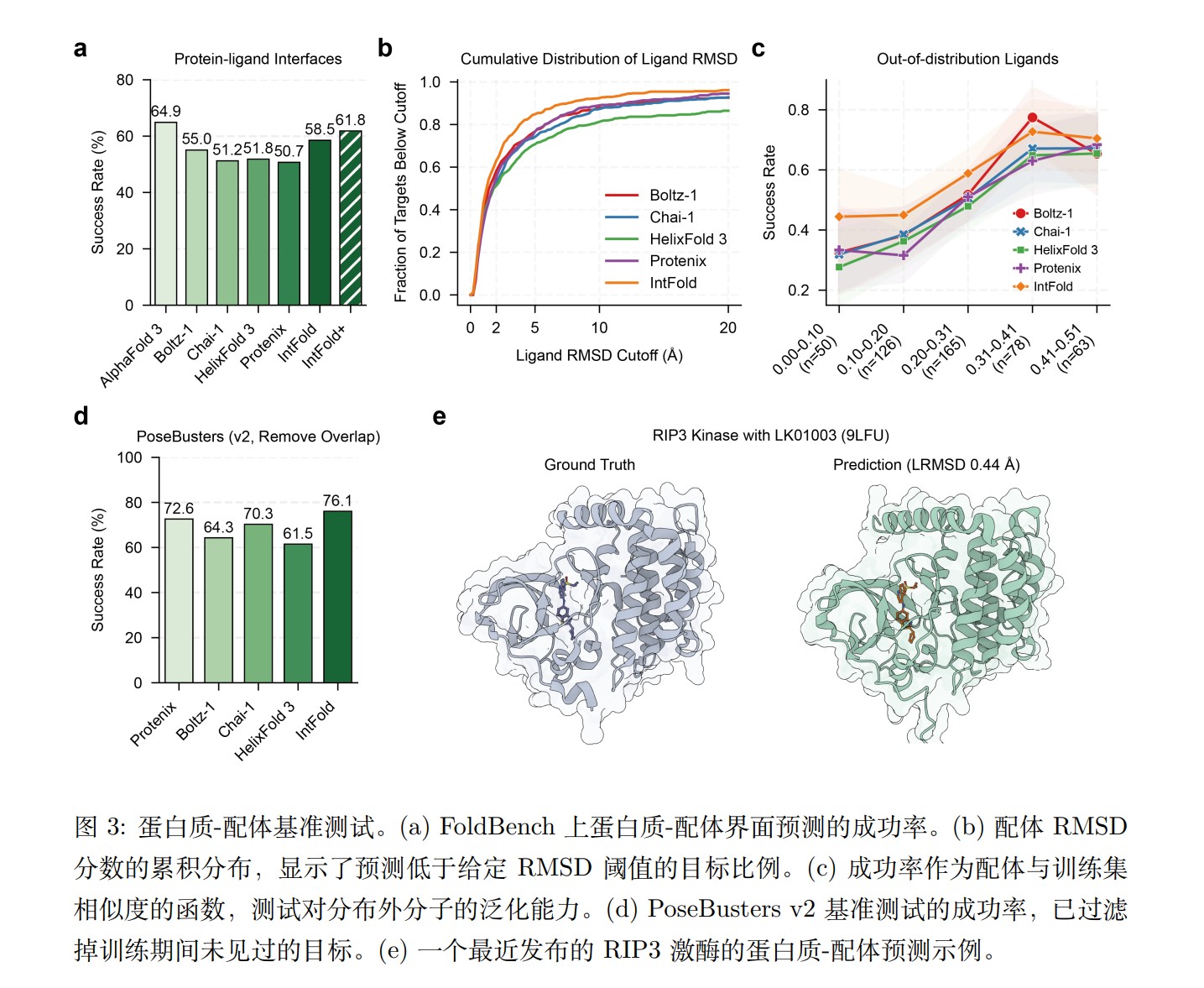
Core Insights - The article discusses the emergence of Generative Science driven by GenAI, highlighting the significance of biological foundation models as a key area of focus in the industry [1] - The release of IntelliFold 2 marks a significant upgrade in biological modeling, showcasing its superior performance compared to AlphaFold 3 in critical tasks related to drug development [4][7] Group 1: Biological Foundation Models - Biological foundation models leverage GenAI architectures like Transformer to extract valuable insights from vast amounts of data, revealing the "grammar of life" that is often difficult for humans to perceive [2] - The AlphaFold series by DeepMind is recognized as a groundbreaking achievement, with AlphaFold 3 being a notable industry benchmark, although few models are expected to match its capabilities by the end of 2025 [2] - The proliferation of biological foundation models faces challenges related to open-source accessibility, performance limits, and deployment convenience, necessitating high-performance and high-availability solutions [2] Group 2: IntelliFold 2 Release - IntelliGen AI's IntelliFold 2, released recently, demonstrates significant advancements in efficiency and functionality, surpassing AlphaFold 3 in key performance metrics [4][7] - IntelliFold 2 achieved a success rate of 58.2% in antibody-antigen interactions, outperforming AlphaFold 3's 47.9%, indicating a more robust model for identifying high-potential candidates [13] - In protein-ligand co-folding tasks, IntelliFold 2 achieved a success rate of 67.7%, surpassing AlphaFold 3's 64.9%, which is crucial for small molecule drug design [13] Group 3: Technical Innovations - The core breakthroughs of IntelliFold 2 stem from a rethinking of "information representation capabilities" and "hardware computing characteristics," integrating microscopic interaction rules with AI computational paradigms [11] - The model employs a random atomic-level tokenization approach to enhance its ability to capture fine-grained atomic contact patterns, addressing challenges in traditional modeling methods [14] - IntelliFold 2's architecture allows for a unified model that connects structure prediction with various functional discoveries, enabling researchers to inject hypotheses and constraints for more controlled and precise task development [17] Group 4: Future Prospects - The article emphasizes the ongoing global competition in biological foundation models, with IntelliFold 2's release being a significant milestone that showcases the potential for emerging teams to achieve outstanding results [25] - IntelliGen AI plans to release a De novo design model for Binder and antibodies in mid-2026, aiming to unify prediction and generation processes to accelerate drug development [26] - The future landscape of biological foundation models is expected to become increasingly competitive, with hopes for new innovators to drive the era of intelligent drug design [27]

AI医疗:暴力破解创新药,人类突破长寿极限
泽平宏观· 2026-02-01 16:05
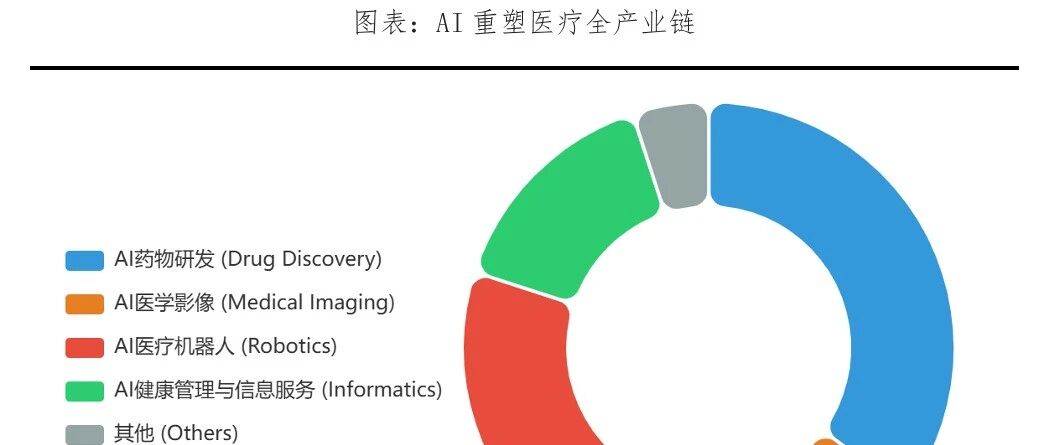
Core Viewpoint - AI is revolutionizing the life sciences and pharmaceutical research, significantly improving efficiency and reducing costs associated with drug development [3][4][7]. Group 1: Global AI Medical Market Expansion - The global AI medical market is rapidly expanding, characterized by the entry of major tech companies like NVIDIA, Google, and Microsoft, which are restructuring medical infrastructure [3][4]. - AI technology is deeply integrating with biotechnology, leading to unprecedented levels of financing and mergers in the AI medical sector, with projections indicating a record high in 2025 [4][5]. - Major pharmaceutical companies are investing billions in partnerships with AI startups, exemplified by Sanofi's $2.5 billion collaboration with Earendil and other significant deals with Atomwise and Dren Bio [5][6]. Group 2: AI Drug Development and Applications - AI is transforming drug development by addressing various diseases, including cancer, neurodegenerative diseases, metabolic disorders, autoimmune diseases, infectious diseases, and rare diseases, significantly lowering trial costs and improving success rates [7][8][9]. - The efficiency of AI in drug development is highlighted by its ability to reduce the traditional 10-year, $1 billion timeline with only a 10% success rate, enhancing the overall drug discovery process [8][9]. - AI's role in drug discovery is expanding from initial target identification to clinical trial design and patient recruitment, covering the entire industry spectrum [8][9]. Group 3: Policy Support for AI in Healthcare - National strategies are being implemented to support AI applications in healthcare, including the 2025 guidelines promoting AI in drug development to reduce costs and time [9][10]. - Local governments are providing financial incentives for AI drug development, with subsidies for computational costs and support for companies achieving regulatory approvals [11][12]. - Policies are encouraging the internationalization of innovative drugs, with significant support for local companies conducting global clinical trials [11][12]. Group 4: Future Opportunities in AI Healthcare - The first major opportunity lies in AI-assisted drug discovery, which is expected to have a trillion-dollar market potential, particularly in treating diseases like cancer and Alzheimer's [25][26]. - AI is set to enhance diagnostic accuracy in medical imaging, addressing resource distribution issues and integrating diagnostic capabilities into imaging devices [28][29]. - AI will drive advancements in clinical decision support and healthcare information systems, improving data utilization and patient care efficiency [30][31]. - AI-powered surgical robots are expected to redefine surgical precision and enable remote medical procedures, breaking geographical barriers in healthcare delivery [32][33].

谷歌基因解码模型准确率已达90%!未来十年,AI将治愈所有疾病?
Di Yi Cai Jing· 2026-01-29 09:39
Core Insights - DeepMind's AlphaGenome aims to address the challenges in drug development by decoding human genes, potentially completing the "last piece of the puzzle" in discovering new molecules for significant medical advancements [1][3] Group 1: AI in Gene Research - AlphaGenome can decode 98% of genetic "dark matter" with an accuracy of 90%, allowing for comprehensive predictions of 11 different gene regulatory processes [1][3] - The tool analyzes complex gene splicing mechanisms and identifies how single genes can produce multiple proteins, which is crucial for understanding disease [3] Group 2: Industry Impact and Adoption - Over 1 million API calls are processed daily by AlphaGenome, with more than 3,000 users across 160 countries, indicating its growing adoption in tackling complex biological challenges [3] - Major pharmaceutical companies like Eli Lilly, AstraZeneca, Novartis, Pfizer, Amgen, and GSK are investing heavily in AI for drug discovery to enhance the success rates of new drug development [5] Group 3: Future Predictions and Clinical Trials - DeepMind's CEO predicts that AI will be able to cure all diseases within the next decade, highlighting the transformative potential of AI in healthcare [1][3] - Clinical trials for AI-designed drugs are set to begin, as stated by the CEO at the recent Davos Forum, indicating a shift towards practical applications of AI in drug development [4] Group 4: Efficiency and Market Expectations - McKinsey predicts that autonomous AI could improve clinical development efficiency by 35% to 45% over the next five years without human intervention [6] - Analysts from TD Cowen suggest that while AI is already prevalent in the pharmaceutical industry, it may take one to three years for investors to see returns from AI in accelerating drug development [6]
DeepMind 掌门告诫马斯克:如果AI出问题,去火星也没用
3 6 Ke· 2025-08-07 07:05
Core Insights - Demis Hassabis, the leader of Google DeepMind, emphasizes the transformative impact of AI, claiming it will revolutionize society at a scale and speed ten times greater than the Industrial Revolution [1][16] - Google DeepMind has integrated its advanced AI models, particularly Gemini, into the Google ecosystem, significantly increasing user engagement and maintaining a strong presence in academic research [1][10] Group 1: Company Overview - Google DeepMind was formed after the merger of DeepMind and Google Brain in April 2023, with Hassabis at the helm [1] - The company has made significant advancements in AI, including the release of AlphaFold 3, which predicts protein complex structures and has been cited over 4,000 times in research [1][10] - Google acquired DeepMind for £400 million in 2014, driven by a shared vision of integrating AI into Google's core mission [9] Group 2: Industry Impact - The release of ChatGPT in 2022 dramatically changed the AI landscape, prompting major tech companies to accelerate their AI investments and talent acquisition [10][11] - Competitors like Meta, Amazon, Apple, and Microsoft are heavily investing in AI, with Microsoft recently hiring over 20 engineers from DeepMind [11][12] - Hassabis believes that the next five to ten years will be crucial for achieving Artificial General Intelligence (AGI), which could exhibit human-like cognitive abilities [12] Group 3: Future Outlook - Hassabis envisions a future of "extreme abundance" facilitated by AI advancements, leading to significant societal benefits if resources are distributed equitably [13][14] - He acknowledges potential challenges, such as energy consumption and job displacement due to AI, but remains optimistic about humanity's ability to adapt and thrive [14][15] - The transformative changes brought by AI are seen as necessary and inevitable, with a focus on minimizing disruption while embracing progress [16]


自研生物结构预测基础模型,「探序秩元」试图打破新药研发双十定律 | 早期项目
3 6 Ke· 2025-08-04 00:15
Core Insights - The emergence of generative science, particularly through advancements in AI models like AlphaFold 2 and AlphaFold 3, is poised to transform traditional scientific research paradigms by leveraging vast amounts of scientific data for model training and direct result generation [1][2] Group 1: Generative Science and AI Models - Generative science allows for a shift from precise mathematical descriptions and experimental validations to utilizing large datasets for model training, achieving faster and broader results [1] - AlphaFold 2 revolutionized protein structure prediction, and AlphaFold 3 extends this capability to complex biological interactions, indicating significant potential for drug development [1][2] - The new company, Isomorphic Labs, has secured substantial orders from major pharmaceutical companies like Eli Lilly and Novartis, highlighting the commercial interest in generative science applications [2] Group 2: IntelliFold Model - The newly developed IntelliFold model by the startup Tanxu aims to provide a controllable foundational model for predicting interactions among various biological molecules, enhancing drug discovery processes [4][6] - IntelliFold demonstrates comparable performance to AlphaFold 3 in several key protein structure prediction metrics, with notable advantages in RNA structure prediction [6] - The model can predict binding conformations and affinities, which are crucial for drug efficacy, thus improving virtual screening processes [6][7] Group 3: Future Directions and Industry Impact - The generative science model is expected to revolutionize protein design by enabling de novo design of amino acid sequences, potentially leading to superior outcomes not found in nature [7] - The goal for Tanxu is to establish IntelliFold as a universal intelligent scientific foundational model, enhancing research efficiency across various tasks [7][8] - The integration of AI in drug development is anticipated to significantly increase the success rates of early-stage drug assets, addressing the traditional challenges of long development cycles and low success rates [8]
AI早报 | 美知名投资人预测:AI 将造就全球首位万亿富翁;有学者被曝在论文中植入提示词,诱导 AI 给出正面评价
Sou Hu Cai Jing· 2025-07-08 00:26
Group 1 - Prominent investor Mark Cuban predicts that AI will create the world's first trillionaire, likely not from traditional wealthy backgrounds [2] - Cuban emphasizes that the impact of AI is comparable to the advent of the internet or cloud computing, suggesting that those who can integrate AI into everyday life will reap significant rewards [2] - Isomorphic Labs, a company spun off from Google DeepMind, is preparing to start its first human trials for AI-designed cancer drugs [3] Group 2 - Isomorphic Labs was established in 2021 and is leveraging AI technology to assist in the development of cancer treatments, building on DeepMind's breakthrough research with AlphaFold [3] - AlphaFold is recognized for its ability to predict protein structures with unprecedented accuracy, and Isomorphic has signed significant research collaboration agreements with major pharmaceutical companies like Novartis and Eli Lilly [3] - Alibaba Cloud has officially open-sourced its web intelligence agent, WebSailor, which has shown superior performance compared to other open-source models and is second only to closed-source models like OpenAI's DeepResearch [4] Group 3 - The robotics company Star Era has completed nearly 500 million yuan in Series A financing, led by Dinghui VGC and Haier Capital, with participation from several notable financial and industrial investors [5] - Star Era has developed service-oriented wheeled humanoid robots and full-sized bipedal robots for industrial applications [5] - Capgemini has announced a $3.3 billion acquisition of business process management company WNS to enhance its AI capabilities, with a final agreement reached at $76.50 per share [6]

Isomorphic Labs:DeepMind 创始人再创业,打造制药界的 TSMC
海外独角兽· 2025-07-07 09:54
Core Insights - Isomorphic Labs is transforming drug discovery from a traditional experimental-driven model to an AI computational-driven design model through the breakthrough structural prediction capabilities of AlphaFold 3 [3][10] - The company has modularized and platformized molecular structure design and has established deep collaborations with top pharmaceutical companies like Eli Lilly and Novartis, gaining both experimental data feedback and revenue [3][4] Research Thesis - The company aims to accelerate drug design using deep learning algorithms, with a focus on the concept of "Isomorphic," which suggests that biological systems can be algorithmically mapped [10] - AlphaFold 3 represents a pivotal moment in structural biology, making molecular design a programmable problem and positioning Isomorphic Labs as a potential "AI Foundry" in drug development [10][11] - The collaboration with major pharmaceutical companies creates a feedback loop that enhances model accuracy through real project data [12][13] Business Model - Isomorphic Labs collaborates with pharmaceutical companies to establish new drug projects, providing structural prediction capabilities and molecular design expertise while the pharmaceutical partners supply targets and experimental resources [15] - The project-based collaboration allows for significant contract values and clear milestone incentives, enhancing project stickiness and revenue potential [15][16] Competitive Landscape - Isomorphic Labs focuses on integrating AlphaFold 3's structural predictions into downstream small molecule modeling, differentiating itself from competitors like Chai Discovery, which emphasizes integrating AI workflows into biological laboratories [39][40] - The company is positioned as a leader in the AI-driven drug discovery (AIDD) space, with a unique approach that combines computational design with experimental validation [30][39] Team - The team consists of approximately 200 members, with a strong background in computational science, structural biology, drug chemistry, and data engineering, reflecting a blend of AI and traditional drug development expertise [41][43] - Leadership includes experienced professionals from DeepMind and the pharmaceutical industry, ensuring a robust foundation for the company's innovative approach [45][46] Financing and Collaboration Milestones - In March 2025, Isomorphic Labs completed its first external financing round, raising $600 million, which reflects investor confidence in the company's technology and market potential [4][53] - The company has secured significant prepayments and milestone agreements with Eli Lilly and Novartis, indicating strong market interest and validation of its AI-driven drug discovery capabilities [54] Product Technology Stack - AlphaFold 3 utilizes a diffusion model to predict the three-dimensional structures of proteins, DNA/RNA, and small molecules, significantly enhancing the accuracy and speed of drug discovery processes [56][58] - The model's ability to provide atomic-level coordinates for binding pockets allows for more efficient and precise screening of potential lead compounds [56][57] Outlook and Conclusion - Isomorphic Labs operates under a model of "platform capability licensing + customized collaboration," which allows for reduced clinical risk while enhancing the adaptability of its models [64] - The company's success in proving the viability of its AI-driven approach to drug discovery could redefine the valuation logic in the biotech sector, moving beyond traditional pipeline models [66]
融资6亿美元,诺贝尔奖团队开发AI制药大模型
3 6 Ke· 2025-07-03 01:22
Core Insights - Demis Hassabis, founder of DeepMind and Isomorphic Labs, has made significant contributions to AI, particularly in drug development and protein structure prediction, with his work leading to the 2024 Nobel Prize in Chemistry for AlphaFold [5][10][19] - Isomorphic Labs, established in 2021, focuses on AI-driven drug discovery, leveraging AlphaFold's technology to enhance the drug development process [3][10][19] Company Overview - Isomorphic Labs has developed a unified AI drug design engine that utilizes multiple next-generation AI models applicable across various therapeutic areas [3][10] - The company recently secured $600 million in funding, led by Thrive Capital, to further develop its AI drug design engine and advance treatment solutions into clinical stages [3][10] Technological Advancements - AlphaFold 3, released in May 2024, significantly improves the prediction of protein structures and molecular interactions, enhancing drug development efficiency by at least 50% compared to traditional methods [14][16] - The AI drug design engine integrates advanced AI technologies, including diffusion models and multi-task reinforcement learning, to streamline the drug discovery process, reducing the timeline from an average of 5-10 years to 1-2 years [16][17] Market Potential - The global AI drug discovery market is projected to reach $20 billion by 2025, with a compound annual growth rate exceeding 30% [19] - The industry is witnessing a surge in investment, with over a hundred startups and large pharmaceutical companies actively engaging in AI research and development [19][20] Strategic Collaborations - Isomorphic Labs has formed strategic partnerships with major pharmaceutical companies, including Novartis and Eli Lilly, to co-develop AI-assisted drug discovery projects [10][11] - These collaborations aim to explore challenging drug targets and expand the scope of AI applications in drug development [11][19]

AI4Science 图谱,如何颠覆10年 x 20亿美金成本的药物研发模式
海外独角兽· 2025-06-18 12:27
Core Insights - The article discusses the convergence of life sciences and digital internet technologies through AI for Science, highlighting the transformative potential of large models in accelerating scientific discovery [3][6]. - It emphasizes the shift from traditional trial-and-error methods in drug development, which typically require 10 years and $2 billion, to automated processes enabled by AI, significantly reducing costs and time [7][8]. Group 1: Background and Framework - The 1950s saw two revolutions: Shannon and Turing's information theory laid the groundwork for the digital revolution, while Watson and Crick's discovery of the DNA double helix initiated the information age in biology [6]. - The article introduces a mapping framework for understanding AI in life sciences, with axes representing Generalist vs. Specialist and Tech vs. Bio, assessing the breadth and depth of startups in biopharmaceutical development [9][11]. Group 2: Biology Foundation Models - AlphaFold 3 represents a milestone in AI for science, solving the long-standing challenge of protein structure prediction, which previously took months or years [14]. - Isomorphic Labs, a spinoff from Google DeepMind, has secured significant partnerships with Eli Lilly and Novartis, validating its technology's commercial value [15]. - Other models like ESM3 and Evo2 are exploring different paths in biological foundation models, focusing on multi-modal inputs and genome language modeling [17][22]. Group 3: AI Scientist and Automation - The AI Scientist concept aims to automate research processes, addressing the inefficiencies of traditional biological research, which is often lengthy and costly [24]. - FutureHouse is developing a multi-agent system to enhance research efficiency, demonstrating the potential for AI to significantly increase productivity in scientific discovery [38]. Group 4: AI-native Therapeutics - AI-native therapeutics companies aim to integrate AI throughout the drug discovery and clinical development process, focusing on complex therapies like RNA and cell therapies [40]. - Companies like Xaira Therapeutics and Generate Biomedicines are building comprehensive platforms that leverage AI for end-to-end drug development, aiming to reduce time and costs associated with traditional methods [49][51]. Group 5: AI Empowered Solutions - Companies in this category focus on optimizing specific stages of drug development using AI, such as drug repurposing and clinical trial acceleration [68][75]. - Tahoe Therapeutics has released a large single-cell perturbation dataset, enhancing AI model training and drug discovery processes [64]. Group 6: Conclusion - The article concludes that the integration of foundation models and automated AI scientists is driving exponential advancements in scientific exploration, shifting value from traditional CROs to AI-native companies [78].