Azure云计算业务

Search documents
微软股价一周内两次被下调评级,AI业务盈利模式引发担忧
Jin Rong Jie· 2026-02-10 03:37
Core Viewpoint - Microsoft has faced two downgrades in stock ratings within a week, raising concerns about its Azure cloud business growth and the development of its Copilot AI tools [1] Group 1: Stock Rating Downgrades - Stifel downgraded Microsoft's rating, citing warnings about the growth rate of its Azure cloud computing business [1] - Melius Research lowered Microsoft's rating from "Buy" to "Hold," pointing to capital expenditure pressures and concerns regarding the Copilot product line [1] Group 2: Challenges and Concerns - Melius analyst Ben Reitzes noted that Microsoft's strong 365 suite may face challenges from competing products like Anthropic's Cowork, potentially forcing Microsoft to offer Copilot for free to maintain relevance, which could harm growth and profit margins in its productivity sector [1] - The need for increased capital expenditure to keep pace with competitors like Alphabet and Amazon could negatively impact Microsoft's free cash flow [1] - Reitzes expressed skepticism about the paid model for AI services, suggesting that Copilot may need to be bundled for free, leading to increased long-term costs [1] Group 3: Target Price Adjustments - Melius has lowered Microsoft's target price to $430, marking it as one of the lowest target prices on Wall Street [1] - Despite the downgrades, 96% of analysts still recommend buying Microsoft stock, with an average target price slightly above $600 [2]

策略周报:“春躁”调整期,静待AI催化-20260208
Bank of China Securities· 2026-02-08 15:21
Core Insights - The report indicates that the "Spring Fever" market is entering a phase of adjustment, with expectations for technology growth to regain prominence post-holiday, particularly in AI applications which may see a rebound [2][12] - The report emphasizes that while there are short-term fluctuations in the non-ferrous metals sector, the long-term re-evaluation logic remains intact, driven by financial attributes and industrial trends [13] - AI applications are anticipated to experience a bottoming rebound, with significant updates expected from leading domestic firms around the Spring Festival, suggesting potential investment opportunities in the AI industry chain [30][31] Market Overview - The market is currently characterized by a shrinking volume and oscillating patterns, with structural opportunities still present despite a lack of systemic rebound momentum [12] - The report notes that the recent volatility in overseas commodity prices has contributed to a weakening market, with a rotation among sectors and active individual stocks [12][23] - The report highlights that the consumer sector is beginning to recover, while previously overvalued technology and non-ferrous sectors are undergoing adjustments [12] Industry and Economic Data - The report provides insights into key economic indicators, such as the ISM manufacturing PMI in the US, which rose to 52.6, and China's foreign exchange reserves, which increased to $33,990.8 million [17] - It also notes that the non-ferrous metals sector is facing increased short-term volatility, but the long-term demand-supply dynamics remain favorable due to tightening global copper supply and emerging demand [13] AI Sector Insights - The report discusses the recent downturn in the AI industry, driven by uncertainties surrounding business models and real demand, particularly following Microsoft's financial disclosures and Nvidia's investment stance on OpenAI [27][28] - It argues that traditional SaaS companies are well-positioned to leverage their industry knowledge and data advantages to build new barriers in the AI era, despite market concerns about self-built AI systems being inefficient and costly [29] - The report anticipates that the upcoming updates from major AI models around the Spring Festival could catalyze a rebound in AI applications, suggesting a focus on investment opportunities in AI applications, cloud services, and storage [30][31]
策略点评:AI回调的布局窗口
Bank of China Securities· 2026-02-06 01:41
Core Insights - The report emphasizes that the recent pullback in the AI industry is a necessary phase in the deep integration of AI technology into various sectors, rather than a fundamental threat to the industry's future [1][6] - It suggests that the current market concerns regarding the uncertainty of AI application business models and hardware demand are part of the industry's evolution, and that this pullback presents investment opportunities in AI applications, cloud services, and storage [2][6] Market Trends - Since mid-January 2026, the AI industry chain has experienced a continuous pullback, exacerbated by several events in early February, including Microsoft's financial report revealing dual concerns about growth dependency and investment returns [2][3] - Microsoft's Q2 2026 financial report indicated a slowdown in Azure cloud computing growth and projected capital expenditures exceeding $100 billion, with approximately 45% of its cloud business backlog dependent on OpenAI [3] - Concerns were also raised regarding NVIDIA's investment stance on OpenAI, with CEO Jensen Huang indicating a cautious approach to investment, despite previous indications of a potential $100 billion investment [4] Business Model Uncertainty - The report identifies dual uncertainties in the market: the uncertainty of AI application business models and the uncertainty of real demand [5][6] - It highlights that traditional SaaS companies may face challenges as enterprises consider building their own AI tools, potentially undermining SaaS profitability [5][6] - The report argues that the market's valuation logic is shifting from paying premiums for future potential to assessing current realities and investment returns [5] Long-term Outlook - The report posits that the concerns regarding business model and demand uncertainties are part of the necessary evolution towards deeper integration of AI technology, rather than a fundamental threat to the industry's prospects [6] - It suggests that traditional application vendors can leverage their industry knowledge and data advantages to build new barriers in the AI era, and that early movers may see valuation increases [6][7] - The demand for hardware is expected to grow in tandem with the maturity of software applications, as AI applications transition from "technology demonstrations" to "production tools" [7]

人工智能成焦点,科技公司走钢丝,美国因素下韩股遭遇“过山车”
Huan Qiu Shi Bao· 2026-02-03 22:57
Core Insights - The South Korean stock market experienced significant volatility, with a sharp decline followed by a strong rebound, highlighting the precarious nature of AI-related investments in a high-valuation environment [1][2] Market Performance - On February 2, the KOSPI index fell by 5.3%, marking the largest drop since April of the previous year, with major chip stocks like Samsung Electronics and SK Hynix dropping over 6% [2] - The KOSPI index rebounded over 3% the following day, returning to above 5000 points, driven by a swift return of bargain hunters after the previous day's sell-off [2] - The volatility was influenced by external factors, including a downturn in the U.S. market and concerns over the Federal Reserve's interest rate policies [2] AI Investment Sentiment - The sustainability of AI investments has been identified as a key factor affecting the South Korean market, which has seen a surge in total market capitalization to over $3.3 trillion, partly due to strong demand for storage chips [4] - Recent discussions around AI spending plans have raised concerns about potential bubbles, particularly following disappointing earnings from Microsoft, which reignited debates about the viability of AI investments [4][5] Corporate Dynamics - OpenAI's dissatisfaction with NVIDIA's latest AI chips has complicated the relationship between the two companies, posing a significant challenge to NVIDIA's dominance in the AI sector [5] - Microsoft reported a robust earnings report but faced a 10% drop in stock price due to stagnation in its Azure cloud business and projected capital expenditures exceeding $100 billion [5] - Major tech companies, including Microsoft, Meta, Alphabet, and Amazon, are expected to collectively spend over $500 billion this year, primarily on AI infrastructure, necessitating precise execution to meet market expectations [6]
高盛力挺2026年美股盈利前景:超半数公司上调指引,缓解财报季低迷担忧
智通财经网· 2026-02-02 12:21
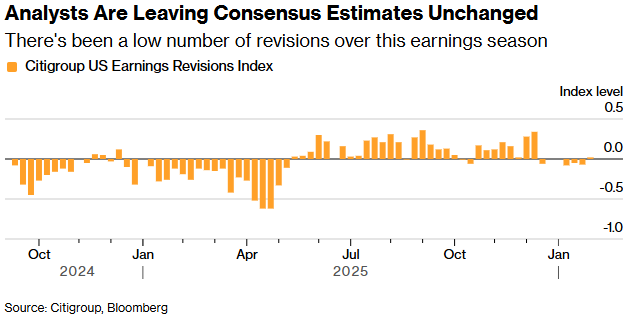
Group 1 - Goldman Sachs strategist Ben Snyder indicates that the earnings outlook for U.S. companies in 2026 remains solid, alleviating concerns raised by lackluster earnings reports [1] - More than half of the S&P 500 companies that have issued 2026 earnings per share forecasts have provided guidance above analyst expectations, surpassing the historical average of over 40% [1] - Approximately 78% of S&P 500 companies have reported earnings that exceeded expectations during the current earnings season, although this is lower than the previous two quarters [1] Group 2 - Lockheed Martin's stock rose by 4% after predicting 2026 profits above analyst expectations, while Verizon's adjusted profit and free cash flow forecasts exceeded consensus, leading to the largest stock increase since October 2008 [5] - Meta's stock surged by 10% following a much stronger than expected revenue forecast, helping to offset the impact of increased AI-related expenditures [5] - In contrast, disappointing earnings reports have led to significant stock declines, as seen with Microsoft, whose stock fell sharply due to underwhelming growth figures from its Azure cloud computing business [5] Group 3 - The consensus earnings growth expectation for the S&P 500 index remains largely unchanged since the start of the earnings season, with Goldman Sachs projecting a 12% growth, while analyst consensus stands at 13.5% [5] - JPMorgan strategist Mislav Matejka describes the earnings season as "encouraging," noting that strong earnings delivery should support corporate capital expenditures, with this trend appearing to accelerate and expand [5]


韩国股市,盘中触发熔断
财联社· 2026-02-02 10:21
Core Viewpoint - The South Korean stock market has been a global leader over the past year, but a significant drop on the first trading day of February has tested investor confidence amid concerns over the sustainability of AI-driven spending and uncertainty in the Federal Reserve's interest rate policy [1][5][6]. Group 1: Market Performance - On February 1, the KOSPI index experienced a sharp decline, falling by 5.26% and marking the largest single-day drop since April of the previous year, with a maximum intraday drop of 5.6% [1][4]. - The market's volatility prompted the activation of the "Sidecar" mechanism to curb excessive fluctuations, which halts sell orders for five minutes when the index moves more than 5% [1][3]. - Despite the recent downturn, the KOSPI index has risen over 17% year-to-date, maintaining a strong position among global indices [8]. Group 2: Key Companies - Major semiconductor companies, Samsung Electronics and SK Hynix, saw their stock prices drop by over 6% and 8%, respectively, during the market sell-off [4]. - Oracle's unexpected announcement to raise $50 billion for cloud infrastructure has drawn significant attention, with concerns about potential layoffs and asset sales to address financing challenges [7]. Group 3: Investor Sentiment - Analysts suggest that multiple factors, including anxiety over the nomination of a new Federal Reserve chair and volatility in metal prices, have led to profit-taking among investors [5]. - Concerns regarding the sustainability of AI-related spending have intensified, particularly following Microsoft’s report of stagnation in its Azure cloud business and Nvidia CEO Jensen Huang's comments on investment commitments to OpenAI [6]. - Some optimistic investors view the recent market correction as a necessary adjustment for future growth, asserting that there have been no substantial changes in order volumes or capital expenditures [10].

微软,市值蒸发超3800亿美元
Xin Lang Cai Jing· 2026-02-02 06:49
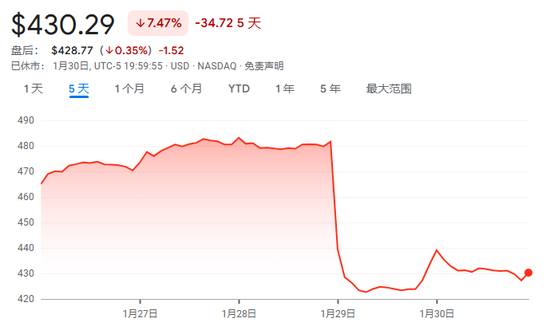
Core Viewpoint - Concerns over AI spending costs have been brewing beneath a seemingly calm stock market, recently resurfacing with significant impact on major tech companies like Microsoft and Meta [1][3][5] Group 1: Microsoft Performance - Microsoft reported a solid earnings report, but investor focus shifted to the stagnation of its Azure cloud computing business and its planned capital expenditures exceeding $100 billion for the year [1][3] - This led to Microsoft's worst weekly performance since March 2020, with a market value loss of $381 billion over two trading days [1][3] Group 2: Meta's Situation - Meta's earnings report indicated the fastest quarterly revenue growth in over four years, resulting in a 10% stock price increase, but plans to increase capital expenditures by up to 87% by 2026 negatively affected its stock, which fell nearly 3% the following day [3][11] - The market is cautious, as tech giants are under pressure to deliver growth that justifies their substantial spending [3][11] Group 3: Broader Market Trends - The total capital expenditures for Google, Amazon, Microsoft, and Meta are expected to exceed $500 billion this year, primarily for AI infrastructure [5][13] - Google has seen a 70% stock price increase over the past six months, driven by the success of its Gemini AI model and custom AI processors [5][13] - Amazon's AWS has shown strong growth, but faces pressure to maintain momentum [5][13] Group 4: Investor Sentiment - Many investors are beginning to withdraw from tech stocks, with a tracking index of the "seven giants" down 1.5% from record highs, while the S&P 500 has risen 0.7% [6][14] - Concerns about the ability of companies like OpenAI to deliver on their capital spending commitments are leading to a sell-off in tech stocks [6][14] - The technology sector is currently the least favored by actively managed fund managers, with a shift towards cyclical sectors like materials and industrials [6][14] Group 5: Future Outlook - Analysts emphasize the need for companies to demonstrate that their AI investments can generate returns, as the market may face further volatility until this is proven [7][15]
微软,市值蒸发超3800亿美元
财联社· 2026-02-02 06:39
Core Viewpoint - Concerns regarding AI spending costs have been brewing beneath the calm surface of the stock market, recently resurfacing with significant impact on major tech companies like Microsoft and Meta [3][5]. Group 1: Microsoft and Meta's Financial Performance - Microsoft reported a solid earnings report, but investor focus shifted to the stagnation of its Azure cloud business and the projected capital expenditure exceeding $100 billion for the year, leading to a significant drop in its stock price [3][5]. - Despite Meta's forecast of the fastest quarterly revenue growth in over four years, its planned capital expenditure increase of up to 87% by 2026 raised concerns, resulting in a stock price decline after an initial surge [5][9]. Group 2: Market Sentiment and Investor Behavior - The tech giants are navigating a precarious situation where substantial AI investments must yield growth to justify their valuations; otherwise, they risk facing market penalties [5][6]. - Investors are becoming more cautious, with signs of withdrawal from tech stocks, as evidenced by a 1.5% decline in an index tracking the "seven giants" compared to a 0.7% increase in the S&P 500 [11][12]. - Concerns are growing over whether significant capital expenditures by companies like OpenAI will translate into tangible returns, leading to a reevaluation of existing strategies [11][12]. Group 3: Upcoming Earnings Reports and Expectations - Market professionals and investors are closely watching upcoming earnings reports from Google and Amazon, which are also major spenders in AI, with total capital expenditures for these companies and others expected to exceed $500 billion this year [8][9]. - Google has seen a notable stock price increase of over 70% in the past six months, driven by the success of its Gemini AI model and custom AI processors, which are anticipated to boost its cloud computing business [9][10].

今年投AI一万亿元!Meta梭哈,微软被摁在地上摩擦
美股研究社· 2026-01-30 11:13
Core Viewpoint - The contrasting market reactions to the earnings reports of Meta and Microsoft highlight differing investor sentiments regarding future growth potential, with Meta's stock rising significantly while Microsoft's fell sharply [4][18]. Group 1: Meta's Financial Performance - In Q4 of fiscal year 2025, Meta reported revenues of $59.893 billion, a year-over-year increase of 24%, surpassing Wall Street expectations [7]. - Net income for the same quarter was $22.768 billion, reflecting a 6% increase year-over-year [8]. - The diluted earnings per share (EPS) reached $8.88, up 11% from the previous year, with advertising revenue contributing 97% of total revenue [9]. - Daily active users across Meta's family of apps averaged 3.58 billion, a 7% increase year-over-year, with ad impressions and average ad prices also showing growth [9]. Group 2: Meta's Future Investments and AI Strategy - Meta has increased its capital expenditure forecast for 2026 to between $115 billion and $135 billion, indicating a strong commitment to AI development [13]. - The company has restructured its AI operations and established a super-intelligent lab, with plans to release new AI models in the coming months [14][15]. - CEO Mark Zuckerberg emphasized the company's rapid development momentum and its aim to expand into frontier areas through AI [16]. Group 3: Microsoft's Financial Performance and Challenges - Microsoft reported a 38% growth in Azure cloud business revenue, although this represented a slight slowdown from previous quarters [22]. - The overall revenue growth for Microsoft decreased from 18% to 17%, raising concerns among investors about the sustainability of its growth [22]. - CFO Amy Hood stated that the company is facing high demand for Azure services but is constrained by supply issues, particularly regarding GPU and CPU resources [30][31]. Group 4: Market Sentiment and Future Outlook - Investors are increasingly focused on the future contributions of Microsoft's AI investments, particularly in its Copilot products, which have seen significant user growth [33]. - The market's patience with Microsoft's performance is waning, as it is expected to deliver measurable returns on its early investments in AI [28][40]. - In contrast, Meta is still in a phase where it can afford to invest heavily in AI without immediate returns, as its advertising base remains stable and cash flow is strong [40][42].

“烧钱”易挣钱难!微软(MSFT.US)AI回报大考折戟惨遭抛售,市值单日蒸发3570亿美元
Zhi Tong Cai Jing· 2026-01-30 02:05
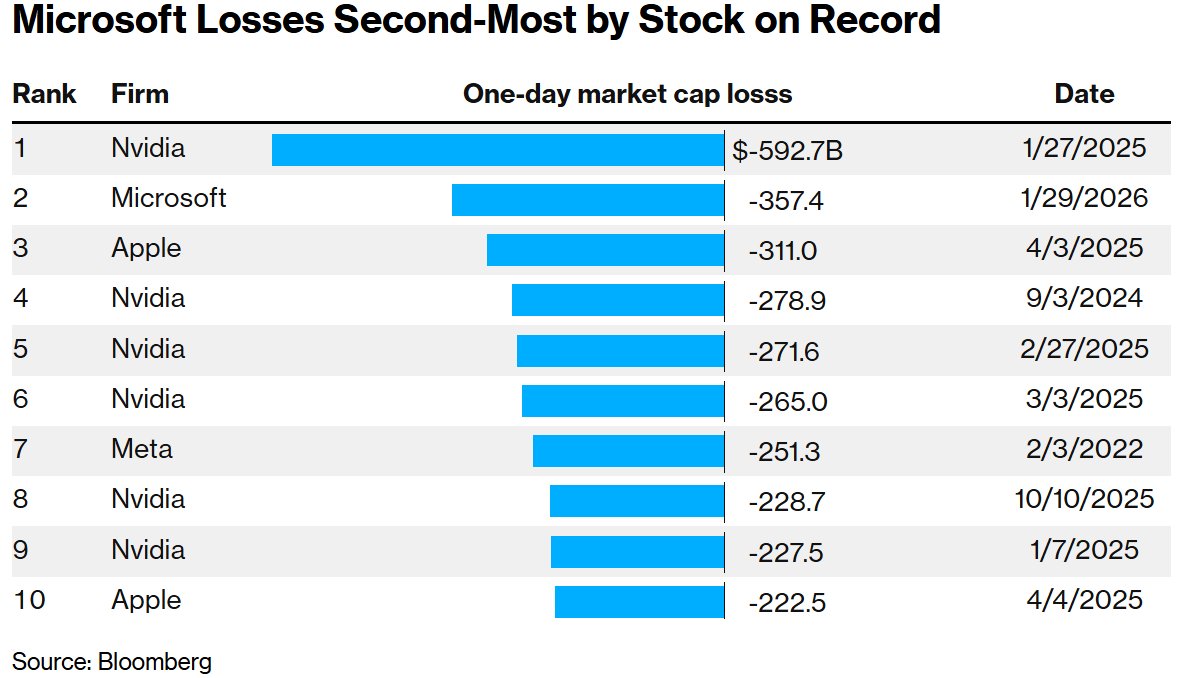
Core Viewpoint - Microsoft experienced a significant stock sell-off, resulting in a market cap loss of $357 billion, marking the second-largest single-day market cap loss in U.S. history [1][3]. Group 1: Market Performance - Microsoft's stock price plummeted by 10%, the largest single-day decline since March 2020 [1]. - The company's market cap loss exceeded the total market cap of over 90% of the S&P 500 index members [1]. - This event follows a historical precedent where Nvidia faced a $593 billion market cap loss in January 2022 [1][2]. Group 2: Financial Results and AI Investment - Microsoft's recent earnings report revealed record AI spending, with capital expenditures increasing by 66% to $37.5 billion [3]. - The growth rate of the Azure cloud computing business has slowed compared to the previous quarter [3]. - Microsoft faces capacity constraints in AI demand, with remaining performance obligations (RPO) totaling $625 billion, of which approximately 45% is linked to its partnership with OpenAI [3]. Group 3: Market Sentiment and Analyst Commentary - There is growing skepticism among investors regarding the return on investment (ROI) from Microsoft's substantial AI expenditures [3]. - Analysts suggest that Microsoft's stock may need to be revalued to align with its historical fair value due to the perceived lack of strong ROI from AI investments [3].