
BTK抑制剂

Search documents
对话北生所所长王晓东:创新没什么难的,创业要交学费
Jing Ji Guan Cha Wang· 2026-02-05 01:28
Core Insights - The conversation with Wang Xiaodong, the director of Beijing Institute of Life Sciences and founder of BeiGene and Vitaron, highlights his straightforward approach and humor, reflecting his scientific mindset and leadership in the field of biotechnology [2][3]. Group 1: Company Overview - BeiGene has established itself as a leader in China's innovative drug sector, focusing on oncology, particularly in developing first-in-class cancer therapies [5][9]. - The company was founded to address the lack of domestic cancer drugs in China, with a vision to fill this gap and improve patient outcomes [5][10]. - Wang Xiaodong emphasizes the importance of learning from early entrepreneurial challenges, indicating that the journey involved significant trial and error in drug development [5][8]. Group 2: Entrepreneurial Impact - The "BeiGene Effect" has inspired numerous scientists from the Beijing Institute of Life Sciences to pursue entrepreneurship, leading to the establishment of several innovative companies [15][18]. - Since 2011, seven scientists from the institute have launched their own companies, contributing to a broader trend of scientific entrepreneurship in China [15][18]. Group 3: Challenges and Resilience - Wang Xiaodong acknowledges the difficulties faced in the entrepreneurial journey, including recent leadership changes at Vitaron, which he views as part of the ongoing challenges in the industry [11][12][14]. - He reflects on the importance of perseverance and adaptability in overcoming obstacles, stating that the entrepreneurial path is rarely smooth [10][11]. Group 4: Research and Development Environment - The Beijing Institute of Life Sciences has made significant strides in bridging the gap between academic research and industrial application, creating a conducive environment for innovation [16][17]. - The institute has established various centers to facilitate the transformation of basic research into commercially viable products, addressing previous disconnects between academia and industry [16][17]. Group 5: Future Outlook - Wang Xiaodong expresses optimism about the future of biotechnology in China, noting the increasing support from the government and the growing pool of talent in the field [26][27]. - He believes that the current environment is the best the institute has experienced in years, with improved funding and collaboration opportunities [26][27].



中美创新药,必有一战
3 6 Ke· 2026-01-19 12:39
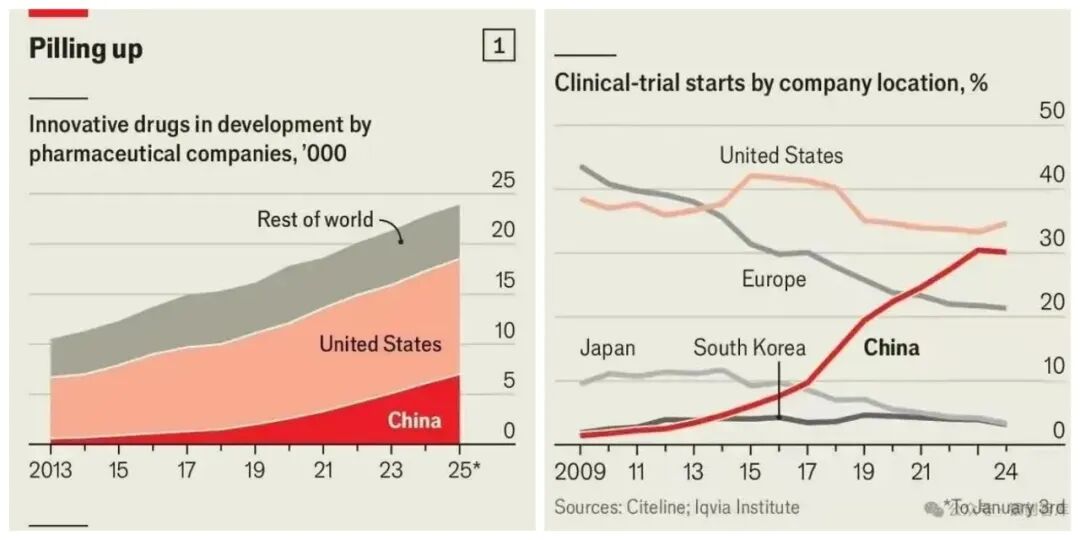
Core Viewpoint - The Chinese innovative drug sector is experiencing rapid growth, positioning itself as a global leader in drug development, with significant investments and collaborations from major pharmaceutical companies [2][8][30]. Group 1: Market Dynamics - The price of experimental monkeys has surged from 3,000 yuan to 100,000 yuan, indicating a high demand in the innovative drug sector [1]. - By 2025, China is projected to rank second globally in new drug clinical trials, with its pipeline accounting for 30% of the global total [2]. - In 2024, Chinese innovative drug companies completed 94 overseas licensing transactions, representing 44% of the national total, with over 100 transactions exceeding $100 billion in the first ten months of 2025 [6][30]. Group 2: Challenges in Traditional Pharmaceutical Sector - The generic drug sector is facing significant challenges, with a projected 5.5% decline in revenue for 2024 and over 30% of companies experiencing losses [5]. - Major pharmaceutical companies are increasingly collaborating with Chinese innovative drug firms to mitigate the risks associated with patent expirations, which could lead to a revenue gap exceeding $300 billion in the next five years [10][30]. Group 3: Advantages of Chinese Innovative Drugs - China offers a cost-effective and efficient environment for drug development, with clinical trial costs significantly lower than in the U.S. [20][21]. - The average time for clinical trial approvals in China has been reduced from 60 to 30 working days, and the average new drug application approval time has decreased to approximately 130 days [14]. - Chinese pharmaceutical companies are increasingly moving from "me-too" and "me-better" drugs to original innovations, with a notable increase in the number of innovative drug projects [27]. Group 4: Global Positioning and Future Outlook - Despite the rapid growth of Chinese innovative drugs, the overall market value of Chinese biotech companies remains significantly lower than their U.S. counterparts, capturing only 5% to 10% of global new drug revenues [30][31]. - Chinese companies are establishing commercial centers in global pharmaceutical hubs to enhance their commercialization capabilities, marking a shift towards becoming major players in the global market [37][38]. - The transition from biotech firms to large multinational pharmaceutical companies is seen as a critical step in the global battle for market share and innovation [38].



摸不到肿块≠没得淋巴瘤!专家:别让滤泡性淋巴瘤拖成大病
2 1 Shi Ji Jing Ji Bao Dao· 2026-01-05 08:50
Core Insights - Lymphoma, particularly follicular lymphoma (FL), is a significant health threat and its incidence is rising in China due to aging population and improved diagnostic capabilities [1][2] - Recent advancements in treatment options for FL have been highlighted at the 67th American Society of Hematology (ASH) annual meeting, showcasing new therapies such as monoclonal antibodies, CD3/CD20 bispecific antibodies, CAR-T therapy, and BTK inhibitors [1][8] Group 1: Treatment Advances - New therapies have improved treatment outcomes and provided patients with alternatives, especially for those who fear chemotherapy side effects [2][8] - The introduction of bispecific antibodies represents an innovative direction in FL treatment, enhancing patient quality of life and offering new avenues for refractory cases [2][8] - The shift towards non-chemotherapy strategies is gaining traction, focusing on targeted and immunological mechanisms to improve patient outcomes while minimizing toxicity [6][8] Group 2: Disease Characteristics and Challenges - Follicular lymphoma accounts for approximately 8.1% to 23.5% of non-Hodgkin lymphoma cases in China, with a rising trend in incidence [2][3] - Despite initial positive responses to treatment, recurrence remains a major challenge, with up to 20% of patients experiencing disease progression within two years [3][5] - The long disease course and the potential for transformation into aggressive lymphoma highlight the need for ongoing vigilance and innovative treatment approaches [3][5] Group 3: Clinical Management - Early symptoms of follicular lymphoma are often non-specific, leading to late diagnoses; patients may present with painless lymphadenopathy or systemic symptoms [4][5] - Treatment decisions should be based on the specific clinical scenario, with careful assessment of disease stage and symptoms to determine the need for intervention [6][7] - The treatment goal has evolved from mere disease control to achieving deep remission and long-term survival, with functional cure becoming a realistic objective due to new therapies [7][8]
淋巴瘤并非“普通瘤” 专家:精准诊断是规范治疗前提
Xin Lang Cai Jing· 2026-01-01 10:32
Core Viewpoint - Lymphoma is a malignant tumor that is often misunderstood by the public, with increasing detection rates due to aging populations and improved health awareness [1] Group 1: Disease Overview - Lymphoma encompasses over a hundred types and can occur in various body parts, including lymph nodes, gastrointestinal tract, central nervous system, lungs, breasts, and testicles [1] - Chronic lymphocytic leukemia (CLL) is more common in the elderly, with a median onset age of 60 and above [1] Group 2: Diagnosis and Treatment - Accurate diagnosis is crucial for determining treatment strategies, as different pathological reports can lead to significantly different treatment plans [1] - Current treatment options for lymphoma include chemotherapy, targeted therapy, radiotherapy, immunotherapy, and hematopoietic stem cell transplantation [1] Group 3: Management of Chronic Lymphocytic Leukemia - The emergence of targeted drugs like BTK inhibitors allows for long-term management of CLL as a chronic disease, requiring ongoing medication and regular follow-ups [2] - Elderly patients may face increased risks of adverse drug reactions and interactions due to comorbidities, necessitating careful consideration of treatment options [2] Group 4: Patient Care and Follow-Up - Long-term follow-up is essential for managing CLL, with an emphasis on preventing infections and monitoring immune function [2] - Patients are advised to carefully read discharge summaries that outline follow-up schedules and contact information for healthcare providers to ensure comprehensive management [2]
医保覆盖、创新迭代、本土深耕:阿斯利康血液肿瘤按下“加速键”
2 1 Shi Ji Jing Ji Bao Dao· 2025-12-10 13:47
Core Insights - The incidence of hematological malignancies is rising globally, with new cases expected to reach 1.546 million by 2030, and in China, the number of new patients is projected to grow to 300,000 by the same year [2] - AstraZeneca is making significant advancements in the hematological oncology sector, particularly with its BTK inhibitor, which has recently undergone a formulation upgrade and has been included in the national medical insurance directory [2][3] - The company is focusing on patient-centric innovations, enhancing drug accessibility, and expanding its treatment options to meet the growing clinical needs in China [3][4] Industry Overview - Hematological malignancies are characterized by rapid onset, severe symptoms, and long treatment durations, leading to a substantial disease burden [2] - The aging population in China is contributing to an increase in the clinical treatment burden associated with hematological cancers [2] Company Strategy - AstraZeneca's strategy in China emphasizes addressing unmet clinical needs in hematological oncology, which is becoming a key area for market expansion [3] - The company has been actively upgrading its BTK inhibitor formulations to improve patient compliance, particularly for elderly patients who may have difficulty swallowing [3][4] - AstraZeneca's blood cancer team is expanding its workforce across various critical roles to enhance clinical collaboration and support [4] Product Development - The BTK inhibitor is projected to achieve global sales exceeding $3 billion in 2024, reflecting its strong market performance [4] - AstraZeneca is enhancing its pipeline through collaborations and acquisitions, including a $1.2 billion acquisition of Gengxi Biotech to strengthen its position in cell therapy [4][5] - The company has developed a diverse research pipeline covering major hematological malignancies, including lymphoma, myeloma, and leukemia, which is rare in the industry [5] Clinical Research and Innovation - AstraZeneca is showcasing its advancements in hematological oncology at major academic conferences, highlighting its ongoing clinical trials and research data [6] - The company aims to transform scientific innovations into accessible patient value, aligning with China's health goals for cancer prevention and treatment by 2030 [6][7] Local R&D Capabilities - AstraZeneca's local R&D system in China supports over 200 projects, with half focused on oncology, demonstrating a commitment to global synchronized research [7] - The company collaborates with local biotech firms, academic institutions, and hospitals to enhance its innovation capabilities and strengthen its market position [7]

医保目录调整 为血液肿瘤患者提供可及用药支持
Ke Ji Ri Bao· 2025-12-08 03:32
Core Insights - The National Healthcare Security Administration has officially announced the 2025 National Basic Medical Insurance, Maternity Insurance, and Work Injury Insurance Drug Catalog, adding 114 new drugs, bringing the total to 3,253, covering various treatment areas including cancer, chronic diseases, and rare diseases [1][2] Group 1: Drug Inclusion and Coverage - The updated catalog includes multiple new blood cancer drugs, such as Maleate Acalabrutinib Tablets, which are significant for patients with chronic lymphocytic leukemia and other blood cancers [1] - The inclusion of Maleate Acalabrutinib Tablets for CLL/SLLL marks a comprehensive coverage for various stages of blood cancer treatment, addressing previously unmet needs [2] Group 2: Impact on Patients and Healthcare - The update enhances clinical treatment options for blood cancer patients, filling gaps in the treatment of chronic lymphocytic leukemia and supporting the goal of improving cancer survival rates as part of the "Healthy China 2030" initiative [2] - The new drug additions are expected to alleviate the economic burden on patients and provide more accessible medication support for clinical treatment [2]
翰森制药(03692.HK):创新管线驱动 业绩稳健增长
Ge Long Hui· 2025-08-20 03:09
Core Viewpoint - The company reported a strong performance in H1 2025, with revenue growth driven by innovative drugs and collaborations, particularly in the oncology sector, highlighting the successful expansion of the core product Amatinib [1][2]. Financial Performance - In H1 2025, the company achieved revenue of 7.434 billion yuan, a year-on-year increase of 14.3%, with innovative drugs and collaboration products contributing 6.145 billion yuan, up 22.1%, accounting for 82.7% of total revenue [1]. - The net profit for H1 2025 was 3.135 billion yuan, reflecting a year-on-year growth of 15.0% [1]. Operational Analysis - The oncology segment generated revenue of 4.531 billion yuan, representing 60.9% of total revenue, with Amatinib's indications continuously expanding [1]. - New approvals for Amatinib include maintenance therapy for NSCLC patients post-surgery and adjuvant therapy, which are expected to drive further growth [1]. - The product has also been approved in the UK, marking it as the first Chinese-origin EGFR-TKI drug to enter the overseas market, contributing to revenue growth [1]. Research and Development Pipeline - The company has a robust R&D pipeline with over 40 innovative drugs and more than 70 clinical trials ongoing [2]. - Key developments include: - B7-H3 ADC for bone and soft tissue sarcomas and SCLC entering Phase III trials [2]. - B7-H4 ADC for ovarian cancer also in Phase III trials and recognized as a breakthrough therapy by CDE [2]. - GLP-1/GIP dual receptor agonist for obesity/overweight in Phase III trials [2]. - TYK2 inhibitors and IL-23p19 monoclonal antibodies for moderate to severe plaque psoriasis in Phase III trials [2]. - Additional innovative drugs such as EGFR/c-Met ADC, KRAS G12D inhibitors, and BTK inhibitors are progressing into clinical stages [2]. Business Development Collaborations - In June 2025, the company granted global exclusive rights (excluding mainland China, Hong Kong, and Macau) for the development, production, and commercialization of the GLP-1/GIP dual receptor agonist HS-20094 to Regeneron, indicating ongoing expansion in global collaboration [2]. Profit Forecast and Valuation - The company is expected to achieve revenues of 14.2 billion yuan, 15.8 billion yuan, and 17.8 billion yuan in 2025, 2026, and 2027, respectively, with net profits projected at 4.7 billion yuan, 5.3 billion yuan, and 6.1 billion yuan [2].
200亿美元市场缺口待补! BTK抑制剂或点燃MS赛道,下半年迎来关键节点!这些公司有望抢占MS出海先机
Di Yi Cai Jing Zi Xun· 2025-07-31 02:25
Group 1: Multiple Sclerosis (MS) Market Opportunity - The global MS patient base is substantial, with a market size exceeding $200 billion, primarily focused on RMS treatment, which has limited neuroprotective effects [2][4] - BTK inhibitors are expected to fill the treatment gap in the PMS area by blocking chronic neuroinflammation and slowing neurodegenerative processes, with key data releases anticipated in H2 2025 [5][6] - Companies likely to benefit from this market opportunity include several listed firms, which are positioned to capitalize on the expected growth in the MS treatment landscape [2][3] Group 2: PCB Technology Revolution - The demand for SLP (Substrate-like PCB) is significantly increasing, with expectations that it will closely match IC substrate performance as CoWoP (Chip-on-Wafer-on-Panel) technology becomes more prevalent [6][8] - The SLP manufacturing process has high barriers to entry, and companies with leading positions in this space are expected to gain substantial benefits [6][9] - The requirements for upstream laser direct writing and drilling equipment are increasing, indicating a shift in technology needs within the PCB industry [6][9]

200亿美元市场缺口待补! BTK抑制剂或点燃MS赛道,下半年迎来关键节点!这些公司有望抢占MS出海先机
第一财经· 2025-07-31 02:17
Group 1: Multiple Sclerosis (MS) Market Opportunity - The global market for Multiple Sclerosis (MS) is estimated to have a gap of $20 billion, with BTK inhibitors potentially igniting the MS treatment sector, particularly in the second half of the year [2][3] - The existing market for MS treatments is primarily focused on Relapsing MS (RMS), while BTK inhibitors are expected to address the unmet needs in Progressive MS (PMS) [3][5] - Key companies expected to benefit from this market opportunity include specific listed firms, with significant data readouts anticipated in the second half of 2025 [3][6] Group 2: PCB Technology Revolution - A new process in printed circuit boards (PCBs) is anticipated to trigger a technological revolution, with a notable increase in demand for SLP (Substrate-like PCB) and a rise in requirements for laser equipment [7][8] - SLP technology is expected to closely resemble IC substrates, with significant performance improvements anticipated as CoWoP (Chip-on-Wafer-on-Panel) technology becomes more commercialized [7][8] - Companies with leading positions in SLP technology and those supplying advanced laser writing and drilling equipment are expected to benefit significantly from these developments [7][8]

整理:每日美股市场要闻速递(5月6日 周二)
news flash· 2025-05-06 12:50
Important News - The U.S. trade deficit reached a record high in March due to tariffs leading to stockpiling of goods [1] - The EU plans to impose additional tariffs on approximately €100 billion (about $113 billion) worth of U.S. goods if ongoing trade negotiations do not yield satisfactory results [1] - Canadian Prime Minister Carney is set to meet with Trump to discuss trade and relations between the two countries [1] Company News - IBM (IBM.N) and Oracle (ORCL.N) announced an expansion of their partnership to advance agent-based AI and hybrid cloud, integrating IBM's flagship AI product suite, watsonx, into Oracle Cloud Infrastructure (OCI) [2] - The U.S. Department of Justice filed documents in federal court requiring Google (GOOG.O) to divest two core assets from its online advertising business—AdX advertising trading platform and publisher ad server [2] - DoorDash (DASH.N) has reached an agreement to acquire the UK-based food delivery platform Deliveroo for £2.9 billion (approximately $3.9 billion) in equity value [2] - Piper Sandler recently warned that under the worst-case scenario of reduced capital expenditures and continued weak demand in the Chinese market, NVIDIA's (NVDA.O) data center business could face an impact of up to $9.8 billion in annual revenue [2] - AstraZeneca (AZN.O) announced that a new indication for its BTK inhibitor has been approved by the EU for the treatment of mantle cell lymphoma, marking it as the first and only approved inhibitor for this indication in the EU [2] - Tesla (TSLA.O) saw a 62% year-over-year decline in new car sales in the UK for April, marking the lowest level in over two years [2] - Pony.ai (PONY.O) and Uber (UBER.N) announced a strategic partnership, with Pony.ai's Robotaxi service and fleet set to integrate into the Uber platform in the second half of this year [2][3]