Blackwell产品线

Search documents
英伟达财报如此“炸裂”,但为何市场“冷眼相待”?
硬AI· 2026-02-26 10:27
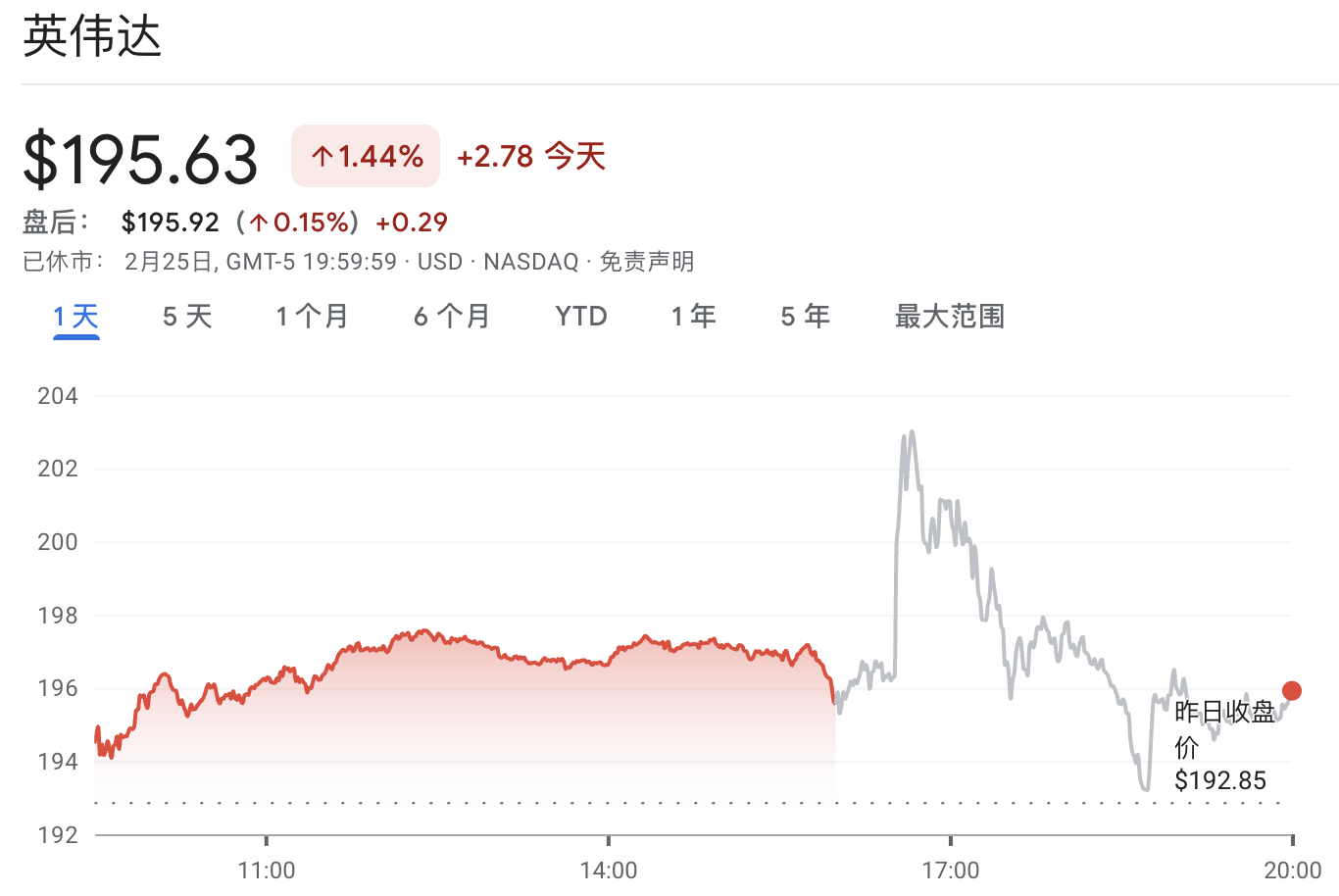
Core Viewpoint - Nvidia has exceeded revenue expectations for 14 consecutive quarters, but concerns about the sustainability of AI demand and supply constraints are overshadowing the impressive performance [2][3]. Group 1: Financial Performance - Nvidia's revenue guidance for the first fiscal quarter is approximately $78 billion, significantly above Wall Street's average expectation of $72.8 billion, yet below some analysts' more aggressive forecasts nearing $80 billion [3][6]. - The fourth quarter revenue grew by 73% to $68.1 billion, with an adjusted EPS of $1.62 and a gross margin of 75.2%, all exceeding market expectations [8]. Group 2: Business Segments - The data center business remains the primary growth driver, generating $62.3 billion in revenue, surpassing the average analyst expectation of $60.4 billion [9]. - Other business segments underperformed, with gaming revenue at $3.73 billion, below the market expectation of $4.01 billion, and automotive-related revenue at $604 million, also falling short of the expected $643 million [9]. Group 3: Market Sentiment and Investor Concerns - Investors are increasingly demanding stronger evidence of sustained growth, as the market sentiment shifts away from viewing AI as a universal asset booster [9][10]. - Nvidia's management has attempted to address these concerns, emphasizing that customers are profiting from increased computing power and will continue to invest at high levels [4][10]. Group 4: Supply Constraints and Long-Term Contracts - Nvidia has secured sufficient components to meet demand growth and has extended shipping commitments through 2027, with expectations that the Blackwell product line will outperform previous sales forecasts [13]. - However, supply chain issues, particularly memory chip shortages, are raising prices and affecting equipment shipments, which has negatively impacted the gaming business [13]. - Nvidia announced a long-term agreement with Meta Platforms for the deployment of "millions" of Nvidia processors, alongside a similar multi-billion dollar agreement with Advanced Micro Devices, although these arrangements have drawn criticism due to potential conflicts of interest [13].



英伟达财报如此“炸裂”,但为何市场“冷眼相待”?
Hua Er Jie Jian Wen· 2026-02-26 06:49
Core Viewpoint - Nvidia reported earnings and guidance that exceeded expectations, yet the stock price did not respond positively due to market concerns over the sustainability of AI demand and supply constraints [1][5]. Financial Performance - Nvidia's revenue guidance for the first fiscal quarter is approximately $78 billion, significantly above Wall Street's average expectation of $72.8 billion, but below some analysts' more aggressive forecasts nearing $80 billion [1][5]. - The company has now exceeded revenue expectations for 14 consecutive quarters, indicating strong performance [4]. - In the fourth fiscal quarter, Nvidia's revenue grew by 73% to $68.1 billion, with an adjusted EPS of $1.62 and a gross margin of 75.2%, all surpassing market expectations [6]. Business Segments - The data center business remains the primary growth driver, generating $62.3 billion in revenue, exceeding the average analyst expectation of $60.4 billion [6]. - Other segments, such as gaming and automotive, underperformed, with gaming revenue at $3.73 billion, below the expected $4.01 billion, and automotive revenue at $604 million, also below the anticipated $643 million [6]. Market Sentiment - Investors are increasingly cautious, requiring stronger evidence of sustained growth in AI, as the market no longer views AI as a universal uplift for all assets [7][8]. - Nvidia's CEO emphasized that customers are profiting from increased computing power, which should encourage continued high-level investments [8]. Supply Chain and Future Outlook - Nvidia's CFO stated that the company has secured sufficient components to meet demand growth and has extended shipping commitments through 2027 [9]. - The company anticipates that its Blackwell product line and subsequent Rubin will outperform previous sales forecasts, with potential revenue of $500 billion from related chips by the end of 2026 [9]. - However, supply chain issues, particularly memory chip shortages, are raising prices and affecting equipment shipments, which could hinder growth in the gaming segment [9].
黄仁勋努力打消AI泡沫论,市场:"卖铲人"不会说山里没金子!英伟达盘中转跌
Hua Er Jie Jian Wen· 2025-11-20 21:20
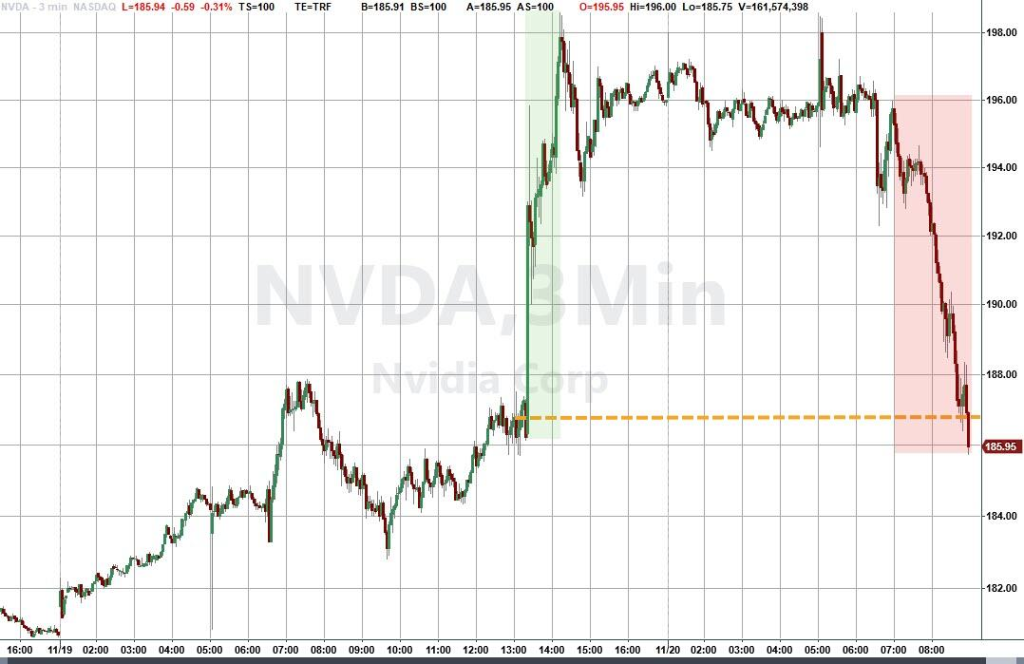
Core Viewpoint - Nvidia's recent earnings report exceeded market expectations, but concerns about an AI bubble persist, leading to stock price fluctuations despite strong performance indicators [4][8]. Group 1: Earnings Performance - Nvidia reported a 62% year-over-year increase in revenue, reaching $57.01 billion, and provided a strong revenue guidance of approximately $65 billion for the fourth quarter, significantly above market expectations [4][8]. - The CEO, Jensen Huang, indicated that sales from the Blackwell and Rubin product lines alone could reach $500 billion in overseas markets over the next six fiscal quarters [4]. Group 2: Market Reactions - Following the earnings announcement, stocks related to the AI ecosystem, including AMD and Broadcom, initially rose but later fell in line with broader market trends [2]. - Despite the positive earnings report, Nvidia's stock experienced a reversal, dropping after an initial 5% increase post-announcement [8]. Group 3: AI Bubble Concerns - Analysts express skepticism regarding the sustainability of capital expenditures in the AI sector, with concerns that significant investments may not yield returns in the long term [9]. - Historical comparisons are drawn to the internet bubble, where Cisco, despite strong growth, faced a dramatic decline post-bubble burst, highlighting the risks associated with high valuations [9]. Group 4: Strategic Investments - Nvidia has engaged in substantial investments in AI companies, such as a $100 billion investment in OpenAI for data center and AI infrastructure development, raising questions about potential "circular financing" risks [5][9]. - Huang defended these investments as strategic partnerships aimed at deepening technological collaboration rather than merely facilitating sales of Nvidia chips [4][5].
华尔街评英伟达财报:忽略中国市场“噪音”,基本面依然强劲,看好Blackwell和Rubin的巨大增长潜力
美股IPO· 2025-08-28 10:45
Core Viewpoint - Nvidia is positioned strongly in AI infrastructure investment opportunities, with a clear long-term growth outlook. Investors should focus on the company's core growth logic rather than short-term uncertainties [1][3][9]. Financial Performance - Nvidia reported Q2 revenue of $46.7 billion, exceeding market expectations, with a year-over-year growth of 56%. The data center business generated $41.1 billion, also reflecting a 56% increase year-over-year [6][9]. - The company provided a Q3 revenue guidance of $54 billion, which is a 16% quarter-over-quarter increase and a 54% year-over-year increase, surpassing market expectations [6][9]. - Nvidia's gross margin was reported at 72.7%, exceeding expectations, while the adjusted gross margin was 72.3% [6]. Product Lines and Growth Drivers - The Blackwell product line is performing strongly, with full production capacity achieved, producing approximately 1,000 racks per week, translating to an annual revenue potential of about $39 billion [3][7]. - The Spectrum-X product line has reached an annualized revenue of $10 billion, significantly up from $8 billion previously [4][7]. - The next-generation Rubin products are on track for a mid-2026 launch, expected to provide strong growth momentum [4][8]. Market Position and Valuation - Nvidia maintains over 80% market share in the rapidly growing global AI infrastructure sector, with a leading free cash flow profit margin of over 45% [4][8]. - The company's valuation is attractive, with a price-to-earnings growth ratio of approximately 0.9, compared to over 3.9 for its tech peers [12]. - Analysts have raised target prices for Nvidia, with estimates ranging from $200 to $235, reflecting confidence in the company's long-term profitability [9][14]. China Market Impact - Despite uncertainties in the Chinese market, analysts have excluded its contribution from forecasts, indicating that the share of revenue from China has dropped to single digits [10][11]. - Nvidia's management confirmed no shipments of H20 products to China in Q2, and the Q3 guidance does not include contributions from the Chinese market [10][11].
传特朗普政府拟放松AI芯片出口限制 英伟达(NVDA.US)股价大涨3.1%
Zhi Tong Cai Jing· 2025-05-07 22:23
Group 1 - The Trump administration is considering relaxing AI chip export restrictions, which has led to a significant increase in Nvidia's stock price by 3.1% and a positive impact on other semiconductor stocks [1] - AI chip demand remains strong, as evidenced by AMD's recent earnings report, which exceeded expectations and indicated robust growth in the AI chip sector [1][2] - AMD warned that U.S. government export controls could result in a revenue loss of up to $1.5 billion for the year, highlighting the significant risks posed by export restrictions on the chip industry [1] Group 2 - Nvidia disclosed that new licensing requirements for its H20 chip aimed at the Chinese market will result in approximately $5.5 billion in inventory and procurement commitment-related costs in its Q1 earnings report [2] - Nvidia's CEO Jensen Huang projected that the demand for AI chips in the Chinese market could reach $50 billion in the coming years [2] - Supermicro reported earnings at the high end of its guidance but provided a disappointing outlook for the current quarter due to customers delaying purchasing decisions amid Nvidia's product transition [2]