CCUS(碳捕获和封存)

Search documents
《洞见ESG》9月刊:我国宣布新一轮国家自主贡献目标
21世纪经济报道· 2025-09-29 14:00
Core Insights - China has announced a new round of Nationally Determined Contributions (NDCs), aiming for a 7%-10% reduction in greenhouse gas emissions by 2035 compared to peak levels, with non-fossil energy consumption reaching over 30% of total energy consumption [6][7] - The country has established the world's largest carbon market, covering over 60% of carbon dioxide emissions after including steel, cement, and aluminum industries [6][8] Regulatory Voices - The Minister of Ecology and Environment, Huang Runqiu, stated that nearly 20 million high-emission vehicles will be eliminated during the 14th Five-Year Plan [4] - The Deputy Minister of Ecology and Environment, Li Gao, emphasized the acceleration of building a unified national carbon market and expanding its coverage [4] - The Deputy Governor of the People's Bank of China, Lu Lei, highlighted the importance of financial institutions in carbon accounting and sustainable information disclosure [4] Policy Updates - The National Development and Reform Commission (NDRC) has initiated revisions to the pricing methods for electricity transmission and distribution to adapt to the new requirements of a modern power system [6] - The NDRC and the National Energy Administration released implementation opinions to promote the integration of artificial intelligence in the energy sector [6] Industry Insights - The China Alcohol Industry ESG Rating Platform 2.0 has been updated to cover all categories of alcoholic beverages, expanding from three to over ten categories [8] - The Shanghai Cooperation Organization has launched a platform to support renewable energy projects, including a target of adding 10 million kilowatts of photovoltaic and wind power capacity [8] - A recent document from the Central Government emphasizes the urgency for companies to disclose ESG information, with 2,523 A-share listed companies having released their 2024 ESG reports, achieving a disclosure rate of 46.49% [8] Event Highlights - The 2025 China International Service Trade Fair showcased advancements in hydrogen energy applications and zero-carbon park developments, indicating a significant shift towards green transformation in China's economic development [10][11] - The fair also featured discussions on how technology, including AI and remote sensing, can drive the green transformation of industries and support climate governance [10]

新能源就近消纳补齐价格机制发布;服贸会绿意浓丨碳中和周报
2 1 Shi Ji Jing Ji Bao Dao· 2025-09-15 12:08
Group 1: Policy Developments - The National Development and Reform Commission and the National Energy Administration released a notice to improve pricing mechanisms for local consumption of renewable energy, emphasizing the principle of "who benefits, who bears the cost" [2][3] - The notice aims to clarify project boundaries and responsibilities, which are currently ambiguous, to promote the development of renewable energy consumption models [2][3] Group 2: Renewable Energy Capacity - China has achieved its wind and solar power total installed capacity ahead of the 2030 Nationally Determined Contribution (NDC) targets, contributing to a significant reduction in carbon intensity and an increase in non-fossil energy consumption [4] - The report indicates that China has built the world's largest and fastest-growing renewable energy system, laying a solid foundation for achieving carbon peak and carbon neutrality goals [4] Group 3: AI and Energy Integration - The National Development and Reform Commission and the National Energy Administration issued implementation opinions to promote the integration of artificial intelligence and energy, aiming for world-leading technology and applications by 2030 [5] - The initiative includes establishing a collaborative mechanism for computing power and electricity, enhancing the green electricity ratio in computing centers [5] Group 4: Pricing Mechanism Revisions - The National Development and Reform Commission is revising pricing mechanisms for electricity transmission and distribution, exploring a capacity-based pricing system to support clean energy transmission [7] - This revision aims to provide key pricing policy support for long-distance transmission and local consumption of renewable energy [7] Group 5: Carbon Offset Projects - The first ecological forest carbon sink project in Daxing'anling has been registered, marking a milestone in the voluntary carbon market [11][12] - The project covers an area of 1,560.83 hectares and is expected to reduce carbon emissions by 242,740 tons over 40 years, with an average annual reduction of 6,068 tons [11][12] Group 6: Energy Transition and Innovation - Traditional energy giants are accelerating their green transformation, with significant advancements in hydrogen energy and carbon capture technologies [13][14] - The increase in hydrogen production capacity and the number of hydrogen refueling stations indicates a shift towards large-scale green technology implementation [13][14] Group 7: Methane Emission Reduction - An online seminar discussed innovative local pathways for reducing methane emissions from coal mines, focusing on monitoring systems and economic feasibility of various low-concentration methane utilization solutions [15] - The collaboration between fiscal and financial policies is emphasized to integrate methane into carbon markets, enhancing economic incentives for emission reductions [15]
西贝致歉,多款菜品改为现做
2 1 Shi Ji Jing Ji Bao Dao· 2025-09-15 09:07
Group 1 - Xibei has issued an official apology, committing to adjust its food preparation process to ensure dishes are made fresh on-site by October 1, addressing customer concerns about food quality and shelf life [1] - The company is actively communicating with suppliers to shorten the shelf life of products while ensuring food safety and inventory turnover [1] Group 2 - The Northeast Yujie media company and its associated noodle factory have been penalized for false advertising, with fines totaling approximately 671.76 million yuan [1] - The company was established in February 2014 and has a registered capital of 30,000 yuan [1] Group 3 - The Fourth Meteorological Economic Forum highlighted that global wind and solar power installations have reached 31%, with extreme weather becoming a critical factor affecting power system stability [1] - Research indicates that for every 1°C increase in maximum temperature, the peak electricity load increases by 4.5% [1] Group 4 - By the end of 2024, China's cumulative installed capacity of renewable energy is expected to reach 1.41 billion kilowatts, accounting for 42% of the total installed capacity [2] - China has maintained the world's leading position in wind and solar power generation for 15 and 10 consecutive years, respectively [2] Group 5 - As of the second quarter of 2025, the balance of green loans in China is approximately 42.4 trillion yuan, with green bond balances exceeding 2.2 trillion yuan [3] - Carbon reduction support tools have guided financial institutions to issue over 1.38 trillion yuan in carbon reduction loans [3] Group 6 - The 2025 Service Trade Fair showcased advancements in hydrogen energy applications and the accelerated implementation of zero-carbon parks [4][5] - Major energy companies demonstrated new green low-carbon technologies, including hydrogen and carbon capture solutions [5] Group 7 - The Chinese environmental protection industry is shifting from technology importation to independent innovation, with capabilities to "go global" in technology, equipment, and talent [6] - The focus is on sharing pollution reduction and carbon reduction technology globally to address climate change [6] Group 8 - Xiaomi has dismissed its China market manager for leaking confidential information and serious violations of company policies [7] - The company emphasizes a zero-tolerance policy towards violations and encourages adherence to ethical standards [7] Group 9 - The risk of "social washing" in ESG practices is gaining attention, with experts noting that donations should complement, not replace, addressing supply chain issues [8] - Companies are encouraged to align donations with ESG strategies and community needs to avoid superficial compliance [8]


西贝致歉,多款菜品改为现做|ESG热搜榜
2 1 Shi Ji Jing Ji Bao Dao· 2025-09-15 08:47
Group 1 - Xibei has issued an official apology, committing to adjust its food preparation process to on-site cooking in response to customer demand, with nationwide implementation expected by October 1 [1] - Xibei is actively communicating with upstream suppliers to shorten food shelf life while ensuring safety and inventory turnover [1] Group 2 - The Fourth Meteorological Economic Forum highlighted that global wind and solar power installations have reached 31%, with extreme weather becoming a key factor affecting power system stability [2] - China aims to achieve a cumulative installed capacity of 1.41 billion kilowatts of renewable energy by the end of 2024, accounting for 42% of the total installed capacity [2] Group 3 - As of the second quarter of 2025, the balance of green loans in China is approximately 42.4 trillion yuan, and the balance of green bonds exceeds 2.2 trillion yuan, positioning China among the top globally [3] - Carbon reduction support tools have guided financial institutions to issue over 1.38 trillion yuan in carbon reduction loans [3] Group 4 - The 2025 Service Trade Fair showcased advancements in hydrogen energy applications and the accelerated implementation of zero-carbon parks, indicating a significant shift towards green transformation in China's economic development [4][5] Group 5 - The China Environmental Protection Industry Association emphasized the importance of sharing pollution reduction and carbon reduction technology globally, highlighting China's capability in technology innovation and output [6] Group 6 - Xiaomi has dismissed its China Marketing Department General Manager Wang Teng for leaking confidential company information and serious violations of company policies [7] Group 7 - The risk of "social washing" in ESG practices has gained attention, with experts noting that donations should complement, not replace, genuine efforts to address supply chain issues [8] - Companies are encouraged to adopt a strategic approach to donations, integrating them with ESG strategies to avoid superficial compliance [8]
服贸会绿意浓:氢能应用深化,零碳园区落地提速
2 1 Shi Ji Jing Ji Bao Dao· 2025-09-10 13:17
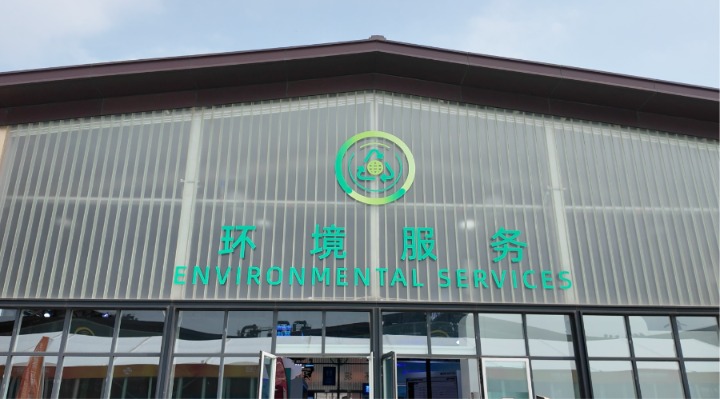
Core Insights - The 2025 China International Service Trade Fair (CIFTIS) opened in Beijing, showcasing a focus on environmental services, particularly highlighting the advancements in green low-carbon technologies by major energy companies, referred to as the "Three Barrels of Oil" (China National Petroleum Corporation, China Petroleum & Chemical Corporation, and China National Offshore Oil Corporation) [1][2]. Group 1: Energy Companies' Innovations - The "Three Barrels of Oil" prominently displayed their latest achievements in hydrogen energy and CCUS (Carbon Capture, Utilization, and Storage) technologies at the environmental service exhibition [2]. - China National Petroleum Corporation has achieved a total hydrogen production capacity of 8,100 tons per year, with a year-on-year increase of 23%, and has built 26 hydrogen refueling stations, marking a 24% growth [2]. - China National Offshore Oil Corporation has implemented over 400 energy-saving and low-carbon projects since the 14th Five-Year Plan, resulting in energy savings equivalent to 1.04 million tons of standard coal and a reduction of 3.15 million tons of CO2 emissions [2]. Group 2: Collaborative Development of Clean Energy - China Petroleum & Chemical Corporation is advancing in five key areas of new energy services: hydrogen energy, CCUS, geothermal energy, wind and solar power, and biofuels, emphasizing the need for collaborative development among these technologies [3]. - The most effective immediate reduction in emissions is through enhancing the energy efficiency of existing equipment, followed by the establishment of a new energy system centered on hydrogen, geothermal, and renewable energy [3]. Group 3: CCUS and Hydrogen as Strategic Priorities - Experts indicate that CCUS and hydrogen energy are crucial for the green low-carbon transition of the "Three Barrels of Oil," as these technologies align closely with traditional energy industry chains [5]. - The application of CCUS technology in the petrochemical industry has significantly reduced greenhouse gas emissions, with potential for expansion into more industrial sectors [5]. Group 4: Zero-Carbon Park Initiatives - The construction of zero-carbon parks is gaining momentum, with over ten domestic and international companies presenting solutions at the fair [6][9]. - The zero-carbon park management platform includes systems for virtual power plant management, industrial energy management, and AI-driven energy supply and demand management [9]. - The integration of renewable energy sources, such as distributed solar power, is essential for the energy supply system of zero-carbon parks, with a focus on energy storage and efficiency [10][11]. Group 5: Future Development and Challenges - The construction of zero-carbon parks is a complex system engineering task that requires optimization of energy structures, technological innovation, and multi-dimensional collaboration [13]. - Future development paths for zero-carbon parks should explore mechanisms for zero-carbon certification and carbon monitoring, which significantly impact the economic feasibility and long-term competitiveness of projects [13].
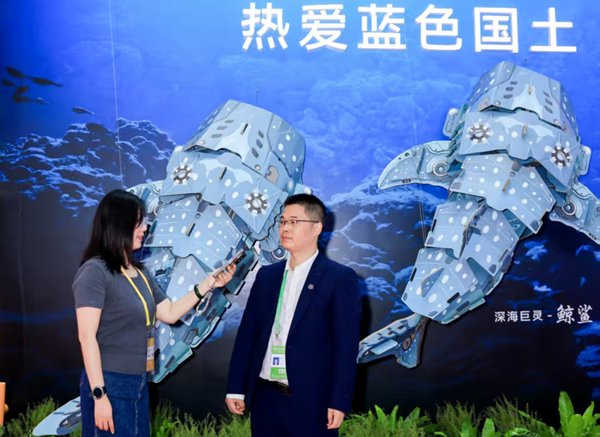
海洋油气与新能源融合发展:中国海油胡森林谈能源转型新路径
Zhong Guo Jing Ji Wang· 2025-07-18 11:58
Core Viewpoint - The energy transition presents more opportunities than challenges, with China National Offshore Oil Corporation (CNOOC) actively promoting the clean transformation of fossil energy and the large-scale development of clean energy [2][3]. Group 1: Energy Transition and Development - As of May 2023, the total installed capacity of wind and solar power has surpassed thermal power, reaching 1.65 billion kilowatts, establishing China as the largest and fastest-growing renewable energy system globally [2]. - CNOOC is optimizing its energy structure by significantly increasing the proportion of natural gas in traditional energy sectors while actively expanding into offshore wind power during the 14th Five-Year Plan period [2]. - The company is exploring carbon capture, utilization, and storage (CCUS), geothermal energy, and hydrogen energy, with its first offshore CCUS project already operational in the Enping oil field [2]. Group 2: Technological Innovation - Technological innovation is the core driving force behind the energy transition, with CNOOC achieving breakthroughs in deep-sea oil and gas resource development through major projects like "Deep Sea No. 1" and "Seaweed No. 1" [3]. - The company aims for a year-on-year reduction in energy consumption intensity and carbon emission intensity in 2024, continuing the downward trend since the 14th Five-Year Plan [3]. - CNOOC employs a dual-driven model of "project traction + forward-looking layout" to tackle key technological challenges and set research directions for the next five years [3]. Group 3: International Cooperation and Market Strategy - CNOOC, as China's largest and the world's second-largest LNG importer, has established a resource network covering over 30 countries and regions, aiming to create a more collaborative global energy market [3][4]. - The company's transformation practices are seen as exemplary, achieving low-carbon development in traditional oil and gas operations while leveraging marine industry advantages to expand into new energy sectors [4]. - The strategy of "stabilizing oil, increasing gas, and expanding new energy" effectively enhances competitiveness in the new energy era amid profound adjustments in the global energy landscape [4].