
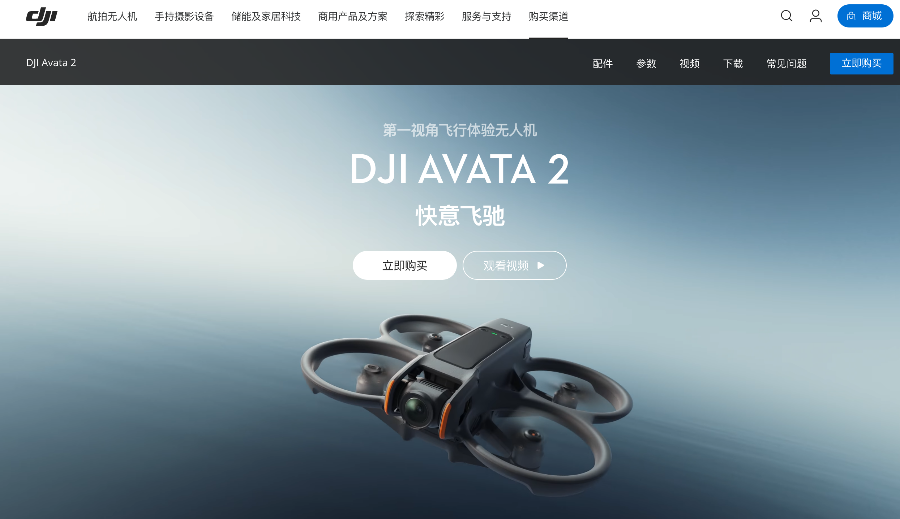
DJI Avata 360

Search documents
大疆“扩疆”,影石、拓竹、追觅攻守不一
Tai Mei Ti A P P· 2025-11-20 11:02
Core Insights - DJI, traditionally low-profile and resistant to market interactions, has recently invited external parties to experience its upcoming panoramic drone, DJI Avata 360, indicating a strategic shift towards more engagement with the market [1][2] - Despite its repeated statements of "no financing, no IPO," DJI's recent activities suggest a proactive approach to counter competition and maintain its market position [2][3] Group 1: DJI's Strategic Moves - DJI has launched several new products this year, including the sweeping robot ROMO and has shown interest in investing in 3D printing companies, indicating a diversification of its business strategy [2][3] - The introduction of the DJI Avata 360 is perceived as a defensive move to showcase its technological advantages amidst slowing growth, aiming to reassure stakeholders of its profitability [13][26] - DJI's market share in consumer drones exceeds 70%, but it faces pressure to innovate and find new mass-market products as growth in the consumer drone market slows [26] Group 2: Competitive Landscape - Competitors like YingShi and TuoZhu are expanding beyond their original markets, indicating a shift in the competitive dynamics of the industry [4][5] - YingShi has entered the drone market with its brand "YingLing Antigravity," directly challenging DJI, while simultaneously expressing respect for DJI's founder, suggesting a complex competitive relationship [6][7][10] - TuoZhu, founded by former DJI engineers, is rapidly gaining traction in the 3D printing sector, with a valuation reportedly reaching 30 billion yuan, posing a significant challenge to DJI's interests [19][21] Group 3: Market Dynamics and Future Outlook - The competition is evolving from product-specific technological advancements to a broader ecosystem-based confrontation, where companies leverage their core competencies across multiple sectors [26] - DJI's entry into the sweeping robot market is expected to disrupt existing players like Chasing, as it applies its advanced drone technology to a new product category [22][23] - The strategic investments and product launches by DJI and its competitors reflect a broader trend of companies seeking to establish dominance in emerging markets while navigating the challenges of innovation and market saturation [26]

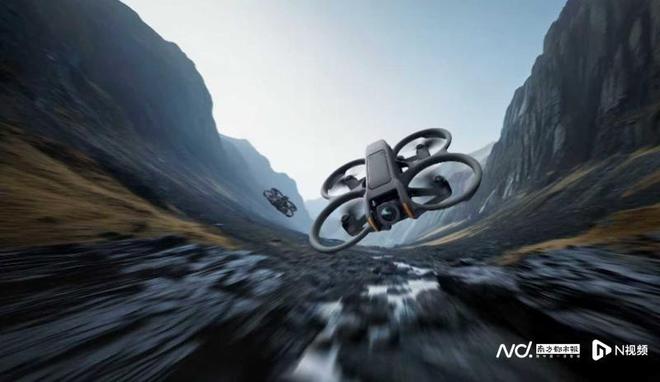
大疆否认投资者会议传闻:系全景无人机新品内部体验活动
Nan Fang Du Shi Bao· 2025-11-19 12:07
Core Viewpoint - DJI is actively responding to competitive pressures in the drone and consumer electronics markets, particularly following the launch of the first panoramic drone by Insta360, indicating a strong competitive awareness and strategic positioning in the industry [1][4]. Group 1: DJI's Product Development and Market Strategy - DJI recently invited multiple investment institutions to its Shenzhen headquarters for a closed-door research session on its upcoming panoramic drone, the DJI Avata 360, although the company later clarified that this was an internal product experience event, not an investor meeting [1]. - The company emphasized that claims regarding its market position, such as being the only profitable consumer drone company globally, are inaccurate and that it does not need to collaborate with other companies to expand its market presence [1]. - The launch of the Avata 360 is seen as a defensive move against Insta360's new product, which could significantly impact Insta360's valuation if DJI leverages its supply chain advantages for competitive pricing [1]. Group 2: Expansion into New Markets - Beyond drones, DJI has been expanding its footprint in the consumer electronics sector, launching products such as the Osmo 360 camera and a sweeping robot, while also investing in a 3D printing company [3]. - The investment in the 3D printing sector is viewed as a strategic move to capitalize on the growth potential of consumer-grade 3D printing technology, aligning with DJI's innovative vision [3][4]. - The competitive landscape is intensifying, with DJI's entry into 3D printing potentially posing a threat to its former employee's company,拓竹科技, which has established itself as a leader in the consumer-grade 3D printing market [3][4]. Group 3: Competitive Dynamics in the Industry - The competition between DJI, Insta360, and拓竹科技 reflects a broader trend in Shenzhen's hardware industry, transitioning from a single dominant player to a multi-competitive environment [5]. - As DJI continues to diversify its product offerings and invest in new technologies, Insta360 is exploring opportunities in drone and content ecosystems, while拓竹科技 is expanding its global market presence in 3D printing [5]. - Future competition is expected to focus more on supply chain efficiency, global channel capabilities, brand building, and organizational management rather than solely on product specifications and pricing [5].
深夜炸场!谷歌终极杀器Gemini 3重磅发布;俞敏洪连发10条南极游视频;香港千万富翁增至近40万人;马云现身蚂蚁园区丨邦早报
创业邦· 2025-11-19 00:12
Group 1: AI Developments - Google launched its new AI model Gemini 3, claiming it to be the "most intelligent" and "factually reliable" AI system to date, with enhanced capabilities in handling text, images, and audio simultaneously [2] - Jeff Bezos founded a new AI startup named "Project Prometheus," which has raised $6.2 billion in funding and employs nearly 100 staff from major tech companies [4] - Perplexity integrated the Kimi K2 Thinking model, marking it as the only domestic model included alongside OpenAI's GPT-5.1 [17] Group 2: Company Financials and Performance - Amer Sports, the parent company of Arc'teryx, reported a 30% revenue increase to $1.756 billion in Q3 2025, with a 161% rise in adjusted net profit to $185 million [14] - Xiaomi Group announced a record high adjusted net profit of 11.3 billion yuan in Q3 2025, with total revenue reaching 113.1 billion yuan, a 22.3% year-on-year increase [14] - 元气森林 announced the separation of its dairy brand 北海牧场 into an independent operation, focusing on low-temperature yogurt while consolidating resources in the beverage sector [14] Group 3: Market Trends and Predictions - A report indicated that the number of "millionaires" in Hong Kong has increased to approximately 395,000, reflecting a growing wealth concentration in the region [27] - The global smartphone shipment is projected to reach 1.2213 billion units in 2025, with AI smartphones expected to grow from 445.8 million units in 2025 to nearly 600 million units in 2026 [27] Group 4: Corporate Changes and Strategies - DJI held closed-door meetings with multiple investment institutions regarding its new panoramic drone, DJI Avata 360, while stating it has no current financing or IPO plans [6][7] - Manner Coffee responded to rumors about a potential IPO in Hong Kong, stating it would not comment on the speculation [7] - The management of 胖东来 underwent significant changes, with 于东来 stepping down as general manager while retaining his position as chairman [7]







吃肉没赶上 割肉一次没落下
Datayes· 2025-11-18 11:57
Core Viewpoint - The article discusses the global risk-off sentiment affecting various markets, including declines in U.S. stocks, Japanese stocks, cryptocurrencies, and even gold. It highlights the investment strategies of former President Trump, who purchased significant amounts of corporate and municipal bonds during this period [1]. Market Overview - The article notes that the A-share market experienced a collective decline on November 18, with the Shanghai Composite Index down 0.81%, the Shenzhen Component down 0.92%, and the ChiNext Index down 1.16%. The total trading volume across the three markets was 1,946.17 billion yuan, an increase of 15.701 billion yuan from the previous day [16]. - Over 4,100 stocks in the market fell, with 63 stocks hitting the daily limit up, while 23 stocks were locked, and 17 stocks had consecutive limit-ups, with the maximum being six consecutive limit-ups [16]. Sector Analysis - The lithium battery sector faced a downturn due to profit-taking and rumors regarding price increases being debunked. Additionally, there were reports of a price war in the energy storage sector, with prices dropping by 30% [12]. - The AI application sector saw some stocks rise against the trend, with companies like Rongji Software and Inspur Software performing well [16]. - The semiconductor sector remained active, driven by concerns over supply chain security due to changing Sino-Japanese relations and the upcoming IPOs of domestic companies [16]. Financial Support Initiatives - The People's Bank of China and 12 other departments issued a plan to boost consumption in Beijing, particularly focusing on financial support for automobile loans, including incentives for new energy vehicle purchases [23]. Investment Trends - The article highlights that the main funds saw a net outflow of 87.67 billion yuan, with the largest outflows occurring in the electric equipment sector. Conversely, sectors like media, computing, and communication saw net inflows [26]. - Notable stocks with significant net inflows included Liou Shares and Huasheng Tiancai, while companies like Tianshi Materials and Yangguang Electric Power experienced the largest net outflows [26]. Valuation and Market Sentiment - The article indicates that sectors such as media, computing, and electronics are leading in performance, while coal, electric equipment, and steel are lagging. The trading heat in sectors like defense, basic chemicals, and agriculture has increased, with some sectors like agriculture and non-bank financials currently at historical low PE percentiles [33].





大疆密会百家投资机构
2 1 Shi Ji Jing Ji Bao Dao· 2025-11-18 11:53
Core Insights - DJI is expanding into multiple consumer electronics and smart hardware sectors, including panoramic cameras, robotic vacuums, and 3D printing, with plans to enter the panoramic drone market [1][12] Group 1: DJI's Recent Activities - DJI recently invited numerous investment institutions to its Shenzhen headquarters for a closed-door research session on its upcoming panoramic drone, the DJI Avata 360 [2][3] - During the event, investors tested the yet-to-be-released DJI Avata 360 and attended a presentation covering product comparisons, industry competition, and market insights [3][4] - Despite the extensive investor engagement, DJI clarified multiple times that it has no financing needs or plans for an IPO, which raised questions among attendees about the purpose of the event [2][8] Group 2: Product Features and Market Position - The DJI Avata 360 is based on the Avata 2 model, designed to simplify operation compared to traditional DIY drones, although it still presents a learning curve for novice users [4][5] - Feedback from investors indicated that while the drone's video transmission is clear and stable, it requires some adaptation due to its fast acceleration [5][6] - DJI's strategy to launch the panoramic drone is seen as a defensive move in response to competitors, with a focus on keeping production costs low [7][10] Group 3: Market Dynamics and Future Outlook - The global consumer drone market is transitioning from an "incremental market" to a "stock market," with growth rates expected to slow down significantly [11] - DJI's recent product strategy reflects a shift from aerial to ground-based technologies, aiming to diversify and find new growth avenues [12][13] - Investors express optimism about the potential of the panoramic drone market, viewing it as a new category that could combine the strengths of both drones and panoramic cameras [14][15]
大疆密会百家投资机构
21世纪经济报道· 2025-11-18 11:37
Core Viewpoint - DJI is expanding into multiple consumer electronics and smart hardware sectors, including panoramic cameras, robotic vacuum cleaners, and 3D printing, while preparing to launch a new panoramic drone, DJI Avata 360 [1][9]. Group 1: DJI's Market Activities - DJI invited numerous investment institutions to its Shenzhen headquarters for a closed-door event to test the yet-to-be-released DJI Avata 360 panoramic drone [1][2]. - Despite the invitation, DJI stated it has no financing or IPO plans, which raised questions among investors about the purpose of the event [1][6]. - The event included a product demonstration and a presentation covering product comparisons, industry competition, and market insights [2][4]. Group 2: Product Features and Market Position - The DJI Avata 360 is based on the Avata 2 model, designed to be more user-friendly than traditional DIY racing drones, but still presents a learning curve for novice users [4][6]. - DJI's strategy appears to be a defensive move in response to competitors, with the potential for lower production costs by integrating panoramic capabilities into existing drone models [6][9]. - DJI holds a dominant position in the global consumer drone market, with a market share consistently above 70%, but the market is transitioning from growth to saturation [9][10]. Group 3: Competitive Landscape - The entry of DJI into the panoramic drone market is seen as a direct response to competitors like YingShi Innovation, which is also developing a panoramic drone [6][9]. - Investors believe that while DJI has advantages in drone technology, YingShi may have an edge in software capabilities crucial for panoramic imaging [11][12]. - The competition between DJI and YingShi is expected to foster market growth, with both companies aiming to innovate and expand their product offerings [11][12].

大疆邀请百家投资机构闭门调研全景无人机新品,未提融资上市
Xin Lang Cai Jing· 2025-11-18 11:34
Core Insights - DJI Innovation recently invited multiple investment institutions for a closed-door survey of its yet-to-be-released panoramic drone product, the DJI Avata 360, indicating no current financing needs or plans for an IPO [1] - The launch of the panoramic drone is viewed as a "defensive move" to address market competition, as DJI currently holds a dominant position in the global consumer drone market, although market growth momentum is weakening [1] - DJI is exploring diversification strategies to find new growth points, including entering markets for panoramic cameras, robotic vacuum cleaners, and 3D printing [1]