
Galaxy XR

Search documents
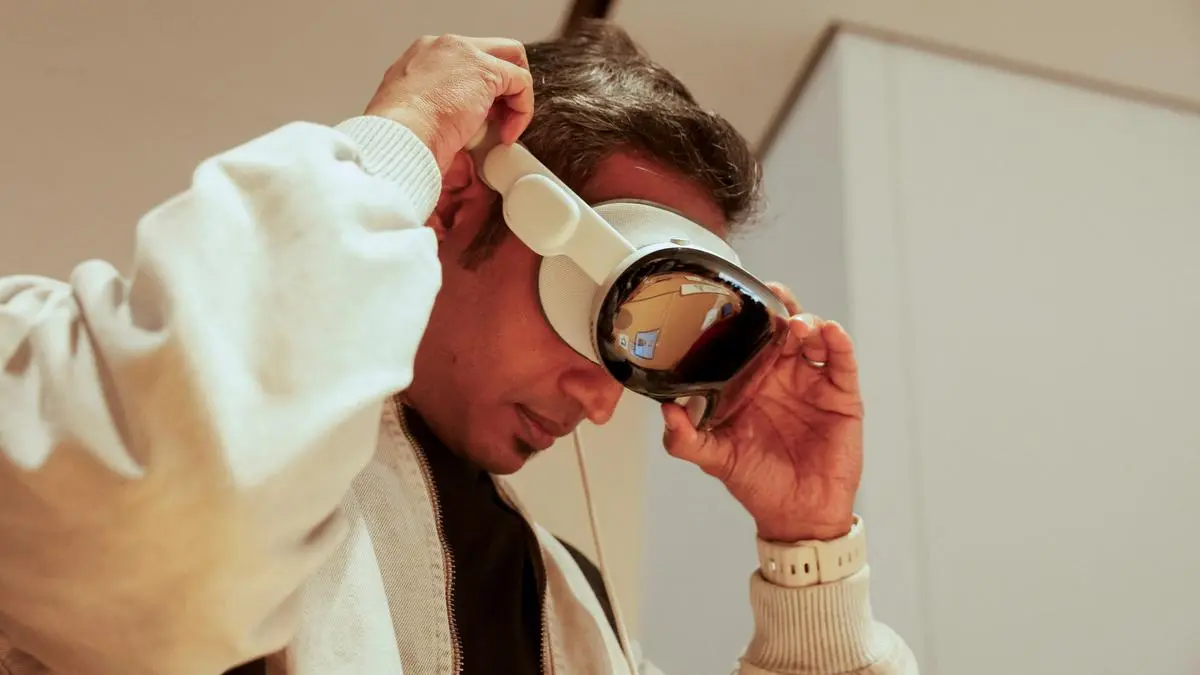
Apple Vision Pro gets YouTube app two years after device’s debut
BusinessLine· 2026-02-13 05:10
Core Viewpoint - Alphabet Inc.'s YouTube has launched a dedicated app for Apple Inc.'s Vision Pro, addressing a significant gap in the headset's entertainment offerings two years post-launch [1][2] Group 1: YouTube App Launch - The new YouTube app for Vision Pro closely resembles the version available on Samsung's Galaxy XR, providing full access to billions of videos and supporting 3D, 180-degree, and 360-degree content [1] - Prior to this launch, YouTube was only accessible through the Safari web browser on the Vision Pro, limiting user capabilities such as offline video downloads [2] Group 2: Market Context - The delayed release of the YouTube app highlights the niche status of Apple's Vision Pro, which, despite its technical capabilities, lacks a robust app ecosystem compared to other Apple devices [3] - Netflix Inc. has not yet released a dedicated app for the Vision Pro, indicating ongoing challenges in attracting major content providers to the platform [3] Group 3: Third-Party Developments - Some third-party developers attempted to create unofficial YouTube players for the Vision Pro's operating system, but many were removed from the App Store for violating terms of service [4] - The official YouTube app is now available as a free download [4]


机械设备:3C设备周观点:苹果AI眼镜或将在2026年Q2亮相,龙头积极布局眼镜市场-20260125
Huafu Securities· 2026-01-25 05:48
Investment Rating - The industry rating is "Outperform the Market," indicating that the overall return of the industry is expected to exceed the market benchmark index by more than 5% in the next 6 months [13]. Core Insights - Apple's AI glasses project has made significant progress and is expected to officially debut in Q2 2026, utilizing magnesium alloy materials and special lenses to enhance the wearing experience, relying on integration with the iPhone for core functionalities [2]. - Meta is shifting its core strategy from the metaverse to AI wearable devices, with plans to double the annual production capacity of its AI smart glasses to 20 million units by the end of 2026, potentially increasing to 30 million based on market conditions [3]. - The smart glasses market is becoming increasingly competitive with major players like Apple, Samsung, and Xiaomi entering the field, leading to strong sales performance for products like the Ray-Ban Meta series, which saw a year-on-year sales increase of over 200% [4]. Summary by Relevant Sections - **Apple's AI Glasses**: Expected to launch in Q2 2026, focusing on a design that does not include an integrated screen and enhances user experience through its pairing with iPhones [2]. - **Meta's Strategy**: Transitioning to AI wearable devices, with a significant increase in production capacity planned for its smart glasses [3]. - **Market Dynamics**: The entry of major hardware manufacturers into the smart glasses market is intensifying competition, with notable sales growth reported for existing products [4]. - **Investment Opportunities**: Suggested focus on companies involved in smart glasses (e.g., Deep Science, Quick Intelligent), silicon-based OLED screens (e.g., Yirui Technology), and automation equipment [5].

机械设备 3C 设备周观点:Meta 押注 AI 可穿戴设备,Open AI 或将推出首款硬件产品-20260117
Huafu Securities· 2026-01-17 11:36
Investment Rating - The industry rating is "Outperform the Market," indicating that the overall return of the industry is expected to exceed the market benchmark index by more than 5% in the next 6 months [11]. Core Insights - Meta is shifting its core strategy from the metaverse to AI wearable devices, planning to double the annual production capacity of AI smart glasses to 20 million units by the end of 2026, with potential further increases to 30 million units based on market conditions [2][3]. - The smart glasses market is becoming increasingly competitive with major players like Apple and Samsung entering the space. Meta's collaboration with EssilorLuxottica has seen strong market performance, with some models selling out immediately and the Ray-Ban Meta series experiencing over 200% year-on-year sales growth [3]. - OpenAI is expected to launch its first AI headphone product, targeting a production volume of 40 to 50 million units in the first year, competing directly with Apple's AirPods [3]. Summary by Sections Smart Glasses Market - The smart glasses segment is heating up with significant entries from companies like Apple, Samsung, and Xiaomi, indicating a robust competitive landscape [3]. - Meta's partnership with EssilorLuxottica has resulted in strong sales performance, with certain models selling out quickly and a notable increase in year-on-year sales [3]. AI Wearable Devices - Meta is focusing on AI wearable devices, with plans to enhance production capabilities significantly by 2026 [2]. - OpenAI is set to introduce a new AI headphone product, further diversifying the AI wearable market [3]. Investment Opportunities - Suggested companies to watch include those involved in smart glasses (e.g., Deep Science, Quick Intelligent), silicon-based OLED screens (e.g., Yirui Technology), and automation equipment (e.g., Bozhong Precision) [4].
开年第一炸:Vision Pro被曝半停产,「空间计算」故事讲不下去了?
3 6 Ke· 2026-01-13 03:20
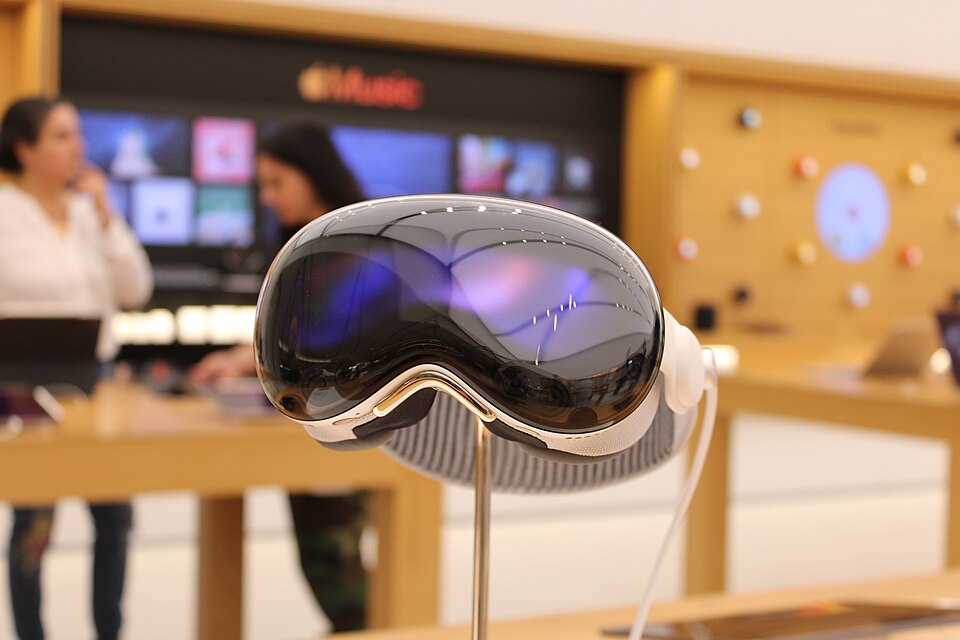
Core Viewpoint - Apple's Vision Pro appears to be in a state of decline, with reports indicating that the company has largely halted maintenance and development for the product, suggesting it may not see further releases in the next two to three years [1][3]. Group 1: Product Status and Market Position - Vision Pro has reportedly entered a semi-production phase, maintaining only minimal capacity and parts lines for future maintenance needs [1]. - The product, once seen as a flagship for ushering in a "post-iPhone era," has quickly devolved into a mere reference model within two years of its launch [3]. - Apple's shift in focus from immersive headsets to lightweight AR glasses indicates a significant pivot away from the already struggling XR market [3]. Group 2: Pricing and Consumer Perception - The initial pricing of Vision Pro was set at $3,499 in the U.S. (approximately 24,000 yuan), 29,999 yuan in mainland China, and €3,999 (around 32,000 yuan) in the EU, which positioned it beyond mainstream accessibility [4]. - The high price point was intended to establish Vision Pro as a "professional tool," but it failed to deliver corresponding productivity or unique experiences, leading consumers to opt for more practical alternatives [4]. Group 3: Developer Challenges and Ecosystem Issues - Developers have expressed frustration with Vision Pro's restrictive development environment, including stringent privacy limitations and a lack of direct access to camera feeds, which stifles innovation [6][8]. - The absence of compatibility with established XR ecosystems like OpenXR and reliance on proprietary frameworks has resulted in a cycle of "no applications—no users—fewer applications," further isolating Vision Pro from potential growth [8]. - The lack of official peripherals, such as controllers, has hindered developers from creating engaging applications, as existing XR ecosystems are primarily built around controller-based interactions [8]. Group 4: Competitive Landscape - As Apple retreats from the XR space, Samsung has introduced its Galaxy XR, which is seen as a potential successor to Vision Pro, although it faces similar challenges regarding user experience and application availability [11][13]. - Galaxy XR's reliance on the Android XR ecosystem provides it with a broader application library, but it still struggles with issues like high pricing and fragmented development environments [13][14]. Group 5: Future Outlook - The failure of Vision Pro serves as a lesson for Apple, emphasizing the importance of aligning advanced technology with user needs and market realities [15]. - Future AR glasses from Apple may reflect a more cautious approach, leveraging the existing Apple ecosystem to create interconnected experiences across devices like iPhone, MacBook, and iPad [15].
吹最大的牛,挨最毒的打:2025 年科技失望榜出炉,这些产品为何“高开低走”?
3 6 Ke· 2026-01-05 09:17
Core Insights - The article presents a "Disappointment List" of products that failed to meet expectations despite initial hype, emphasizing the importance of learning from failures to improve future products [1] Group 1: Sora 2 - Sora 2, an AI video model from OpenAI, faced significant user dissatisfaction due to limited daily generation quotas and inconsistent video quality, leading to a user retention rate of less than 1% over 30 days [4][5] - OpenAI's initial oversight of user demand and subsequent adjustments to its service model resulted in a loss of reputation, highlighting the need for careful consideration of user needs and compliance before launching AI models [5] Group 2: Humane AI Pin - The Humane AI Pin was initially touted as a revolutionary product but turned out to be a basic device with significant usability issues, including slow response times and a problematic operating system [8][9] - Despite high expectations, the product's performance and functionality fell short, leading to its eventual shutdown and bankruptcy, serving as a cautionary tale for the AI hardware market [9] Group 3: Microsoft Recall - Microsoft's Recall feature aimed to enhance user experience by allowing users to revisit past activities but raised privacy concerns due to the extensive data it collects [12][13] - The feature's perceived lack of utility compared to existing solutions and potential privacy risks led to user backlash, indicating a misalignment between developer intentions and user needs [13] Group 4: Galaxy XR - Samsung's Galaxy XR, positioned as a competitor to Apple's Vision Pro, received negative feedback regarding its weight, comfort, and lack of compelling software applications, which hindered its market acceptance [16][17] - The product's failure to deliver a robust XR ecosystem reflects the ongoing challenges in the XR market, suggesting that the technology is not yet mature enough for widespread adoption [17] Group 5: Fujifilm X Half - Fujifilm's X Half camera was criticized for its high price relative to its performance, failing to meet user expectations for a retro digital camera [20][21] - The product's inability to align with user demands and its outdated features led to a rapid decline in its second-hand market value, indicating a disconnect between the company's vision and consumer preferences [21] Group 6: AI Learning Machines - AI learning machines, marketed as affordable alternatives to human tutors, often failed to deliver accurate educational content, leading to parental dissatisfaction and a return to traditional tutoring methods [24][25] - The prevalence of "AI hallucinations" in these products underscores the challenges in ensuring reliable AI performance in educational contexts [25] Group 7: Redmi Book 14 - The Redmi Book 14 2025 model disappointed users with downgraded specifications compared to its predecessor, raising concerns about product positioning and planning within the brand [28][29] - The confusion surrounding multiple versions of the product highlights the need for clearer product differentiation and strategic planning in the entry-level laptop market [29] Conclusion - The article emphasizes that many of the highlighted products, despite initial promise, failed due to a lack of understanding of user needs and market dynamics, serving as a reminder for companies to prioritize user experience over mere technical specifications [30]


3C设备周观点:智能眼镜首次入选国补范围,龙头积极布局智能眼镜赛道愈发火爆-20260104
Huafu Securities· 2026-01-04 13:11
Investment Rating - The industry rating is "Outperform the Market" [7] Core Insights - The smart glasses have been included in the national subsidy scope for the first time, with a subsidy standard of 15% of the selling price, capped at 500 yuan [2] - The smart glasses market is heating up, with global AI camera glasses sales expected to reach 14.5 million units by 2025, with a compound annual growth rate (CAGR) exceeding 50% from 2025 to 2029, potentially reaching 60 million units by 2029 [3] - Major players like Apple, Samsung, and Xiaomi are actively entering the smart glasses market, with significant sales growth reported for products like the Ray-Ban Meta series, which saw a year-on-year sales increase of over 200% [4] Summary by Sections National Subsidy Policy - The 2026 consumer goods national subsidy policy expands the subsidy range to include smart glasses for the first time, maintaining the same subsidy standard as 2025 [2] Market Growth Projections - The smart glasses market is projected to grow significantly, with sales expected to reach 14.5 million units globally by 2025 and 60 million units by 2029, indicating a robust growth trajectory [3] Competitive Landscape - The entry of major tech companies into the smart glasses sector is intensifying competition, with notable collaborations and product launches enhancing market dynamics [4] Investment Opportunities - Suggested companies to watch include those involved in foldable screens, smart glasses, silicon-based OLED screens, automation assembly and testing equipment, thermal management, and 3D printing applications [5]
谷歌收拾XR旧河山:AI重新定义的XR,将「吞噬」设备与OS
3 6 Ke· 2025-12-10 04:37
Core Insights - Google has unveiled its Android XR device roadmap and showcased a prototype AI glasses in collaboration with Samsung, marking a significant step in its XR strategy [1][5] - The event emphasized the integration of Gemini with Android XR, positioning it as a new computing platform rather than just an Android version for headsets [1][2] Group 1: Product Strategy - Google outlined four product lines: XR headsets, AI glasses, wired XR glasses, and future wireless XR glasses, all sharing the same system capabilities and development stack [3][6] - The strategy reflects a conservative approach, avoiding a top-down hardware convergence like Apple, and instead allowing hardware exploration by various manufacturers [3][5] - The XR headsets, particularly the Samsung Galaxy XR, serve as a platform anchor, providing a reference point for Android XR's capabilities [8][10] Group 2: AI Integration - Gemini is positioned as the default intelligent layer within Android XR, enhancing multimodal AI experiences across devices [2][15] - The interaction paradigm has shifted, with Gemini enabling users to manage windows and content through simple intent descriptions rather than complex commands [15][16] - AI glasses are highlighted as a key focus, emphasizing low interference and immediate understanding without complex interfaces [10][12] Group 3: Developer Ecosystem - Google aims to unify the development experience by integrating existing tools like Jetpack and ARCore into the XR ecosystem, allowing developers to create applications that extend across different device forms [23][28] - The Android XR framework does not require developers to choose between native applications for glasses or mobile extensions, promoting a cohesive development environment [28][29] - This strategy positions Android XR as a new operating environment within the Android ecosystem, facilitating a smoother transition for developers into XR [29][30]

当年狂买白酒!本轮牛市,基金会狂买AI硬件吗?
Mei Ri Jing Ji Xin Wen· 2025-12-09 12:42
Group 1: International Technology Companies - Nvidia is allowed to sell H200 AI chips to "approved customers" in China, with 25% of sales revenue going to the US government [1] - Tesla's humanoid robot, Optimus, demonstrated a grasping motion during a fall, raising questions about its capabilities [1] - Google showcased new features of Galaxy XR and announced AI glasses in collaboration with Samsung and others, set to launch next year [1] Group 2: Domestic Technology Developments - Zhipu AI announced the open-sourcing of its core AI Agent model, AutoGLM, potentially allowing anyone to create "Doubao phones" [2] - The launch of Doubao phone assistant on December 1 has triggered reactions from major internet companies [2] - The first MUSA Developer Conference will see the release of a new GPU architecture by Moore Threads on December 19-20 [3] Group 3: Market Overview - A-shares showed mixed performance, with the Shanghai Composite and Shenzhen Component indices down by 0.37% and 0.39%, respectively, while the ChiNext index rose by 0.61% [4] - The trading volume in the Shanghai and Shenzhen markets reached 1.904 trillion yuan, a decrease of 132.7 billion yuan from the previous day [5] - A total of 1,308 stocks rose while 4,058 fell, with a median decline of 0.99% among individual stocks [6] Group 4: Market Sentiment and Trends - The current market pullback is considered normal, with expectations of continued rebound this week [7] - Major indices are close to upper resistance levels, indicating limited rebound space [8] - The market is described as relatively healthy, with reasonable valuations and underlying logic for upward movement remaining intact [8] Group 5: Sector Performance - The market shows structural divergence, with significant trading volumes in semiconductor, communication equipment, and components sectors [9] - The CPO concept stocks continue to reach new highs, indicating strong sector performance [11] - The humanoid robot sector is in a developmental phase, with significant institutional investment, warranting close attention [12] Group 6: Speculative Trends - The commercial aerospace sector experienced fluctuations but still saw several stocks hitting the limit-up [13] - The "Strait West Coast" concept has emerged as a strong speculative theme, with 19 stocks hitting limit-up or over 10% gains [16] - Speculative trading in the Strait West Coast concept is expected to continue as the new year approaches [17]


一文读懂Android XR发布会:谷歌“亲儿子”明年开卖
3 6 Ke· 2025-12-09 10:27
Core Insights - Google has launched the XR Edition event, showcasing advancements in the XR field and positioning Android XR as the industry's first unified platform for extended reality devices [1][3] - The platform aims to extend the advantages of smartphone experiences into the XR domain, with a focus on diverse product forms [3][4] Product Development - Google collaborates with Samsung and Qualcomm to develop Android XR, with Samsung handling the technical architecture and Qualcomm providing chip support [3][4] - The initial products under Android XR include two models of AI smart glasses, set to launch in 2026, designed in partnership with Warby Parker and Gentle Monster [4][6] - The first model emphasizes basic interaction with audio capabilities, while the second model integrates a low-power transparent display for notifications and navigation [4][6] User Experience - The design philosophy of the smart glasses prioritizes a seamless integration of technology into daily wear, focusing on a "context-aware" assistance experience powered by Gemini AI [6][9] - Features include visual search for object recognition, real-time translation for conversations, and contextual reminders based on location [6][9] New Product Categories - Google introduces a new category of wired XR glasses, Project Aura, which combines a lightweight display with a portable computing core, expected to launch in 2026 [7][9] - Project Aura allows for high-precision overlay of virtual content on real-world visuals, enhancing user interaction [9][10] Collaboration with Samsung - Samsung's Galaxy XR headset, launched in October, features upgrades such as seamless PC connectivity and a digital avatar for video calls, enhancing social interaction [11][12] - The headset's Travel Mode stabilizes virtual images during movement, reducing motion-induced discomfort [12] Developer Support - Google has released the Android XR SDK Developer Preview 3, providing full support for AI smart glasses development, marking a significant extension of the platform [13][16] - New development libraries, Jetpack Glimmer and Jetpack Projected, facilitate the creation of applications for transparent displays and smooth transitions from mobile to eyewear [16][17] Ecosystem Development - Android XR adheres to the OpenXR standard, enabling developers to create immersive content using Unreal Engine and Godot engine [17][19] - A case study from Uber demonstrates the potential of smart glasses in enhancing travel experiences through real-time information display and AR navigation [17][19]
谷歌把Gemini放进AI眼镜了 Meta和苹果能一战吗?
Di Yi Cai Jing· 2025-12-09 07:21
Core Insights - Google is re-entering the smart glasses market with a new focus on AI integration, leveraging advancements in generative AI and a mature hardware supply chain [1][2] - The company aims to compete directly with Apple and Meta by offering a range of smart glasses tailored to different user needs, supported by its Gemini AI model [2][4] Group 1: Product Development - Google announced three different smart glasses in collaboration with Samsung and XREAL, designed to seamlessly integrate AI and XR into users' lives [1][2] - The Galaxy XR headset, priced at $1,799, is positioned as a direct competitor to Apple's Vision Pro, which costs $3,500 [2] - Upcoming products include Project Aura, a wired XR glasses model set to launch in 2026, which will combine features of heavy headsets and lightweight glasses [3][4] Group 2: Features and Functionality - The Galaxy XR headset received a system update introducing features like virtual display, digital likeness, and travel mode, which are comparable to Apple's offerings [3] - Future smart glasses will include a non-display AI model with built-in speakers and cameras for natural interaction with Gemini, and a display model for navigation and translation [4] Group 3: Market Positioning and Strategy - Google aims to establish a unified Android XR platform that integrates hardware, software, and AI across various devices, positioning itself strongly in the smart glasses market [4] - Industry experts predict that the evolution of AI capabilities will lead to a significant shift in consumer technology, with smart glasses potentially replacing smartphones by 2027 or 2028 [5]