
MEMS麦克风

Search documents
瑞声科技:管理层调研-均热板业务扩张;AI 眼镜与边缘 AI 设备崛起将驱动未来增长
2026-01-19 02:32
Summary of AAC (2018.HK) Conference Call Company Overview - **Company**: AAC Technologies Holdings Inc. (2018.HK) - **Industry**: Technology, specifically focusing on acoustics, haptics, and edge AI devices Key Points and Arguments Revenue Growth and Market Outlook - Management is optimistic about achieving double-digit revenue growth by 2026, driven primarily by major global smartphone brand customers and product cycle changes [1][3] - Rising memory costs may limit growth in the smartphone market, but improvements in cost control are expected to enhance margins [1] Catalysts for Future Growth - **Vapor Chamber Technology**: Increasing penetration in smartphones and notebooks is anticipated to drive growth [1][3] - **AI and AR Devices**: AAC is collaborating with leading global brands to develop components for AI glasses and innovative edge AI devices, which are expected to be significant growth drivers by 2027 [3] - **Diverse Production Sites**: The company's production facilities in Vietnam are positioned to better serve global customers amid geopolitical tensions [3] Product Innovations - AAC is focusing on components such as acoustics, haptics, and MEMS microphones for emerging edge AI devices, enhancing user interaction through voice commands [2][3] - The company is also developing optical waveguide lenses for AI glasses, aiming to penetrate critical components in this market [3] Financial Projections - **12-Month Price Target**: HK$68.6, representing a potential upside of 71.9% from the current price of HK$39.90 [4][8] - **Market Capitalization**: Approximately HK$46.8 billion (US$6.0 billion) [8] - **Revenue Forecasts**: Expected revenues of Rmb 27.33 billion in 2024, increasing to Rmb 38.13 billion by 2026 [8] Risks and Challenges - Key downside risks include: 1. Rapid expansion of low-margin camera modules [7] 2. Increased competition in handset lenses and existing product lines [7] 3. Weaker-than-expected smartphone demand post-COVID-19 [7] 4. Strategic shifts towards more modules and assembly business [7] Investment Rating - The company maintains a "Buy" rating, supported by its strong position in the acoustics market and the anticipated growth in edge AI devices [2][4] Additional Important Information - The report includes disclosures regarding potential conflicts of interest due to Goldman Sachs' investment banking relationships with AAC [4][17] - Analysts involved in the report have certified that their views reflect their personal opinions and are not influenced by compensation [10] This summary encapsulates the key insights from the conference call, highlighting AAC's growth prospects, product innovations, financial outlook, and associated risks.

敏芯股份:以全链路自研竞逐全球传感器市场
Shang Hai Zheng Quan Bao· 2025-12-25 00:13
Core Viewpoint - The article highlights the significant growth and development of the MEMS (Micro-Electro-Mechanical Systems) industry in China, particularly focusing on the achievements of Minxin Co., which has become a leading player in the MEMS sensor market, producing 100 million sensors monthly and accumulating over 5 billion units shipped, equating to an average of 3 sensors per person in China [1][1][1] Group 1: Company Development - Minxin Co. was founded in 2007 when there were no domestic MEMS wafer foundries in China, and it has since evolved into a leader in the MEMS sensor market, becoming the first MEMS chip stock in China in 2020 [1][1] - The company has diversified its product offerings to include acoustic sensors, pressure sensors, inertial sensors, and posture sensors, which are widely used in consumer electronics, smart vehicles, industrial control, and medical markets [1][1] - Minxin Co. ranks fourth globally in MEMS microphone shipments and third in MEMS acoustic sensor chip shipments [1][1] Group 2: Product Innovation - The company aims to produce world-class products, with some of its small category products already achieving world-leading technology levels, such as a 70dB high signal-to-noise ratio MEMS microphone and a six-dimensional force sensor for humanoid robots [1][1] - In 2024, the company plans to invest over 80 million yuan in R&D, accounting for 16.01% of its revenue, to enhance its capabilities in MEMS sensor chip design, wafer manufacturing, packaging, and testing [1][1] Group 3: Customer Relationships - Minxin Co. collaborates with high-quality clients such as Samsung, Xiaomi, and OPPO, which helps the company to refine its product quality and R&D direction, creating a positive feedback loop for product development [1][1] - The company is planning to develop an 80dB silicon microphone, anticipating future customer demands for higher signal-to-noise ratios [1][1] Group 4: Industry Positioning - Minxin Co. has played a crucial role in establishing the MEMS production capability in China, contributing to the creation of the first MEMS wafer foundry through collaboration with national projects [1][1] - The company aims to become a platform enterprise that covers all sensor needs for mobile devices, expanding its product line and downstream application areas [1][1] Group 5: Future Strategy - The company has a clear strategic plan for the next five years, focusing on technology reserves in emerging industries such as humanoid robots, smart wearables, and the Internet of Things [1][1] - Minxin Co. plans to avoid homogenization through mergers and acquisitions of quality targets and is actively considering global expansion to meet future supply chain demands from overseas clients [1][1]

敏芯股份:以全链路自研竞逐全球传感器市场
Shang Hai Zheng Quan Bao· 2025-12-24 20:11
Core Insights - The article highlights the significant growth and development of the MEMS (Micro-Electro-Mechanical Systems) industry in China, particularly through the achievements of Minxin Co., which has become a leader in MEMS sensors, producing 100 million sensors monthly and accumulating over 5 billion units shipped since its inception in 2007 [1][2]. Group 1: Company Development - Minxin Co. has evolved from a startup in 2007, when there were no domestic MEMS wafer foundries, to a leading MEMS chip company in China, achieving a revenue share of 47.61% from MEMS acoustic sensors in 2024 [1][3]. - The company has expanded its product matrix to include acoustic sensors, pressure sensors, inertial sensors, and posture sensors, with global rankings of fourth in MEMS microphones and third in MEMS acoustic sensor chip shipments [3][5]. Group 2: Product Strategy - The company aims to produce world-class products, with ongoing development of high-performance MEMS microphones and sensors for emerging markets such as humanoid robots and AR/VR applications [3][5]. - Minxin Co. emphasizes the importance of continuous R&D investment, with a planned R&D expenditure of over 80 million yuan in 2024, representing 16.01% of its revenue [5][6]. Group 3: Customer Relationships - The company collaborates with high-profile clients like Samsung, Xiaomi, and OPPO, focusing on building relationships that allow for mutual growth and high-quality product development [5][6]. - Minxin Co. recognizes that the value of its customers directly influences its own value, driving the company to invest heavily in assets to meet the quality and delivery expectations of premium clients [6][7]. Group 4: Industry Positioning - Minxin Co. has played a pivotal role in establishing the MEMS production capabilities in China, contributing to the creation of the first MEMS wafer fab through collaboration with state initiatives [7][8]. - The company aims to transition from being a participant in the industry chain to becoming an ecosystem builder, offering a comprehensive range of sensors for various applications [7][8]. Group 5: Future Outlook - The company has a clear strategic plan for the next five years, focusing on technology reserves in emerging fields like humanoid robots and IoT, as well as pursuing mergers and acquisitions to avoid homogenization in competition [8]. - Minxin Co. is committed to strengthening its R&D innovation, expanding its product categories, and targeting top-tier clients to become a global leader in MEMS solutions [8].

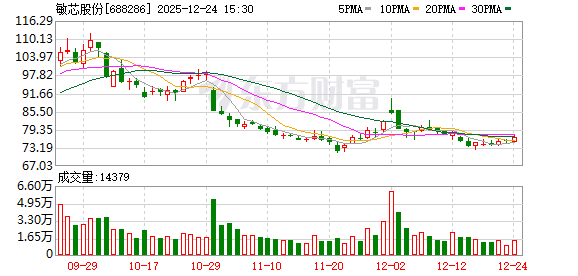
共达电声:公司目前还布局了车载无线充、车载USB充、汽车喇叭、毫米波雷达模组等产品
Mei Ri Jing Ji Xin Wen· 2025-12-24 03:58
Core Viewpoint - The company is focusing on the development of acoustic technology and has diversified its product offerings beyond just electroacoustics [1] Group 1: Company Focus - The company specializes in the acoustic field, with products including MEMS microphones, speakers, and horns applicable to various terminal products [1] - The company has also expanded its product lineup to include automotive wireless charging, automotive USB charging, car speakers, and millimeter-wave radar modules [1]

MEMS,中国势不可挡
3 6 Ke· 2025-11-07 02:56
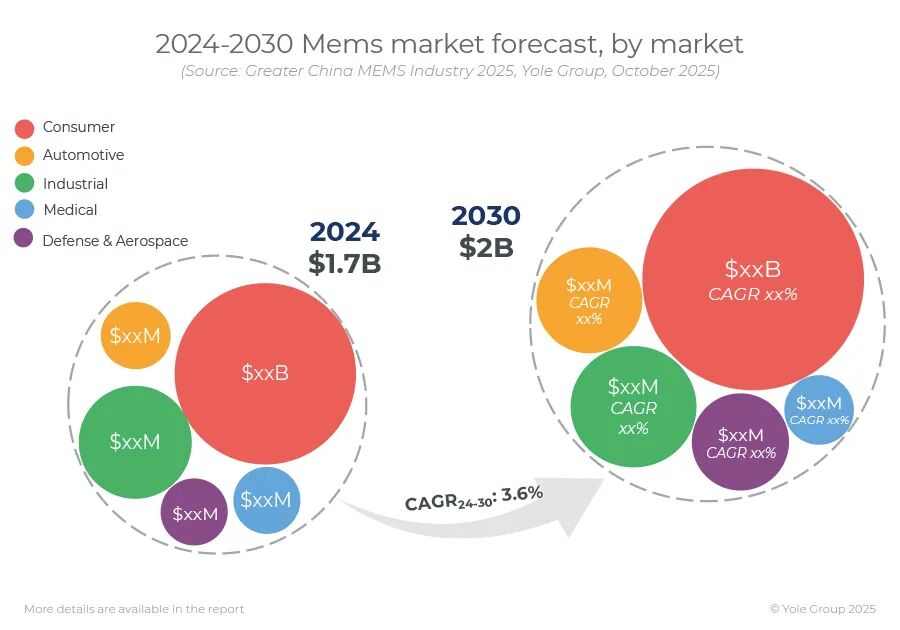
Core Insights - The MEMS industry in Greater China is projected to reach $1.7 billion in revenue in 2024, with a year-on-year growth of 8.4% and an estimated shipment of 5.4 billion units [1] - The market is expected to grow at a compound annual growth rate (CAGR) of 3.6% from 2024 to 2030, reaching $2 billion in revenue and 6.6 billion units sold by 2030 [1] - Chinese manufacturers are positioned to capitalize on this growth, particularly in the "AI + IoT + automotive electronics" wave [1] Market Dynamics - Consumer electronics remain the largest application segment for MEMS, with strong demand for inertial sensors, microphones, and pressure sensors in wearable devices like TWS headphones and smartwatches [3] - Major Chinese companies such as Silan Microelectronics, AAC Technologies, Goermicro, MiraMEMS, and MEMSensing are key players in the supply chain, leveraging performance, reliability, and cost advantages [3] - Goermicro is projected to achieve over 4.5 billion yuan in revenue in 2024, making it the largest smart sensor interaction solution provider in China [3] Revenue Growth - Silan Microelectronics reported a 10% increase in revenue for its MEMS sensor products in the first half of 2025, with a market share of 20%-30% in domestic smartphone brands [3] - AAC Technologies' sensor and semiconductor business revenue reached 608 million yuan in the first half of 2025, a 56.2% increase, driven by high signal-to-noise ratio microphones [4] - MEMSensing achieved a record revenue of 300 million yuan in the first half of 2025, a 47.82% increase, with significant upgrades in acoustic sensor technology [5] Industry Expansion - Chinese MEMS manufacturers are expanding into high-value sectors like automotive and industrial applications, with Silan Microelectronics developing high-precision inertial sensors for automotive use [6] - The automotive sector is seeing increased demand for MEMS microphones due to the rise of smart cockpits and voice control systems [6] - The industrial sector is leveraging MEMS accelerometers and microphones for equipment health monitoring, aligning with the cost and manufacturing flexibility of Chinese firms [7] Emerging Applications - The medical market is expected to be one of the fastest-growing segments for MEMS, particularly with the opening of the OTC hearing aid market in the U.S. and China [7] - MEMS technology is also being integrated into AI infrastructure, with demand for MEMS optical switches and micro-mirrors in optical communication systems [8] Device Maturity - The variety of MEMS devices includes inertial, acoustic, environmental, optical, medical, and energy-related types, with applications expanding beyond consumer electronics [9] - Chinese manufacturers have achieved near-complete domestic production of MEMS microphones, reaching international performance standards [10] Manufacturing Advancements - The MEMS foundry sector in Greater China is projected to grow by 14.3% in 2024, becoming a new growth engine for the industry [13] - Companies like Chipone Integrated Circuits and Huazhong University of Science and Technology are emerging as key players in MEMS wafer foundry [16][17] - The transition from 8-inch to 12-inch wafer production lines is underway, with Guangzhou Zengxin launching the first 12-inch MEMS sensor production line in China [18] Future Outlook - Chinese MEMS companies are expected to gain unprecedented development opportunities, benefiting from their position as a core manufacturing hub for consumer electronics, automotive, and industrial sectors [12] - The focus on manufacturing capabilities is shifting from "filling gaps" to "building advantages," enhancing China's bargaining power and technological influence in the global MEMS market [21]


MEMS,中国势不可挡
半导体行业观察· 2025-11-07 01:00
Core Viewpoint - The MEMS (Micro-Electro-Mechanical Systems) industry in the Greater China region is projected to reach a global revenue of $1.7 billion in 2024, with a year-on-year growth of 8.4%, driven by the convergence of AI, IoT, and automotive electronics [2]. Group 1: Market Dynamics - The MEMS market is expected to have a compound annual growth rate (CAGR) of 3.6% from 2024 to 2030, with sales reaching 6.6 billion units and revenue hitting $2 billion by 2030 [2]. - Consumer electronics remain the largest application segment, particularly in TWS earbuds, smartwatches, and AR glasses, where demand for inertial sensors, microphones, and pressure sensors is strong [4][5]. Group 2: Chinese Manufacturers' Role - Chinese companies such as Silan Microelectronics, AAC Technologies, Goermicro, MiraMEMS, and MEMSensing are becoming key drivers in the MEMS market, leveraging advantages in performance, reliability, and cost [5]. - The domestic MEMS microphone industry has achieved nearly complete localization, forming a complete ecosystem from wafer to packaging, with performance metrics approaching international standards [12]. Group 3: Technological Advancements - MEMS acoustic sensors are set to undergo significant upgrades in technical specifications, particularly in signal-to-noise ratio, creating new market opportunities [6]. - The automotive and industrial sectors are seeing increased demand for high-reliability MEMS products, with applications in safety-related systems and device health monitoring [7]. Group 4: Emerging Markets - The medical market is anticipated to be one of the fastest-growing segments for MEMS, especially with the opening of the OTC hearing aid market in the U.S. and China [8]. - The demand for MEMS in communication and AI infrastructure is also rising, driven by the surge in data traffic and AI training scales [8]. Group 5: Manufacturing and Supply Chain - The MEMS foundry sector in Greater China is expected to grow by 14.3% in 2024, with companies like Chipone, Silex, and Huazhong University of Science and Technology leading the charge [17]. - The transition from 8-inch to 12-inch wafer production lines is underway, which will significantly reduce costs and increase output [19][21]. Group 6: Future Outlook - Chinese MEMS companies are positioned to seize unprecedented growth opportunities, benefiting from their proximity to key markets and the ability to respond quickly to customer needs [14][15]. - The next decade will be crucial for achieving breakthroughs in high performance, intelligence, and system integration within the MEMS industry [24].

被OpenAI、苹果看上的中国供应商,走到台前
汽车商业评论· 2025-10-29 23:06
Core Viewpoint - 瑞声科技 is positioning itself as a leader in the perception technology space, focusing on integrating sound, light, and touch to create high-quality user experiences through its "AAC Inside" branding strategy [25][28][30]. Group 1: Technological Innovations - 瑞声科技 showcased a series of innovative technologies and solutions in the consumer electronics and smart automotive sectors during the 2025 瑞声科技技术峰会 [4]. - The company is enhancing its capabilities in capturing and transmitting sound through MEMS microphones and speakers, which are its strongholds [6]. - 瑞声科技 has established a comprehensive high-end acoustic system solution by acquiring companies like PSS and 初光, significantly boosting its technical strength in both speaker and microphone domains [13][16]. Group 2: Strategic Partnerships - 瑞声科技 has collaborated with renowned audio brands such as Naim to create advanced audio systems, exemplified by the "Naim殿堂之声音响系统" featuring 40 independent channels and 32 speakers [11]. - The company is also in discussions with OpenAI regarding component supply, indicating its strategic positioning in the AI hardware landscape [7]. Group 3: Market Position and Growth - 瑞声科技's revenue for the first half of 2023 reached RMB 13.32 billion, reflecting an 18.4% year-on-year growth, driven by the rising demand for AI-enabled devices [29]. - The MEMS microphone business is expected to see over 50% revenue growth in 2025 compared to 2024, highlighting the company's strong market position [29]. Group 4: Future Vision - 瑞声科技 aims to redefine user experiences by transitioning from a component supplier to a provider of immersive experiences, with "AAC Inside" becoming synonymous with high-quality perception experiences [30]. - The company is committed to continuous investment in AI hardware and XR technologies, establishing a complete perception ecosystem [24][30].

里昂:Open AI合作带来增长动力,瑞声科技"高确信度跑赢大市"
Ge Long Hui· 2025-09-23 02:10
Group 1 - OpenAI is developing its own AI device in collaboration with a major iPhone assembler in mainland China, with discussions ongoing for component supply with local industry chain companies [1] - The device, likely named AI Pin, is expected to be a wearable badge with capabilities for sound, text, photos, and videos, along with AI processing power [1] - OpenAI's device team consists of members from Apple, making collaboration with Apple's supply chain companies a logical choice [1] Group 2 - AAC Technologies reported a revenue of RMB 13.32 billion for the first half of the year, marking an 18.4% year-on-year increase, setting a new record [1] - The company has significantly benefited from the growth of the AI industry, with multiple business segments experiencing rapid growth [1] - The MEMS microphone business is expected to see revenue growth exceeding 50% in 2025 compared to 2024 due to increased demand for voice interaction features in AI smartphones [1] Group 3 - The demand for higher cooling performance in AI smartphones is expected to drive rapid growth in AAC Technologies' thermal management business, with overseas high-end customer orders already secured [2] - The overall revenue scale of the thermal product line is projected to triple in 2025 compared to 2024 [2] - The recently released iPhone 17 Pro/Pro Max series features a VC heat spreader for enhanced cooling performance, with AAC Technologies as a core supplier [2]
里昂:Open AI合作带来增长动力,瑞声科技(02018.HK)"高确信度跑赢大市"
Ge Long Hui· 2025-09-23 02:07
Group 1 - OpenAI is developing its own AI device in collaboration with a major iPhone assembler in mainland China, with discussions ongoing for component supply with local industry chain companies [1] - The device, likely named AI Pin, is expected to be a wearable badge featuring voice, text, photo, and video capabilities, along with AI processing power [1] - The core team of OpenAI's device division consists of members from Apple, making collaboration with Apple's supply chain companies a logical choice [1] Group 2 - AAC Technologies reported a revenue of RMB 13.32 billion for the first half of the year, marking an 18.4% year-on-year increase, setting a new record [2] - The company has significantly benefited from the growth of the AI industry, with multiple business segments experiencing rapid growth [2] - The demand for voice interaction in AI smartphones has positively impacted the MEMS microphone business, with revenue expected to increase by over 50% in 2025 compared to 2024 [2] Group 3 - The higher computational power and increased power consumption of AI smartphones are driving the demand for enhanced thermal performance, which will significantly boost AAC Technologies' thermal business [2] - The latest iPhone 17 Pro/Pro Max series has adopted VC heat spreaders for the first time, greatly improving thermal performance, with AAC Technologies as a core supplier [2] - Future adjustments in Apple's product strategy may lead to the standard iPhone models also incorporating VC heat spreaders, further accelerating the growth of AAC Technologies' thermal business [2]
全年营收将首超300亿!瑞声科技(02018.HK)三大新引擎打破“声学周期股”旧叙事
Ge Long Hui· 2025-08-27 03:06
Core Viewpoint - The narrative surrounding AAC Technologies (瑞声科技) is shifting from being labeled as a "cyclical acoustic stock" to a new logic driven by technological premium and diversified growth, as evidenced by a net profit increase of over 60% year-on-year in the first half of the year [1][2]. Financial Performance - The company reported a revenue of 13.32 billion yuan in the first half, representing an 18.4% year-on-year growth, and a net profit of 876 million yuan, which surged by 63.1% [2][3]. - The revenue growth was primarily driven by product structure upgrades and a slower expense growth rate compared to revenue growth [2]. - The company has a solid financial cushion with 7.75 billion yuan in cash, a net debt ratio of 4.7%, and an operating cash inflow of 2.89 billion yuan [2]. Business Engines Transformation - The business model is evolving from a "single engine" to a "three-engine" approach, indicating a significant transformation in operations [4]. First Engine - Optical - The optical business is experiencing continuous profit improvement, with revenue reaching 2.65 billion yuan in the first half and a gross margin increase of 5.5 percentage points to 10.2% [3][5]. - The company is expected to ship over 10 million WLG (glass-plastic hybrid lens) units this year, with a projected 50% increase in shipments next year [5]. Second Engine - AI Hardware - The AI hardware segment is driving exponential demand growth, with the VC thermal plate entering flagship models of global top clients [6][7]. - The market for MEMS microphones is expected to grow significantly due to AI voice interaction needs, with revenue from this segment reaching 608 million yuan, a year-on-year increase of 56.2% [3][6]. Third Engine - Automotive Acoustics - The automotive acoustic segment is transitioning to a system-level solution provider, with high-end electric vehicles using up to 20 microphones per vehicle [8]. - The company has secured orders from various new energy vehicle brands, indicating a strong market presence [8]. Market Expectations - There is a discrepancy in market expectations, as the company is still valued based on traditional acoustic metrics, while it has transitioned to a diversified perception ecosystem platform [9]. - Short-term catalysts for valuation re-evaluation include further improvements in optical profitability, rapid growth in high-value segments, and sustained growth in automotive speaker business [10][11]. Long-term Outlook - The company is well-positioned for long-term growth, with expectations of significant increases in single-unit value across various segments, including robotics and automotive [11]. - As the market begins to recognize AAC Technologies as a technology platform focused on perception ecosystems rather than merely a mobile component supplier, the potential for a "Davis Double" effect may emerge [11].
