Mac电脑

Search documents
狂砸7000亿美元,美国科技巨头加码投资AI引担忧:资源都被抢了
Guan Cha Zhe Wang· 2026-02-08 08:08
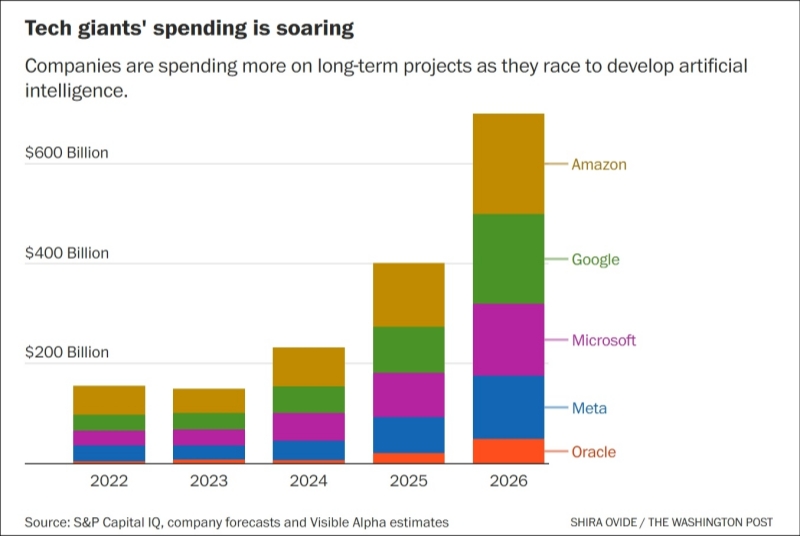
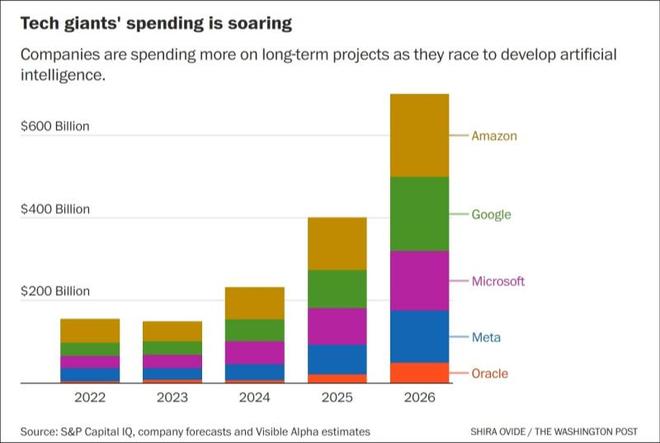
Core Insights - The unprecedented surge in AI investment by five major tech companies in the U.S. is projected to reach nearly $700 billion by 2026, raising concerns among experts and investors about resource allocation in other economic sectors [1][3][5] Group 1: Investment Trends - The five tech giants, including Amazon, Google, Microsoft, Meta, and Oracle, are expected to invest approximately $700 billion in large-scale AI projects this year, nearly doubling last year's spending [1][3] - The tech industry must generate an additional $650 billion in revenue annually to achieve reasonable returns on AI investments, a figure that may have increased with rising AI expenditures [3][4] Group 2: Economic Impact - The massive capital expenditures in AI are causing resource shortages in other sectors, leading to difficulties in finding skilled labor for construction projects and potentially increasing prices for consumer electronics [5][6] - The construction of AI data centers is consuming significant chip production capacity, which is expected to drive up prices for smartphones and computers by at least 5% later this year [5][6] Group 3: Labor Market Challenges - The construction industry is facing a shortage of skilled workers, with nearly 500,000 workers expected to be lacking next year, exacerbated by the demand for AI data center construction [9][10] - The focus on AI projects is diverting attention and resources away from other sectors, potentially stifling innovation and economic vitality in non-AI-dependent industries [10][11]





狂砸7000亿美元,“这么投AI怕是要伤美国元气”
Guan Cha Zhe Wang· 2026-02-08 08:04
Core Insights - The U.S. AI investment race is intensifying, with five major tech companies projected to spend nearly $700 billion on AI-related capital expenditures by 2026, raising concerns among experts and investors about resource allocation in other sectors [1][3][4] Group 1: Investment Trends - The $700 billion investment in AI is unprecedented and nearly doubles the previous year's spending, equivalent to three-quarters of the U.S. defense budget [1][3] - Companies like Amazon, Google, Microsoft, Meta, and Oracle are focusing on building data centers equipped with powerful computing chips to enhance AI capabilities [1][3] - Critics argue that the massive upfront costs of AI development may not yield returns unless AI fundamentally transforms work and the economy [3][4] Group 2: Economic Impact - The surge in AI investment is causing resource shortages in other industries, leading to difficulties in finding skilled labor, particularly electricians, and resulting in delays for non-AI construction projects [1][4][7] - The construction of AI data centers is consuming significant chip capacity, which is expected to drive up prices for consumer electronics, with analysts predicting at least a 5% price increase for smartphones and PCs later this year [5][6] - The construction spending on new AI data centers has increased by 32% year-over-year, while other commercial real estate construction has stagnated or declined [7][8] Group 3: Market Dynamics - The AI investment boom is causing a disparity in funding within Silicon Valley, with a significant portion of venture capital flowing to a small percentage of high-valuation companies, potentially stifling innovation among less prominent startups [8][9] - The construction industry is projected to face a shortage of nearly 500,000 workers next year, exacerbated by the demand for skilled labor in AI data center projects [8][9] - Concerns are raised about the potential long-term effects of the AI investment frenzy on the overall economic vitality, as resources and attention may be diverted from other critical sectors [8][9]
苹果线上商店更新:Mac电脑订购流程与iPad订购模式趋同
Huan Qiu Wang Zi Xun· 2026-02-01 03:04
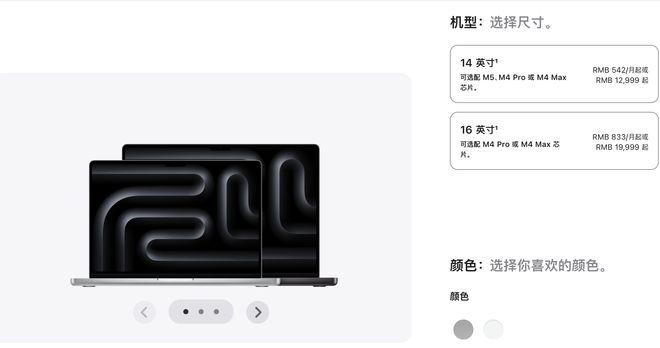
Core Viewpoint - Apple has implemented a significant update to its online store, introducing a new ordering process for its entire range of Mac computers, including MacBook Air, MacBook Pro, iMac, Mac mini, Mac Studio, and Mac Pro [1][3] Group 1 - The previous ordering model allowed users to select from several standard configurations for each Mac product, but the new model requires users to customize their configurations from scratch [3] - The new ordering process is similar to that of the iPad, where users must select screen size, color, and various hardware specifications step by step [3] - For example, when ordering a MacBook Pro, users first choose between 14-inch and 16-inch screen sizes, then select the body color, and can upgrade to a nano-texture display for enhanced visual experience [3] Group 2 - After selecting the screen size and color, users must choose from the available M-series chips and core options that meet their needs [3] - Following the chip selection, users can customize memory capacity, solid-state drive storage space, and select a power adapter based on their requirements [3] - Finally, users confirm the keyboard language version before completing their order [3]
库克透露:苹果预计最早今年“换帅”!头号热门人选出炉
新华网财经· 2026-01-10 04:13
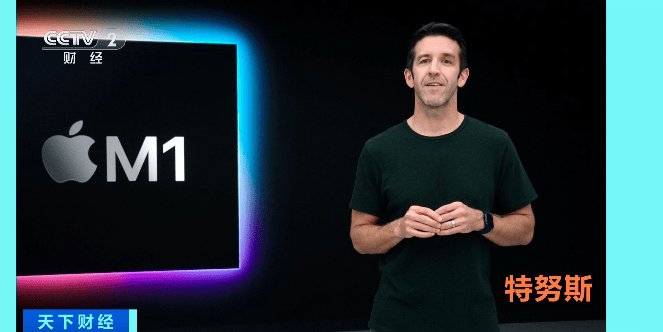
Group 1 - The core viewpoint of the article is that Apple Inc. is accelerating the selection process for a successor to CEO Tim Cook, who is expected to step down as early as this year and may transition to the role of chairman of the board [1][7]. - John Ternus, the current Senior Vice President of Hardware Engineering, has emerged as the leading candidate to succeed Cook [3][5]. - Ternus, aged 50, has been with Apple since 2001 and has played a key role in the development of several groundbreaking products, including the transition of Mac computers from Intel chips to Apple's self-developed chips [5]. Group 2 - Cook, who is currently 65 years old, has expressed to the management team that he feels fatigued and wishes to reduce his workload [7]. - The company has not yet announced the specific successor or the timeline for Cook's departure [5].

苹果公司硬件工程高级副总裁特努斯成库克继任者热门人选
Sou Hu Cai Jing· 2026-01-09 12:45
Group 1 - The core focus of the news is the upcoming resignation of Apple CEO Tim Cook and the speculation surrounding his successor, with John Ternus, the Senior Vice President of Hardware Engineering, emerging as the leading candidate [1][3]. - Apple is reportedly accelerating the selection process for Cook's successor, with Ternus being recognized as the top contender among various candidates [3]. - Ternus, aged 50, has been with Apple since 2001 and has played a crucial role in the company's transition from Intel chips to in-house developed chips, as well as participating in the development of Apple's foldable phone [5]. Group 2 - Ternus is noted for his calm demeanor and collaborative nature, earning widespread recognition from many executives and employees within Apple [5]. - In addition to Ternus, there are reports that Cook is also considering other candidates for the CEO position, although no official announcement has been made regarding the successor or the timeline for the transition [5]. - Cook, who is currently 65 years old, has expressed feelings of fatigue and a desire to reduce his workload, with expectations that he may step down as CEO as early as this year, potentially transitioning to the role of Chairman of the Board [5].
国泰海通 · 深度|策略:从历次科技牛规律,定位当下AI产业链投资阶段
国泰海通证券研究· 2026-01-06 14:27
Core Viewpoint - The current overseas computing power valuation is reasonable with potential for upward revision, while domestic computing power has significant long-term growth potential and performance expectations are being met [1] Historical Analysis of Technology Bull Markets - The article reviews past technology bull markets (2009-2010 consumer electronics, 2013-2015 gaming, and 2019-2021 lithium battery) to analyze the price performance characteristics during valuation expansion and profit-driven phases, providing a historical reference for the current AI industry chain [2][8] Valuation Expansion Phase Characteristics - During this phase, new technologies emerge without profit support, and industry and policy catalysts create imagination space, driving up valuations. Historical data shows that: - High levels of industry crowding are common, but short-term trading crowding does not affect the overall trend [3][15] - Risk premium effectively measures valuation boundaries, with significant reactions to positive news diminishing when the risk premium falls below a certain threshold [18] - High valuation ranges are sensitive to liquidity changes, with tightening liquidity potentially triggering adjustments [3][18] Profit-Driven Phase Characteristics - In this phase, exceeding profit expectations drives market performance, with historical examples showing: - The need to be cautious of competitive pressures and valuation constraints under endgame thinking [4][21] - Overcapitalization during profit upturns can lead to increased competition and excess capacity, negatively impacting profitability [22][25] Investment Recommendations - Overseas Computing Power: Currently in the profit-driven phase, with ROIC expected to continue rising until Q3 2025, and leading companies' valuations (PE-FY3) are reasonable at 20-30 times, indicating no bubble [5][26] - Domestic Computing Power: Significant long-term growth potential exists, with performance expectations being met and a systemic decline in risk-free rates acting as a catalyst for the next market phase [5][28] - AI Applications: Valuation is attractive, particularly in the internet and media sectors, although the timing and areas for breakout applications are uncertain [5][29]

苹果芯片负责人,否认离职
半导体行业观察· 2025-12-09 01:50
Core Viewpoint - The article discusses the recent rumors regarding Johnny Srouji, Apple's chip chief, considering leaving the company, and his subsequent confirmation that he has no plans to depart. This comes amid a wave of executive departures at Apple, raising concerns about leadership stability within the company [2][3][4]. Group 1: Executive Departures - Several high-profile executives have recently left Apple, including John Giannandrea, Alan Dye, Kate Adams, and Lisa Jackson, leading to questions about the company's leadership stability [3][4]. - The departures are attributed to various factors, including the retirement age of senior executives and a broader talent drain, which is described as "disturbing" [5][6]. - Apple is reportedly facing one of the most tumultuous periods in CEO Tim Cook's tenure, with efforts being made to retain top talent through improved compensation packages [5][6]. Group 2: Srouji's Role and Contributions - Johnny Srouji has been a key figure at Apple since 2008, leading the hardware technology team responsible for the development of the M-series and A-series chips, which have allowed Apple to transition away from Intel chips [2][4]. - Srouji's team has also developed a cellular modem intended to replace Qualcomm modems in most iPhones, highlighting the significance of his contributions to Apple's hardware strategy [2][3]. Group 3: Concerns Over Talent Retention - The article notes a significant loss of talent within Apple's hardware design and artificial intelligence teams, with many employees leaving for competitors or startups, including OpenAI and Meta [6][7]. - The morale within Apple's AI team is reportedly low, exacerbated by the departure of key personnel and the increasing reliance on external AI technologies [6][7]. - The company is under pressure to enhance its recruitment and retention strategies to address the ongoing talent drain [7].

高管离职潮!苹果芯片负责人考虑离职
Feng Huang Wang· 2025-12-07 02:33
Core Insights - Apple has recently experienced significant executive turnover, losing key figures such as AI chief John Giannandrea, design head Alan Dye, legal chief Katherine Adams, and government affairs chief Lisa Jackson, all of whom reported directly to CEO Tim Cook [1] - The potential departure of hardware technology senior vice president Johny Srouji, a crucial player in Apple's chip strategy, raises concerns about further instability within the company [1] Group 1 - The recent executive changes at Apple are unprecedented in the company's history, indicating a potential shift in leadership dynamics [1] - Srouji, known for his pivotal role in the development of M-series and A-series chips, has significantly contributed to Apple's competitive edge in performance and efficiency [1] - Apple's market share in the PC industry has notably increased following the transition to in-house chip production, largely attributed to Srouji's efforts [1] Group 2 - There are proposals within Apple to promote Srouji to Chief Technology Officer (CTO), which would position him as the second most powerful executive in the company [2] - Implementing the CTO role faces challenges, particularly the need to establish hardware engineering head John Ternus as CEO before transferring reporting lines to Srouji [2] - Srouji desires a position with substantial autonomy, preferring not to report directly to the CEO, which poses difficulties given Apple's established hierarchical structure [2]
IPO压力下 ARM探索智能手机以外新市场
Xin Lang Ke Ji· 2025-11-26 08:29
Core Viewpoint - ARM's dominant position in the smartphone processor market poses both a significant asset and a challenge for its upcoming IPO, which aims for a valuation of $60 billion [1] Group 1: Market Position and Challenges - ARM holds a near-monopoly in the mobile and consumer electronics markets, but this dominance may limit future growth opportunities [1] - The company has not penetrated the hottest segment of the chip market for AI models, where NVIDIA is the leader [1] - ARM's relationship with Apple has become complex, with Apple being a major customer but not prominently featured in ARM's IPO documents [2] Group 2: Revenue and Business Model - ARM's revenue model relies heavily on licensing fees, with a 2.7% royalty rate translating to $0.11 per chip sold, leading to limited pricing power [3] - Despite a stable revenue stream from older products, ARM's overall revenue declined by 1% to $2.7 billion last year [3] Group 3: Future Growth Areas - ARM is exploring new markets such as automotive and cloud computing, where it currently holds 41% of the automotive market and 10% of the $18 billion cloud processor market [5][6] - The automotive sector has seen a 36% increase in licensing revenue, indicating potential for growth [6] - ARM's technology plays a supportive role in AI, with partnerships in the autonomous vehicle sector and collaborations with cloud giants [5][6]
中国资产深夜拉升,美团涨3%,小米、阿里、网易集体上涨,苏轩堂药业狂飙20%
2 1 Shi Ji Jing Ji Bao Dao· 2025-11-05 15:47
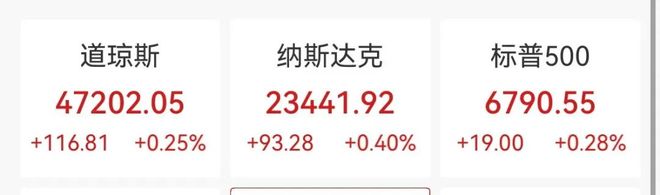
Core Viewpoint - The U.S. stock market showed mixed performance with major indices fluctuating, while the ADP employment report indicated a significant rebound in job growth for October, suggesting a positive economic outlook. Group 1: Employment Data - In October, the ADP employment numbers increased by 42,000, marking the largest gain since July 2025, surpassing the expected increase of 30,000 and recovering from a previous decline of 32,000 [3]. Group 2: Technology Sector Performance - Major tech companies experienced varied stock movements; Google and Meta rose over 1%, while Nvidia initially dropped over 1% before recovering to a 1% gain. Notably, Michael Burry has bet over $1 billion against Nvidia and Palantir by purchasing put options [3]. - Apple plans to enter the budget laptop market with a new Mac priced below $1,000, reflecting a strategic shift to attract cost-conscious consumers [3]. - AMD's third-quarter revenue and profit exceeded expectations, but the guidance for the fourth quarter appears weak, leading to initial declines of over 2% before a recovery [3]. Group 3: Chinese Stocks - The Nasdaq Golden Dragon China Index opened slightly down but later rose by 0.25%. Notable gainers included Su Xuan Tang Pharmaceutical, which surged over 20%, and other companies like Canadian Solar and New Oxygen, which rose over 10% [4][5]. - The Chinese tech leaders' index showed strong performance, with companies like Meituan, Xiaomi, Pinduoduo, NetEase, and Alibaba all experiencing gains [6][7]. Group 4: Market Indicators - Spot gold prices showed slight fluctuations around the $3,970 mark, while the U.S. dollar index increased by 0.07% [9].