
NVIDIA DRIVE AGX Hyperion 10

Search documents
禾赛和英伟达合作再深化,共建自动驾驶与机器人安全新标准
Jin Rong Jie· 2026-03-17 03:04
Core Insights - Hesai Technology has joined the NVIDIA Halos AI system detection lab, the first globally recognized project certified by the American National Standards Institute National Accreditation Board (ANAB) [1][3] - The NVIDIA Halos system is a comprehensive safety framework for physical AI, aimed at ensuring the safe development of autonomous vehicles and robotics [1][3] Group 1: Company Developments - Hesai's CEO, Li Yifan, emphasized that safety and reliability are paramount for the widespread application of autonomous systems, especially as they move towards large-scale deployment [3] - The company has delivered over 2 million LiDAR units globally, which are used in advanced driver-assistance systems (ADAS), autonomous vehicles, and robotics [3][4] - Hesai has established a "three-in-one" safety system that integrates functional safety, expected functional safety, and cybersecurity into its LiDAR system design [4] Group 2: Industry Collaboration - The partnership with NVIDIA builds on a long-term collaboration that began in 2019, reinforcing Hesai's position as a key ecosystem partner [4] - Hesai has been selected as a LiDAR partner for NVIDIA's "DRIVE AGX Hyperion 10" platform, which aims to help various vehicle models achieve Level 4 autonomous driving capabilities [4] - The collaboration is part of a broader industry effort to create a credible safety system as autonomous technology transitions from research to large-scale deployment [5]




Hesai Gains As Nvidia Selects Its Lidar For Self-Driving Stack
Benzinga· 2026-01-06 17:30
Core Insights - Hesai Technology has been selected by NVIDIA as a lidar partner for the DRIVE AGX Hyperion 10 platform, which is aimed at accelerating the development of Level 4-capable vehicles [1][2]. Group 1: Partnership and Technology - Hesai's lidar technology will be integrated into an open, production-oriented architecture that automakers and developers can utilize to create and validate autonomy-ready systems [2]. - The Hyperion 10 platform combines various sensing modalities, including cameras, radar, lidar, and ultrasonic sensors, into a unified setup for enhanced perception and safety development [2][3]. - NVIDIA's platform is powered by two DRIVE AGX Thor systems-on-a-chip, delivering over 2,000 FP4 teraflops of processing power for real-time, 360-degree sensor fusion [3]. Group 2: Product Features and Applications - Hesai will support the Hyperion 10 platform with its ETX ultra-long-range lidar, designed for Level 3 and Level 4 applications, featuring high resolution and options for clean vehicle integration [3]. - The company is also expanding into new sensing use cases, including 3D motion capture technology, indicating a broader focus on spatial data and real-time perception beyond the automotive sector [4]. Group 3: Market Performance - Hesai's stock was trading higher by 1.67% at $27.08 at the time of publication, reflecting positive market sentiment following the announcement [4].

英伟达开源最新VLA,能否破局L4自动驾驶?
Tai Mei Ti A P P· 2025-12-02 13:01
Core Insights - NVIDIA has officially open-sourced its latest autonomous driving Vision-Language-Action (VLA) model, Alpamayo-R1, which can process vehicle camera images and text instructions to output driving decisions [2][3] - The Alpamayo-R1 model emphasizes "explainability," providing reasons for its decisions, which aids in safety validation and regulatory review [3][4] - The VLA model is seen as the next core technology in intelligent driving, with various companies, including Li Auto, Xpeng Motors, and Great Wall Motors, already implementing it in production [3][4] Group 1: Model Features and Benefits - Traditional end-to-end models are often "black boxes," making them difficult to interpret, especially in complex scenarios [4] - VLA introduces a language modality as an intermediary layer, enhancing the model's ability to handle complex situations and providing a more human-like decision-making process [4][5] - The Alpamayo-R1 model has shown significant performance improvements, including a 12% enhancement in trajectory planning performance and a 25% reduction in near-collision rates [5][6] Group 2: Industry Impact and Ecosystem Development - NVIDIA aims to position itself as the "Android" of the autonomous driving sector, moving beyond being just a hardware supplier [6][8] - The company has announced plans to deploy 100,000 Robotaxis starting in 2027, collaborating with firms like Uber and Mercedes to create the world's largest L4 autonomous driving fleet [7][8] - The open ecosystem proposed by NVIDIA could facilitate data sharing among companies, potentially accelerating technological advancements in the industry [8][9] Group 3: Challenges and Future Considerations - Despite the advancements, the Alpamayo-R1 model requires high-performance hardware to meet automotive-grade latency, indicating a dependency on NVIDIA's hardware solutions [10][11] - The effectiveness of VLA technology is still under evaluation, and there are concerns about the limitations imposed by NVIDIA's platform on developers [11][12] - The successful commercialization of L4 autonomous driving will also depend on regulatory frameworks and the ability to balance data privacy with operational safety [11][12]

AI需求爆棚!Q3英伟达数据中心营收破500亿美元
Sou Hu Cai Jing· 2025-11-20 10:54
Core Insights - Nvidia reported a record revenue of $57.01 billion for Q3 2025, exceeding market expectations of approximately $55 billion, with a year-over-year growth of 62% and a quarter-over-quarter increase of 22% [2][3] - The data center revenue reached $51.2 billion, marking a 66% increase year-over-year [2][3] - Nvidia's GAAP and non-GAAP gross margins were 73.4% and 73.6%, respectively, with diluted earnings per share of $1.30 [2][3] Financial Performance - Revenue for Q3 2025 was $57,006 million, compared to $46,743 million in Q2 2025 and $35,082 million in Q3 2024, reflecting a 22% quarter-over-quarter and 62% year-over-year growth [3] - Operating expenses were $5,839 million, up 8% from the previous quarter and 36% from the same quarter last year [3] - Net income for the quarter was $31,910 million, a 21% increase from Q2 2025 and a 65% increase from Q3 2024 [3] - Diluted earnings per share increased by 20% quarter-over-quarter and 67% year-over-year [3] Business Segments - Data Center: Nvidia's Blackwell showed significant performance improvements, with throughput per megawatt reaching ten times that of the previous generation [4] - Gaming: Q3 gaming revenue was $4.3 billion, down 1% from the previous quarter but up 30% year-over-year [5] - Professional Visualization: Revenue reached $760 million, a 26% increase from the previous quarter and a 56% increase year-over-year [5] - Automotive: Revenue was $592 million, up 1% from the previous quarter and 32% year-over-year [5] Market Position and Investor Sentiment - Nvidia is viewed as a bellwether for the AI investment landscape, with its performance reflecting the returns of significant investments in AI by major tech companies [6] - Despite a recent sell-off, Nvidia's stock price has increased by 35% this year, significantly outperforming the Nasdaq 100 index [7] - Some institutional investors have reduced or liquidated their positions in Nvidia, citing concerns over the sustainability of AI capital expenditures [6]
英伟达市值破五万亿美元;首款鸿蒙人形机器人亮相丨科技风向标
2 1 Shi Ji Jing Ji Bao Dao· 2025-10-30 02:00
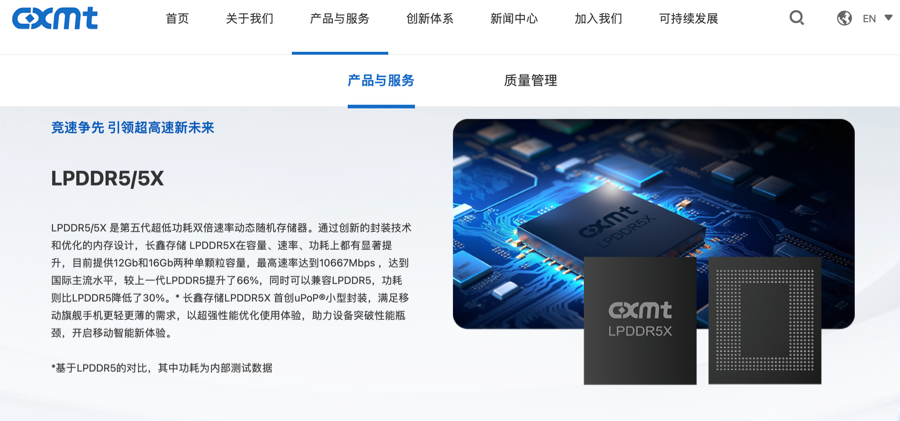
Group 1: Industry Developments - NVIDIA announced a partnership with Uber to expand a global Level 4 autonomous driving network, aiming to scale Uber's fleet to 100,000 vehicles by 2027 [2] - Amazon plans to lay off approximately 14,000 employees, representing 4% of its workforce, to streamline operations and accelerate AI deployment [3] - The first domestic humanoid robot powered by the open-source HarmonyOS was unveiled, marking a significant step in building a self-controlled robotics ecosystem [5] Group 2: Corporate Actions - Shentong Express received approval for its acquisition of Daniao Logistics, allowing the company to proceed with the transaction [6] - Liying Intelligent Manufacturing plans to acquire 96.15% of Zhejiang Xianglong for 2.404 billion yuan, enhancing its automotive sector presence [17] - Anker Innovation intends to purchase an additional 4.2659% stake in its subsidiary, Haiyi Zhixin, for 229 million yuan, increasing its ownership to 86.2627% [18] Group 3: Financial Highlights - JBD successfully completed over 1 billion yuan in Series B financing, setting a record in the MicroLED micro-display sector [22] - Changxin Storage announced the mass production of LPDDR5X memory products, achieving a 66% speed increase and a 30% reduction in power consumption compared to the previous generation [14] - Nvidia became the first company to surpass a market capitalization of 5 trillion dollars, achieving this milestone in just 113 days [13]
炸翻全球科技圈!黄仁勋“AI春晚”引爆英伟达,反驳AI泡沫、抛GPU核弹…
Sou Hu Cai Jing· 2025-10-29 02:46
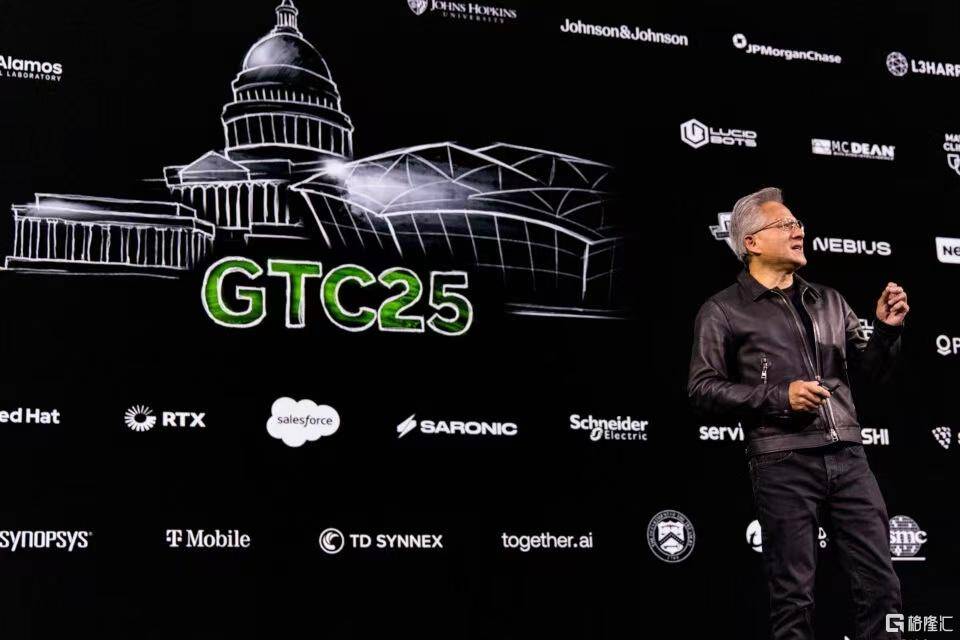
Core Insights - Huang Renxun's keynote at the GTC conference highlighted significant advancements in AI and technology, marking the beginning of "Computing Revolution 2.0" for NVIDIA, which saw its market value approach $5 trillion after a 5% increase in stock price [2][3][12]. Group 1: Strategic Partnerships and Collaborations - NVIDIA announced a $1 billion equity investment in collaboration with Nokia to develop a 6G AI platform, alongside partnerships with T-Mobile and Cisco for the first 6G AI-native wireless stack in the U.S. [5][6]. - The company is working with the U.S. Department of Energy to build seven supercomputers, including the largest AI supercomputer for the department, equipped with 100,000 NVIDIA Blackwell GPUs [9][10]. Group 2: Technological Innovations - NVIDIA introduced NVQLink technology to connect quantum processors with GPU supercomputers, gaining support from 17 quantum processor manufacturers and 5 controller manufacturers [7][8]. - The company unveiled the BlueField-4 data processing chip and the industrial-grade edge AI platform IGX Thor, significantly enhancing processing capabilities [11]. Group 3: AI Market Outlook - Huang Renxun refuted claims of an AI bubble, asserting that the demand for NVIDIA GPUs remains strong, with 6 million Blackwell architecture GPUs shipped in the past four quarters [12][14]. - The anticipated sales for Blackwell and the upcoming Rubin chip are projected to reach $500 billion [15]. Group 4: Future Developments - NVIDIA's roadmap includes the production of the fastest AI chip, Blackwell, in Arizona, marking a significant milestone in U.S. manufacturing [18][19]. - The next-generation Vera Rubin super GPU has completed lab testing and is expected to enter mass production soon, designed for both AI and scientific tasks [20].
特朗普再批“无能”:美联储几个月后就换人!美股又创新高,黄仁勋发表最新演讲,英伟达市值一夜暴增1.6万亿元
Mei Ri Jing Ji Xin Wen· 2025-10-29 01:01
Group 1: Federal Reserve and Economic Outlook - President Trump criticized Federal Reserve Chairman Powell, labeling him as "incompetent" and indicated that a new candidate would be appointed by May next year [1] - The Federal Reserve's interest rate decision is highly anticipated, with a 99.5% probability of a 25 basis point cut expected during the upcoming meeting [30] - Morgan Stanley reported a significant inflow of foreign capital into the Chinese stock market, indicating a recovery in global investor confidence towards China [29] Group 2: NVIDIA and AI Developments - NVIDIA's stock reached $201.03, marking a 4.98% increase and a total market capitalization nearing $5 trillion, with a one-night increase of $231.8 billion [4] - CEO Jensen Huang announced a partnership with Nokia, involving a $1 billion equity investment and collaboration on a 6G telecom computing platform [7][27] - NVIDIA introduced new AI technologies and partnerships, including a new AI-native wireless stack with T-Mobile and Cisco, and plans to build seven supercomputers with the U.S. Department of Energy [9][12] Group 3: Market Performance - U.S. stock indices collectively rose, with the Nasdaq up 0.8%, Dow Jones up 0.34%, and S&P 500 up 0.23%, reaching new highs [2] - Notable stock movements included a 23% increase in Nokia's ADR, attributed to NVIDIA's planned investment [27] - Other tech companies like Microsoft and Intel also saw stock increases, with Microsoft regaining a market cap of $4 trillion [24][26]

量子计算、机器人……黄仁勋勾勒AI宏伟蓝图
财联社· 2025-10-29 00:20
Core Viewpoint - NVIDIA's GTC conference highlighted its expansive vision for AI and related technologies, showcasing partnerships and innovations that position the company at the forefront of the AI and telecommunications sectors [2][4]. Group 1: NVIDIA's Technological Advancements - NVIDIA's CEO Jensen Huang presented a roadmap extending to 2028, revealing that the company has accumulated $500 billion in orders for its Blackwell and Rubin chips by the end of the 2026 fiscal year [4][19]. - The introduction of the NVIDIA ARC (Aerial RAN Computer) aims to capture opportunities in the AI-RAN market, in collaboration with Nokia, which includes a $1 billion equity investment [6]. - NVIDIA's new BlueField-4 data processing chip is designed to accelerate AI infrastructure, supporting throughput of 800 Gb/s and high-performance inference processing [17]. Group 2: Partnerships and Collaborations - NVIDIA announced partnerships with T-Mobile and Cisco to develop the first AI-native wireless stack for 6G in the U.S. [9]. - A collaboration with the U.S. Department of Energy will see the construction of seven supercomputers, including the Solstice system, which will be the largest AI supercomputer for scientific discovery [11]. Group 3: AI Applications and Innovations - The AI traffic is experiencing explosive growth, with ChatGPT having 800 million active users, nearly half of whom access it via mobile devices [8]. - NVIDIA's Omniverse digital twin technology is being utilized to build modern factories and train robots, with a partnership with the startup Figure to accelerate humanoid robot development [26]. - The introduction of the IGX Thor edge AI platform offers 8 times the AI computing power compared to its predecessor, enabling seamless operation of large language models at the edge [29]. Group 4: Automotive and Autonomous Driving - The launch of the NVIDIA DRIVE AGX Hyperion 10 platform is aimed at L4-level autonomous driving, featuring a comprehensive sensor architecture [31]. - A partnership with Uber will allow vehicles using this platform to connect to the Uber network [33].
英伟达和Uber达成合作 加速全球L4自动驾驶生态扩张
Xin Lang Ke Ji· 2025-10-28 18:29
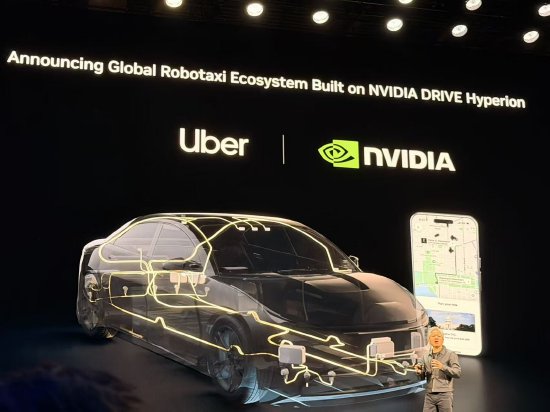
Core Insights - NVIDIA CEO Jensen Huang announced a partnership with Uber to expand a global Level 4 (L4) autonomous driving network [2] - The collaboration will utilize NVIDIA's autonomous driving platform, including NVIDIA DRIVE AGX Hyperion 10 and NVIDIA DRIVE AV software, to accelerate Uber's autonomous driving ecosystem [2] - NVIDIA aims to support Uber in gradually expanding its global fleet of autonomous taxis and delivery vehicles to a target scale of 100,000 vehicles by 2027 [2] Company and Industry Summary - NVIDIA will provide technological support for Uber's autonomous vehicle development, including a data factory powered by the NVIDIA Cosmos platform to organize and process necessary data [2] - The partnership signifies a strategic move in the autonomous driving industry, highlighting the increasing collaboration between technology companies and ride-hailing services [2]

Uber to Deploy One of the World's Largest Networks of Autonomous Vehicles, Powered by NVIDIA AI Architecture
Businesswire· 2025-10-28 17:58
Core Insights - Uber is partnering with NVIDIA to deploy one of the world's largest networks of autonomous vehicles, focusing on Level 4 (L4) autonomy for robotaxi operations both in the United States and internationally [1][3][4] Partnership and Vehicle Development - Stellantis will supply at least 5,000 L4 vehicles powered by NVIDIA DRIVE AGX Hyperion 10 to Uber, marking a significant step in the development of autonomous fleets [1][3] - The vehicles will utilize the latest NVIDIA DRIVE AGX Hyperion platform and NVIDIA DriveOS operating system, designed specifically for L4 autonomy [2][6] Operational Framework - Uber will manage end-to-end fleet operations, which includes remote assistance, charging, cleaning, maintenance, and customer support [3] - The collaboration aims to create a scalable solution for smarter, safer, and more efficient mobility [4] Industry Impact - The partnership is expected to transform urban mobility, making transportation safer, cleaner, and more efficient [4] - Uber and NVIDIA are also working with various partners to support a broad global Level 4 ecosystem, enhancing autonomy across multiple sectors including passenger mobility and delivery [5] Data and AI Integration - Uber plans to collect over 3 million hours of robotaxi-specific driving data to support L4 model training and validation, leveraging NVIDIA's GPUs and Cosmos platform for data management [7][8] - This initiative aims to accelerate the deployment of profitable autonomous solutions by creating a robust data engine for continuous improvement [8]

