
Petrelintide

Search documents
药渡每周渡选-20260313
药渡数据· 2026-03-13 02:57
Investment Rating - The report does not explicitly state an investment rating for the industry Core Insights - The global biopharmaceutical industry is experiencing a surge in capital market activities, with significant collaborations and financing deals, including a $1.18 billion global rights authorization for a dual antibody by Deqi Pharmaceuticals and a $1.53 billion exclusive license agreement between China National Pharmaceutical Group and Sanofi [4][10] - Clinical advancements are notable in metabolic, oncology, and immunology fields, with Roche's Fenebrutinib showing a 51% reduction in annual relapse rate for multiple sclerosis and promising results from various drugs targeting obesity and cancer [5][8] - The industry is witnessing a strategic shift towards accelerated capitalization and upgraded R&D models, with companies focusing on core technology platform development and AI-driven drug discovery becoming a trend [5][10] Summary by Sections Global Biopharmaceutical Industry Dynamics - The capital market is seeing dense collaboration and financing activities, with multiple companies securing significant funding and partnerships [4] - Notable financing events include Candid's $505 million merger for NASDAQ listing and various companies completing rounds of financing exceeding hundreds of millions [10][11] Major Events in the Global Biopharmaceutical Industry - Deqi Pharmaceuticals authorized global rights for its CD3/CD19 dual antibody, potentially earning up to $1.18 billion [6] - Clinical data from Hansoh Pharmaceutical's obesity treatment showed a 19.3% average weight reduction in a Phase III trial, indicating strong efficacy [6][8] - China National Pharmaceutical Group's exclusive licensing deal with Sanofi for a JAK/ROCK inhibitor could yield up to $1.53 billion [6] Important Clinical Developments/Results - Roche's Fenebrutinib demonstrated a 51% reduction in annual relapse rate for multiple sclerosis in Phase III trials [8] - Kanfang Biologics' Cardonili achieved a 100% overall survival rate at 24 months in cervical cancer patients during Phase II trials [8] - Petrelintide, also from Roche, showed a 10.7% average weight loss in obese patients over 42 weeks in Phase II trials [8] Important Financing and Transaction Events - The report highlights multiple significant financing and strategic collaboration events, including a $400 million strategic financing for Teva Pharmaceuticals and various companies completing substantial funding rounds [10][11] - Five and Boao's IPO application in Hong Kong and other companies securing large investments indicate a trend towards increased capital influx in the biopharmaceutical sector [11][12]




医药行业周报:本周申万医药生物指数下跌2.8%,关注全国两会政府工作报告-20260309
Shenwan Hongyuan Securities· 2026-03-09 02:47
Investment Rating - The report maintains an "Overweight" rating for the pharmaceutical industry, indicating a positive outlook compared to the overall market performance [3][15]. Core Insights - The pharmaceutical sector experienced a decline of 2.8% this week, underperforming against the Shanghai Composite Index, which fell by 0.93% [3][4]. - The biopharmaceutical industry has been designated as a "new pillar industry" in the national government work report, signaling strong policy support for its development [3][15]. - Recent trends show an increase in the prices of bulk raw materials, suggesting potential investment opportunities in companies like Xinhecheng, Zhejiang Pharmaceutical, and Tianxin Pharmaceutical [3][23]. Market Performance - The pharmaceutical index ranked 17th among 31 sub-industries, with various segments showing mixed performance: raw materials (-3.4%), chemical preparations (-1.7%), and medical devices (-4.6%) [3][4][7]. - The overall valuation of the pharmaceutical sector stands at 30.5 times earnings, ranking 12th among 31 primary industries [3][7]. Recent Key Events Government Policy - The government work report explicitly includes biopharmaceuticals as a key industry, alongside integrated circuits and aerospace, marking a significant policy shift [3][15]. - In 2025, China is expected to approve 76 innovative drugs, with domestic innovations accounting for a substantial portion of new approvals [15]. Collaboration and Licensing - Deqi Pharmaceuticals entered a global exclusive licensing agreement with U.S.-based company for a T-cell engaging antibody, with a total transaction value exceeding $1.18 billion [16]. - Shouyao Holdings has adjusted its collaboration model for a JAK2 inhibitor, streamlining ownership and payment structures [18]. New Drug Development - Avidity reported promising clinical data for a muscle-targeting antibody-drug conjugate, showing significant efficacy in reducing mRNA levels in patients [19]. - The first patient has been dosed with a novel dual-target siRNA drug developed by Beibeite, marking its entry into clinical trials [20]. - The first patient has also been dosed with RTX-117, the first "AI+RNA" small molecule drug in China, developed by Jintai Technology [20]. Financing Activities - Aidi Pharmaceuticals plans to raise up to 1.277 billion RMB, focusing on global clinical development for an HIV integrase inhibitor [23]. Investment Recommendations - Investors are advised to monitor companies involved in raw material production and innovative drug development, including Heng Rui Medicine, BeiGene, and Aidi Pharmaceuticals [3][23].
Zealand Pharma A/S (ZLDPF) Discusses Top Line Phase II Results for ZUPREME-1 Trial of Petrelintide in Obesity Transcript
Seeking Alpha· 2026-03-06 01:25
Core Viewpoint - Zealand Pharma announced positive top line results from the Phase II ZUPREME-1 trial of its amylin analog petrelintide, developed in partnership with Roche [2]. Group 1 - The conference call was led by Adam Lange, Vice President of Investor Relations, who welcomed participants and highlighted the significance of the trial results [2]. - The presentation included key figures and insights from the trial, with contributions from the company's leadership team, including the CEO and Chief Medical Officer [3].


Zealand Pharma (OTCPK:ZLDP.Y) Update / briefing Transcript
2026-03-05 20:32
Zealand Pharma Conference Call Summary Company Overview - **Company**: Zealand Pharma - **Product**: Petrelintide, an amylin analog - **Partnership**: Co-development and co-commercialization with Roche Key Industry Insights - **Obesity Treatment Landscape**: - Obesity is a significant healthcare challenge with a treatment penetration of only 3% to 5% in the U.S. - Current therapies primarily focus on GLP-1 based treatments, which have limitations in long-term treatment persistence and weight maintenance [5][6] Core Findings from Phase 2 ZUPREME-1 Trial - **Weight Loss Results**: - Petrelintide demonstrated double-digit weight loss, with mean weight loss ranging from 8.7% to 10.7% from baseline over 42 weeks [12][18] - No weight loss plateau was observed, indicating potential for continued weight loss with extended treatment [12][18] - **Tolerability and Safety**: - Petrelintide exhibited a placebo-like tolerability profile, with low rates of gastrointestinal adverse events [16][17] - No episodes of vomiting were reported in participants treated with the maximally effective dose [17][18] - Approximately 70% of participants on the maximally effective dose did not report any gastrointestinal adverse events [17] - **Demographics of Trial Participants**: - The trial included 493 participants with a balanced gender distribution, mean body weight of 107 kg, average BMI of 37 kg/m², and mean age of 47 years [11] - Female participants achieved approximately 6 percentage points more weight loss than male participants on a placebo-adjusted basis [14] - **Geographic Variations**: - Participants from the EU experienced approximately 3 percentage points greater weight loss compared to those from U.S. study sites [15][66] Future Development Plans - **Phase 3 Trial Expectations**: - Zealand Pharma plans to initiate the Phase 3 program in the second half of 2026, aiming for mid-teen percentage weight loss while maintaining tolerability [19][90] - The design will focus on optimizing conditions to enhance clinical response and long-term treatment adherence [19][90] - **Combination Therapy Potential**: - There is confidence in Petrelintide's role as both a monotherapy and in combination with CT-388, with the latter expected to enhance treatment outcomes [42][44] Market Positioning and Strategy - **Target Market**: - Petrelintide aims to redefine the weight management experience, focusing on sustainable weight loss and maintenance rather than just rapid weight loss [20][92] - The product is positioned as a foundational first-choice therapy for individuals living with overweight and obesity, addressing the need for a tolerable treatment option [20][92] Additional Considerations - **Regulatory and Competitive Landscape**: - The trial design will consider regulatory requirements for diverse populations and previous exposure to weight loss medications [52][62] - The competitive landscape includes multiple amylin programs, with ongoing evaluations of Petrelintide's efficacy and safety compared to other therapies [72][84] Conclusion - Zealand Pharma's Petrelintide shows promise as a leading treatment option in the obesity market, with a strong focus on tolerability and sustained weight loss. The upcoming Phase 3 trials will be crucial in validating its efficacy and establishing its market position against existing therapies.
Zealand Pharma (OTCPK:ZLDP.Y) Earnings Call Presentation
2026-03-05 19:30
This presentation contains "forward-looking statements", as that term is defined in the Private Securities Litigation Reform Act of 1995 in the United States, as amended, even though no longer listed in the United States this is used as a definition to provide Zealand Pharma's expectations or forecasts of future events regarding the research, development and commercialization of pharmaceutical products, the timing of the company's pre-clinical and clinical trials and the reporting of data therefrom and the ...
Genentech Announces Positive Phase II Results for Petrelintide, an Amylin Analog Developed for People Living With Overweight and Obesity
Businesswire· 2026-03-05 18:45
Core Insights - Genentech announced positive Phase II results for petrelintide, an amylin analog, showing a mean body weight reduction of up to 10.7% at week 42 compared to 1.7% with placebo, with a p-value of less than 0.001 [1][2] - The trial demonstrated that petrelintide has a favorable tolerability profile, with no cases of vomiting at the maximally effective dose and a treatment discontinuation rate of 4.8% compared to 4.9% for placebo [1][2] - The study involved 493 participants with a mean BMI of 37 kg/m², and the results support further development of petrelintide for chronic weight management [1][2] Study Details - The Phase II ZUPREME-1 trial was randomized, double-blind, and placebo-controlled, lasting 42 weeks, with participants receiving once-weekly subcutaneous injections of petrelintide [1][2] - The primary endpoint was the percentage change in body weight from baseline to week 28, with secondary endpoints including changes in waist circumference, HbA1c, hsCRP, fasting lipids, and fasting glucose [2] - The trial population was gender-balanced, with 53% female participants, and included a dose escalation period followed by a maintenance period [1][2] Future Developments - Final data from the ZUPREME-1 trial, including a nine-week safety follow-up, will be presented at an upcoming medical congress [1] - Topline results from a second Phase II trial, ZUPREME-2, are expected in the second half of 2026, focusing on individuals with obesity or overweight and type 2 diabetes [1] - A Phase II trial exploring the combination of petrelintide and CT-388 will be initiated later in 2026 [1] Market Context - Obesity is identified as the greatest single risk factor for chronic disease globally, with projections indicating over four billion people will be living with overweight and obesity by 2035 [1] - Genentech and Roche entered into a collaboration with Zealand to co-develop and commercialize petrelintide, addressing the growing need for effective obesity treatments [1][2]

全球制药业洞察 | 减肥药赛道白热化,辉瑞加速追赶诺和诺德、礼来
彭博Bloomberg· 2026-03-04 06:05
Core Viewpoint - The article discusses the competitive landscape of obesity drug development, highlighting that over 190 clinical projects are currently underway, with major contributions from companies like Pfizer, Eli Lilly, and Novo Nordisk, and emphasizes the need for new mechanisms to address the limitations of existing GLP-1 therapies [3][4]. Group 1: Current Landscape of Obesity Drug Development - More than 120 companies are engaged in obesity drug research, with at least 190 drugs in clinical development, primarily targeting GLP-1 [4][6]. - Approximately 40% of these projects are in or about to enter Phase II clinical trials, with at least 36 projects in late-stage development or submitted for market approval [4]. - Injectable drugs dominate the research pipeline, while oral medications account for one-third of the pipeline, with two-thirds being small molecules, which are easier to produce and have lower patient burden [4][6]. Group 2: Role of China in Drug Development - China contributes significantly to the global obesity drug pipeline, with just over one-third of projects being developed or co-developed by Chinese companies, and 25% in Phase III testing or submitted for approval [6]. - Key drugs from Chinese companies include Hengrui Medicine's HRS-9531 (GLP-1/GIP dual receptor agonist) and Innovent Biologics' Enogratide (GLP-1 agonist), which are expected to enter the market soon [6]. Group 3: Mechanisms and Efficacy of GLP-1 Drugs - Over 50% of the drugs in development target GLP-1, either as monotherapy or in combination with GIP, glucagon, and amylin [8][10]. - There is a need to explore new mechanisms due to the gastrointestinal side effects of GLP-1 drugs, which may not be suitable for all patients [8]. - Current GLP-1 drugs can lead to weight loss, but up to 40% of this weight loss may come from lean body mass loss, indicating a need for improved efficacy and differentiation in a competitive market [10]. Group 4: Emerging Therapies and Combination Approaches - Amylin, produced in pancreatic beta cells, may offer benefits similar to GLP-1 drugs while potentially improving tolerability [11][12]. - Dual-action drugs targeting both amylin and calcitonin receptors may provide enhanced weight loss effects and better patient tolerance [11][12]. - The combination of amylin with GLP-1 drugs may yield additive effects, enhancing overall treatment efficacy [12].
减肥药市场迎来重磅玩家!多款在研药物傍身 罗氏(RHHBY.US)誓言挤进全球前三
Zhi Tong Cai Jing· 2026-03-03 09:04
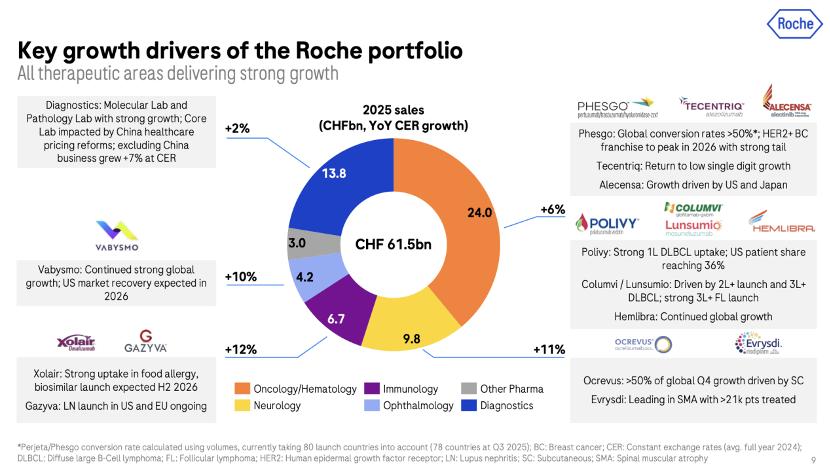
Core Insights - Roche aims to capture a double-digit market share in the weight loss drug market and intends to rank among the top three competitors globally, closing the gap with rivals Novo Nordisk and Eli Lilly [1] Group 1: Product Pipeline and Clinical Trials - Roche has developed a robust pipeline in the metabolic field, including multiple weight loss drugs such as CT-388, CT-996, CT-868, Petrelintide, Pegozafermin, and Emugrobart [1][2] - CT-388 has shown promising results in a Phase II clinical trial, with a 22.5% average weight loss in patients using the highest dose of 24mg after 48 weeks, and it has good tolerability [2] - CT-996, an oral GLP-1 receptor agonist, has shown a 7.3% average weight loss after 4 weeks in obese patients without type 2 diabetes [2] - Pegozafermin is in Phase III trials for treating metabolic dysfunction-associated steatotic liver disease (MASH) and is projected to achieve peak sales exceeding $5 billion [3] Group 2: Oncology Business Strength - Roche's oncology business, which includes hematology, is a significant growth driver, contributing nearly half of the pharmaceutical revenue, with a reported 9% year-over-year growth to CHF 47.669 billion in 2025 [4] - The breast cancer product line, including Herceptin and Perjeta, is a cornerstone of Roche's oncology business, with Phesgo achieving CHF 2.441 billion in sales in 2025, a 48% increase [4] - Roche's blood cancer portfolio includes Polivy and Columvi, with Polivy generating CHF 1.47 billion in revenue in 2025, reflecting a 38% year-over-year growth [5] Group 3: Strategic Expansion and Future Outlook - Roche has engaged in over 20 transactions since 2025, totaling more than $20 billion, to expand its portfolio and mitigate the risk of a patent cliff [6] - The company anticipates launching up to 19 new drugs by 2030, with 17 expected to exceed CHF 1 billion in annual sales, and 9 projected to surpass CHF 3 billion [6]

1700亿“专利悬崖”,罗氏走出来了
3 6 Ke· 2026-02-02 12:21
Core Insights - Roche, once a dominant player in oncology, has shown a revenue growth of 7% and a 9% increase in its pharmaceutical business, indicating a strategic recovery and diversification in its product portfolio [1][3] - The company is focusing on six key products, including Phesgo and Polivy, which are driving growth and compensating for declines in older drugs due to patent expirations [1][5] - Roche plans to launch 19 new drugs by 2030, with 16 having blockbuster potential, aiming to avoid the so-called "patent cliff" [1][3] Oncology Business - Roche's oncology segment has seen continuous growth for eight consecutive quarters, contributing 239.38 billion Swiss Francs (approximately 289.5 billion USD) in 2025, a 6% year-over-year increase [3] - Phesgo has emerged as a standout product with a 48% sales increase, leveraging its innovative dual-target subcutaneous formulation [5][6] - The HER2-targeted therapies are expected to peak at around 9 billion Swiss Francs by 2026, with a stable revenue stream projected thereafter [6] New Drug Developments - Roche is optimistic about Giredestrant, a new oral SERD for ER-positive breast cancer, which is anticipated to become a first-line treatment option, with peak sales expectations exceeding 3 billion USD [7][8] - The company has achieved significant milestones in clinical trials, particularly with the lidERA study, which shows promise in reducing recurrence risk in early-stage breast cancer patients [7] Hematology Sector - Roche's hematology products generated 86 billion Swiss Francs in 2025, marking a 15% increase, with Polivy being a key driver of this growth [9][10] - Polivy has become a leading first-line treatment for diffuse large B-cell lymphoma (DLBCL), achieving sales of 14.7 billion Swiss Francs in 2025, a 38% increase [10] Strategic Expansion into Chronic Diseases - Roche is diversifying its portfolio by investing over 20 billion USD in chronic disease areas such as obesity and Alzheimer's, aiming to become a top player in the obesity market [11][12] - The company has made significant acquisitions and partnerships to build a robust pipeline in obesity treatments, including GLP-1 receptor agonists and long-acting insulin analogs [11][15] Future Outlook - Roche's strategy emphasizes maintaining a diverse product portfolio to mitigate risks associated with patent expirations, with a focus on innovative therapies in various therapeutic areas [12][16] - The next few years will be critical for validating Roche's ambitious plans and determining the sustainability of its new growth trajectory [18]
Zealand Pharma (OTCPK:ZLDP.Y) FY Conference Transcript
2026-01-14 22:32
Zealand Pharma Conference Call Summary Company Overview - **Company**: Zealand Pharma - **Industry**: Biotech, focusing on metabolic health and obesity treatment Core Points and Arguments - Zealand Pharma launched its **Metabolic Frontier 2030 strategy**, aiming to tackle the obesity pandemic and its related diseases, marking a pivotal year in the company's history [2][3] - The company aims to become a leading biotech in metabolic health, with ambitions to launch significant new medicines, including **Survodutide** (in partnership with Boehringer Ingelheim) and **Petrelintide** (in partnership with Roche) [3][4] - Zealand has a competitive advantage due to its 25 years of experience in metabolic health and peptides, combined with proprietary data that can enhance AI and machine learning capabilities in drug development [5][6] - The company has a strong financial position with over **DKK 2.5 billion** in cash and near-term milestones exceeding **$1.2 billion**, allowing it to fund its journey towards profitability [6] Pipeline and Clinical Development - Zealand expects multiple clinical data readouts in the coming year, including **Petrelintide phase 2 data** and **Survodutide phase 3 studies** [7][8] - The company anticipates launching five new products over the next five years, targeting obesity and rare diseases like congenital hyperinsulinism and short bowel syndrome [10] - Petrelintide aims to provide a weight loss of **15%-20%**, which aligns with patient expectations and offers a more tolerable weight loss experience compared to existing therapies [20][21] Market Dynamics and Challenges - The obesity pandemic is described as a significant healthcare challenge, with over **5 million deaths** attributed to obesity, highlighting the urgency for effective treatments [11] - Current GLP-1 therapies have a low adherence rate, with only **2%-4%** of the U.S. population on treatment, primarily due to side effects and cost [12][15] - Zealand emphasizes the need for innovative solutions that not only promote weight loss but also ensure long-term adherence to treatment [15][16] Partnerships and Collaborations - Zealand's partnership with Roche for Petrelintide is characterized as a strong collaboration, with a **50/50 profit share** and Roche handling manufacturing investments [22][23] - The partnership with Boehringer Ingelheim focuses on Survodutide, which is expected to lead in the GLP-1 space and has the potential to address conditions like MASH (metabolic dysfunction-associated steatotic liver disease) [24][25] Research and Development Investment - Zealand plans to invest **DKK 5 billion** in research over the next five years, significantly increasing its commitment to building a valuable metabolic health pipeline [29] - The company is exploring additional partnerships to enhance its pipeline and aims to develop **10 clinical candidates** within the next five years [30] Future Outlook - Zealand Pharma is positioned for a transformational year with significant clinical data readouts and a focus on addressing the obesity crisis through innovative therapies [30] - The company is committed to developing alternatives to GLP-1s, emphasizing the importance of patient experience and adherence in chronic disease management [50][52] Additional Insights - Zealand acknowledges the need for a shift in how obesity treatments are perceived, moving from a focus on weight loss numbers to the overall patient experience and long-term health benefits [31][32] - The company is also considering the development of a once-monthly Amylin therapy and oral small molecules, indicating a commitment to expanding treatment options in the obesity market [51][52]