
SCTB14

Search documents
靠BD首付带飞业绩?双抗赛道竞争激烈!三生国健:聚焦源头创新及差异化研发
Xin Lang Cai Jing· 2026-02-26 10:21
Core Insights - Sangamo's significant revenue growth in 2025 is attributed to a collaboration with Pfizer, resulting in a reported revenue of 4.199 billion yuan, a 251.81% increase year-on-year, and a net profit of 2.939 billion yuan, reflecting a 317.09% increase [1][9] - The company received a non-refundable upfront payment of 1.25 billion USD from Pfizer for the development rights of the PD-1/VEGF bispecific antibody SSGJ-707, which is a key driver of its financial performance [4][12] - The competitive landscape for PD-1/VEGF bispecific antibodies is intensifying, with multiple players entering the market, prompting Sangamo to focus on core pipeline innovations and differentiated development strategies [2][10] Financial Performance - In 2025, Sangamo reported total revenue of 4.199 billion yuan, a 251.81% increase from the previous year [1][9] - The net profit attributable to shareholders reached 2.939 billion yuan, marking a 317.09% increase year-on-year [1][9] - The company's non-GAAP net profit, excluding certain income and expenses, was 2.805 billion yuan, reflecting a staggering 1041.01% increase [1][9] Strategic Partnerships - Sangamo's collaboration with Pfizer includes a 1.25 billion USD upfront payment and potential milestone payments up to 4.8 billion USD based on development and sales achievements [4][12] - The agreement grants Pfizer exclusive rights to develop, manufacture, and commercialize SSGJ-707 globally, excluding mainland China [4][12] Market Competition - The PD-1/VEGF bispecific antibody market is becoming increasingly competitive, with several companies, including Kintor Pharma and BMS/BioNTech, advancing their own candidates [2][10] - As of now, there are 17 PD-(L)1/VEGF bispecific antibodies in clinical trials globally, indicating a crowded field [5][13] Research and Development Pipeline - Sangamo has a total of 22 projects in its research pipeline, with 7 in Phase III clinical trials, including candidates targeting autoimmune diseases [7][15] - The company has recently received approval for its anti-IL-17A monoclonal antibody, which is aimed at treating moderate to severe plaque psoriasis [16][15] Industry Trends - The IL-17 antibody market is also highly competitive, with multiple products already approved and many more in clinical development [8][17] - The success of PD-1/VEGF bispecific antibodies is closely watched, with recent clinical trial results impacting market confidence [6][14]



神州细胞2025年预亏超5亿,核心产品销售受挫,股价近期走弱
Jing Ji Guan Cha Wang· 2026-02-14 01:16
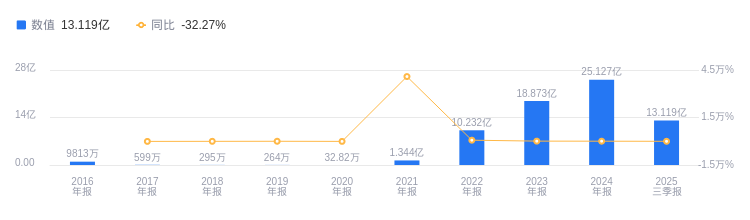
Core Viewpoint - Shenzhou Cell forecasts a net profit loss of 520 million to 580 million yuan for 2025, primarily due to significant revenue decline from its core product Anjiah, impacted by medical insurance cost control and price reductions [1] Financial Performance - The company anticipates a net profit loss of 503 million to 563 million yuan after excluding non-recurring items, with R&D investment projected between 830 million to 870 million yuan [1] - In the Q3 2025 report, revenue decreased by 32.27% year-on-year, with a net profit loss of 251 million yuan and a debt ratio of 101.46% [1] Recent Developments - During an institutional survey, Shenzhou Cell disclosed that several products (e.g., SCT1000, SCT650C, SCTB14) have entered or are planned to advance to Phase III clinical trials, with some potentially entering the registration research phase in 2026 [2] - The company plans to advance several new product IND applications this year and considers overseas business development as a medium to long-term strategy, although specific transactions remain uncertain [2] Stock Performance - Over the past seven trading days, Shenzhou Cell's stock price has declined by 1.55%, with a price range fluctuation of 4.98% [3] - The latest closing price is 39.38 yuan, with trading volume gradually decreasing and turnover rate maintained between 0.24% and 0.46% [3] - The stock has underperformed compared to the overall decline in the pharmaceutical and biotechnology sector [3]

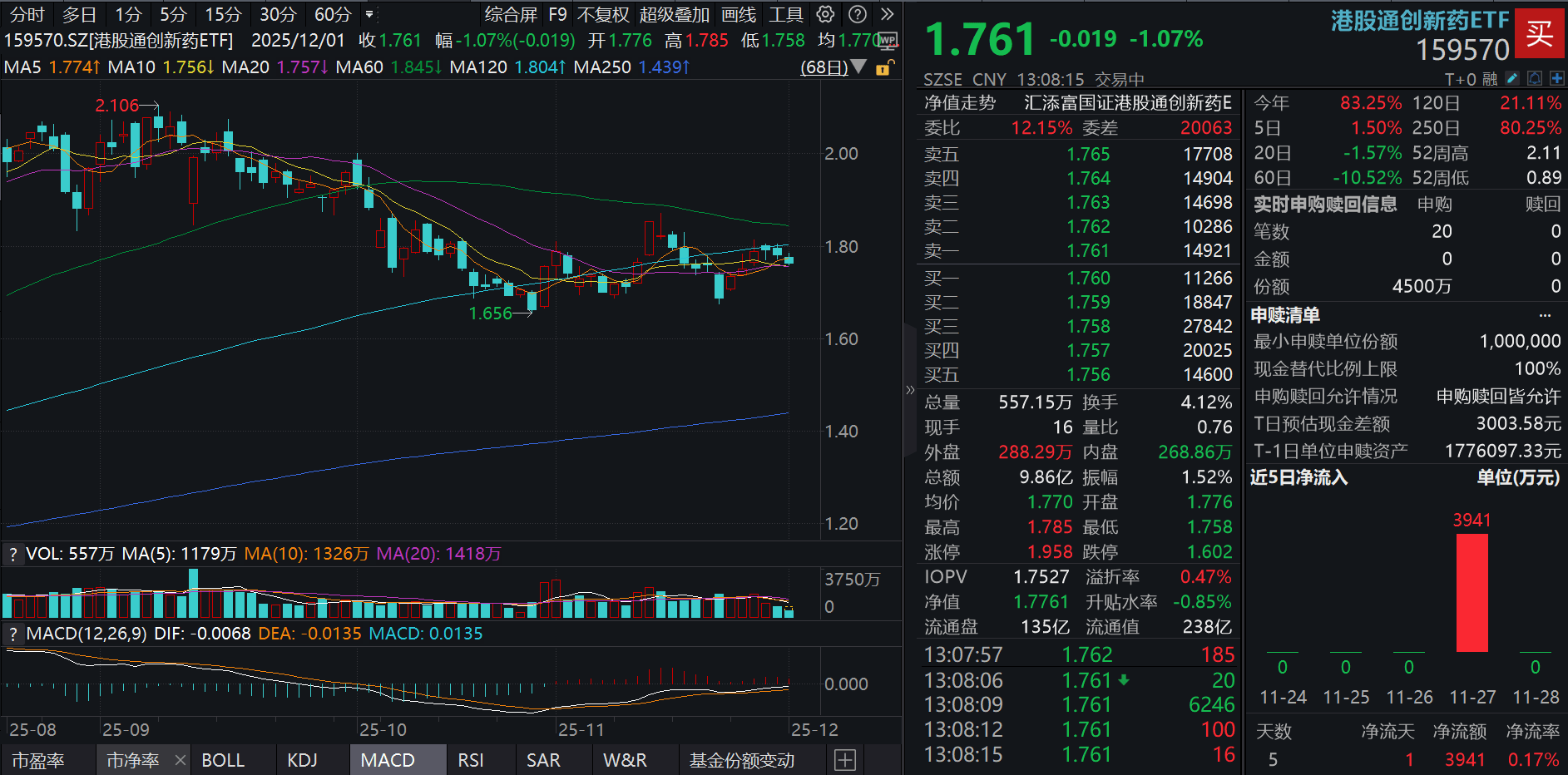
信达生物银屑病新药获批,百利天恒首笔2.5亿美元里程碑到账!港股通创新药ETF(159570)回调超1%,8000万元资金狂涌!
Sou Hu Cai Jing· 2025-12-01 05:41
Group 1: Federal Reserve and Market Expectations - Goldman Sachs indicates that the Federal Reserve is expected to lower interest rates during the December 9-10 meeting, with a nearly certain probability of a 25 basis point cut at around 85%-86% [1] Group 2: Company Developments - Baillie Gifford's subsidiary SystImmune received a $250 million milestone payment from Bristol-Myers Squibb related to the global strategic collaboration agreement, with potential for up to $2.5 billion in near-term or contingent payments and an additional $7.1 billion upon achieving specific development, registration, and sales milestones [1] - Innovent Biologics announced that its self-developed drug, Xinmeiyue® (Pikankizumab injection), has been approved by the National Medical Products Administration (NMPA) for the treatment of moderate to severe plaque psoriasis in adult patients, marking a significant advancement in domestic precision treatment for psoriasis [1] Group 3: Market Performance and Trends - The Hong Kong Stock Connect Innovation Drug ETF (159570) experienced a decline of over 1% for two consecutive days, with a trading volume exceeding 1 billion yuan, and a net inflow of 80 million yuan during the day [3] - As of November 29, the latest scale of the Hong Kong Stock Connect Innovation Drug ETF (159570) exceeded 24 billion yuan, leading its peers in the same category [3] Group 4: Upcoming Events and Industry Catalysts - The results of the drug catalog negotiation conducted by the Medical Insurance Bureau are expected to be released in the first weekend of December, with a focus on the inclusion of domestic biological innovative drugs for skin diseases in the medical insurance [4] - The American Society of Hematology (ASH) conference is set to take place from December 6-9, where multiple differentiated hematology products will have data disclosed, with a focus on companies like BeiGene, Innovent Biologics, and others [4] Group 5: Company Stock Performance - The weighted stocks of the Hong Kong Stock Connect Innovation Drug ETF (159570) showed mixed performance, with major stocks like Rongchang Bio down over 5%, while Innovent Biologics and Hansoh Pharmaceutical saw slight increases [1][2]
神州细胞的前世今生:2025年Q3营收13.12亿行业排第10,负债率101.46%远高于行业平均
Xin Lang Zheng Quan· 2025-10-30 13:13
Core Viewpoint - Shenzhou Cell is a leading innovative biopharmaceutical company in China, focusing on the research and development of biological drugs across various therapeutic areas, including malignant tumors and autoimmune diseases [1] Group 1: Business Performance - For Q3 2025, Shenzhou Cell reported revenue of 1.312 billion yuan, ranking 10th among 34 companies in the industry, with the industry leader, Changchun High-tech, generating 9.807 billion yuan [2] - The net profit for the same period was -251 million yuan, placing the company 31st in the industry, while the top performer, Tonghua Dongbao, achieved a net profit of 1.188 billion yuan [2] Group 2: Financial Ratios - As of Q3 2025, Shenzhou Cell's debt-to-asset ratio was 101.46%, a decrease from 104.24% year-on-year, but still significantly higher than the industry average of 26.88%, indicating substantial debt pressure [3] - The gross profit margin for the same period was 94.09%, slightly down from 96.28% year-on-year, yet above the industry average of 70.17%, reflecting strong profitability potential [3] Group 3: Shareholder Information - As of September 30, 2025, the number of A-share shareholders increased by 40.96% to 13,700, while the average number of circulating A-shares held per shareholder decreased by 29.06% to 32,400 [5] - Notable changes among the top ten circulating shareholders include the entry of Hong Kong Central Clearing Limited and the South China CSI 500 ETF, while the China Europe Medical Health Mixed A fund exited the list [5] Group 4: Market Outlook - According to West Securities, Shenzhou Cell's revenue in the first half of 2025 was below expectations due to price reductions from centralized procurement and medical insurance controls affecting its core product, Anjiah [6] - Despite challenges, the company is expected to see growth from new products and a stable increase in sales of other antibody drugs, with projected revenues for 2025-2027 of 2.194 billion, 2.543 billion, and 3.021 billion yuan, respectively [6] - Zhongyou Securities anticipates a revenue increase in 2024, with a forecast of 2.827 billion yuan for 2025, and a net profit of 223 million yuan, maintaining a "buy" rating [6]
神州细胞回复审核问询函:业绩波动,多举措应对挑战
Xin Lang Cai Jing· 2025-10-14 15:33
Core Viewpoint - The financial performance of Beijing Shenzhou Cell Biotechnology Group Co., Ltd. has shown significant fluctuations, with a notable decline in revenue and net profit due to price reductions from centralized procurement and medical insurance cost control measures. The company is also advancing its product pipeline but faces inherent risks in new drug development [2][3]. Group 1: Operating Performance - The company's operating revenue for the reporting period was 1,023.18 million yuan, 1,887.35 million yuan, 2,512.71 million yuan, and 519.74 million yuan, with net profits of -518.99 million yuan, -396.86 million yuan, 111.93 million yuan, and 64.06 million yuan respectively [2]. - In the first half of 2025, the company reported operating revenue of 972.02 million yuan and a net loss of -33.86 million yuan, marking a year-on-year decline of 37.99% in sales revenue due to the impact of centralized procurement and medical insurance cost control [2]. - Research and development expenses decreased in 2024 and the first half of 2025, primarily due to the completion of Phase III clinical trials for several products and other pipelines being in early stages [2][3]. Group 2: Asset and Liability Situation - As of June 30, 2025, the company had cash and cash equivalents of 302.87 million yuan, accounts receivable of 795.72 million yuan, inventory of 281.61 million yuan, and intangible assets of 176.20 million yuan [4]. - The company’s short-term borrowings amounted to 1,235.41 million yuan, with a total debt increase primarily for advancing research and industrialization projects and supplementing working capital [4]. - The company has a decreasing debt-to-asset ratio, with sufficient bank credit lines and a well-arranged repayment plan for short-term borrowings, indicating manageable debt repayment risks [4]. Group 3: Other Matters - As of June 30, 2025, the company had no significant financial investments, and there were no new or planned financial investments in the six months prior to the board resolution for this issuance [5]. - The company has timely and accurately transitioned construction in progress to fixed assets, with prepaid expenses mainly related to material procurement and service payments [5].
【医药】PD-1(PD-L1)/VEGF 双抗概念火爆,中国创新药企引领研发热潮——行业跨市场周报(0602)(王明瑞/叶思奥)
光大证券研究· 2025-06-04 13:56
Group 1 - The pharmaceutical and biotechnology index rose by 2.21%, outperforming the CSI 300 index by 3.30 percentage points and the ChiNext index by 2.00 percentage points, ranking second among 31 sub-industries [3] - Recent IND applications have been initiated for drugs such as BG-60366 from BeiGene and RFUS-949 from Renfu Pharmaceutical, while clinical applications for BGB-C354 and SSS55 injection have also been newly undertaken [4] Group 2 - The upcoming 2025 ASCO conference is expected to showcase Chinese innovative pharmaceutical companies, with a notable global licensing deal of $6.05 billion between 3SBio and Pfizer, enhancing the focus on PD-1 (PD-L1)/VEGF dual antibody products [5] - There are currently 14 PD-1 (PD-L1)/VEGF products in clinical stages globally, all associated with Chinese companies, with the fastest progress seen in the drug Ivorisumab from CanSino Biologics, which has been approved in China [5] Group 3 - Companies such as Zhenzhen Cell, Rongchang Biopharmaceutical, Junshi Biosciences, and Huahai Pharmaceutical have clinical products progressing quickly but have not yet established business development partnerships [6] - Huahai Pharmaceutical's HB0025 for endometrial cancer is expected to start Phase III clinical trials in the second half of 2025, while Zhenzhen Cell's SCTB14 has initiated Phase II/III clinical trials in March 2025 [6] Group 4 - The investment strategy for 2025 emphasizes structural selection of investment opportunities based on payment willingness and ability, focusing on three payment channels: in-hospital payments, out-of-pocket payments, and overseas payments [7] - The strategy highlights three key directions: policy support for innovative drugs and devices, expanding public demand for blood products and home medical devices, and the upward cycle of overseas sales for products like heparin and respiratory-related treatments [7]

BMS与BNT达成90亿交易 狂赚普米斯“筹码”差价 中国创新药价值重塑进行时
Xin Lang Cai Jing· 2025-06-03 11:05
Core Insights - Bristol-Myers Squibb (BMS) acquired BioNTech's PD-L1/VEGF dual antibody BNT327 for $9 billion, highlighting the increasing interest in Chinese biotech firms and their innovative drug pipelines [1][2] - The rapid financial success of BioNTech, which earned over $8 billion from the initial $55 million licensing deal with Chinese firm Pumice Biologics, raises questions about the pricing strategies of Chinese pharmaceutical companies in the global market [1][2][3] - The trend of multinational corporations (MNCs) aggressively acquiring Chinese dual antibodies is reshaping the global landscape of innovative drugs, with significant deals such as the $6.05 billion agreement between 3SBio and Pfizer [1][4] Group 1: Major Transactions - BMS's deal with BioNTech includes a $1.5 billion upfront payment, a record for oncology licensing agreements, along with additional milestone payments totaling $76 billion [2] - 3SBio's licensing of its PD-1/VEGF dual antibody SSGJ-707 to Pfizer for $6.05 billion, with an upfront payment of $1.25 billion, sets a new record for domestic innovative drug licensing [4][5] - Other notable transactions include Merck's $3.3 billion investment in LianBio and the anticipated $5 billion deal involving Shijiazhuang Yiling Pharmaceutical [5][6] Group 2: Market Dynamics - The surge in MNCs acquiring Chinese dual antibodies is driven by the expiration of patents for existing blockbuster drugs and the need for new products [6][7] - Chinese innovative drug companies benefit from lower development costs and a large patient pool, making them attractive targets for MNCs seeking to enhance their product pipelines [6][7] - The total value of outbound licensing deals for Chinese innovative drugs reached $45.5 billion since early 2025, with 42% of high-value projects coming from China [5][6] Group 3: Future Outlook - The ongoing trend of MNCs partnering with Chinese biotech firms is expected to bolster the confidence of domestic companies in pursuing research and development [7][8] - The ability of Chinese innovative drug companies to negotiate higher prices in licensing deals will depend on their negotiation skills and market positioning [8] - The need for a "pricing power revolution" in the Chinese pharmaceutical industry is emphasized, as companies face challenges from rising R&D costs and stringent domestic pricing policies [9]

