
SEBS

Search documents
从“书架”走上“货架”
Liao Ning Ri Bao· 2025-12-31 00:59
Core Viewpoint - The company is focused on developing innovative materials, particularly GYC147, a composite film product that can significantly reduce raw material costs while maintaining performance standards in pharmaceutical packaging and soft-pack lithium batteries [1][2]. Group 1: Product Development - GYC147 is a composite film product made from aluminum foil and functional films, primarily used in pharmaceutical packaging and soft-pack lithium batteries [1]. - The company has successfully developed a high-performance SEPS product through its high-end elastomer pilot line, achieving international advanced levels and addressing long-standing supply chain issues in the industry [2]. Group 2: Technological Innovation - The company emphasizes the importance of technology maturation, product trial production, and process improvement to achieve breakthroughs in key technologies and enhance product performance [2]. - The pilot platform has successfully conducted 23 pilot projects since its operation in 2020, leading to the maturation of over ten products and the formation of complete process packages [1]. Group 3: Industry Impact - The company aims to connect the innovation chain, technology chain, and industry chain during the 14th Five-Year Plan period, accelerating the engineering breakthroughs and industrial applications of technological innovations [2]. - The company has been recognized as one of the first national-level manufacturing pilot platforms, highlighting its capability in engineering transformation and commercialization in the field of specialty polymers [2].
湖南石化:技术创新迭代升级 做强做优领航前行
Zhong Guo Hua Gong Bao· 2025-12-23 03:41
Core Viewpoint - The successful launch of the Shanghai Jinshan Baling New Materials Company's 250,000-ton SBC project marks a significant breakthrough in high-end new materials supply capabilities for Sinopec [1][4]. Group 1: Company Overview - Hunan Petrochemical is one of the earliest companies in China to achieve industrial production of SBC elastomers, establishing a leading SBS production facility in the 1980s and SEBS in 2006, breaking foreign technology monopolies [4]. - The company has a total SBC elastomer production capacity of 800,000 tons, with 380,000 tons from its headquarters, 170,000 tons from Hainan Baling New Materials Company, and 250,000 tons from Shanghai Jinshan Baling New Materials Company [1][4]. Group 2: Production and Capacity - The Shanghai Jinshan Baling New Materials Company, which began production in November, has a capacity of 140,000 tons for SBS, 50,000 tons for SEBS, and 60,000 tons for SIS [5]. - Hunan Petrochemical's rubber department achieved a cumulative SBC elastomer production of over 300,000 tons in the first eleven months of the year, with a 19% year-on-year increase in sales of new specialty products [8]. Group 3: Technological Advancements - The projects in collaboration with Hainan Refining and Shanghai Petrochemical utilize Sinopec's proprietary technology, significantly improving environmental protection, energy consumption control, and production efficiency compared to traditional methods [4]. - The company’s self-developed SBS and SEBS technologies have won national science and technology awards, enhancing China's core competitiveness in high-end synthetic rubber [4]. Group 4: Market Applications - SBC elastomers are versatile materials combining the processing ease of plastics with the high elasticity of rubber, suitable for high-value applications such as infant products, medical devices, 5G cables, and eco-friendly synthetic leather [8].

2025年化工市场流水账——弱现实下的探底之路
Xin Lang Cai Jing· 2025-11-23 05:41
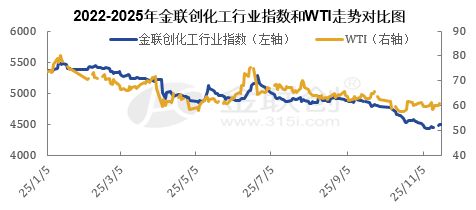
Core Viewpoint - The domestic chemical market is expected to face an oversupply in 2025, with prices of various chemical products hitting new lows in November, indicating a weak market driven primarily by macroeconomic factors rather than crude oil prices [1][8]. Market Trends - The chemical market experienced fluctuations from January to March, with a peak in January followed by a decline due to geopolitical tensions and tariff impacts, leading to a low opening after the Spring Festival [3][4]. - In the second quarter, the market was heavily influenced by U.S. tariffs and trade tensions, resulting in significant volatility, with a brief recovery in June due to positive trade negotiations [5]. - The third quarter saw a weak overall market, but a slight recovery was noted due to domestic supply-side reforms and the elimination of outdated production capacity [7]. - The fourth quarter continued to reflect weak demand against high supply, with a notable decline in prices across multiple chemical products, although a slight rebound was expected towards the end of December [8]. Price Movements - As of November 18, 2025, 116 out of 131 monitored chemical products had decreased in price since the beginning of the year, representing 89% of the total, while only 15 products saw price increases [8]. - The leading price increase was observed in the sulfur market, with a rise of 2,420 yuan/ton (+156.13%), while products like SEBS and butadiene experienced significant declines of -26.44% and -39.69%, respectively [9]. Profitability - Most chemical products are operating at marginal or negative profit margins, with many experiencing increased losses compared to the beginning of the year, indicating a challenging operational environment for chemical companies [8].
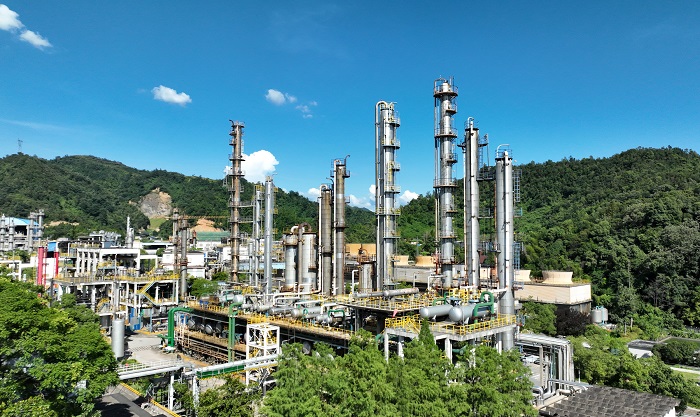
湖南石化及其合资公司SBC弹性体年产能达80万吨
Zhong Guo Jin Rong Xin Xi Wang· 2025-11-18 11:50
Core Insights - The Shanghai Jinshan Baling New Materials Company, a joint investment by Hunan Petrochemical and Shanghai Petrochemical, has successfully completed its annual production capacity of 250,000 tons of SBC (Styrene Block Copolymer) and achieved a successful initial operation, marking a new breakthrough in Sinopec's supply capacity in the high-end new materials sector [1] Group 1: Company Achievements - Hunan Petrochemical has become the largest SBC elastomer manufacturer globally, with a total annual production capacity of 800,000 tons across its main plant and two joint ventures [1] - The main plant of Hunan Petrochemical has an annual SBC elastomer production capacity of 380,000 tons, while the Hainan Baling New Materials Company has a capacity of 170,000 tons, and the newly established Shanghai Jinshan Baling New Materials Company has a capacity of 250,000 tons [1][2] Group 2: Historical Context - Hunan Petrochemical was one of the first companies in China to industrialize SBC elastomer production, establishing the first 10,000-ton SBS industrial production unit in the 1980s [2] - The company has broken foreign technology monopolies by building the first 10,000-ton SEBS industrial production unit in 2006 and the first 20,000-ton SEPS industrial production unit in 2017 [2] Group 3: Recent Developments - In 2023, the Hainan Baling Chemical New Materials Company launched its SBC elastomer unit, with SBS production capacity of 120,000 tons and SEBS capacity of 50,000 tons [3] - The newly established Shanghai Jinshan Baling New Materials Company produces three types of SBC elastomers, with SBS capacity of 140,000 tons, SEBS capacity of 50,000 tons, and SIS (Styrene-Isoprene-Styrene) capacity of 60,000 tons [3] Group 4: Production and Market Performance - From January to October 2023, Hunan Petrochemical's rubber division produced nearly 270,000 tons of SBC elastomer series products, achieving a 19% year-on-year increase in sales of new specialty products [3] - The Hainan Baling New Materials Company has produced over 300,000 tons since its establishment, with an average operating rate of 110%, significantly higher than the industry average [3] Group 5: Product Characteristics and Applications - SBC elastomers are new polymer materials that combine the processing convenience of plastics with the high elasticity of rubber, featuring green safety, easy processing, and recyclability [3] - Applications of SBC elastomers include high-value sectors such as infant products, medical devices, 5G optical cable reinforcement, and environmentally friendly synthetic leather, with some medical-grade products suitable for human implantation [3]
长鸿高科(605008) - 2025年第三季度主要经营数据公告
2025-10-30 10:18
宁波长鸿高分子科技股份有限公司 | | 2025 年第三季度 | 2024 年第三季度 | 变动比例 | | --- | --- | --- | --- | | 主要产品名称 | 平均销售单价 | 平均销售单价 | | | | | | (%) | | | (元/吨) | (元/吨) | | 证券代码:605008 证券简称:长鸿高科 公告编号:2025-063 2025 年第三季度主要经营数据公告 本公司董事会及全体董事保证本公告内容不存在任何虚假记载、误导性陈述 或者重大遗漏,并对其内容的真实性、准确性和完整性承担法律责任。 宁波长鸿高分子科技股份有限公司(以下简称"公司")根据上海证券交易所 《上市公司行业信息披露指引第十三号——化工》的规定,现将 2025 年第三季度 主要经营数据披露如下: | 主要产品名称 | 2025 年第三季度 | 2025 年第三季 | 年第三季度 2025 | | --- | --- | --- | --- | | | 产量(吨) | 度销量(吨) | 营业收入(万元) | | SBS | 25,441.31 | 24,671.18 | 26,378.28 | | SEBS ...

化工装置深挖系列三,丁二烯上下游配套与边际装置分析(下)
Hua Tai Qi Huo· 2025-10-22 11:18
1. Report Industry Investment Rating No relevant information provided. 2. Core Viewpoints of the Report The report analyzes the marginal devices of various downstream products of butadiene, including their current status, production capacity, and sourcing of raw materials. The four major demand areas for butadiene, namely cis - polybutadiene rubber, styrene - butadiene rubber, ABS, and SBS, account for 86.45% of the total butadiene demand. The analysis is carried out in descending order of the demand ratio of externally - sourced raw material devices [8]. 3. Summary According to the Catalog 3.1 Preface The previous part of the series analyzed the marginal devices and regional device balance of butadiene itself. This part focuses on the marginal devices of butadiene's downstream products. The four major demand areas for butadiene are cis - polybutadiene rubber, styrene - butadiene rubber, ABS, and SBS, accounting for 86.45% of the total demand. The analysis will be conducted in descending order of the demand ratio of externally - sourced raw material devices [8]. 3.2 Butadiene Downstream Device Analysis 3.2.1 Cis - Polybutadiene Rubber Device - **Status Analysis**: There are 38 sets of cis - polybutadiene rubber devices in China, with 5 shut down, 1 under construction, and 32 in production. The total production capacity of existing devices is 2.072 million tons. The production capacity of private enterprises is 0.54 million tons (26.06%), state - owned enterprises is 1.472 million tons (71.04%), and foreign - funded enterprises is 0.06 million tons (2.9%). All use the polymerization method [9]. - **Marginal Capacity Analysis**: Among the 2.112 million tons of in - production devices, the total production capacity of devices with self - owned butadiene is 1.23 million tons (59.36%), with state - owned devices accounting for 83%. The remaining over 40% of the devices need to source raw materials externally, mainly concentrated in East China, with a total production capacity of 0.842 million tons, and the capacity in East China accounting for 88.12% [13]. 3.2.2 ABS Device - **Status Analysis**: There are 28 sets of ABS polymer devices in China, with 2 shut down, 5 under construction, and 21 in production. The total production capacity of existing devices is 9.165 million tons. The production capacity of state - owned enterprises is 6.72 million tons (73.3%), private enterprises is 1 million tons (10.9%), and foreign - funded enterprises is 1.445 million tons (15.77%). The emulsion grafting method accounts for 90.67% of the production capacity, and the bulk method accounts for 9.33% [16]. - **Marginal Capacity Analysis**: Among the 9.165 million tons of in - production devices, the total production capacity of devices with self - owned butadiene is 2.34 million tons (25.53%), all of which are state - owned devices. The remaining 70% of the devices need to source raw materials externally, mainly concentrated in East China, with a total production capacity of 6.825 million tons, and the capacity in East China accounting for 64.1% [20]. 3.2.3 SBS Device - **Status Analysis**: There are 30 sets of SBS devices in China, with 1 shut down, 3 under construction, and 26 in production. The total production capacity of existing devices is 1.845 million tons. The production capacity of private enterprises is 0.44 million tons (23.85%), state - owned enterprises is 0.9 million tons (48.78%), and foreign - funded enterprises is 0.505 million tons (27.37%). The block anionic solution polymerization method accounts for 69.73% of the production capacity [25]. - **Marginal Capacity Analysis**: Among the 1.845 million tons of in - production devices, the total production capacity of devices with self - owned butadiene is 0.38 million tons (20.6%), with state - owned devices accounting for 65%. The remaining nearly 80% of the devices need to source raw materials externally, mainly concentrated in East and South China, with production capacities of 0.74 million tons and 0.655 million tons respectively, accounting for 39.59% and 39.25% [27]. 3.2.4 Styrene - Butadiene Rubber Device - **Status Analysis**: There are 29 sets of styrene - butadiene rubber devices in China, with 2 under construction, 25 in production, and 2 in long - term shutdown since 2018. The total production capacity of in - production devices is 1.765 million tons. The production capacity of private enterprises is 0.1 million tons (5.67%), state - owned enterprises is 1.615 million tons (91.5%), and foreign - funded enterprises is 0.05 million tons (2.83%). The emulsion polymerization method accounts for 68.19% of the production capacity [32]. - **Marginal Capacity Analysis**: Among the 1.765 million tons of in - production devices, the total production capacity of devices with self - owned butadiene is 1.055 million tons (59.77%), with state - owned devices accounting for 92.44%. The remaining 40% of the devices need to source raw materials externally, mainly concentrated in East China, with a total production capacity of 0.71 million tons, and the capacity in East China accounting for 84.5% [34]. 3.2.5 Nitrile Latex Device - **Status Analysis**: There are 47 sets of nitrile latex devices in China, with 8 shut down, 2 under construction, and 37 in production. The total production capacity of existing devices is 2.012 million tons. The production capacity of private enterprises is 1.122 million tons (55.77%), state - owned enterprises is 0.44 million tons (21.87%), and foreign - funded enterprises is 0.45 million tons (22.37%). All use the latex reactor device [38]. - **Marginal Capacity Analysis**: Among the 2.012 million tons of in - production devices, the total production capacity of devices with self - owned butadiene is 0.3 million tons (14.9%), all of which are state - owned devices. The remaining 85% of the devices need to source raw materials externally, mainly concentrated in East China, with private enterprises as the main force [41]. 3.2.6 SEBS Device - **Status Analysis**: There are 15 sets of SEBS devices in China, with 3 under construction and 12 in production. The total production capacity is 460,000 tons. The production capacity of private enterprises is 70,000 tons (15.22%), state - owned enterprises is 275,000 tons (59.78%), foreign - funded enterprises is 95,000 tons (20.65%), and Hong Kong, Macao, and Taiwan - funded enterprises is 20,000 tons (4.35%). The block anionic solution polymerization method accounts for 56.52% of the production capacity [46]. - **Marginal Capacity Analysis**: All SEBS devices in China need to source butadiene raw materials externally, mainly in East and South China. The device production capacity is small and scattered [49]. 3.2.7 Nitrile Rubber Device There are 5 sets of nitrile rubber devices in China, with a total production capacity of 285,000 tons. The production capacity of private enterprises is 185,000 tons (35.09%), and state - owned enterprises is 100,000 tons (64.91%). Private enterprise devices need to source raw materials externally, while the state - owned device has self - owned butadiene raw materials [52]. 3.2.8 Styrene - Butadiene Latex Device There are 9 sets of styrene - butadiene latex devices in China, with 1 under construction and 8 in production. The total production capacity is 245,000 tons. The production capacity of private enterprises is 190,000 tons (77.55%), state - owned enterprises is 50,000 tons (20.41%), and mixed - ownership enterprises is 5,000 tons (2.04%). The latex reactor device accounts for 100% of the production capacity [57]. 3.2.9 Pyridine - Butadiene Latex Device There are 5 sets of pyridine - butadiene latex devices in China, with 1 shut down and 4 in production. The total production capacity is 165,000 tons. The production capacity of private enterprises is 145,000 tons (87.88%), and foreign - funded enterprises is 20,000 tons (12.12%). The latex reactor device accounts for 100% of the production capacity [60]. 3.3 Summary - Cis - polybutadiene rubber: The total production capacity of devices with self - owned butadiene accounts for 59.36%, with state - owned devices accounting for 83%. The remaining over 40% of the devices need to source raw materials externally, mainly concentrated in East China, with a capacity accounting for 88.12% [65]. - ABS: The proportion of in - production devices with self - owned butadiene is 25.53%, all of which are state - owned devices. Nearly 75% of the devices need to source raw materials externally, mainly concentrated in East China, with a capacity accounting for 64.1%, and the remaining devices are distributed in South, Northeast, and North China [65]. - SBS: The total production capacity of devices with self - owned butadiene accounts for 20.6%, with state - owned devices accounting for 65%. Nearly 80% of the devices need to source raw materials externally, mainly concentrated in East and South China, accounting for 39.59% and 39.25% respectively, and the remaining devices are in Central, North, and Northeast China [65]. - Styrene - butadiene rubber: The total production capacity of devices with self - owned butadiene accounts for 59.77%, with state - owned devices accounting for 94.3%. 40% of the devices need to source raw materials externally, mainly concentrated in East China, with a capacity accounting for 84.5%, and the remaining devices are distributed in South, Northeast, and Central China [65]. - SEBS: All in - production devices need to source raw materials externally, mainly concentrated in East and South China, with capacity accounting for 39.19% and 31.08% respectively, and nearly 30% of the capacity in Central China [66]. - Nitrile latex: The total production capacity of devices with self - owned butadiene accounts for 14.9%, all of which are state - owned devices. 85% of the devices need to source raw materials externally, mainly concentrated in East China, with private enterprises as the main force [66].
绿色橡胶前沿科技的探索者——记全国劳动模范、中国石化集团化工和材料领域高级专家梁红文
Zhong Guo Hua Gong Bao· 2025-09-01 02:48
Core Viewpoint - The article highlights the achievements of Liang Hongwen in the field of thermoplastic elastomers, particularly in the development of SEBS and SEPS, showcasing China's advancements in this industry and the importance of independent innovation [2][3][4]. Group 1: Achievements and Recognition - Liang Hongwen has received numerous awards, including one National Science and Technology Progress Award and ten provincial and ministerial-level awards, along with 75 domestic and 1 foreign authorized invention patents [1]. - He was honored as a "National Labor Model" by the All-China Federation of Trade Unions prior to the May Day holiday this year [1]. Group 2: Development of SEBS - In the 1990s, Liang Hongwen initiated the independent research and development of SEBS, overcoming significant technical challenges and achieving industrial production in 2006 with the establishment of China's first 10,000-ton industrial facility [2]. - His team has developed 18 different grades of SEBS and secured over 20 national invention patents, marking a significant advancement in China's SEBS technology [2]. Group 3: Advancements in SEPS - Following the success with SEBS, Liang Hongwen's team focused on SEPS, leading to the establishment of a 20,000-ton annual production facility in 2017, making China the third country to industrialize SEPS using proprietary technology [3]. Group 4: Industry Impact and Applications - Liang Hongwen's team has been instrumental in transitioning the thermoplastic rubber industry from expansion to refinement, contributing to various sectors including medical and tire manufacturing [4]. - In the medical field, they developed a specialized medical-grade SEBS to replace harmful PVC, significantly reducing costs and enhancing public health [4]. - In tire manufacturing, they created synthetic rubber materials that meet high-performance tire production requirements, achieving breakthroughs in product development from 2017 to 2023 [4].

长鸿高科(605008) - 2025年第二季度主要经营数据公告
2025-08-27 07:53
证券代码:605008 证券简称:长鸿高科 公告编号:2025-056 宁波长鸿高分子科技股份有限公司 | 主要产品名称 | 2025 年第二季度 平均销售单价 | 2024 年第二季度 平均销售单价 | 变动比例 (%) | | --- | --- | --- | --- | | | (元/吨) | (元/吨) | | | SBS | 10,905.76 | 11,820.77 | -7.74 | | SEBS | 12,346.74 | 13,309.76 | -7.24 | | PBT | 6,871.72 | 7,871.23 | -12.70 | | 热拌用沥青再生剂 | 2,810.80 | 3,589.55 | -21.69 | | 改质沥青 | 3,354.13 | | | | 黑色母粒 | 5,333.92 | 6,753.22 | -21.02 | | THF | 8,750.82 | 9,972.90 | -12.25 | (2)主要原材料价格变动情况(不含税) 2025 年第二季度主要经营数据公告 本公司董事会及全体董事保证本公告内容不存在任何虚假记载、误导性陈述 或者重大遗漏,并对其 ...
长鸿高科(605008) - 2025年第一季度主要经营数据公告
2025-04-29 10:50
证券代码:605008 证券简称:长鸿高科 公告编号:2025-028 宁波长鸿高分子科技股份有限公司 2025 年第一季度主要经营数据公告 本公司董事会及全体董事保证本公告内容不存在任何虚假记载、误导性陈述 或者重大遗漏,并对其内容的真实性、准确性和完整性承担法律责任。 宁波长鸿高分子科技股份有限公司(以下简称"公司")根据上海证券交易 所《上市公司行业信息披露指引第十三号——化工》的规定,现将 2025 年第一 季度主要经营数据披露如下: | SBS | 11,887.77 | 10,977.92 | 8.29 | | --- | --- | --- | --- | | SEBS | 13,678.24 | 13,060.37 | 4.73 | | PBT | 6,852.97 | 7,924.70 | -13.52 | | 热拌用沥青再生剂 | 3,035.84 | 3,389.47 | -10.43 | | 黑色母粒 | 5,397.46 | 7,052.51 | -23.47 | (2)主要原材料价格变动情况(不含税) | 主要原料名称 | 2025 | 年第一季度 | 年第一季度 2024 | 变 ...
浙江众成:2024年POF销售业绩稳定增长 加大研发提升高端产品占比
Zheng Quan Shi Bao Wang· 2025-04-20 06:03
Core Viewpoint - Zhejiang Zhongcheng, a leader in the POF shrink film industry, reported a decline in revenue and net profit for 2024, emphasizing its commitment to high-end and differentiated products despite challenging market conditions [1] Group 1: Financial Performance - In 2024, Zhejiang Zhongcheng achieved operating revenue of 1,710.15 million yuan and net profit of 74.17 million yuan, representing a year-on-year decrease of 1.05% and 28.71% respectively [1] - The company maintained stable sales performance with POF shrink film sales exceeding 45,000 tons, solidifying its market leadership [1] Group 2: Market Position and Strategy - Since 2009, Zhejiang Zhongcheng has ranked first in domestic production and sales of POF shrink film, and second globally, only behind Sealed Air Corporation [1] - The company focuses on its main business, channels, and products to strengthen its core operations amid increasing competition and market pressures [1] Group 3: Product Development and Innovation - Zhejiang Zhongcheng is committed to increasing investment in technology development and continuously launching high-end products, with a growing proportion of high-end product revenue [1] - The company’s subsidiary, Zhongli Synthetic Materials, has developed a series of differentiated products, overcoming several foreign technology barriers [2] - The company plans to enhance existing product processes and develop new products, including a 10μ smooth film and high barrier cover films, to create new advantages in product and technology [3] Group 4: Industry Recognition and Standards - In 2024, Zhejiang Zhongcheng received multiple honors, including being recognized as an excellent brand enterprise in China and a champion in the manufacturing sector in Zhejiang Province [2] - The company was also a key contributor to the national standard for "Packaging Materials - Polyolefin Shrink Film" [2]
