
Tesla Bot

Search documents
全球首款手机龙虾秒光!OpenClaw创始人称愿与百度共同开发龙虾;特斯拉AWE展出即将发布的第三代机器人丨智能制造日报
创业邦· 2026-03-13 04:11
Group 1 - The world's first mobile lobster application "Red Hand Operator" was launched by Baidu, leading to a surge in downloads and a resource shortage in the system backend, prompting Baidu Smart Cloud to expedite resource allocation to ensure user experience [2] - Tesla showcased its upcoming third-generation humanoid robot at the AWE 2026, with plans for mass production starting at the end of 2026, targeting a long-term production capacity of 1 million units [2] Group 2 - Ecovacs presented two new products at AWE 2026, including the AI bionic robot "Mao Tuan Er," which is designed for companionship and is priced at 3999 yuan, and the "Bajie" household service robot, which upgrades storage space from two-dimensional to three-dimensional [4][5] - SmartSens announced the launch of a new 12-megapixel AI glasses application CMOS image sensor, SC1220IOT, which is currently in the sample acceptance stage and is expected to achieve mass production in Q2 2026 [5]



具身智能企业扎堆启动上市,机器人板块走强,大族激光涨超7%,机器人ETF汇添富(159213)反包涨超1%,对比新能源汽车,机器人走到哪了?
Sou Hu Cai Jing· 2026-02-12 06:52
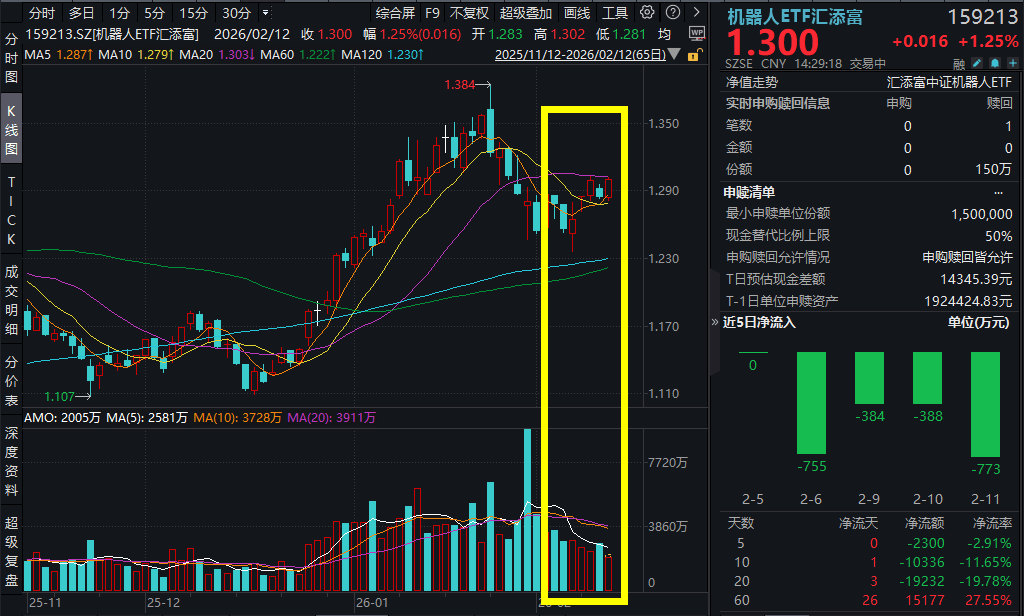
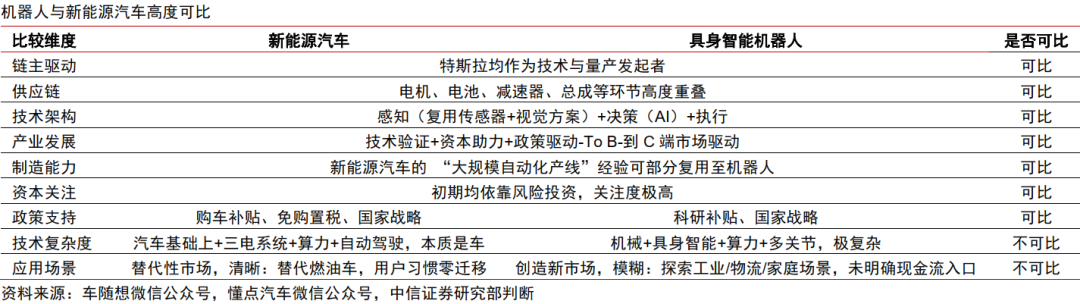
Core Viewpoint - The A-share market is experiencing an upward trend, particularly in the technology sector, with a notable rise in the robotics sector, as evidenced by the performance of the Robotics ETF Huatai-PineBridge (159213) which increased by 1.25% [1] Group 1: Robotics ETF Performance - The Robotics ETF Huatai-PineBridge (159213) has shown a mixed performance among its constituent stocks, with major gains from companies like Dazhu Laser, which rose over 7%, and others like Greentech Harmony and iFlytek, which increased by over 2% [2][3] - The top ten constituent stocks of the Robotics ETF include iFlytek with a 2.21% increase and Dazhu Laser with a 7.33% increase, indicating strong performance in the sector [4] Group 2: Technological Developments - Xiaomi has officially launched and open-sourced its first-generation robotics VLA model, Xiaomi-Robotics-0, which features 4.7 billion parameters and excels in visual language understanding and real-time execution capabilities [5] - Alibaba's DAMO Academy has released the RynnBrain model, which significantly enhances robotic intelligence by introducing spatial reasoning and memory capabilities, outperforming leading models like Google's Gemini Robotics ER 1.5 [5] Group 3: Market Trends and IPO Activity - There is a surge in companies focused on embodied intelligence initiating IPO processes, with three companies already advancing their A-share listings as of February 10 [6] - The robotics industry is compared to the electric vehicle sector, with both undergoing a phase of technological validation and expected to benefit from policy support and market demand [7][8] Group 4: Investment Insights - The investment focus in the humanoid robotics sector is shifting from thematic investments to expectations of mass production, with key milestones anticipated from Tesla's developments in humanoid robots [8] - The industry is expected to see a reduction in the timeline from technology validation to commercial rollout compared to the electric vehicle sector, due to the accumulated resources and capital in the robotics field [8]


中信证券:复盘新能源汽车,掘金人形机器人
Xin Lang Cai Jing· 2026-01-30 01:35
Core Insights - The report analyzes the development and investment cycles of the electric vehicle (EV) industry and draws parallels to the humanoid robot industry, suggesting that humanoid robots are currently in a technology validation phase, but their commercialization timeline will be shorter than that of EVs [3][27][28] - The report emphasizes the importance of focusing on high-value, clear-structure, and high-certainty segments within the robot industry, as these segments exhibit the greatest performance elasticity [17][22][41] Industry Comparison - Both the EV and humanoid robot industries are considered global strategic industries, initiated by Tesla, and follow similar patterns of technological validation, capital support, and policy-driven market dynamics [4][28] - The complexity of intelligent robotics is higher than that of EVs, with more fragmented application scenarios, leading to greater uncertainty in industry development [4][28] Investment Strategy - The report recommends actively seeking leading companies in the humanoid robot sector that have high barriers to entry in terms of non-standardization, technology, cost, and production expansion, as these companies are likely to navigate through industry cycles successfully [22][41] - The humanoid robot industry is expected to follow a path from closed to open systems, from standardization to complexity, and from production to everyday life applications [23][30] Technological Development - Current technological challenges in humanoid robots include improving autonomous decision-making capabilities, enhancing motion flexibility and stability, and reducing overall costs [31][34] - The report notes that while the cost structure of humanoid robots is similar to that of EVs, the industry is still in its infancy, and no dominant players have emerged yet, akin to CATL in the battery sector [41] Market Dynamics - The EV industry has experienced four major market cycles driven by macroeconomic factors, policy changes, and technological advancements, which may serve as a reference for the humanoid robot industry as it develops [10][11][39] - The report highlights that the investment landscape for humanoid robots is currently characterized by thematic investments, similar to earlier stages of the EV market [39][41]


中信证券:复盘新能源汽车 掘金人形机器人
智通财经网· 2026-01-30 00:49
Core Viewpoint - The humanoid robot industry is currently in a technology validation phase, but the timeline for commercialization is expected to be shorter than that of the electric vehicle industry. The focus should be on segments with high value, clear structure, and high certainty, as these will have the greatest performance elasticity [1][22]. Industry Comparison - The humanoid robot industry is highly comparable to the electric vehicle industry, both being global strategic industries initiated by Tesla. They follow similar development patterns driven by technology validation, capital support, and policy incentives, although the complexity and fragmentation of robot intelligence present unique challenges [2][3]. Key Segments - High-value and high-barrier segments in the humanoid robot industry include platform companies (integrating hardware and software), high-performance SOC chips (driving the brain side), dexterous hands (integrated hardware and software small robots), actuators, and precision sensors [1][19][22]. Investment Strategy - The investment strategy should focus on identifying leading companies in the humanoid robot sector that have high non-standard, technical, cost, and production expansion barriers, as these companies are likely to navigate through industry cycles successfully [1][22]. Market Dynamics - The humanoid robot industry is expected to experience a more stable performance trajectory compared to the electric vehicle industry, which has faced significant volatility due to cyclical material performance. The industry is still in its early stages, with no dominant players yet emerging like CATL in the lithium battery sector [19][22]. Policy and Capital Support - Policy and capital support are crucial for the development of both the electric vehicle and humanoid robot industries. The approach for robots should follow a "plan first, market later" strategy, similar to the early days of electric vehicles [5][6].
公司深度 | 伯特利: 线控底盘领军者 人形机器人未来的中坚力量【国联民生汽车 崔琰团队】
汽车琰究· 2026-01-26 16:12
Core Viewpoint - The company is a leading player in the domestic automotive brake system market, focusing on the development of intelligent chassis systems, including mechanical brakes, electric control, mechanical steering, and lightweight structural components, aiming for a comprehensive line control chassis solution [2][8]. Product Development - The company has established a comprehensive product layout, transitioning from mechanical components to electronic and intelligent systems, including electronic parking brakes (EPB), electronic stability control (ESC), and line control braking systems (WCBS) [17][26]. - The company has expanded its product offerings to include active suspension systems and has made strategic acquisitions to enhance its capabilities in electric steering systems [3][17]. Client Structure - The client base has evolved from traditional domestic brands like Chery and Geely to include new energy vehicle manufacturers and global partners such as Nissan and Ford, reflecting a shift towards more advanced electric control systems [2][20]. - The company has established a stable client structure with over 50 clients globally, including major players in the automotive industry, and is continuously expanding its international presence [31][34]. Globalization Strategy - The company has implemented a three-pronged internationalization strategy, establishing manufacturing bases in China, Mexico, and Morocco to enhance its global supply chain and reduce costs [36][38]. - The Mexican facility, operational since 2023, aims to produce 4 million parts annually, while plans for a Moroccan facility are set to begin in 2024, targeting the European and North African markets [38][40]. Financial Performance - The company has demonstrated robust revenue growth, with a projected revenue of 128.75 billion yuan in 2025, increasing to 208.31 billion yuan by 2027, alongside a steady rise in net profit [6][40]. - The gross margin is expected to improve as new products scale up, with a focus on enhancing profitability through the integration of advanced technologies [41][44]. Technological Capabilities - The company has built a strong technological foundation, focusing on precision manufacturing, system integration, and the development of advanced electronic control systems, which are critical for the automotive industry's shift towards electrification and automation [46][52]. - Continuous investment in research and development has led to significant advancements in product offerings, including the successful mass production of line control braking systems [65][66]. Future Outlook - The company is positioned to leverage its technological expertise and strategic vision to transition from a domestic leader to a global player in the automotive components sector, particularly in the intelligent chassis and robotics markets [11][14].


X @Herbert Ong
Herbert Ong· 2025-12-03 00:30
BREAKING: Elon Musk Just Dropped New Tesla Bot Demo https://t.co/PaXf3oYupK ...
从造车到造“人”,这些车企发出人形机器人量产信号!
Zheng Quan Shi Bao Wang· 2025-11-26 03:10
Core Insights - The automotive industry is increasingly investing in humanoid robots, viewing them as a new growth engine and a strategic positioning battle in the smart industry landscape [1][3][7] - Major automotive companies like GAC Group and Xpeng Motors are showcasing their humanoid robots and have announced production timelines, indicating a shift towards mass production [2][4] - The market for humanoid robots is projected to reach $20 trillion, highlighting the significant potential for growth in this sector [3] Group 1: Industry Trends - Automotive companies are leveraging their expertise in mechanical engineering, power systems, and artificial intelligence to enter the humanoid robot market [1][2] - The integration of humanoid robots into automotive production is seen as a way to enhance efficiency and reduce manufacturing costs [2][4] - The competition in the humanoid robot space is characterized by a long-term race focused on technology, cost, and compliance [1][8] Group 2: Production and Development Strategies - Companies are adopting various strategies to enter the humanoid robot market, including self-research and investment partnerships [4][5] - Self-research allows companies to reuse core technologies, while investment partnerships provide flexibility and reduce risks associated with technology uncertainty [4][5] - The timeline for mass production of humanoid robots is set for 2026, with companies like Tesla and Xpeng leading the charge [7] Group 3: Application Scenarios - Humanoid robots are envisioned for various applications, including industrial manufacturing and customer service roles [6][8] - Current applications are primarily in the testing phase, with significant challenges remaining in achieving the necessary perception, decision-making, and interaction capabilities for home use [6][8] - The industry is still in the exploratory stage, with many companies yet to generate substantial revenue from humanoid robots [7][8]



从造车到造“人” 车企发出人形机器人量产信号
Zheng Quan Shi Bao· 2025-11-25 18:29
Core Insights - The automotive industry is increasingly investing in humanoid robots, viewing them as a new growth engine and a strategic positioning battle in the smart technology sector [1][3][7] - Major automotive companies are showcasing their humanoid robots at exhibitions, with clear timelines for mass production announced by several firms [2][3] - The integration of technologies from the automotive sector into humanoid robots is seen as a way to enhance production efficiency and reduce manufacturing costs [2][4] Industry Trends - The humanoid robot market is projected to reach a market size of $20 trillion, indicating significant growth potential [3] - Companies like Xpeng and GAC Group are planning to achieve mass production of their humanoid robots by 2026, with GAC aiming for batch production of self-developed components by 2025 [2][3] - The competition in the humanoid robot space is characterized by a mix of self-research and investment partnerships, with companies leveraging existing technologies to expedite development [4][5] Technological Integration - Automotive companies are applying their expertise in sensors and algorithms to humanoid robots, which allows for a smoother transition and lower trial costs compared to other industries [2][4] - The development of humanoid robots involves addressing complex technical challenges, such as bipedal movement and environmental interaction, necessitating dedicated research teams [4][6] Application Scenarios - Initial applications for humanoid robots are focused on industrial manufacturing, with potential future uses in customer-facing roles and household environments [6][8] - The industry is still in the exploratory phase regarding the practical applications of humanoid robots, with many concepts remaining untested in real-world scenarios [6][8] Market Challenges - Despite the promising outlook, many automotive companies have yet to generate substantial revenue from humanoid robots, facing technical and commercialization hurdles [7][8] - High costs associated with software training and integration pose significant barriers to mass production, with companies needing to ensure affordability for consumers [8] - The current state of the humanoid robot industry is still largely in the research and development phase, with a lack of mature supply chain systems [7][8]
在进博会上感受人形机器人发展前沿脉动
Xin Hua Wang· 2025-11-10 23:24
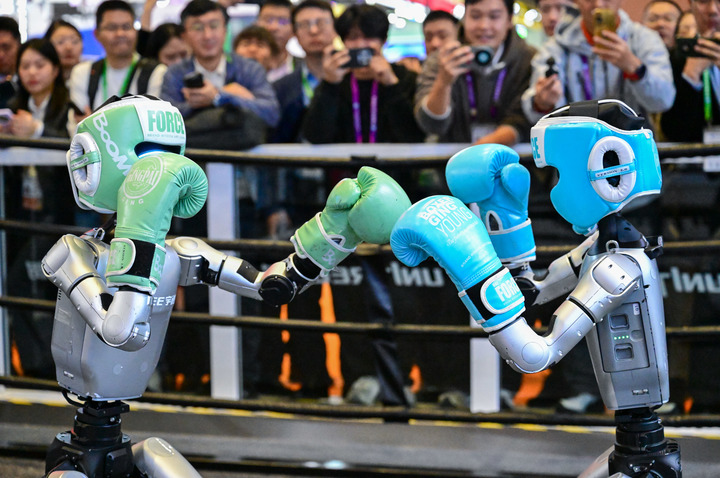
Core Insights - The development of humanoid robots is rapidly advancing, with increasing applications in various sectors, moving from entertainment to practical industrial uses [1][7] - Humanoid robots are seen as a new generation of super terminals, similar to smartphones and electric vehicles, with significant potential to drive economic growth and innovation [9] Group 1: Technological Advancements - Humanoid robots are becoming more versatile, capable of performing complex tasks such as quality inspection and assisting in various environments [4][7] - The technology is evolving to allow humanoid robots to autonomously complete approximately 80% of tasks in unfamiliar settings, marking a significant breakthrough [7][8] - Companies are focusing on enhancing the performance, cost control, and algorithm application of humanoid robots to achieve scalable production capabilities [9] Group 2: Industry Trends - The humanoid robot industry is currently in a phase of exploration, with a consensus forming around the need for collaboration between academia and industry to drive commercialization [8][9] - The upcoming year is anticipated to be critical for the commercial rollout of humanoid robots, particularly in industrial applications, with expectations of significant unit deliveries [9][10] - The industry is expected to witness a major milestone with the delivery of over 10,000 units by a single company, akin to the emergence of the "ten thousand club" in the electric vehicle sector [10]
财经聚焦·第八届进博会丨在进博会上感受人形机器人发展前沿脉动
Xin Hua Wang· 2025-11-10 11:56
Core Insights - The development of humanoid robots is advancing rapidly, with increasing applications in various fields, showcasing their potential to enhance productivity and efficiency in both industrial and service sectors [1][7][9] Group 1: Application and Performance - Humanoid robots are demonstrating diverse capabilities, from performing martial arts to assisting in tasks like fetching water, indicating their versatility in both entertainment and practical applications [2][4] - The AEON industrial humanoid robot can move at a speed of 2.4 meters per second and is designed for high-precision tasks in complex environments, highlighting advancements in industrial automation [4][7] Group 2: Industry Trends and Future Outlook - The humanoid robot sector is seen as a new generation of super terminals, akin to smartphones and electric vehicles, with significant potential for integration across various industries [9] - Industry leaders predict that 2024 will be a pivotal year for the commercialization of humanoid robots, with expectations of significant deliveries, potentially exceeding 10,000 units from a single company [10] - The current state of humanoid robot development is compared to the early years of ChatGPT, indicating a phase of exploration and potential breakthroughs in autonomous task completion [7][8]