WeRide One

Search documents
文远知行─W(00800.HK):重视国内市场、深厚布局海外的L4平台型公司
Ge Long Hui· 2026-02-12 10:27
Core Insights - The company has established a strong competitive moat in technology, licensing, mass production capabilities, and operational capacity, with significant advancements in autonomous driving technology and regulatory approvals [1][2] Group 1: Technology and Innovation - The company has developed a universal technology platform called WeRide One, which integrates AI models, software algorithms, modular hardware design, and cloud architecture, showcasing high versatility and scalability [1] - The recent launch of WeRide GENESIS has significantly enhanced the company's autonomous driving algorithms' ability to handle complex real-world scenarios, improving iteration efficiency and reducing the time and cost of traditional road testing [1] Group 2: Licensing and Regulatory Approvals - The company has achieved a first-mover advantage in licensing, having obtained autonomous driving licenses in eight countries, including China, UAE, Singapore, France, the USA, Saudi Arabia, Belgium, and Switzerland, by 2025 [1] Group 3: Fleet and Operational Capacity - As of January 12, 2026, the company's global Robotaxi fleet has reached 1,023 vehicles, with approximately 200 units deployed in the Middle East, aiming for tens of thousands of Robotaxis by 2030 [1] - The company is actively expanding its presence in the domestic Robotaxi market, with operations in major cities like Beijing, Guangzhou, and Shanghai, and plans to introduce autonomous taxi services in Shanghai by July 2025 [2] Group 4: Global Expansion Strategy - The company has a robust global expansion strategy, with plans to increase its Robotaxi fleet in the Middle East from 200 to 500-1,000 vehicles by 2026, and is set to launch a fully autonomous commercial operation in Abu Dhabi with Uber by November 26, 2025 [2] Group 5: Market Position and Future Prospects - The company employs a platform strategy in its L4 business, leveraging its success in autonomous taxi development to explore other autonomous vehicle solutions, including minibuses and freight vehicles [2] - By August 2025, the company is projected to hold a 36% market share in the global autonomous minibus market, ranking first based on revenue [2] Group 6: Financial Projections - The company forecasts net losses of 1.69 billion yuan, 1.37 billion yuan, and 1.10 billion yuan for the years 2025 to 2027, with corresponding EPS of -1.65 yuan, -1.33 yuan, and -1.07 yuan [3]
文远知行-W(00800):重视国内市场、深厚布局海外的L4平台型公司
NORTHEAST SECURITIES· 2026-02-11 07:31
Investment Rating - The report initiates coverage with a "Buy" rating for the company [3][6]. Core Insights - The company has established a strong competitive moat in L4 autonomous driving through technology, licensing, mass production capabilities, and operational efficiency. It has developed the WeRide One platform, which integrates AI models, software algorithms, modular hardware design, and cloud architecture, enhancing scalability and versatility [1][28]. - The company has achieved significant milestones in licensing, having obtained autonomous driving licenses in eight countries, including China, UAE, Singapore, France, the USA, Saudi Arabia, Belgium, and Switzerland, positioning it as an industry leader [1][36]. - As of January 12, 2026, the company's global Robotaxi fleet reached 1,023 vehicles, with a target of deploying tens of thousands by 2030 [1][41]. Summary by Sections Company Overview - The company, WeRide, was founded in 2017 and is the only technology firm with autonomous driving licenses in eight countries. It focuses on developing safe and reliable autonomous driving technologies across various applications, including Robotaxi, Robobus, Robovan, and Robosweeper [16]. Technology and R&D - The company emphasizes R&D, with a high proportion of its workforce dedicated to it. As of June 30, 2025, 93.7% of its full-time employees are R&D personnel, including top AI scientists and engineers [28]. - The WeRide GENESIS simulation model significantly enhances the efficiency and capability of autonomous driving algorithms, reducing the time and cost of traditional road testing [31][32]. Licensing and Market Presence - The company has a clear advantage in licensing, having secured multiple licenses in various cities, including Shanghai and Abu Dhabi, where it has commenced fully autonomous operations [2][39]. - The company has successfully launched its Robotaxi services in major cities, including Beijing, Guangzhou, and Abu Dhabi, with plans to expand further [2][45]. Financial Projections - The company forecasts net losses of CNY 1.69 billion, CNY 1.37 billion, and CNY 1.10 billion for the years 2025, 2026, and 2027, respectively, with expected EPS of -CNY 1.65, -CNY 1.33, and -CNY 1.07 [3][5]. Market Strategy - The company is focused on both domestic and international markets, with a robust strategy for global expansion, particularly in the Middle East, where it has established a significant presence [2][82]. - The company aims to achieve single-vehicle breakeven in Abu Dhabi, indicating a viable business model for its Robotaxi services [54][86].

Robotaxi驶入“千辆时代”,广东智驾提速规模商业化
2 1 Shi Ji Jing Ji Bao Dao· 2026-01-24 13:17
Core Insights - The autonomous driving industry in China has reached a significant milestone with the Robotaxi fleets of WeRide and Pony.ai surpassing 1,000 vehicles, marking the entry into the "thousand-vehicle era" [1][4][8] Industry Overview - Guangdong province has emerged as a key player in the autonomous driving sector, with 3.618 million new energy vehicles produced in 2022, accounting for 25% of the national total [2] - The province aims to produce 1.1829 million new energy vehicles by 2025, laying a solid foundation for the development of the intelligent driving industry [2] Company Developments - WeRide's Robotaxi has commenced commercial operations in over 10 major cities globally, including Guangzhou, Beijing, and Abu Dhabi, with a focus on fully autonomous operations [2][6] - WeRide reported a revenue of 171 million yuan in Q3 2025, a year-on-year increase of 144.3%, with a gross profit of 56.3 million yuan, reflecting a gross margin of 32.9% [4][5] - The company has achieved a significant reduction in net losses, narrowing by 70.5% year-on-year, indicating a transition towards scale expansion and profitability improvement [4] Technological Advancements - WeRide launched the HPC 3.0 high-performance computing platform, which provides 2,000 TOPS of AI computing power, reducing the cost of its autonomous driving suite by 50% [5] - The WeRide One platform enables efficient mass deployment of autonomous driving across various urban scenarios, enhancing operational capabilities [5][6] Market Expansion - WeRide has accelerated its international expansion, partnering with Uber to establish the largest commercial Robotaxi fleet in Abu Dhabi, with plans to expand to 15 additional international cities over the next five years [6][8] - The company is positioned to benefit from favorable policies, including the recent approval for L4 autonomous vehicles to operate commercially in several cities [7][8] Competitive Landscape - Guangdong's robust industrial foundation, including a well-developed supply chain for chips and electronic components, supports the growth of the autonomous driving sector [7] - The province's supportive government policies and funding initiatives have created a conducive environment for the development of autonomous driving technologies [7][8]
Waymo, Tesla Robotaxi Rival WeRide's Fleet Surpasses 1,000 AVs, Boasts Driverless Operations In 3 Cities: 'Tens Of Thousands…'
Yahoo Finance· 2026-01-18 12:14
Core Insights - WeRide Inc. has expanded its global autonomous cab fleet, reaching a total of 1,023 Robotaxis and achieving driverless operations in Beijing, Guangzhou, and Abu Dhabi, with a vision to scale to tens of thousands of Robotaxis by 2030 [2][3]. Group 1: Fleet Expansion and Operations - WeRide has announced it now operates over 1,000 Robotaxis globally, specifically 1,023 [2]. - The company has achieved fully driverless operations in three major cities: Beijing, Guangzhou, and Abu Dhabi [2]. - WeRide aims to expand its fleet significantly, targeting tens of thousands of Robotaxis by the year 2030 [2]. Group 2: Strategic Partnerships and Integrations - WeRide is integrating its services with WeChat, allowing over a billion users to book Robotaxi rides in Guangzhou and Beijing through the WeRide Go feature [3]. - The company has partnered with Uber Technologies and Dubai's Roads and Transport Authority to launch Robotaxi rides in Dubai via the Uber app [4].
WeRide Attracts Public Investments as Top Funds Back Its Autonomous Mobility Growth
Globenewswire· 2025-12-04 10:14
Core Insights - WeRide has attracted significant investment from ARK Invest, indicating strong confidence in its growth prospects in the autonomous mobility market [1][8] - The autonomous mobility market is projected to become a multi-trillion-dollar industry, with robotaxi fleets potentially reaching tens of millions of vehicles by 2030 [2] - WeRide's strong Q3 2025 performance, with a revenue increase of 144.3% year-on-year, highlights its competitive position in the industry [5] Investment and Market Position - ARK Invest acquired 858,295 WeRide American Depositary Shares (ADSs), reflecting confidence in the company's long-term strategic positioning [1][8] - Bank of America initiated coverage on WeRide with a Buy rating and a price target of US$12 for ADSs, representing a 45.6% upside potential [3] - Other investment firms, including Bank of China International and Citi, have also issued Buy ratings with significant upside potential [3] Shareholder Base - WeRide's shareholders include prominent global institutions such as Bosch, Fidelity, and NVIDIA, as well as strategic players like Grab and Uber [4][8] - The diverse shareholder base underscores the strong institutional confidence in WeRide's business model and growth trajectory [4][10] Regulatory and Operational Achievements - WeRide holds autonomous driving permits in eight countries, showcasing strong regulatory trust in its technology [2][11] - The company has achieved fully driverless Robotaxi operations in multiple cities, including Abu Dhabi, Guangzhou, and Beijing [9][11] Financial Performance - WeRide reported Q3 2025 revenue of US$24.0 million, with its core Robotaxi business generating US$5.0 million, reflecting a 761.0% year-on-year increase [5] - Gross profit increased by 1,123.9%, and gross margin rose to 32.9%, indicating a strong path toward profitability [5][6] Future Growth Plans - WeRide plans to deploy 500-1,000 Robotaxis in the Middle East by the end of 2026 and aims for tens of thousands worldwide by 2030 [9] - The company is committed to maintaining its leading position in the fast-evolving autonomous mobility market through continuous innovation [6][10]


产业链巨变,自动驾驶赛道迎来大逃杀时刻
3 6 Ke· 2025-11-24 10:08
Core Insights - The domestic autonomous driving unicorn, Haomo Zhixing, has announced a work stoppage for all employees starting November 24, indicating significant operational challenges in the industry [1] - The recent IPOs of two major autonomous driving companies, Pony.ai and WeRide, did not lead to a surge in stock prices, with both companies experiencing a decline of about one-third from their peak values [3][8] - The market sentiment towards the Robotaxi sector is shifting from a focus on technology to a more pragmatic approach centered on commercial viability and efficiency, suggesting a potential industry reshuffle [8][9] Company Developments - Pony.ai and WeRide, despite their friendly public interactions during their IPO, are facing similar stock market challenges, indicating a broader skepticism about the outsourcing model in the autonomous driving sector [3][8] - Xpeng Motors announced plans to launch three Robotaxi models by 2026, reflecting ongoing enthusiasm from traditional automakers for Robotaxi services [5][20] - Tesla showcased its Cybercab, a dedicated autonomous vehicle for its Robotaxi fleet, at the China International Import Expo, highlighting its commitment to the Robotaxi market [7] Market Trends - The autonomous driving industry is witnessing a shift from outsourcing to in-house development, with major automakers like Tesla and Xpeng increasingly opting for self-developed solutions [9][10] - The cost advantages of in-house models are becoming apparent, as evidenced by Tesla's significantly lower operational costs compared to competitors like Waymo [16][19] - The transition from modular to end-to-end technology in autonomous driving is reshaping the competitive landscape, with traditional players like Pony.ai and WeRide struggling to adapt [35][45] Financial Performance - Pony.ai has reported cumulative losses of approximately $868 million over four and a half years, with a peak loss of $274 million in 2024, indicating severe financial strain [25][28] - WeRide's financial situation is even more dire, with total losses of about $759.6 million during the same period, reflecting the challenges faced by outsourcing players in the current market [26][30] - Both companies have invested heavily in R&D, with Pony.ai's R&D expenditures reaching $784 million, underscoring the financial burden of keeping pace with rapid technological advancements [28][30] Industry Outlook - The autonomous driving and Robotaxi sectors are entering a phase of intense competition, with established players facing existential threats from both traditional automakers and new entrants like Nvidia [24][46] - The success of companies like Momenta, which have embraced end-to-end solutions, suggests that there may still be opportunities for outsourcing models, albeit in a redefined market context [46]



文远知行双重上市,会成为第一家赚钱的Robotaxi公司吗?
Sou Hu Cai Jing· 2025-11-11 06:46
Core Viewpoint - WeRide, a leading global autonomous driving technology company, has successfully listed on the Hong Kong Stock Exchange, becoming the first Robotaxi stock in Hong Kong, following its NASDAQ listing in October 2024, marking a significant milestone in its global expansion [1][3]. Group 1: IPO and Market Reception - WeRide's public offering was oversubscribed by more than 70 times, with significant interest from long-term funds and hedge funds, indicating strong international capital confidence in the autonomous driving sector [3]. - The management team, including CEO Dr. Han Xu, has signed a voluntary lock-up agreement, committing not to sell shares for three years, reflecting confidence in the company's long-term strategy [3][13]. Group 2: Business Model and Strategic Partnerships - WeRide's business model focuses on a "light asset + revenue sharing" approach to scale its Robotaxi services [14]. - The company has secured significant investments from strategic partners, including Grab and Uber, enhancing its market position and operational capabilities [9][10]. Group 3: Global Expansion and Technological Leadership - WeRide operates in 11 countries and over 30 cities, holding autonomous driving licenses in seven countries, showcasing its competitive edge in the global market [16][17]. - The company has achieved significant milestones in the Middle East, including the launch of a fully autonomous Robotaxi service in Abu Dhabi, marking a new phase in its commercial operations [19]. Group 4: Market Potential and Future Outlook - The global Robotaxi service market is projected to reach $394 billion by the late 2030s, with significant profit margins compared to traditional ride-sharing platforms [22]. - WeRide is positioned to leverage its technological strengths and early market entry to capitalize on the anticipated growth in the Robotaxi sector, potentially becoming the first company to achieve profitability in this space [23].
文远知行双重上市,会成为第一家赚钱的Robotaxi公司吗?
华尔街见闻· 2025-11-11 05:59
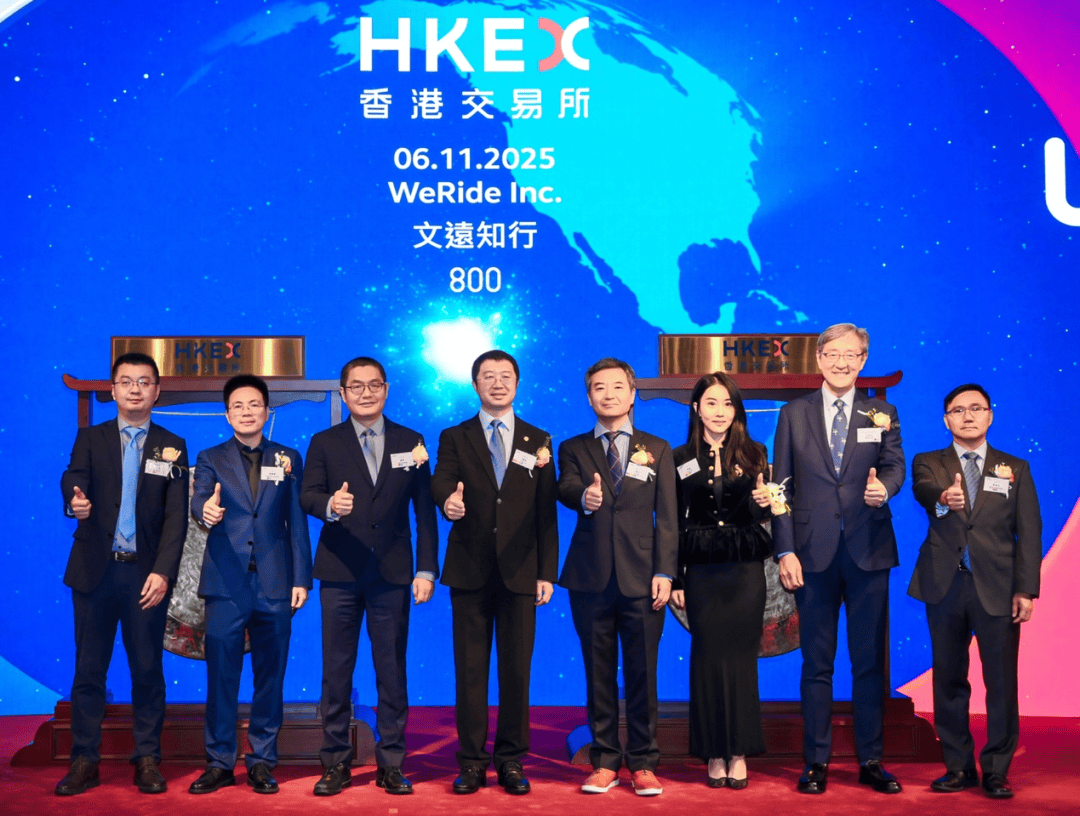
Core Viewpoint - WeRide has achieved a significant milestone with its dual primary listing on both NASDAQ and the Hong Kong Stock Exchange, marking a key step in its global expansion strategy [1] Group 1: Listing and Market Reception - WeRide's public offering was oversubscribed by over 70 times, indicating strong interest from long-term investors such as Temasek and Morgan Stanley Investment Management [3] - The management team, including CEO Han Xu, has shown confidence in the long-term development of the autonomous driving sector by signing a voluntary lock-up agreement to not sell shares for three years [4][16] - The dual listing strategy aims to mitigate risks and create a more secure and liquid trading mechanism for global shareholders [5] Group 2: Business Model and Market Expansion - WeRide operates over 1,500 autonomous vehicles, with more than 700 being Robotaxis, and aims to transition from technology validation to large-scale commercialization [4] - The company employs a "light asset + revenue sharing" model to promote the scaling of its Robotaxi services [18] - WeRide's autonomous driving solutions are currently deployed in over 30 cities across 11 countries, showcasing its strong execution and competitive edge in international markets [19] Group 3: Strategic Partnerships and Investments - WeRide has secured significant investments from key partners, including a multi-million dollar equity investment from Grab aimed at deploying L4 Robotaxis in Southeast Asia [8][12] - The company has also received commitments from Uber for an additional $100 million investment, reinforcing its leadership position in autonomous driving [13] - WeRide's collaborations with Bosch and other top-tier companies further enhance its ecosystem, supporting its global fleet deployment [15] Group 4: Technological Advancements - WeRide is the only company in Singapore operating both Robotaxi and Robobus services, leading the L4 development by at least 1.5 years compared to competitors [11] - The company has developed the WeRide GENESIS simulation platform, which allows for extensive virtual testing of urban traffic environments and extreme scenarios, enhancing its technological barriers [24] - WeRide has accumulated approximately 5.5 million kilometers of real-world autonomous driving data, which supports the development of its simulation platform [22] Group 5: Market Potential and Future Outlook - The global Robotaxi service market is projected to reach $394 billion by the late 2030s, with a total of 6 million operational vehicles [27] - Robotaxi services are expected to significantly improve urban traffic efficiency and reshape city transportation planning, positioning them as a key component of future smart city initiatives [28] - With its IPO, WeRide is well-positioned to leverage its core competencies and first-mover advantages in overseas markets, potentially becoming the first company in the Robotaxi sector to achieve profitability [28]
WeRide 港交所上市,成为全球首家在港股和美股双重上市的 Robotaxi 公司
Globenewswire· 2025-11-06 21:39
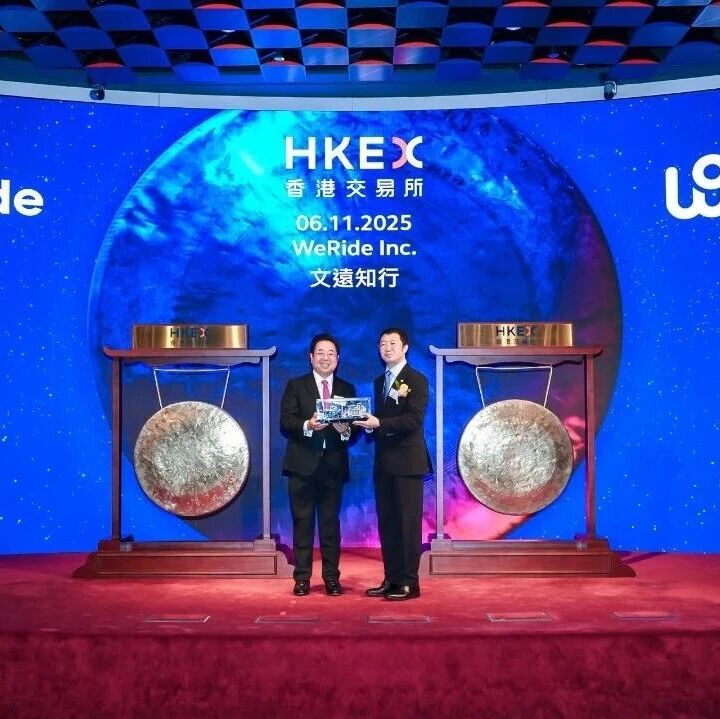
Core Viewpoint - WeRide has officially listed on the Hong Kong Stock Exchange, becoming the first Robotaxi company to be publicly traded in both Hong Kong and the United States, marking a significant milestone in the autonomous driving industry [2][3]. Group 1: Listing Details - WeRide issued a total of 88.25 million shares at a price of HKD 27.1 per share, raising approximately HKD 2.39 billion before the greenshoe option [2]. - The CEO, Tony Han, has signed a three-year lock-up agreement, demonstrating confidence in the company's fundamentals and growth prospects [2]. Group 2: Company Achievements - WeRide is the only company globally to have its products licensed for autonomous driving in seven countries, including China, UAE, Singapore, Saudi Arabia, France, Belgium, and the USA [5]. - The company operates over 1,500 L4 autonomous vehicles, with more than 700 being Robotaxis, and has partnered with Uber to operate the largest commercial Robotaxi fleet outside of China and the USA [5]. Group 3: Technological Advancements - WeRide's autonomous driving technology spans L2 to L4 levels, providing services such as Robotaxi, Robobus, Robosweeper, and Robovan, supported by the self-developed WeRide GENESIS simulation engine [4]. - The company has achieved significant milestones in commercializing L4 autonomous vehicles, with operations in major cities like Guangzhou and Beijing, and maintaining a lead of at least 1.5 years over competitors in key markets [6]. Group 4: Future Plans - WeRide aims to deploy tens of thousands of Robotaxis by 2030, continuing to expand its global commercial operations and technological development [5][6]. - The company is committed to creating a safer, more efficient, and sustainable smart mobility ecosystem through partnerships with global leaders like NVIDIA, Bosch, and Renault-Nissan [5][7].
刚刚,国内L4自动驾驶双雄会师港股,开盘均破发跌超10%
3 6 Ke· 2025-11-06 03:31
Core Viewpoint - The simultaneous listing of China's leading L4 autonomous driving companies, WeRide and Pony.ai, on the Hong Kong Stock Exchange marks a significant milestone for the Chinese autonomous driving industry and reflects global capital market confidence in the commercialization prospects of L4 technology [21][22]. Group 1: IPO Details - WeRide raised a net amount of HKD 22.6 billion (approximately RMB 20.56 billion) in its IPO, with a final issue price set at HKD 27.10 (approximately RMB 24.6) per share, issuing 88.3 million shares [3][4]. - Pony.ai raised a net amount of HKD 64.5 billion (approximately RMB 58.69 billion), with a final issue price of HKD 139 (approximately RMB 126.49) per share, issuing 48.3 million shares [5][6]. - WeRide's IPO was oversubscribed 73.44 times, while Pony.ai's was oversubscribed 15.88 times, indicating varying investor interest levels [8][12]. Group 2: Financial Performance - WeRide's revenue for 2022 was RMB 528 million, with projections of RMB 402 million for 2023 and RMB 361 million for 2024 [10][12]. - Pony.ai's revenue for 2022 was approximately RMB 490 million, with projections of RMB 510 million for 2023 and RMB 530 million for 2024 [12][14]. - Both companies reported significant net losses, with WeRide's net loss for 2024 estimated at RMB 2.51 billion and Pony.ai's at approximately RMB 1.95 billion [9][14]. Group 3: Business Strategies and Technology - WeRide employs a "software-first" autonomous driving technology platform called "WeRide One," focusing on various autonomous vehicle types, including Robotaxi and Robobus [16][20]. - Pony.ai adopts a "hardware-driven" strategy with its "Virtual Driver" technology, primarily focusing on Robotaxi and autonomous trucks [16][20]. - WeRide has obtained autonomous driving licenses in five countries and operates in ten countries, showcasing its global expansion efforts [17][20]. Group 4: Market Position and Future Outlook - The dual listing in Hong Kong aims to broaden financing channels and attract investors from the Asia-Pacific region, enhancing stock liquidity for both companies [7][21]. - Despite current losses, both companies are accelerating their commercialization processes, with WeRide showing a 60.8% year-on-year revenue growth in Q2 2025, driven by its Robotaxi business [12][23]. - The competitive landscape indicates that both companies are well-positioned to capitalize on the growing demand for autonomous driving solutions, reflecting their deep industry engagement and global ambitions [22][23].