Ren Min Ri Bao Hai Wai Ban

Search documents
绘锦绣河山 颂时代华章
Ren Min Ri Bao Hai Wai Ban· 2025-09-30 21:49
Core Viewpoint - The article highlights the significant contributions of contemporary Chinese art in reflecting the nation's development and the people's lives since the founding of New China, emphasizing the patriotic sentiments and innovative spirit of artists in the new era [14]. Group 1: National Theme Art Projects - A selection of new artworks is presented from national thematic art creation projects, showcasing the artistic expressions that celebrate the achievements and changes in society [14]. - The artworks aim to inspire a strong sense of national pride and confidence in the ongoing progress of the country [14]. Group 2: Art Exhibitions - The article mentions the "Dream Building - Our New Era Art Photography Exhibition" and the 14th National Art Exhibition as platforms for showcasing contemporary artistic works [14]. - These exhibitions serve as a medium for artists to convey the spirit of the times and the aspirations of the people [14]. Group 3: Artistic Contributions - Artists are noted for integrating national sentiments into their works, depicting the resolute steps of the country’s advancement and the new achievements in technology [14]. - The artworks reflect the evolving happiness of life in China, resonating with the public's love for their country [14].

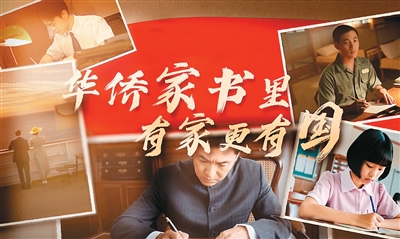
华侨家书里,有家更有国(人民家书)
Ren Min Ri Bao Hai Wai Ban· 2025-09-30 21:49
Core Points - The article highlights the emotional connection and patriotic sentiments expressed in letters written by overseas Chinese to their families after the establishment of the People's Republic of China in 1949, showcasing their pride and commitment to contributing to the nation's development [13][14][15]. Group 1: Historical Context - The letters reflect the joy and hope of overseas Chinese upon learning about significant events in China, such as the peaceful liberation of cities and the establishment of the new government [14][15]. - The correspondence serves as a historical record of the sentiments of overseas Chinese during a transformative period in China's history, emphasizing their desire to return and contribute to the nation's progress [13][19]. Group 2: Personal Stories - The letters include personal anecdotes and reflections from individuals like Liang Baochang, who expressed his excitement about returning to a strong and independent China after years of hardship abroad [15][16]. - Other letters, such as those from students returning from the United States, convey a collective commitment to participate in the socialist construction of the country, highlighting the aspirations of the younger generation [18][19]. Group 3: Contributions to National Development - The letters emphasize the contributions of overseas Chinese to their homeland, with many individuals returning to support various sectors, including education, healthcare, and agriculture [16][21]. - The correspondence illustrates the ongoing support and dedication of overseas Chinese to their communities, as they actively participated in the development of their hometowns and the nation as a whole [21][22].
澳门公布7名委任议员名单
Ren Min Ri Bao Hai Wai Ban· 2025-09-30 21:49
Core Points - The Chief Executive of the Macao Special Administrative Region, Ho Iat Seng, has appointed seven members to the eighth Legislative Assembly, completing the total of 33 members [1] - The election for the eighth Legislative Assembly took place on September 14, with preliminary results announced on September 15, confirming 14 directly elected seats and 12 indirectly elected seats [1] - The final results of the election were published on September 16, with no changes to the elected members [1] Summary by Sections - **Appointment of Members** - Seven members appointed to the eighth Legislative Assembly are: Zhang Yongchun, Li Huanjiang, Gao Jinhui, Zhou Jiajun, Lin Faqin, Huang Jialun, and Gao Ansheng [1] - **Election Process** - The election held on September 14 resulted in 14 directly elected seats and 12 indirectly elected seats [1] - Preliminary voting results were revealed on September 15, and final results were confirmed on September 16 [1]
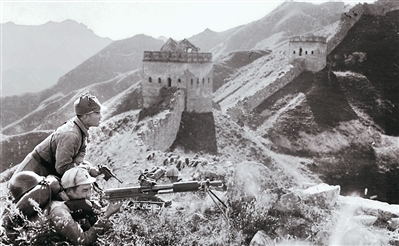
老照片里的长城(众生相)
Ren Min Ri Bao Hai Wai Ban· 2025-09-30 21:49
Core Viewpoint - The article highlights the deep connection between the Yan family and the Great Wall of China, showcasing their extensive exploration and research over 40 years, culminating in the publication of a book titled "Great Wall Morphology Atlas" that aims to document and understand the architectural beauty and historical significance of the Great Wall [4][6]. Group 1: Exploration Journey - The Yan family, consisting of Yan Xinqiang and his son Yan Gongming, has visited the Great Wall over a thousand times since 1984, traveling from Beijing to various provinces including Hebei, Shanxi, and even Ningxia and Gansu [4][5]. - Their first visit to the Great Wall was in 1984 at the ancient northern pass of Gubeikou, where they relied on limited transportation options to reach the Wall [4][5]. - The father-son duo gained recognition in the Great Wall exploration community and made significant contributions to identifying the locations of historical photographs related to the Great Wall [5]. Group 2: Research and Discoveries - The Yan family successfully identified the location of a historical photograph taken by photographer Sha Fei in 1938, which had remained a mystery for years, by analyzing architectural details such as wall materials and window configurations [5][6]. - They developed a methodology termed "morphology," focusing on the physical characteristics of the Great Wall rather than relying on vague geographical names, which allowed them to uncover more secrets of the Wall [6]. - Their research efforts led to the publication of "Great Wall Morphology Atlas," which aims to provide a comprehensive understanding of the Great Wall's defensive architecture and aesthetic beauty [6]. Group 3: Personal Experiences and Legacy - The article recounts personal anecdotes from the Yan family's explorations, including a memorable winter encounter in 1987 when they sought refuge from a snowstorm [6]. - The father-son duo emphasizes the importance of documenting the lesser-known aspects of the Great Wall, aiming to inspire future generations to appreciate its rich history and intricate details [6].
中国创新向世界展现新图景(环球热点)
Ren Min Ri Bao Hai Wai Ban· 2025-09-30 21:49
Group 1 - The World Intellectual Property Organization's 2025 Global Innovation Index Report ranks China 10th globally, marking its first entry into the top ten and a cumulative rise of 25 positions since 2013 [1] - In 2024, China's R&D expenditure exceeded 3.6 trillion yuan, reflecting an 8.3% increase from the previous year, with a stable growth in R&D investment intensity and rapid growth in basic research funding [2] - China has the largest R&D workforce globally, with 26 of the world's top 100 technology innovation clusters, and over 460,000 high-tech enterprises [2] Group 2 - China has maintained its global leadership in several intellectual property metrics, including design patent applications and trademark applications, with significant improvements in technology transfer efficiency [3] - The country ranks 19th in innovation input and 5th in innovation output in 2025, indicating a smoother operation of the "input-transformation-diffusion" innovation loop [3] - The integration of artificial intelligence into core business strategies has enhanced R&D reuse rates and iteration efficiency, supported by national-level computing and data infrastructure [3] Group 3 - China is actively promoting international cooperation in artificial intelligence through initiatives like the "AI+" international cooperation proposal, which aims to enhance practical collaboration and benefit global communities [4] - The country has successfully exported AI technology to various nations, providing applications that improve agricultural monitoring, energy management, and library services [4] - China's global initiatives in innovation support the UN's 2030 Sustainable Development Agenda and aim to create a stable environment for international innovation cooperation [6] Group 4 - China is making significant strides in key core technologies, with advancements in robotics and artificial intelligence that attract global attention [7] - The number of innovative drugs in China's biotechnology sector has surged, with over 1,250 new drugs in the R&D phase, meeting international standards and gaining recognition [7] - The automotive industry exemplifies China's transformation from a manufacturing to an innovation-driven economy, with local innovations being recognized globally [8] Group 5 - Enhancing national innovation capabilities requires breaking down disciplinary boundaries and fostering collaboration between natural sciences, engineering, and social sciences [9] - Recommendations for improving innovation capabilities include strengthening the innovation ecosystem, increasing investment in basic research, and establishing a unified framework for AI technology assessment and governance [9]
见证巴中“铁杆友谊”不断升级
Ren Min Ri Bao Hai Wai Ban· 2025-09-30 21:49
Group 1 - The core sentiment of the article emphasizes the deep and enduring friendship between Pakistan and China, illustrated by the saying "higher than mountains, deeper than seas, sweeter than honey" [1] - The article highlights the significant projects that have positively impacted Pakistan's economy, such as the Karot Hydropower Station, the Orange Line Metro, and the Gwadar New International Airport, which have improved connectivity and created job opportunities [1] - Cultural exchanges are identified as a crucial factor in strengthening Pakistan-China relations, with over 28,000 Pakistani students studying in China, contributing to mutual understanding and cooperation [1] Group 2 - The article references the 75-year history of diplomatic relations between Pakistan and China, underscoring the mutual trust and benefit that has characterized their cooperation in various fields, including security and economy [2] - The metaphor of "a bundle of sticks" is used to illustrate the importance of unity and collaboration between the two nations, reinforcing the idea that together they are stronger [2] - The article concludes with a forward-looking statement about the potential for continued collaboration and the writing of new chapters in Pakistan-China cooperation [2]

走过“八千里路”此情切切
Ren Min Ri Bao Hai Wai Ban· 2025-09-30 21:49
Group 1 - The article highlights the emotional performance of Taiwanese singer Ling Feng at the "Bay Area Rising Moon" 2025 Greater Bay Area Film and Music Gala, where he sang "I Love My Country" [1][4] - Ling Feng, at the age of 80, overcame health challenges, including two strokes, to perform, emphasizing the song's significance as his belief [1][4] - The song "I Love My Country," released in 1983, expresses longing for his homeland and has remained memorable for Ling Feng despite his health issues [1][2] Group 2 - Ling Feng's childhood in Shandong and subsequent move to Taiwan instilled a deep sense of nostalgia and patriotism, which he has passed on to his children [2] - His documentary series "Eight Thousand Miles of Clouds and Moon," aired from 1987 to 2016, documented the changes in mainland China and resonated with many Taiwanese viewers [2][3] - Ling Feng has played a significant role in cultural exchanges between Taiwan and mainland China, establishing a foundation to support artists and promote mutual understanding [3] Group 3 - The article emphasizes the importance of cultural exchange, with Ling Feng describing himself as a "ferryman" for cross-strait cultural interactions [3] - His recent public appearance at the gala marks a significant moment in his career, showcasing his enduring connection to his homeland through music [4][5]
持续提升产品质量供给水平(锐财经)
Ren Min Ri Bao Hai Wai Ban· 2025-09-30 21:49
Core Viewpoint - The National Market Supervision Administration has strengthened the quality safety supervision of industrial products, focusing on key products, industries, issues, and regions to enhance product quality and safety standards. Group 1: Quality Supervision Measures - A total of 164 types of products and over 16,000 batches have undergone national quality supervision checks this year [1] - The administration has issued 4,216 industrial product production licenses to 4,071 enterprises, while denying 216 licenses and revoking 33,000 CCC certificates that did not meet certification requirements [2] - The focus areas include children's products, gas appliances, mobile power supplies, agricultural products, and vehicle-related products [2] Group 2: Charging Device Regulation - The administration has implemented stricter regulations for charging devices, including initial factory inspections and unannounced checks [3] - During the "review" period, nearly 9,000 CCC certification certificates for charging devices and lithium batteries were suspended, with over 600 certificates revoked [3] - Information sharing mechanisms have been established to notify e-commerce platforms about revoked or suspended certifications, ensuring immediate removal of non-compliant products [3][4] Group 3: Technical Support Initiatives - The administration has organized technical support activities, helping 103,000 enterprises improve product quality and increase industrial output by 11.88 billion yuan [6] - In Taizhou, the pass rate for snow boots increased from 60% to 95%, and order volume grew by 30% due to regulatory support [6] - In Xiamen, the energy storage battery industry saw a 15% increase in production efficiency and an 8% reduction in manufacturing costs through technical assistance [6] Group 4: Online Product Quality Assurance - The administration has initiated a pilot program for online product quality verification, focusing on electric bicycles and mobile power supplies [5] - Major e-commerce platforms have committed to enhancing product verification processes and ensuring compliance with quality standards [5][6] - The volume of consumer complaints related to product quality has decreased by 15% year-on-year, indicating improved regulatory effectiveness [6]
与祖国同频共振,把日子过得越来越红火
Ren Min Ri Bao Hai Wai Ban· 2025-09-30 21:49
Core Viewpoint - The celebrations for the 76th anniversary of the People's Republic of China in Hong Kong and Macau are marked by various festive activities and promotional measures, creating a vibrant atmosphere in the streets [2][3]. Group 1: Celebratory Events - Hong Kong will hold a flag-raising ceremony and a National Day reception at Golden Bauhinia Square and the Hong Kong Convention and Exhibition Centre on October 1 [2]. - A cultural gala will take place on the evening of October 2, broadcasted live by multiple television stations [2]. - Macau will also host a grand flag-raising ceremony and a large reception on October 1, along with a "Joyful Run" event to celebrate National Day [2][3]. Group 2: Fireworks and Exhibitions - The 33rd Macau International Fireworks Display Contest will occur on October 1 and 6, while Hong Kong will feature a themed fireworks display titled "Victoria Harbour Fireworks Shine for China" on the evening of October 1, showcasing over 30,000 fireworks [3]. - An exhibition titled "Endless Exploration: China's Aerospace, Aviation, and Navigation" will be held at the Macau Science Museum, highlighting significant achievements in these fields [3][4]. Group 3: Public Engagement and Discounts - Various recreational facilities, science museums, and art exhibitions in Hong Kong will be open for free on October 1, along with half-price movie tickets and free public transport on that day [4]. - In Macau, over 70 international and local fashion brands will offer special promotions, and a "Golden Moon Festival Celebration" will feature exclusive discounts and gifts for shoppers [4]. Group 4: Tourism Expectations - Hong Kong anticipates approximately 1.54 million mainland visitors during the National Day holiday, an increase of about 11% compared to the previous year [5]. - Macau expects an average of 150,000 inbound tourists daily during the holiday, with hotel occupancy rates showing significant demand [5].

留住最美笑容 讲述光阴故事
Ren Min Ri Bao Hai Wai Ban· 2025-09-30 21:49
中国照相馆创立之初,彩色照片还要依靠手工上色。暗房显影、胶片冲洗,一张照片的呈现往往要等上 许久。"当年我还是学徒,每天守在暗房里,等着底片显影。"如今已是特级摄影师的蔡旭回忆说,"那 时学徒要从引导员、洗片人等做起,3年后才能摸相机。" 图①:1956年中国照相馆迁京时的开张门店。 走在北京王府井大街上,拐角处有一家陪伴中国人近90年的老照相馆——中国照相馆。 在这里,师傅们用镜头捕捉最美的笑容,顾客们用相片记录他们光阴里的故事。从胶片到数码,从暗房 洗片到AI修复,中国照相馆不仅见证了摄影技术的变迁,更记录了生活的变化,留住了人们对岁月、 对情感最真挚的眷恋。 一张照片不仅仅是影像,更是一份情感 穿着红色马甲,白衬衫挽到臂肘,摄影师王新微微俯身,眼睛透过镜头望向面前的一家人。 图②:20世纪70年代老照片。 图③:20世纪80年代拍摄婚纱照。 图④:王新师傅在拍摄。 洪铭楷摄 图⑤:王新师傅拍摄的全家福照片。 图⑥:三个家庭的合影。 图⑦:如今的中国照相馆。 本文配图除署名外均由受访者提供 潘旭涛制图 "来,和姥姥、姥爷在一起开心吗?"一两句俏皮话,换来一阵笑声。他趁机按下快门,最自然的笑容就 这样被定格 ...