
Zhong Guo Fa Zhan Wang

Search documents
粤港澳三地青年共燃全运激情,同心谱写湾区奋进新篇章
Zhong Guo Fa Zhan Wang· 2025-11-05 06:57
Group 1 - The event "Youth from Guangdong, Hong Kong, and Macao Welcome the National Games" was held in Guangzhou, gathering nearly 1,000 participants including youth representatives and cultural guests [1] - The event was guided by various political and cultural organizations, showcasing strong support from local educational and cultural institutions [1] Group 2 - The first segment "Cantonese Rhythm and Collective Spirit" integrated elements of the National Games with Cantonese culture, setting a festive tone for the event [2] - Performances included classic Cantonese nursery rhymes and a comedy show, emphasizing themes of unity and support [2] Group 3 - The second segment "United for the National Games" featured a scenario play that embodied the Olympic spirit of "Faster, Higher, Stronger, Together" [3] - Representatives from the three regions shared their experiences and understanding of the National Games spirit, highlighting the unique value of Cantonese as a cultural link [3] Group 4 - The final segment "Bay Area Praises the Motherland" combined blessings for the country with hopes for the National Games, concluding the event with diverse artistic expressions [4] - The event served as a significant practice for deepening youth interaction among the three regions, promoting cultural exchange through sports [4]
融入服务全国统一大市场建设 协同推进四省十市高质量发展
Zhong Guo Fa Zhan Wang· 2025-11-05 03:20
Core Viewpoint - The meeting held in Shangqiu from November 5 to 6, 2023, focused on high-quality development in the interprovincial border areas of Jiangsu, Anhui, Shandong, and Henan, emphasizing regional cooperation and multi-field collaborative development [1] Infrastructure Development - The ten cities in the Su-Wan-Lu-Pu interprovincial border area are prioritizing the construction of a modern comprehensive transportation system, including railways, highways, ports, and multi-modal transport [2] - Significant progress has been made in railway network construction, with major projects like the Day-Lan High-Speed Railway completed and others such as the Xuzhou-Heze Railway and Huai-Su-Beng Railway under development [2] - Major breakthroughs in highway network construction include the completion of several expressways and ongoing projects aimed at resolving interprovincial "broken road" issues, enhancing cross-province commuting efficiency [3] Water and Air Transport - New advancements in water and air transport infrastructure include the near completion of a 300,000-ton crude oil terminal in Lianyungang and the expansion of various airports, indicating a significant upgrade in aviation capacity in the Huaihai Economic Zone [4] Multi-Modal Transport System - The development of a multi-modal transport system is being accelerated, with initiatives like the opening of the "Huai Bei-Xuzhou-Qingdao" freight train and the establishment of a national comprehensive freight hub [5] Industrial Development - The interprovincial border area is positioned as a key region for national strategies, with a population of 65 million and a GDP of 4.6 trillion yuan, showcasing its potential for industrial cluster development [6][7] - Various cities are fostering industry clusters, such as the lithium battery industry in Zaozhuang and advanced manufacturing in Shangqiu, supported by significant investments and the establishment of industrial funds [7][8] Technological Innovation - The construction of a technology innovation community is underway, with initiatives to establish technology transfer centers and promote regional technology exchange [9] Park Development - Substantial progress has been made in the establishment of industrial cooperation parks, with the Xu-Huai Industrial Cooperation Park becoming operational and attracting numerous enterprises from the Yangtze River Delta [10] Governance and Market Environment - Efforts to enhance regional governance include the establishment of a digital collaboration alliance and improved market regulation mechanisms, aiming to create a fair competitive environment [11][12]
共赴东方之约 共享市场机遇——中国为世界构筑高水平“开放之桥”
Zhong Guo Fa Zhan Wang· 2025-11-04 11:04
Core Insights - The 8th China International Import Expo (CIIE) is set to open on November 5, showcasing China's commitment to high-level openness and international cooperation [1][3][4] - The event will feature 4,108 foreign enterprises from 155 countries and regions, with an exhibition area exceeding 430,000 square meters, highlighting China's expanding economic partnerships [3][4] - The expo aims to enhance global economic resilience and cooperation, with a focus on innovation and new technologies [5][8] Economic Impact - CIIE has generated over $500 billion in intended transaction value over its first seven editions, reinforcing China's position as the world's second-largest import market [4][10] - During the "14th Five-Year Plan" period, China's imports of goods and services are expected to exceed $15 trillion, with over 800 million people projected to enter the middle-income bracket in the next decade [4][10] Innovation and Technology - The expo will showcase 461 new products and technologies, including advanced AI solutions and robotics, positioning itself as a global innovation platform [5][9] - Notable companies like Siemens and Rockwell Automation will present cutting-edge technologies, emphasizing the event's role in facilitating technological exchange [5][9] Consumer and Market Development - Shanghai aims to enhance consumer experience through various measures, including support for international card payments and a one-stop service platform for foreign exhibitors [7][10] - The event will also launch the "2025 China International Boutique Consumption Month," promoting a blend of international and local products [10][11] Global Cooperation - The expo emphasizes a "shared and co-created" approach, aiming to foster a global community and mutual benefits among nations [8][12] - It will feature six major exhibition areas and focus on emerging consumption trends, such as the "silver economy" and "weight management," to drive industry integration [8][9] Conclusion - CIIE serves as a vital link between China and the global market, showcasing China's commitment to openness and cooperation while providing a platform for international businesses to connect with Chinese consumers [10][12]


成都锦江区构建“1+6+2”未来产业发展新格局
Zhong Guo Fa Zhan Wang· 2025-11-04 11:01
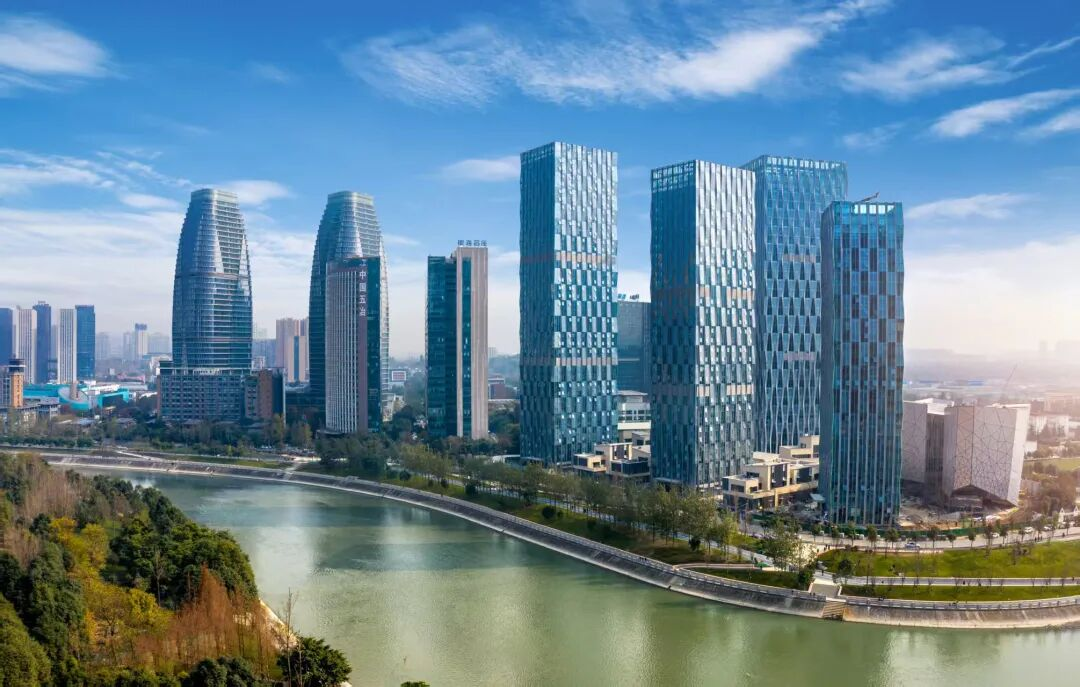
Core Viewpoint - The Jinjiang District is actively promoting the development of future industries, focusing on six key sectors, to drive high-quality regional growth and innovation [1][3][4]. Group 1: Future Industry Development - The "14th Five-Year Plan" emphasizes the acceleration of future industry layout, with Jinjiang District aligning its strategies to build a modern industrial system [3][4]. - Jinjiang District aims to establish a "100 billion-level future industry pilot zone" and attract over 1,000 high-growth enterprises by 2027 [9][12]. Group 2: Key Sectors - The six key sectors identified for development include: - **Intelligent 6G**: Focus on semantic communication and integrated sensing, with plans to incubate over 10 key projects [8][15]. - **Brain-Computer Interface**: Establishing a research system to attract leading enterprises and produce globally influential innovations [11][15]. - **Quantum Technology**: Promoting the integration of technology breakthroughs with industry applications [12][15]. - **Embodied Intelligence**: Launching the world's first dual-legged robot for specific applications, enhancing the "Jinjiang-made" brand [12][15]. - **Low-altitude Economy**: Developing a drone theme park and promoting various application scenarios [12][15]. - **Intelligent Connected Vehicles**: Completing initial smart road upgrades to support integrated applications [12][15]. Group 3: Strategic Initiatives - Jinjiang District is implementing innovative administrative models to enhance collaboration across departments and support future industry development [12][15]. - The district is diversifying investment paths, including "fund + direct investment" models, to provide comprehensive financial support for innovative enterprises [12][15]. - High-standard infrastructure is being developed, including specialized buildings for 6G and embodied intelligence, to support industry growth [12][15]. Group 4: Policy Support - A comprehensive policy toolkit has been introduced to support future industry development, including incentives for startups, original research, talent acquisition, and enterprise growth [17]. - The district is committed to fostering a new ecosystem for future industries by integrating key resources such as talent and research [17].
前三季度成绩为顺利完成全年目标任务打下坚实基础
Zhong Guo Fa Zhan Wang· 2025-11-04 07:10
Group 1: Economic Performance - In the first three quarters, China's GDP grew by 5.2% year-on-year, maintaining a leading position among major global economies [5][6] - The manufacturing sector showed strong performance, with the added value of equipment manufacturing and high-tech manufacturing increasing by 9.7% and 9.6% respectively [5] - The profit of industrial enterprises above designated size increased by 3.2% year-on-year, with a significant monthly increase of 21.6% in September [5] Group 2: Investment and Infrastructure - The National Development and Reform Commission (NDRC) allocated 500 billion yuan for local government debt to support effective investment, including 200 billion yuan in special bonds for specific provincial projects [3] - A new management method for engineering construction project bidding agencies was introduced to enhance regulation and transparency [3] - The Airbus A320 assembly line in Tianjin has officially started production, with full operations expected by early 2026, doubling the assembly capacity [4] Group 3: Policy and Planning - The NDRC is drafting the "14th Five-Year Plan" outline, aiming to translate strategic goals into actionable projects and measures [9][10] - The NDRC is focusing on establishing a carbon management system to achieve carbon peak and carbon neutrality goals by 2030 [10][11] - The NDRC is actively collecting public opinions on the "14th Five-Year Plan" to ensure it reflects the needs and aspirations of various stakeholders [9] Group 4: Energy Supply and Winter Preparedness - The NDRC is ensuring energy supply for the upcoming winter, with coal reserves at 220 million tons, sufficient for over 35 days [12] - Underground gas storage facilities have completed their annual injection tasks, ensuring readiness for winter [12] - The overall energy supply and demand balance for the winter heating season is expected to be stable, ensuring affordable energy for the public [12]
荆门“十四五”产业突围:链动转型 赋能未来 书写高质量发展新篇章
Zhong Guo Fa Zhan Wang· 2025-11-04 05:58
Core Insights - Hubei's Jingmen City has achieved significant industrial transformation during the 14th Five-Year Plan, with high-tech manufacturing's share increasing from 5.45% to 16% and the number of billion-dollar enterprises doubling from 2 to 6 in three years [1] - The city has adopted a "chain thinking" approach to enhance industrial resilience and promote collaborative development across various sectors [2] Group 1: Industrial Development Strategies - Jingmen has shifted from a traditional "single-point investment" model to a "cluster rise" strategy, establishing a modern industrial system with four pillar industries: green chemicals, new energy materials, automotive and intelligent equipment manufacturing, and agricultural products processing [2] - The automotive sector has seen a significant investment of 6 billion yuan from Great Wall Motors, leading to a production value increase from 18.24 billion yuan in 2022 to 52.46 billion yuan in 2024 [2] - The new energy materials sector has also thrived, with a total output value of 85.21 billion yuan in 2024, marking a 28.6% year-on-year growth [3] Group 2: Traditional and Emerging Industries - Traditional industries are being revitalized through innovation, such as the transformation of Jingmen Petrochemical's production capabilities, which is expected to increase specialty oil production capacity from 790,000 tons to 1,367,000 tons by 2026 [3] - Emerging industries are scaling up, with the electronic information sector projected to reach a production value of 50.77 billion yuan in 2024, representing a 43.9% share of the city's industrial output [6] Group 3: Digital Transformation - Digital technology is being integrated into the manufacturing process, with 153 small and medium-sized enterprises undergoing digital transformation, achieving a digital coverage rate of 78% in large-scale industries [7] - The establishment of an industrial internet platform aims to enhance connectivity across the supply chain, facilitating real-time monitoring and optimization of operations [8] Group 4: Future Industry Development - Jingmen is positioning itself as a leader in the low-altitude economy, with a dedicated industrial park and plans to develop a full ecosystem for low-altitude vehicles, targeting a revenue of over 2 billion yuan by 2030 [6] - The city aims to strengthen its competitive edge in advanced manufacturing and renewable energy sectors, with a focus on high-quality industrial development [9]
仙桃入选全国县域创新十大案例
Zhong Guo Fa Zhan Wang· 2025-11-04 05:58
"筑巢引凤,近悦远来"是仙桃营商环境建设的生动写照。近年来,仙桃以刀刃向内的改革勇气与久久为 功的服务韧劲,持续打造"服务最优、成本最低、效率最高"的一流营商环境,用环境之"优"托举发展 之"进"。在项目服务中,当地推行"一企一策""一企一人"定制化机制,组建工作专班提前介入、主动服 务,将碰头会开到工地现场,手把手协助企业办理手续,高效破解征地拆迁、配套建设等难题。华润电 力二期项目的推进便是典型例证,在专班"保姆式"服务下,项目快速完成18项前期专项批复及各类证照 办理,700多名工人加紧施工,预计投运后年产值将突破60亿元、税收达5亿元。 营商环境的持续优化,换来了经济发展的昂扬曲线。"十四五"期间,仙桃GDP先后站稳900亿、跨越 1000亿、突破1100亿大关;连续9年实现争先进位,2025年以全国第52位的成绩强势跻身赛迪百强县市 榜单;更连续5年位居全省首位,连续3年成为全省唯一千亿县,发展能级、速度、质效与后劲实现全方 位提升,"聚力建支点、奋进两千亿、勇当排头兵"的动能愈发澎湃。 此次入选全国县域创新十大案例,既是荣誉更是动力。仙桃将以此次入选为契机,持续深化营商环境改 革创新,释放"仙办好 ...
从“五组数据”“四张网”看四川“十四五”基础设施发展“成绩单”
Zhong Guo Fa Zhan Wang· 2025-11-04 05:53
Core Insights - The Sichuan provincial government has made significant achievements in infrastructure development during the "14th Five-Year Plan" period, focusing on both traditional and new infrastructure projects [5][6] Infrastructure Achievements - The total length of the comprehensive transportation network in Sichuan has reached 443,000 kilometers, ranking first in the country, equivalent to the distance from Earth to the Moon [5] - The installed capacity of hydropower in Sichuan is about to exceed 100 million kilowatts, also ranking first nationally, with 30% of the country's hydropower coming from Sichuan [5] - Sichuan has established 10 major national scientific and technological infrastructure projects, ranking third in the country [5] - The province has built 248,000 5G base stations, ranking fifth nationally, achieving comprehensive coverage of gigabit networks in industrial parks [5][6] Investment and Economic Support - Infrastructure investment accounts for over 30% of fixed asset investment in Sichuan, providing strong support for stable economic operation and high-quality development [6] Four Networks of Infrastructure - **Three-dimensional Transportation Network**: Significant breakthroughs in strategic corridors, with the Sichuan-Tibet Railway under construction and the Chengdu to Huangshengguan section of the Chengqing Railway completed [7] - **Modern Water Conservancy Network**: The construction of a modern water network is accelerating, with urban water supply coverage achieved and rural self-supply rate increasing from 82% to 92% [8] - **Green Energy Network**: The completion of the Baihetan Hydropower Station contributes to Sichuan's position as a leader in clean energy, with wind and solar power installations expected to reach 32 million kilowatts by the end of the year [8] - **Smart Digital Network**: The development of computing power and internet infrastructure is advancing, with the Chengdu Supercomputing Center ranking among the top globally [9] Future Plans - Sichuan aims to build a modern infrastructure system that is advanced, applicable, systematic, efficient, safe, and green, supporting high-quality economic and social development in the "15th Five-Year Plan" [9]
广东完善居家社区机构“三业态”服务功能
Zhong Guo Fa Zhan Wang· 2025-11-03 15:32
Core Insights - Guangdong Province is facing an aging population challenge, with 18.99 million residents aged 60 and above, representing an aging rate of 14.86%, and is expected to enter a moderately aging society by 2030 [1] - The province has implemented a series of policies since the 14th Five-Year Plan to enhance its elderly care service system, focusing on a three-pronged service model of home, community, and institutional care [1] Group 1 - Guangdong Province has established over 20,000 community elderly care service facilities, achieving a coverage rate of 100% in urban areas and 67% in rural areas [1] - There are currently 1,630 operational elderly care institutions in the province, providing a total of 210,000 beds [1] - All 122 administrative counties (cities, districts) have achieved full coverage of county-level institutions for the care of severely disabled individuals [1] Group 2 - The province has completed approximately 93,000 home modifications for elderly individuals, exceeding the planned target for the 14th Five-Year Plan, and has set up over 20,000 family elderly care beds [2] - There are 3,705 "Elderly Dining Halls" across the province, serving over 53.3 million elderly individuals [2] - Cross-border elderly care cooperation with the Greater Bay Area is advancing, with 24 recognized service institutions in Hong Kong accommodating 709 eligible elderly residents [2]
锚定四中全会部署,“十五五”资本市场谱写高质量发展新篇
Zhong Guo Fa Zhan Wang· 2025-11-03 12:09
Core Viewpoint - The Fourth Plenary Session of the 20th Central Committee of the Communist Party of China has set the direction for the capital market's reform and development over the next five years, emphasizing the importance of deepening reforms, expanding openness, and risk prevention in supporting China's modernization efforts [1][2]. Group 1: Capital Market Development - The capital market has transitioned from scale expansion to quality and efficiency improvement during the "14th Five-Year Plan" period, with significant reforms such as the comprehensive implementation of the registration system and the establishment of a multi-tiered market system [1][2]. - The capital market has become a crucial platform for nurturing "hard technology" enterprises and supporting industrial upgrades, facilitating the rapid development of innovative companies with core technologies [1][2]. Group 2: Strategic Focus for "15th Five-Year Plan" - The capital market is tasked with supporting high-quality economic development and contributing to the construction of a financial powerhouse, with a focus on risk prevention, strong regulation, and promoting high-quality development [2][3]. - There will be an emphasis on supporting technological innovation through reforms in the Sci-Tech Innovation Board and the Growth Enterprise Market, optimizing listing review standards to evaluate companies based on R&D investment and technological breakthroughs [2][3]. Group 3: Financing and Investment Strategies - A comprehensive financing support system covering the entire lifecycle of enterprises will be established, along with improvements to the merger and acquisition system to support quality enterprises in achieving scale through industrial integration [3]. - The cultivation of long-term, patient, and strategic capital will be prioritized, with measures such as tax incentives to attract long-term funds into the market, thereby reducing market volatility [3]. Group 4: International Integration and Risk Management - The capital market will pursue a policy of institutional openness, enhancing connections with international capital markets and aligning domestic financial regulations with international standards [3][4]. - Risk prevention will be a key focus, with measures to address risks in critical areas such as real estate and local government debt, alongside strict enforcement against financial fraud and market manipulation [4].