Zhong Guo Neng Yuan Wang

Search documents
航空业绩拐点显现,地缘提升航运景气 | 投研报告
Zhong Guo Neng Yuan Wang· 2026-02-03 09:51
Industry Dynamics Tracking - The overall container shipping rates have decreased, with the SCFI composite index dropping by 9.7% to 1317 points. Specific routes such as Shanghai-Europe and Shanghai-Mediterranean saw declines of 11.1% and 12.0% respectively [3][4] - The refined oil tanker rates have increased, with the BCTI index rising by 4.6% to 890 points. The MR rates in the Pacific and Atlantic regions showed mixed results, with a notable increase of 12.7% in the Atlantic [8] - The logistics sector is witnessing a resilient demand, with the e-commerce express delivery industry expected to benefit from a recovery in the economy and a reduction in costs, leading to improved profitability for companies like SF Express and JD Logistics [12] Air Transport - The civil aviation sector is showing signs of recovery, with major airlines like China Southern and Hainan Airlines expected to turn profitable in 2025, while Eastern and Air China are projected to reduce their losses significantly [3] - The State Council has issued a plan to accelerate the cultivation of new growth points in service consumption, focusing on transportation services among others, which is expected to support the aviation sector [3] Shipping and Port Operations - The dry bulk shipping market is experiencing a "strong off-season" due to a combination of high demand in the Atlantic region and tight capacity, with the BDI index rising by 12.0% to 1949 points [8] - The geopolitical situation in the Middle East is tense, with the U.S. increasing military presence and Iran conducting live-fire exercises, which could impact oil shipping routes [6] - China's port cargo throughput has decreased, with a reported decline of 1.70% in total cargo and a 4.35% drop in container throughput [9] Road and Rail Transport - National logistics operations are running smoothly, with rail freight volumes reported at 7441.9 million tons, a decrease of 3.35% [10] - Shenzhen International reported a 3.3% increase in toll revenue for December 2025, indicating stable revenue growth in the road transport sector [11] Investment Opportunities - In the express delivery sector, companies like YTO Express and ZTO Express are expected to benefit from market share growth and operational improvements, while SF Express is noted for its cost control and shareholder returns [12] - The oil transportation market is anticipated to improve due to OPEC+ production increases and potential interest rate cuts, suggesting a favorable outlook for companies like China Merchants Energy and COSCO Shipping Energy [13] - The dry bulk shipping market is expected to continue its recovery, driven by environmental regulations and increased demand for commodities, with companies like China Merchants Energy and Haitong Development highlighted as potential beneficiaries [13]




寒潮退潮,美气价格高位回落;欧洲&国内气价相对平稳 | 投研报告
Zhong Guo Neng Yuan Wang· 2026-02-03 09:51
Core Viewpoint - The report indicates a significant decline in U.S. natural gas prices due to the retreat of cold weather, while European and domestic gas prices remain relatively stable [1] Price Tracking - U.S. natural gas prices decreased by 74.4% week-on-week, while European prices increased by 0.9% and domestic prices rose by 1.3% as of January 30, 2026 [1] - The current prices are reported as follows: U.S. HH at 1.8 yuan/m³, European TTF at 3.5 yuan/m³, East Asia JKM at 2.9 yuan/m³, domestic LNG ex-factory price at 2.7 yuan/m³, and domestic LNG CIF price at 3 yuan/m³ [1] Supply and Demand Analysis - U.S. natural gas storage decreased by 2,420 billion cubic feet week-on-week to 28,230 billion cubic feet, with a year-on-year increase of 9.8% [2] - European natural gas consumption from January to October 2025 was 3,495 billion cubic meters, up 4.6% year-on-year [2] - European gas supply decreased by 6.9% week-on-week to 128,422 GWh, with a notable drop in inventory consumption [2] - Domestic natural gas apparent consumption for 2025 was 4,332 billion cubic meters, reflecting a year-on-year increase of 2.3% [2] Pricing Mechanism Progress - As of 2026, 68% of cities in China have implemented residential pricing adjustments, with an average increase of 0.22 yuan/m³ [3] - The price difference for leading companies remains at 0.53-0.54 yuan/m³, indicating potential for further price adjustments [3] Investment Recommendations - The report suggests that supply is easing and cost optimization for city gas companies is ongoing, with a focus on companies like Xin'ao Energy, China Resources Gas, and Kunlun Energy [4] - Companies with quality long-term contracts and flexible scheduling, such as Jiufeng Energy and Xin'ao Shares, are highlighted for their cost advantages [4] - The importance of energy independence is emphasized, recommending companies with gas production capabilities like Shouhua Gas [4]
全国性储能容量电价出台,独立储能盈利模式重构 | 投研报告
Zhong Guo Neng Yuan Wang· 2026-02-03 09:51
Core Insights - The report highlights the strategic significance of the national-level establishment of a new capacity pricing mechanism for independent energy storage in the power grid [1][2] Policy Content - The capacity pricing calculation rule is based on local coal power capacity pricing standards (165-330 CNY/kW*year), adjusted according to peak capacity and considering factors like market development and system demand [2] - A list management system will be implemented to accelerate the construction of energy storage projects, with specific project lists developed by provincial energy authorities [2] - The compensation for new energy storage capacity will be included in local system operating costs, with end-users bearing the costs [2] Impact - Multiple provinces are expected to introduce corresponding energy storage capacity pricing policies, leading to a surge in demand [3] - Based on Gansu's standards, the subsidy standard for 4-hour energy storage is estimated at 193 CNY/kW, with an internal rate of return (IRR) of 8-9%, meeting funding requirements [3] - The anticipated new energy storage capacity is projected to reach 183 GWh by 2025, with a further 50% growth to 275 GWh in 2026 [3] - A decline in lithium carbonate prices may lead to the resumption of previously paused projects if prices stabilize between 120,000-150,000 CNY/ton [3] Investment Recommendations - The introduction of a national energy storage capacity pricing mechanism and the decline in lithium carbonate prices are expected to restore energy storage demand, favoring companies like CATL and Sungrow, which are currently undervalued [3] - Other recommended companies include EVE Energy and Haibo Innovation, with positive outlooks for Canadian Solar, Zhongxin Innovation, and BYD, while also monitoring Penghui Energy [3] - The midstream materials sector is also favored, with recommendations for separators, electrolytes, anodes, cathodes, aluminum foil, and copper foil [3]


煤矿里的“快递小哥”
Zhong Guo Neng Yuan Wang· 2026-02-03 09:51
国家能源集团神东煤炭藏着硬核"智能快递员"!不送包裹专运煤,每小时运力堪比几十辆重卡,7800米超长地下线路独立畅行,传感器全程护航零失误,地 下数百米实现煤炭智能高效配送~解锁能源保供的科技密码,这波煤矿智能运输太秀了! 0:00 / 2:12 ...
煤小宝送粥啦!井下腊八的限定温暖
Zhong Guo Neng Yuan Wang· 2026-02-03 09:51
Core Viewpoint - The article highlights the efforts of the National Energy Group's Shen Dong Coal in providing warmth and support to miners during the winter season through the distribution of hot porridge, symbolizing care and appreciation for their hard work [2] Group 1 - The initiative involves delivering hot porridge from the surface cafeteria to miners underground, emphasizing the importance of warmth and sustenance during the cold winter months [2] - The act of delivering porridge is framed as a gesture of gratitude towards the miners who ensure energy supply during harsh conditions, reinforcing the company's commitment to its workforce [2] - The message conveys a sense of community and support, wishing health and happiness to all involved in the energy supply chain during the festive season [2]
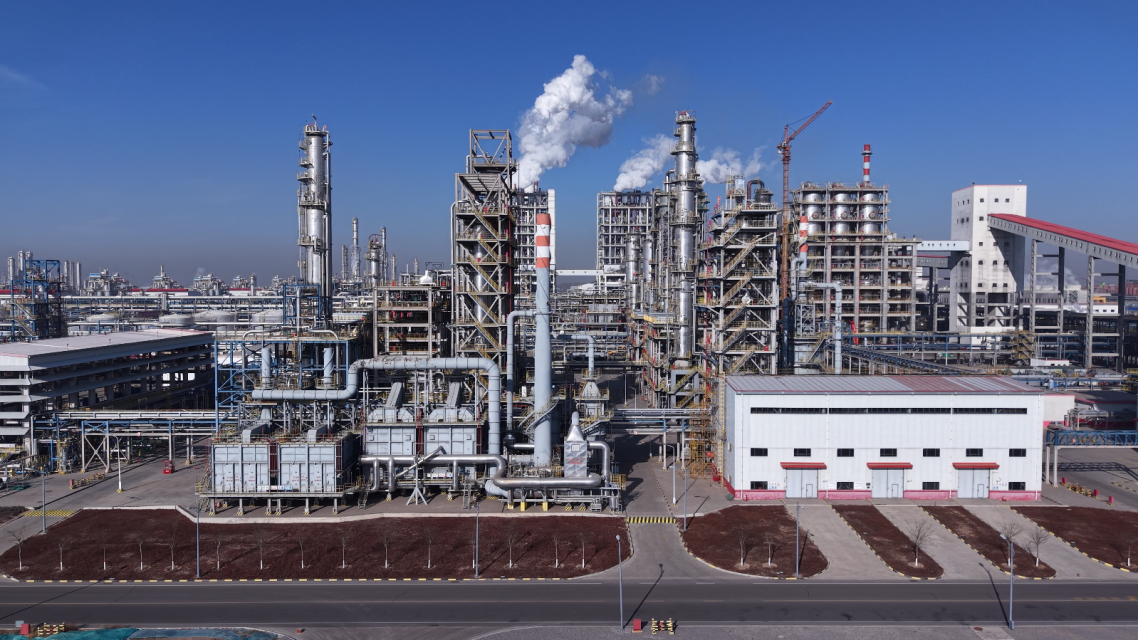
国产首套!陕鼓高压CO₂压缩机助力我国最大CCS项目成功试车
Zhong Guo Neng Yuan Wang· 2026-02-03 09:51
Core Viewpoint - The successful trial operation of the CO₂ compressor by Shaanxi Blower (Group) Co., Ltd. marks a significant technological breakthrough in China's carbon capture and storage (CCS) sector, providing a replicable low-carbon transformation path for the coal chemical industry [1][3][5] Group 1: Technological Breakthrough - The CO₂ compressor, rated at 15MPa, is the first high-pressure centrifugal CO₂ compressor applied in CCS facilities in China, overcoming challenges related to high-pressure and high-density medium compression [1][3] - The compressor's compression capability is likened to compressing the gas volume of 140 bottles into a single mineral water bottle, highlighting its advanced engineering [1] Group 2: Industry Collaboration and Development - Shaanxi Blower has established a collaborative innovation center with universities and enterprises to address major issues in carbon capture, utilization, and storage, aiming to create a one-stop platform for solutions [5] - The company has developed a product line of CO₂ compressors with flow rates between 30-100 million tons/year and exhaust pressures below 15MPa, contributing to various national demonstration projects [5] Group 3: Impact on Industry and Environment - The CCS demonstration project at Shaanxi Coal Yulin Chemical is a landmark initiative under China's dual carbon goals, promoting the high-end, diversified, and low-carbon development of the coal chemical industry [5][6] - The successful trial operation lays the foundation for the project's large-scale operation and provides a reliable pathway for the green transformation of industries such as coal chemical, electricity, and steel, effectively reducing decarbonization costs [6]


微光暖井下 平安赴新岁
Zhong Guo Neng Yuan Wang· 2026-02-03 09:51
0:00 / 2:34 百米井下,是矿工们的坚守;万家灯火,是家人的期盼。矿工家属走进井下,解锁矿工的工作日常,黑黝黝的脸庞刻着奔波,满含期待的目光皆是牵挂。智 能化工作面全程护航,一个拥抱抚平所有惦念,一句平安便是岁末最美的圆满。平安归家,就是家人最暖的期盼,愿每一位矿工,都能岁岁平安,如约回 家! ...
矿区焕新颜 彩灯迎新春
Zhong Guo Neng Yuan Wang· 2026-02-03 09:51
0:00 / 1:02 新春将至,年味愈浓。国家能源集团神东煤炭矿区已换上"新春盛装",光影交织、流光溢彩,浓浓的新春氛围扑面而来。灯火映团圆,祥和满矿区,以温馨 年味迎接新年到来,愿新岁皆安,岁岁欢喜! ...
三九寒天戈壁高空“绣花” 带电守护电网生命线
Zhong Guo Neng Yuan Wang· 2026-02-03 09:51
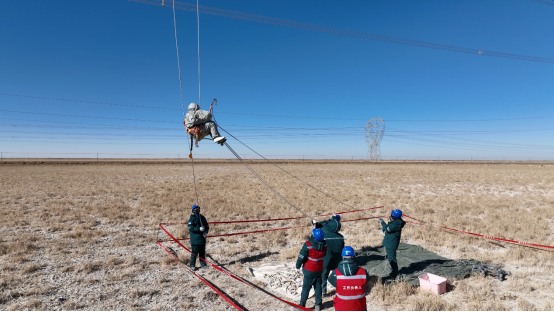
"进入等电位!"工作负责人姚斌果断下令。电位转移棒精准挂上导线,瞬间,张杨融入强电场。一场与 严寒、高空、超高压的无声较量正式开始。他的任务是在这"银色巨龙"上,为受损的导线进行一场精密 的"高空绣花"。 750千伏柴鱼Ⅱ线是连接青海、甘肃、新疆的能源命脉,更是新疆与西北主网联网的关键通道。近日, 国网青海超高压公司在迎峰度冬排查中发现,受冬季强风影响,该线路三处导线与间隔棒连接处因剧烈 摩擦出现损伤,威胁电网安全。 当前正值冬季用电高峰,"带电作业"成为最优选择。 格尔木运维分部带电作业班临危受命,于1月8日 至10日,在一年中最冷的三九天,开展高原极寒三连战。 前两日作业已告捷。1月10日,气温又下降了几度。他们将决战第三场。 上午11时,团队抵达现场。大家快速熟练地布置作业区,拉好围栏、铺好防潮帆布、将绝缘绳蛇形排 开、各种工器具有序排列。 中午12时许,气温仍在零下10摄氏度。张杨穿戴好装备,细致检查每一个环节。屏蔽服内无法穿厚衣, 升空前,他跳跃摆臂充分热身。 1月10日,青海柴达木盆地,海拔2800米,寒气裹挟。在纵贯高原戈壁荒漠的750千伏柴鱼Ⅱ线上,一个 身影悬停在三十多米的高空。带电作业人员 ...
历年之最 2025年宁夏新增新能源并网近1600万千瓦
Zhong Guo Neng Yuan Wang· 2026-02-03 09:51
Core Viewpoint - Ningxia's renewable energy sector is experiencing rapid growth, with significant increases in installed capacity and energy consumption efficiency, positioning it as a leader in the northwest region of China [1][3][5]. Group 1: Renewable Energy Development - By 2025, Ningxia's newly added renewable energy grid capacity reached 15.99 million kilowatts, the highest in history, surpassing the total of the first four years of the 14th Five-Year Plan [1]. - As of December 31, 2025, Ningxia's total installed renewable energy capacity reached 57.32 million kilowatts, with a grid-connected capacity share of 65.5% [3]. - The renewable energy utilization rate in Ningxia reached 94.55%, maintaining the top position in the northwest region for seven consecutive years [1]. Group 2: Energy Storage Development - In 2025, Ningxia added 2.91 million kilowatts of energy storage capacity, with a total energy storage capacity of 7.63 million kilowatts, ranking among the top in the State Grid Corporation [3]. - The energy storage capacity also reached 1.59 million kilowatt-hours, indicating a significant increase in energy storage technology within the region [3]. Group 3: Challenges and Innovations - Despite the rapid growth, Ningxia faces challenges in renewable energy consumption due to the expanding installed capacity [5]. - The State Grid Ningxia Electric Power Company has implemented innovative measures to ensure stable growth in renewable energy consumption, achieving a record of three consecutive days where daily renewable energy generation exceeded regional power consumption [5]. - The company has focused on technological innovations in power forecasting and grid scheduling, enhancing collaboration with market participants to support renewable energy integration [5]. Group 4: Future Outlook - In 2026, as the start of the 15th Five-Year Plan, Ningxia's renewable energy installed capacity is expected to reach 72 million kilowatts, with a projected share of 70% [5]. - The State Grid Ningxia Electric Power Company aims to enhance its service capabilities and build a safer, more efficient, and smarter green grid system to improve renewable energy consumption capacity and operational quality [5].