Zhong Guo Neng Yuan Wang

Search documents
了不起的中国风电,登上顶尖期刊《科学》杂志
Zhong Guo Neng Yuan Wang· 2026-02-03 09:52
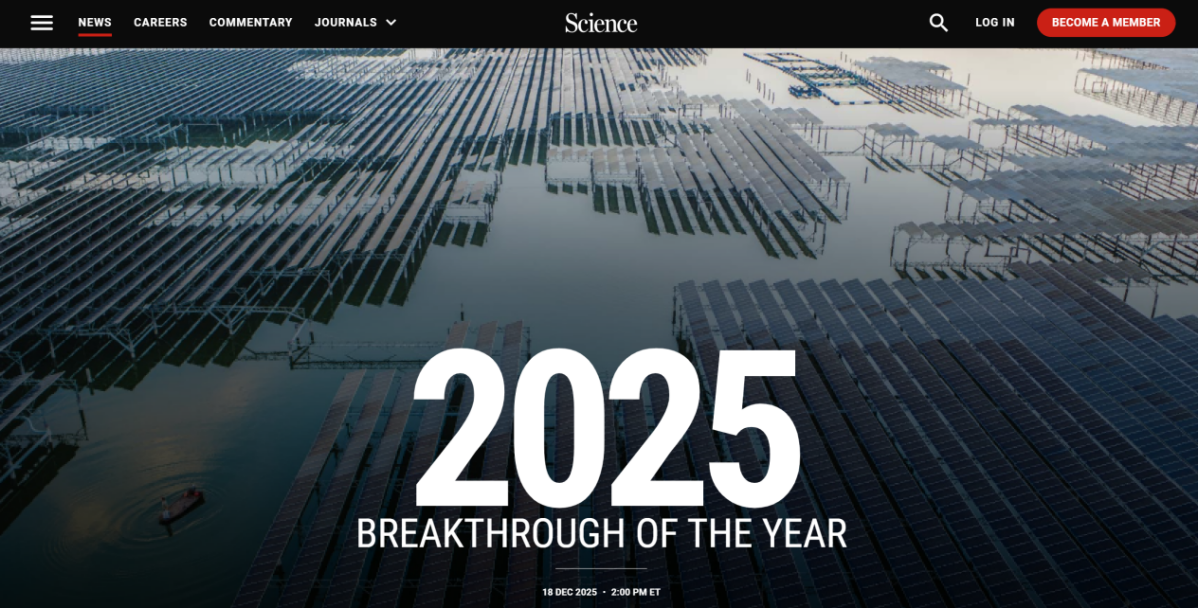
Group 1 - The core viewpoint of the articles highlights that "China-led renewable energy development" has been recognized as the top scientific breakthrough for 2025 by the journal Science, with a similar acknowledgment from Nature [1][5] - The development of China's wind power industry is prominently featured, showcasing its significant achievements and contributions to the global energy landscape [1][3] - The total installed capacity of solar and wind power in China is now sufficient to meet the entire electricity demand of the United States, indicating the scale of China's renewable energy capabilities [3] Group 2 - The SANY Shaoshan blade factory, recognized as the world's first "lighthouse factory" in the wind power sector, is highlighted in a special report by Science, illustrating the advanced manufacturing processes in China's wind energy production [3] - China produces two-thirds of the world's wind turbines, with a growing number of international orders, reflecting the increasing global demand for Chinese wind energy technology [3] - The articles emphasize China's journey from having minimal wind power capabilities to becoming the world's leader in installed wind power capacity for 15 consecutive years, establishing a complete wind power industry chain [5]

《草原上崛起的“风能巨人”》——内蒙古能源集团:以风电巨擘之力 崛起草原风电新标杆
Zhong Guo Neng Yuan Wang· 2026-02-03 09:52
0:00 / 2:30 内蒙古能源集团150万千瓦风电项目,拥有150台全国陆上最大10兆瓦风机,轮毂高达125米,叶片展开足有113米——每一台都在风中舞动着6个标准足球场 大小的"圆规"。它不仅为区域电网注入强劲绿色动能,为服务国家能源安全、推动跨区域清洁能源合作,贡献坚实的"蒙能力量"。 内蒙古能源集团"150万千瓦风电项目"从开工到发电只用了不到一年时间,每年带来约43亿度清洁电力。它通过智慧大脑实现远程操控,像指挥一支绿色舰 队。这些风机不仅每年能省下135万吨煤,减少405万吨碳排放,用草原的风点亮更多灯火,守护我们的能源未来。 ...
擘画能源新图景 绿色转型践使命——中国石油“十四五”高质量发展纪实
Zhong Guo Neng Yuan Wang· 2026-02-03 09:52
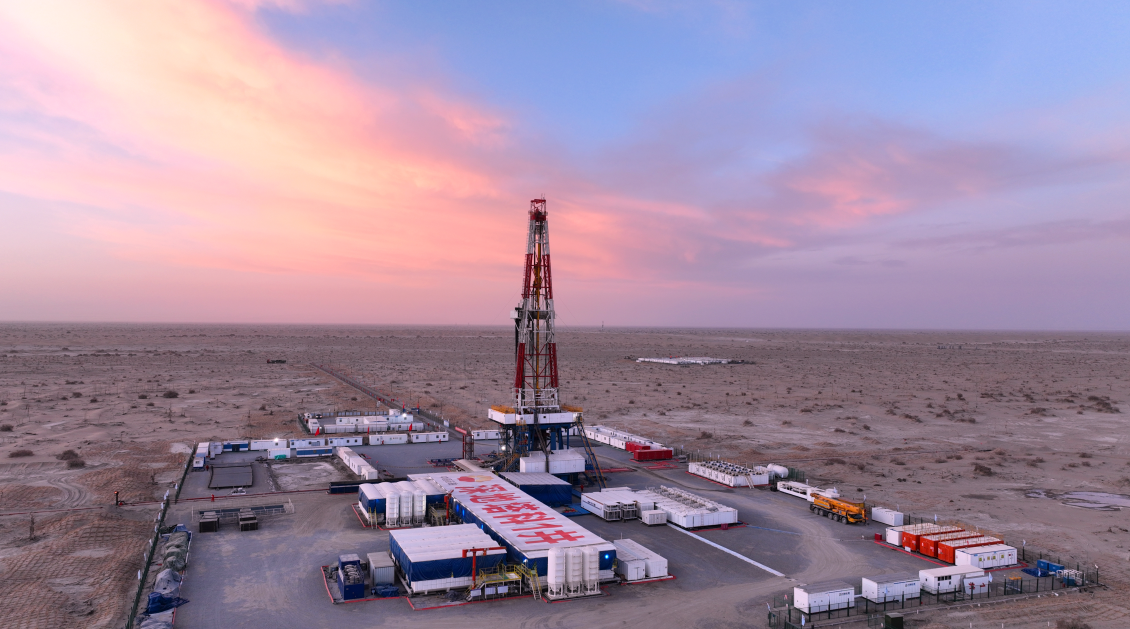
Core Viewpoint - China National Petroleum Corporation (CNPC) has achieved significant milestones in ensuring national energy security and high-quality development during the 14th Five-Year Plan period, demonstrating its commitment to innovation and practical actions in the energy sector [1][2]. Group 1: Energy Security and Production - CNPC has positioned itself as a key player in safeguarding national energy security, focusing on enhancing oil and gas supply capabilities [2][3]. - By the end of 2025, CNPC's domestic crude oil production is expected to account for approximately 50% of the national total, with the Changqing Oilfield maintaining an annual output of over 60 million tons for six consecutive years [2][6]. - The company has made significant progress in unconventional oil and gas resource development, achieving a domestic shale oil production of over 7 million tons by the end of last year [5][6]. Group 2: Technological Innovation - CNPC has prioritized technological innovation as a strategic focus, establishing itself as a leader in original technology development in oil and gas exploration and production [7][10]. - The successful drilling of the Deep Taka 1 well, reaching a depth of 10,910 meters, marks a significant achievement in deep drilling technology, setting a new record in Asia [7][9]. - The company has developed key technologies in seismic exploration and refining, enhancing its competitive edge in the global market [9][10]. Group 3: Green Transition and Low-Carbon Development - CNPC is accelerating its green transition, implementing a three-step strategy of "clean substitution, strategic replacement, and green transformation" to build a low-carbon ecosystem [11][14]. - The company has initiated several carbon capture, utilization, and storage (CCUS) projects, with plans for significant increases in carbon injection volumes by 2025 [13][14]. - CNPC has achieved substantial energy savings and water conservation, exceeding its planned targets during the 14th Five-Year Plan period [14]. Group 4: Future Outlook - Looking ahead, CNPC aims to fully integrate new development concepts and contribute to national energy security and modernization efforts, positioning itself as a world-class comprehensive energy and chemical company [14].

国内电铜库存开始去化,价格或走强 | 投研报告
Zhong Guo Neng Yuan Wang· 2026-02-03 09:51
以下为研究报告摘要: 投资要点 贵金属:短期贵金属巨震,但是年内仍将降息支撑贵金属价格 价格方面,周内伦敦黄金价格为4981.85美元/盎司,环比1月23日+35.60美元/盎司,涨幅为0.72%。周内 伦敦白银价格为103.19美元/盎司,环比1月23日+4.19美元/盎司,涨幅为4.23%。 数据方面,美国11月耐用品订单环比初值5.3%,前值-2.1%,预期3.8%。美国美联储FOMC利率决策(下 限)3.5%,前值3.5%,预期3.5%。美国美联储FOMC利率决策(上限)3.75%,前值3.75%,预期3.75%。美 国1月24日当周首次申请失业救济人数20.9万人,前值20万人,预期20.5万人。美国12月PPI同比3%,前 值3%,预期2.8%。 本周美联储议息会议维持联邦基金利率目标区间维持在3.5%至3.75%之间。在本次决议中,美联储的两 位理事斯蒂芬·米兰和克里斯托弗·沃勒投出了反对票,他们倾向于降息25个基点。周五,特朗普总统宣 布将提名凯文·沃什担任下届美联储主席。沃什在美联储任职期间一贯对通胀保持警惕,经常支持更高 利率。但去年他转而呼应特朗普观点,认为利率可以大幅降低。 华鑫证券近 ...





发电侧容量电价机制完善,容量机制扩围提比,调节性资产价值重塑 | 投研报告
Zhong Guo Neng Yuan Wang· 2026-02-03 09:51
Core Viewpoint - The report highlights the recent announcement by the National Development and Reform Commission and the National Energy Administration regarding the improvement of the capacity price mechanism for power generation, which includes an increase in the coal power capacity price recovery ratio and the inclusion of new energy storage, gas power, and pumped storage in the capacity compensation framework [1][2]. Group 1: Investment Highlights - The coal power capacity recovery ratio is set to increase from approximately 30% in 2024-2025 to no less than 50%, enhancing revenue certainty for coal power operators [1]. - The average capacity fee revenue for coal power is expected to rise from 0.027 yuan/kWh to 0.040 yuan/kWh by 2026 due to the increased recovery ratio [1]. - Local governments are encouraged to adjust the lower limit of medium- and long-term trading prices for coal power and relax the signing ratio requirements for medium- and long-term contracts, promoting flexible pricing mechanisms [1]. Group 2: Capacity Compensation Mechanism Expansion - A new capacity price mechanism for independent new energy storage on the grid side has been established, with compensation standards based on local coal power, calculated according to peak capacity [2]. - The pumped storage capacity price mechanism has been improved, categorizing old and new plants for cost recovery, with new plants participating in market revenue sharing [2]. - A capacity price mechanism for gas power generation may be established by provincial pricing authorities, determining capacity prices based on a fixed cost recovery ratio [2]. Group 3: Reliable Capacity Compensation Mechanism - A reliable capacity definition has been established, referring to the capacity that can provide stable power during peak demand periods [3]. - A reliable capacity compensation mechanism will be developed to replace the original capacity price, focusing on compensating for unrecovered fixed costs of marginal units while considering supply-demand relationships and user affordability [3]. - The compensation scope will include coal power, gas power, and independent new energy storage, gradually expanding to pumped storage, ensuring unified evaluation of capacity contribution value [3]. Group 4: Investment Recommendations - Coal power, gas power, and pumped storage operators are expected to benefit from the increased fixed cost recovery ratio and market revenue sharing mechanisms [3]. - The implementation of capacity prices will significantly improve the revenue model for independent energy storage stations, favoring quality storage asset operations [3]. - Regulatory resources will support the construction of new power systems and facilitate the absorption of renewable energy [3]. Recommended companies include Huaneng International, Huadian International, and Longyuan Power [3].
关注淡季补库涨价品种粘胶、染料,化工景气度有望持续上行 | 投研报告
Zhong Guo Neng Yuan Wang· 2026-02-03 09:51
Group 1 - The basic chemical industry index closed at 4943.97 points, up 0.65% from last Friday, and outperformed the CSI 300 index by 0.01% this week [1][2] - Among the sub-industries, 13 out of 25 sub-industries rose, while 12 fell. The leading sectors included textile chemical products, other chemical raw materials, compound fertilizers, coal chemicals, and phosphate fertilizers, with weekly increases of 13.89%, 6.58%, 4.94%, 4.72%, and 4.56% respectively [1][2] - Conversely, modified plastics, synthetic resins, and other plastic products experienced declines, with weekly decreases of -6.44%, -4.36%, and -3.67% respectively [1][2] Group 2 - The price of disperse dyes has increased, with a rise of 1000 CNY/ton to 18000 CNY/ton on January 22, 2026, marking the first price adjustment in nearly a quarter [3] - The price of active dyes also rose from 22000 CNY/ton to 23000 CNY/ton on January 29, 2026, driven by a significant increase in the price of upstream key intermediates [3] - The price of these intermediates surged from 25000 CNY/ton to 38000 CNY/ton, an increase of over 50%, impacting downstream dye production costs [3] Group 3 - The viscose fiber industry is experiencing high operating rates and low inventory levels, creating a basis for price increases. The operating rate has remained above 90% since September 2025, with total industry inventory at 10000 tons as of January 30, 2026, down 24.53% week-on-week [4] - The inventory days are estimated at about 9 days, indicating a relatively low stock level and favorable conditions for price hikes [4] Group 4 - The PVC industry is advancing towards mercury-free production, with a focus on developing mercury-free catalysts. The industry has achieved a target of halving mercury usage per unit product by 2020 compared to 2010 [5] - The transition from "low mercury" to "mercury-free" production is expected to phase out outdated capacities, thereby restoring the supply-demand balance in the industry [5]
原材料价格上涨对白电龙头影响有限,白电1-2月排产增速环比改善 | 投研报告
Zhong Guo Neng Yuan Wang· 2026-02-03 09:51
Core Viewpoint - Recent increases in copper and other raw material prices have raised concerns about the profitability of leading white goods companies, but historical analysis shows that the negative impact of rising raw material costs on gross margins has gradually diminished, suggesting that these companies can maintain profitability through structural adjustments and cost savings [1][2]. Raw Material Price Impact - Since 2008, the home appliance industry has experienced three significant raw material price increase cycles, with the impact on gross margins decreasing over time: during 2009-2011, the maximum quarterly gross margin decline for leading white goods companies was 5-7 percentage points; in 2016-2017, it was around 5 percentage points; and from 2020-2022, it was about 2 percentage points [2]. - In January 2026, the average monthly closing prices for copper and aluminum on the SHFE showed year-on-year increases of 36.7% and 20.9%, respectively, which are lower than the increases seen from 2020-2022, indicating that the current raw material cost increase may have a lesser impact on white goods companies [2]. Production and Demand Trends - In February, the total production of white goods in China reached 23.79 million units, a year-on-year decrease of 22.1%, with a cumulative decline of 5.0% for January-February [3]. - The production of air conditioners, refrigerators, and washing machines showed varying degrees of decline compared to the previous year, with air conditioners down 31.6%, refrigerators down 17.0%, and washing machines down 3.2% [3]. - The impact of the Spring Festival timing has put pressure on production, but cumulative growth rates have shown slight improvement, and demand is expected to stabilize due to the effects of national subsidy policies [3]. Retail Market Performance - In 2025, the retail scale of China's home appliance market was 893.1 billion yuan, a year-on-year decline of 4.3%, with specific categories like air conditioners and refrigerators experiencing declines of 0.4% and 11.5%, respectively [4]. - Small home appliances performed relatively well, with an overall retail growth of 3.8%, indicating resilience in this segment despite the overall market downturn [4]. Investment Recommendations - The report recommends investing in leading white goods companies such as Midea Group, Haier Smart Home, TCL Technology, and Hisense Home Appliances, as well as in black goods and small appliances [4].
主机厂原材料涨价后续影响分析 | 投研报告
Zhong Guo Neng Yuan Wang· 2026-02-03 09:51
Core Viewpoint - The automotive industry has experienced significant price increases in raw materials since 2020, primarily driven by two waves of price hikes, with lithium carbonate prices seeing a dramatic rise from 40,000 yuan/ton in Q3 2020 to 550,000 yuan/ton by Q4 2022 [1] Group 1: Price Trends - The first wave of price increases occurred from Q3 2020 to Q1 2022, with lithium carbonate leading the surge [1] - The second wave began in Q4 2025, affecting battery materials like lithium carbonate and hexafluorophosphate lithium, as well as copper and aluminum [1] - By January 28, 2026, prices for battery-grade lithium carbonate and hexafluorophosphate lithium had increased by 187% and 180% respectively compared to their lowest values in 2025 [1] Group 2: Impact on Stakeholders - The rise in raw material prices has been shared among upstream suppliers, manufacturers, and consumers, with component suppliers' gross margins declining from 19.3% in Q3 2020 to 15.3% in Q4 2021 [2] - Automakers also faced margin pressure, with passenger vehicle gross margins dropping from 12.7% in Q4 2020 to 8.8% in Q4 2021 [2] - Consumers have seen price increases for electric vehicles, with companies like BYD raising prices due to rising raw material costs and subsidy reductions [2] Group 3: Future Outlook - Automakers are likely to transfer some of the raw material cost increases to consumers through moderate price hikes or model upgrades, but overall profitability may be affected [3] - The penetration rate of new energy vehicles (NEVs) is expected to reach 54% by 2025, contrasting with lower rates of 6%, 15%, and 28% from 2020 to 2022 [3] - The automotive market in 2026 may face challenges due to subsidy reductions, but high-end manufacturers are expected to maintain profitability [4] Group 4: Investment Recommendations - The automotive industry is rated positively, with a focus on companies that are well-positioned in high-end markets or export strategies, such as JAC Motors, Geely, BYD, Great Wall Motors, Seres, and BAIC Blue Valley [4]
完善容量电价政策发布 碳减排明确成为发展主线 | 投研报告
Zhong Guo Neng Yuan Wang· 2026-02-03 09:51
Group 1: Energy Sector Overview - As of the end of 2025, the cumulative installed power generation capacity in the country reached 3.89 billion kilowatts, with a total of 434 GW of new energy capacity added throughout the year, exceeding market expectations. This includes 119 GW from wind power and 315 GW from solar power. Notably, thermal power added 95 GW [1][4]. - In December alone, solar power saw an addition of 41 GW and wind power added 38 GW, significantly higher than the monthly figures from June to November, likely due to the grid connection of large wind and solar projects at year-end [1][4]. Group 2: Storage and Pricing Mechanisms - The National Development and Reform Commission and the National Energy Administration issued a notice to improve the capacity pricing mechanism for power generation, which is expected to accelerate the introduction of independent storage capacity pricing policies at the provincial level. This is anticipated to expand the domestic independent storage market, benefiting storage integrators, upstream component manufacturers, and battery companies [2][3]. - The notice is seen as a significant step in establishing a unified framework for pricing and profitability for gas-fired power plants, which may enhance their construction enthusiasm and profitability [3]. Group 3: Investment Recommendations - Companies to watch in the storage sector include integrators such as Haibo Shichuang, Sunshine Power, and Canadian Solar, as well as battery manufacturers like CATL, EVE Energy, and others [2]. - In the power generation sector, companies with significant natural gas generation capacity such as Huadian International and Guangdong Power Development are recommended, along with those offering a combination of dividend yield and growth potential like Gui Guan Power [4][5]. Group 4: Carbon Market Developments - The "14th Five-Year Plan" emphasizes carbon reduction as a key development line, with stricter carbon emission controls expected. The carbon market is projected to expand, with additional industries being incorporated by 2027 [5][6]. - New methodologies for CCER (China Certified Emission Reduction) are being introduced, expanding the market's support to various sectors, including oil and gas recovery and green hydrogen, which may create new investment opportunities [6].
应对金价波动,以复盘对比2013年“抢金潮”为参考 | 投研报告
Zhong Guo Neng Yuan Wang· 2026-02-03 09:51
Core Viewpoint - The report highlights the similarities between the current gold price fluctuations and the "gold rush" of 2013, emphasizing the potential for concentrated consumer demand during initial price declines and the impact of sustained price weakness on investment-driven consumption [1][3]. Group 1: Historical Context and Market Response - In April 2013, a significant drop in gold prices led to a surge in consumer purchases, with retail sales growth for gold and jewelry reaching 72.16% compared to the previous month [2][5]. - Major companies like Luk Fook Group and Chow Tai Fook reported record revenues and profits during this period, driven by the increased demand for gold products [6][7]. - The subsequent decline in gold prices from 2013 to 2015 resulted in a depletion of consumer demand, with retail sales growth slowing to 0.04% in 2014 [7]. Group 2: Current Market Dynamics - The current gold price fluctuations are characterized by a long-term investment behavior focused on asset allocation and wealth preservation, rather than short-term speculative buying [3][8]. - Companies with strong brand narratives and product differentiation, such as Lao Pu Gold and Chow Sang Sang, have shown resilience and growth despite high gold prices, indicating a shift in consumer preferences towards quality and cultural identity [9][10]. - The demand for gold jewelry remains robust, with significant year-on-year growth reported by major retailers, suggesting that short-term price volatility may not significantly impact consumer purchasing behavior [10][11]. Group 3: Investment Recommendations - The report suggests focusing on companies that can leverage the current market dynamics, such as Cai Bai Co., which combines investment gold bars and jewelry, and Luk Fook Group, which has competitive advantages in pricing and operations [11]. - Additionally, attention is drawn to leading companies with strong product design and differentiation capabilities, including Lao Pu Gold, Chao Hong Ji, and Chow Tai Fook, as they are expected to perform well in the evolving market landscape [11].