
Zhong Guo Jing Ying Bao

Search documents
宝新能源实控人叶华能因股权代持及违规减持被罚没3754万元
Zhong Guo Jing Ying Bao· 2026-01-08 06:57
Core Viewpoint - The actual controller of Baoneng New Energy, Ye Huaneng, has been penalized by the Guangdong Securities Regulatory Bureau for failing to disclose shareholding arrangements and for illegal share reductions, resulting in a total fine and confiscation of 37.54 million yuan [1] Group 1: Regulatory Actions - Ye Huaneng received a warning and was fined 3.75429 million yuan by the Guangdong Securities Regulatory Bureau [1] - The penalty includes a fine of 2 million yuan for the failure to disclose shareholding arrangements and an additional fine of 1 million yuan for illegal share reductions [1] - The illegal share reduction involved a 1.1% reduction of shares, amounting to 141 million yuan [1] Group 2: Shareholding Details - In January 2017, Ye Huaneng decided to transfer 111 million shares (5.11% of total shares) held by Baoliwa Group to Ningyuanxi for holding on behalf [1] - The failure to disclose this holding arrangement to the listed company is the basis for the regulatory action taken against Ye Huaneng [1]



小米新一代SU7明年4月上市,雷军称辅助驾驶全满配
Zhong Guo Jing Ying Bao· 2026-01-08 06:20
根据汽车之家数据,过去一年,小米SU7 成为最畅销的20万元以上的轿车。对于小米SU7的表现,雷军 表示:"小米SU7,因为好看、好开和智能体验,上市后就成为了汽车行业无可争议的大爆品,一直火 爆到今天。"中经记者 陈茂利 张硕 北京报道 【新一代SU7预计4月份上市 小米雷军:辅助驾驶全部满配】日前,小米集团创始人、CEO雷军在社交 媒体上透露,小米汽车新一代SU7,豪华高性能纯电轿车预计于2026年4月份上市,将全系标配激光雷 达,辅助驾驶全部满配。 《中国经营报》记者获悉,2024年3月28日,小米汽车发布了SU7。当年4月份开始交付至今,1年9个月 时间,小米SU7 交付超过了 36万辆车,月均超过1.7万辆。 ...

可以科技推出桌面AI伙伴DeskMate 加速布局人机共生市场
Zhong Guo Jing Ying Bao· 2026-01-08 06:02
Core Insights - The article highlights the launch of DeskMate, a new desktop AI partner by Can Technology, marking a strategic shift from modular robotics to "human-machine symbiosis" [1] - DeskMate aims to address efficiency, focus, and stress relief in modern office environments through its unique "bionic role AI system," enabling natural interaction by understanding user emotions and context [1] - Can Technology has completed a new financing round exceeding 100 million yuan, led by Wuzhong Jin控 and Yuanhe Taihu Bay, with participation from notable investors and plans for further fundraising in February 2026 [1] Company Developments - Can Technology has been innovating in the robotics field for ten years and is now focusing on creating AI tools that grow emotionally and cognitively with users [1] - The company plans to use the funds from the upcoming financing round to enhance next-generation technology development and expand its global market presence [1] Product Features - DeskMate is designed to provide a natural interaction experience that goes beyond traditional command-based interfaces, aiming to improve user engagement and productivity [1] - The product's ability to perceive and respond to user emotions and contexts represents a significant advancement in AI technology for office applications [1]
国铁集团总资产破10万亿元 负债率连降6次
Zhong Guo Jing Ying Bao· 2026-01-08 05:39
Core Viewpoint - China National Railway Group (referred to as "the Company") is effectively managing operational risks and optimizing debt financing, leading to a steady decline in its debt-to-asset ratio, which is projected to reach 62.5% by the end of 2025 [3][4]. Financial Performance - By the end of 2025, the Company's total assets are expected to exceed 10 trillion yuan, reaching 10.2 trillion yuan, with a debt-to-asset ratio that has decreased for the sixth consecutive time [3][4]. - The Company's debt-to-asset ratio is projected to decline from 65.56% in 2023 to 63.52% in 2024, and further to 62.84% in the first half of 2025, returning to levels not seen in 13 years [3][4]. - During the 14th Five-Year Plan period, the Company's total assets increased by 17.1%, from 8.7 trillion yuan to 10.2 trillion yuan, while transportation revenue surged by 56.8%, from 650 billion yuan to 1.02 trillion yuan [4][5]. Revenue Growth - The growth in both passenger and freight volumes is expected to contribute to a significant increase in revenue, with total transportation revenue projected to exceed 1 trillion yuan for the first time, reaching 1.02 trillion yuan, a year-on-year increase of 3.1% [5][6]. - By 2025, the Company anticipates completing freight shipments of 4.066 billion tons, a 2.1% increase year-on-year, and passenger shipments of 4.255 billion people, a 4.2% increase year-on-year [4][5]. Cost Management - The Company has implemented strict cost control measures, optimizing expenditure structures and reducing non-productive spending, resulting in a budget savings of 19.7 billion yuan for the year [5][6]. - The Company has improved maintenance efficiency, achieving a 90% self-repair rate for level three maintenance and a 60% self-repair rate for level four maintenance [5][6]. Investment Strategy - The Company is focusing its investments on enhancing network efficiency, with a strategic emphasis on projects like the Western Land-Sea New Corridor and China-Europe Railway Express facilities, which are expected to yield quicker economic benefits [6][7]. - Future plans include optimizing capital layout and enhancing the quality of joint venture railway companies, while also managing overseas investment risks [6][7]. Future Outlook - The Company aims to continue improving operational management and advancing integrated operations, with a focus on transforming non-transportation sectors and nurturing enterprises with clear market positioning [6][7]. - The ongoing market-oriented reforms in railway passenger and freight transport are expected to sustain growth in both volume and quality, leading to further improvements in the Company's financial performance and a potential reduction in the debt-to-asset ratio [6][7].
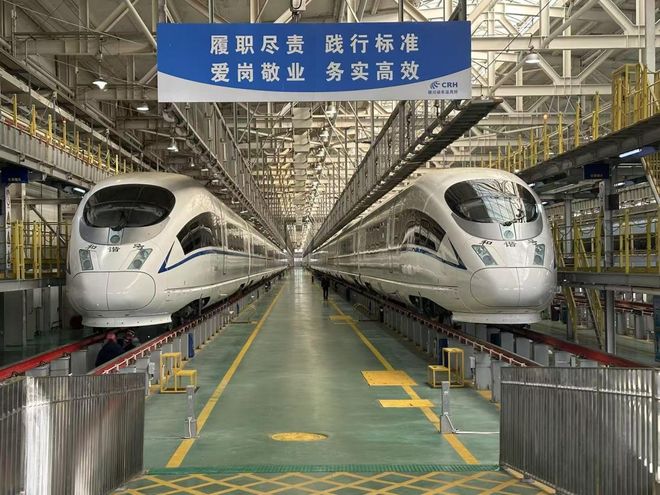
新一代SU7预计4月份上市 小米雷军:辅助驾驶全部满配
Zhong Guo Jing Ying Bao· 2026-01-08 05:39
日前,小米集团创始人、CEO雷军在社交媒体上透露,小米汽车新一代SU7,豪华高性能纯电轿车预计 于2026年4月份上市,将全系标配激光雷达,辅助驾驶全部满配。 《中国经营报》记者获悉,2024年3月28日,小米汽车发布了SU7。当年4月份开始交付至今,1年9个月 时间,小米SU7 交付超过了 36万辆车,月均超过1.7万辆。 根据汽车之家数据,过去一年,小米SU7 成为最畅销的20万元以上的轿车。对于小米SU7的表现,雷军 表示:"小米SU7,因为好看、好开和智能体验,上市后就成为了汽车行业无可争议的大爆品,一直火 爆到今天。" (文章来源:中国经营报) ...
特朗普:禁止囤房!
Zhong Guo Jing Ying Bao· 2026-01-08 05:39
Core Viewpoint - The U.S. President Trump announced immediate measures to prohibit large institutional investors from purchasing more single-family homes to address the issue of housing affordability, particularly for young Americans [1]. Group 1: Policy Announcement - Trump plans to request Congress to legislate this policy aimed at preventing large investors from acquiring single-family homes [1]. - The discussion on housing and affordability will take place at the upcoming Davos Forum [1]. Group 2: Market Impact - Following Trump's announcement, shares of residential investment firms, including Blackstone Inc., experienced a decline of approximately 10% [1]. - Blackstone is identified as the largest private equity apartment owner in the U.S., with over 230,000 apartments in its portfolio [1]. Group 3: Industry Dynamics - Over the past decade, private equity firms, real estate investment trusts, and other large institutional investors have accumulated significant portfolios of single-family rental homes, which some believe have reduced housing supply for potential homeowners and increased home prices [1]. - A warning from Redfin's chief economist suggests that banning large investors may only lead to medium or small investors replacing them, rather than facilitating home purchases by individual buyers [2].

四部门:动力和储能电池产业存在盲目建设、低价竞争现象 行业可持续发展能力被削弱
Zhong Guo Jing Ying Bao· 2026-01-08 05:16
Core Viewpoint - The meeting held by multiple government agencies emphasizes the need to regulate the rapidly developing power and energy storage battery industry in China to address irrational competition and ensure sustainable development [2] Group 1: Industry Development - China's power and energy storage battery industry has developed rapidly and gained a competitive advantage globally [2] - The industry faces issues such as blind construction and irrational low-price competition, which disrupt normal market order and weaken sustainable development capabilities [2] Group 2: Regulatory Measures - There is a call to strengthen market supervision, enhance price enforcement inspections, and increase oversight of production consistency and product quality [2] - The meeting highlights the importance of combating intellectual property violations within the industry [2] Group 3: Capacity Management - The need to optimize capacity management is stressed, including the establishment of capacity monitoring and early warning mechanisms to prevent overcapacity risks [2] - Support for industry self-discipline and the role of industry associations in guiding enterprises to layout capacity scientifically is emphasized [2] Group 4: Regional Coordination - The meeting advocates for enhanced regional collaboration and coordination between central and local governments, along with comprehensive policy measures [2] - There is a focus on guiding local enterprises, controlling redundant construction, and promoting healthy and orderly industry development [2]
河南一农商行涉多起骗贷案:掩盖不良、伪造材料和内外勾结
Zhong Guo Jing Ying Bao· 2026-01-08 05:13
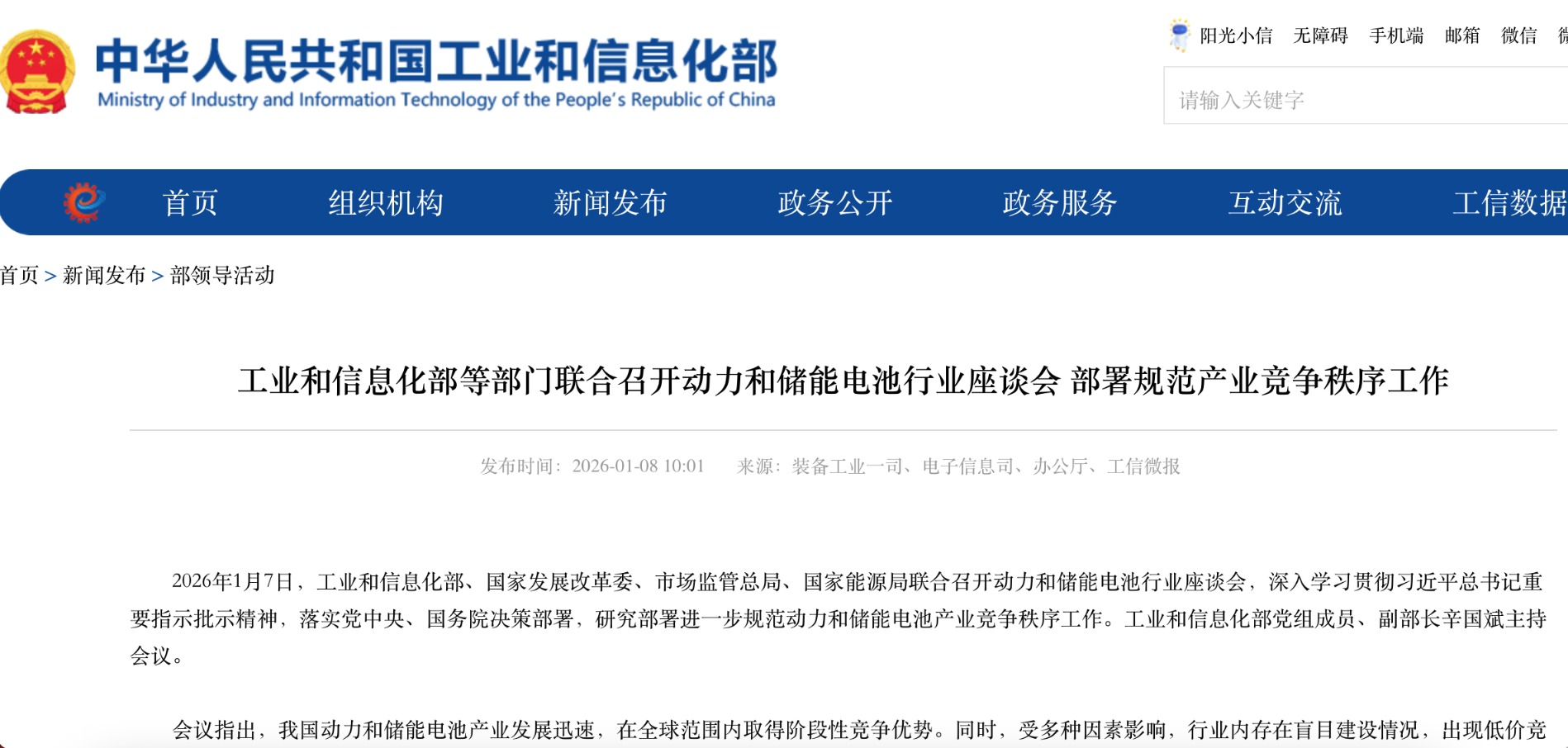
骗贷案频发 2025年12月29日,河南省洛阳市中级人民法院公布了一则刑事判决书,涉及暴某通过虚构购销合同、编 造贷款事由、伪造担保人资格等手段,多次以自己名义和他人名义在伊川农商银行的一家支行进行贷款 和续贷。 根据法院调查,2013年10月,暴某以自己名义在伊川农商银行的某店支行贷款10万元,贷款到期后无力 偿还,经多次续贷,至2018年12月续贷至35万元,此笔贷款至今未还已逾期。 2016年9月,暴某以牛某名义在某店支行贷款50万元,暴某实际获得贷款20万元,而时任当时支行行长 的刘某将其亲属名下的一辆奥迪车辆抵给暴某。该笔贷款到期后,暴某无力偿还,经过多次续贷,于 2018年12月续贷至80万元,至今未还已逾期。 中经记者杨井鑫北京报道 2025年年末,河南省公布了一批骗取贷款和诈骗的裁判文书,而多宗案件都指向了河南的一家农商银行 伊川农商银行。 在这些案例中,贷款人原本都不具备偿还贷款能力,依赖以贷养贷、循环续贷掩盖骗贷直至东窗事发。 值得一提的是,骗贷手法一致集中在了伪造贷款材料,涉事不少支行的"内鬼"也被查。 同样,2015年6月至2019年1月,刘某也采用提供虚假贷款资料、虚假贷款用途等方式 ...
罚没3754万元!宝新能源实控人涉股权代持未如实披露及违规减持
Zhong Guo Jing Ying Bao· 2026-01-08 05:03
Core Viewpoint - The actual controller of Baoneng New Energy, Ye Huane, received a warning and a fine of 37.54 million yuan from the Guangdong Securities Regulatory Bureau for failing to disclose shareholding arrangements and for illegal share reductions [2]. Group 1: Regulatory Actions - Ye Huane was penalized for not disclosing the transfer of 111 million shares (5.11% of total shares) from Baoliwa Group to Ningyuanxi, which was held in trust [2]. - The Guangdong Securities Regulatory Bureau imposed a fine of 2 million yuan for the failure to disclose and an additional fine of 10 million yuan for the illegal share reduction [2]. - The illegal share reduction involved a 1.1% reduction of shares, amounting to 141 million yuan, which occurred between December 20 and December 27, 2021 [2].
视频|夏春:2026年黄金还会相对强势,但上涨幅度不如2025年
Zhong Guo Jing Ying Bao· 2026-01-08 03:54
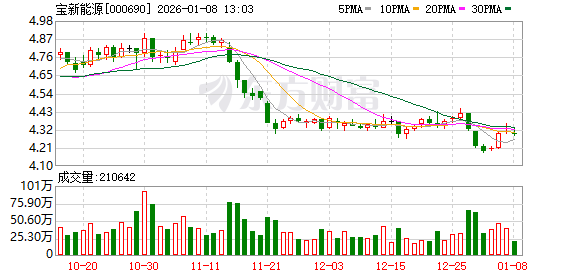
0:00 智汇集团创始人及首席经济学家夏春:在2026年,黄金还会保持相对强势,但是绝对不会出现60%的持 续上涨幅度。价格处在高位的时候,建议大家不要只盯着黄金。未来大家对黄金和白银的投资,或者说 配置比例,要去做一个长期的、宏观的结构性判断,理解它背后的涨跌逻辑。 ...