
Zhong Guo Hua Gong Bao

Search documents
前8月我国能源投资保持较快增长
Zhong Guo Hua Gong Bao· 2025-11-05 02:09
Core Insights - The National Energy Administration reported a significant increase in energy investment in China, with a total investment of 1.97 trillion yuan in key energy projects in the first eight months of the year, representing an 18.2% year-on-year growth [1] Group 1: Investment Growth Characteristics - Nuclear power, power grids, new energy storage, and coal power are key drivers of investment growth in energy projects [1] - In the first eight months, key energy storage projects in Xinjiang, Guangdong, Yunnan, Shandong, and Inner Mongolia saw investment growth rates exceeding 100% [1] Group 2: Rapid Growth in Specific Sectors - Wind power, modern coal chemical industry, oil and gas reserve facilities, charging and swapping infrastructure, and hydrogen energy investments are experiencing rapid growth [1] - Ongoing projects in Xinjiang and Inner Mongolia for coal-to-oil and coal-to-olefins are progressing steadily, while the Daan green hydrogen ammonia integration demonstration project in Jilin has been completed [1] Group 3: Steady Growth in Other Energy Investments - Investments in solar power generation, integrated source-grid-load-storage systems, oil and gas exploration and development, and pumped storage are steadily increasing [1] - Several integrated source-grid-load-storage projects are being advanced in Shandong, Shanxi, Gansu, and Guangxi, while major oil fields are steadily increasing reserves and production [1]
专家把脉橡胶助剂行业发展方向
Zhong Guo Hua Gong Bao· 2025-11-05 02:09
Core Insights - The rubber additives industry is urged to focus on technological innovation, green low-carbon practices, digital empowerment, and open collaboration to drive sustainable development [1][2]. Group 1: Industry Trends - The rubber additives sector is experiencing a shift towards high-performance, environmentally friendly products, with a focus on domestic substitution of key materials [2]. - The industry is encouraged to adopt differentiated, high-end, and customized approaches, optimizing industrial layout and supporting overseas factory establishment [2]. Group 2: Technological Advancements - New technologies, including artificial intelligence, are increasingly being integrated into the development of rubber chemicals, enhancing the design and synthesis processes [3]. - The use of molecular generation and performance prediction models is recommended to create rubber additives that meet specific requirements [3]. Group 3: Sustainability Goals - The industry aims to reduce carbon emissions per unit product by 20% within five years and increase the proportion of green additives to over 70% [1]. - There is a strong emphasis on promoting green processes and clean production technologies, as well as developing bio-based materials to improve resource utilization efficiency [1][2].
中国石化签约,布局钠电池!
Zhong Guo Hua Gong Bao· 2025-11-04 09:24
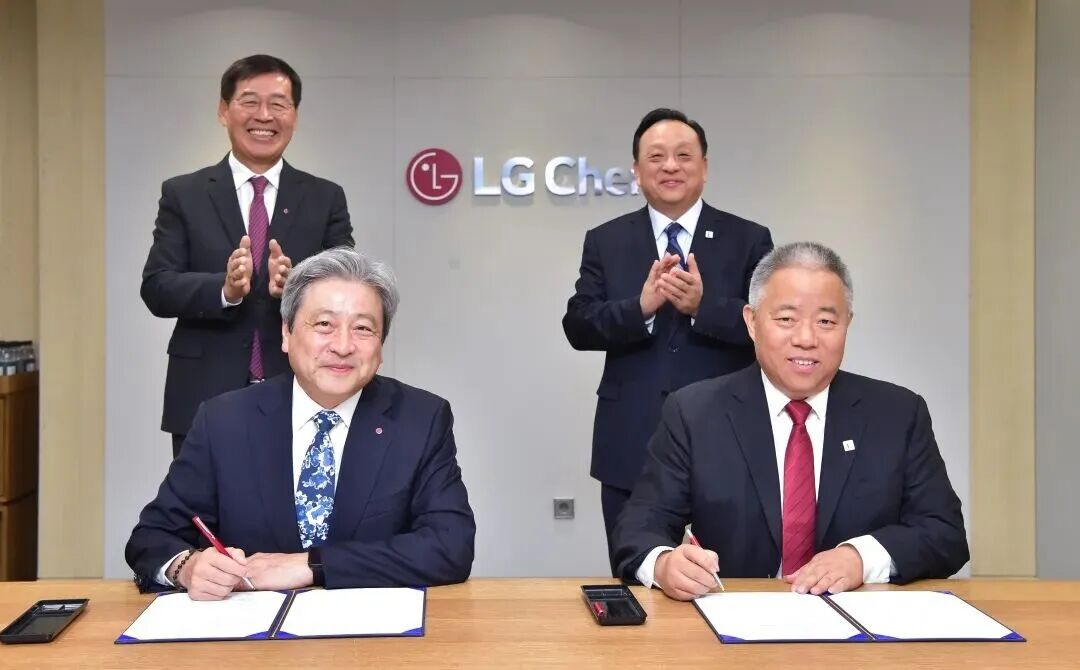
Core Insights - China Petroleum & Chemical Corporation (Sinopec) and LG Chem have signed an agreement to jointly develop key materials for sodium-ion batteries, targeting the energy storage systems and low-speed electric vehicle markets in China and globally [1][3] - The collaboration aims to accelerate the commercialization process of sodium-ion batteries and expand their business model, with future plans to extend cooperation into new energy and high-value-added materials [1][3] Industry Overview - Sodium-ion batteries offer advantages over lithium-ion batteries in terms of resource availability, cost, safety, and charging speed [3] - In low-temperature environments, sodium-ion batteries exhibit less capacity degradation, outperforming lithium iron phosphate batteries [3] - The market for sodium-ion batteries in China is projected to grow significantly, from 10 GWh in 2025 to 292 GWh by 2034, representing an average annual growth rate of approximately 45% [3] - By 2030, it is expected that China will account for over 90% of the global sodium-ion battery manufacturing capacity [3]


关厂、出售!两大化工巨头同日宣布调整业务
Zhong Guo Hua Gong Bao· 2025-11-04 09:09
Group 1 - BASF announced the integration of its Asian PolyTHF business into its Shanghai Caojing site and will cease production at its Ulsan facility in South Korea, with the closure expected to be completed by 2026 [1] - The decision is part of BASF's global production strategy assessment aimed at enhancing competitiveness in response to structural changes in the global chemical fiber market, including severe overcapacity [1] - After the Ulsan plant closure, BASF will continue to produce PolyTHF at its sites in China, Germany, and the USA, with a total capacity of 250,000 tons per year [1] Group 2 - Evonik announced the sale of its betaine business in Indonesia to Aekyung Chemical, marking a step towards its transformation into a sustainable specialty chemicals supplier [1] - Evonik has been gradually divesting its global betaine-related assets, having sold its business in Milton Keynes, UK, in August 2020, and its Virginia, USA, business in August 2022 [2] - Despite the divestitures, Evonik will continue its betaine operations in Europe and Latin America, as betaine is widely used in personal care products and other consumer goods [2]

“开窍”的MOF,拿下诺奖——从“科学桂冠”到“产业皇冠”还有多远?
Zhong Guo Hua Gong Bao· 2025-11-04 09:07
Core Insights - The Nobel Prize in Chemistry 2025 was awarded to researchers for their contributions to the development of Metal-Organic Frameworks (MOFs), highlighting the transformative potential of this rapidly evolving field [1][3] - The announcement triggered immediate interest and activity in the industry, with companies and investors quickly moving to explore MOF-related projects [1][6] - Despite the excitement, there are concerns regarding the practical applications and commercialization of MOFs, with some questioning their utility beyond academic research [1][5] Industry Developments - MOFs are described as "molecular Legos," consisting of metal ions or clusters connected by organic ligands, offering vast surface areas for various applications [2][4] - The synthesis of MOFs has surpassed 100,000 structures, with applications in gas storage, energy, catalysis, environmental remediation, and biomedicine showing promising results [6][10] - The cost of scalable MOF production is a significant barrier, with prices ranging from $11 to $17 per kilogram, and raw material costs accounting for over 60% of this [6][10] Commercialization Efforts - BASF has achieved commercial-scale production of MOF materials, marking a significant milestone in the industry [7][13] - BlueTing New Energy Technology in Zhejiang has established a pilot production line for MOF materials, aiming for a production capacity of hundreds of tons [7][14] - The market for MOFs in applications such as lithium-ion batteries is projected to exceed 10 billion yuan, indicating substantial commercial potential [7][8] Research and Innovation - The Chinese government has prioritized MOF research, integrating it into national strategic plans since 2012, which has led to significant advancements in the field [9][10] - Experts emphasize the need for breakthroughs in material stability and durability to enhance MOF applications in harsh environments [10][12] - The integration of AI and high-throughput computing is seen as a key factor in accelerating the design and customization of new MOF materials [10][12] Global Competition - The global race for MOF technology is intensifying, with China positioned as a strong competitor due to its extensive talent pool and rapid technological advancements [9][11] - The industry is urged to focus on genuine research and development rather than superficial efforts, to ensure that MOFs address real industrial challenges [12][11]
上海新阳集成电路材料项目开工
Zhong Guo Hua Gong Bao· 2025-11-04 07:22
Core Viewpoint - Shanghai Xinyang Semiconductor Materials Co., Ltd. has commenced construction of a project for an annual production capacity of 50,000 tons of key process materials for integrated circuits, with an investment of 1.85 billion yuan, expected to be operational by November 2027 and reach full capacity by 2032 [1] Group 1: Project Details - The project will cover an area of 128 acres and aims to produce various ultra-pure chip cleaning solutions, including 5,000 tons/year of ultra-pure chip cleaning liquid, 6,500 tons/year of ultra-pure chip plating liquid, 33,500 tons/year of ultra-pure chip etching liquid, and 5,000 tons/year of chemical mechanical polishing liquid [1] - Upon completion, the project will significantly enhance the company's supply service capabilities and technological innovation in the field of key process materials for integrated circuits [1] Group 2: Strategic Importance - The project aligns with national industrial strategies and responds to the strategic goals of the Songjiang District to develop an "advanced manufacturing industry cluster" and a "new quality productivity development pilot zone" [1] - The completion of the project is expected to strengthen the local integrated circuit industry chain, enhancing overall regional industrial competitiveness by reinforcing, supplementing, and extending the supply chain [1]

多方共推橡胶资源高质循环利用
Zhong Guo Hua Gong Bao· 2025-11-04 07:20
Core Viewpoint - The conference emphasizes the need for high-quality recycling of rubber resources and the establishment of a sustainable future through collaborative efforts within the industry [1][2]. Group 1: Industry Development Strategies - The Rubber Association's chairman suggests a shift from quantity accumulation to quality enhancement, advocating for a full-chain recycling upgrade [1]. - Key strategies include innovation-driven development, increased R&D investment, and the integration of production, learning, and application [1]. - The association aims to promote industry collaboration and establish a community of shared interests within the supply chain [1][2]. Group 2: Technological and Environmental Focus - The secretary-general of the Rubber Association highlights that classified disposal and tiered utilization will become mainstream, with a focus on eco-friendly additives and the ecological development of recycled rubber [2]. - There is an emphasis on the design of green formulations for recycled rubber, promoting the use of environmentally friendly recycled rubber in tire production [2]. Group 3: Collaboration and Standards - The association plans to advocate for the establishment of unified environmental and product standards to create a fair competitive environment in the industry [2]. - Companies are encouraged to enhance their capabilities, focusing on product quality and service improvement [2]. - The importance of building a circular green industry alliance through collaboration with various recycling channels and production enterprises is emphasized [3].
首张非生物来源可再生燃料氨证书颁发
Zhong Guo Hua Gong Bao· 2025-11-04 07:14
Core Insights - The Jilin Daan Wind-Solar Green Hydrogen Ammonia Integrated Demonstration Project (Phase I) by State Power Investment Corporation has received the world's first certification for "non-biological renewable fuel ammonia" from the International Sustainability and Carbon Certification (ISCC EU) [1][2] Group 1: Project Overview - The project produces "green ammonia" entirely from renewable energy sources such as wind and solar power, distinguishing it from traditional ammonia production methods that utilize biomass [1] - The Daan project has an annual capacity of 180,000 tons of ammonia and is the largest single-unit green ammonia project globally [1][2] - The project employs innovative "electric-hydrogen-ammonia" flexible control technology to address the challenges of renewable energy volatility and chemical production stability [1] Group 2: Industry Impact - The project is recognized as a significant achievement for China's entire green hydrogen industry chain, establishing a traceable and verifiable system from "green electricity" to "green hydrogen" and then to "green ammonia" [2] - It is part of China's clean low-carbon hydrogen demonstration project and one of the top 100 strategic emerging industry projects, with a total installed capacity of 800 megawatts (700 MW wind and 100 MW solar) [2] - The project has signed intention procurement agreements with multiple energy companies in Europe, Japan, and South Korea, indicating its potential for international collaboration and market expansion [2]

焦化行业探讨穿越周期之道
Zhong Guo Hua Gong Bao· 2025-11-04 07:07
Core Insights - The Chinese coking industry is facing three major challenges: declining demand, price volatility, and environmental pressure, necessitating a comprehensive transformation to ensure stability and resilience [1][2] - The industry is experiencing a decline in both the import volume and price of coking coal, as well as a significant drop in the export volume and price of coke, leading to ongoing losses in the petroleum, coal, and other fuel processing industries [1] - The focus on solidifying technological foundations and implementing refined management practices is seen as essential for overcoming current industry challenges [1][2] Technological Foundations - The industry should promote optimization of coal resources and stabilize the quality of coal used in production through big data analysis and blending models [1] - There is a need for the widespread adoption of standard automatic sampling technology and the establishment of a professional and regular diagnostic and maintenance mechanism for coke oven bodies and combustion systems [1][2] Refined Management - A target cost management system should be developed, guided by the final product prices, with cost indicators broken down to individual process units and responsible parties [2] - The construction of an integrated control platform combining Distributed Control Systems (DCS), Manufacturing Execution Systems (MES), and Enterprise Resource Planning (ERP) is essential for real-time data analysis and intelligent optimization across the entire coking process [2] Environmental Standards - The industry is transitioning from optional to mandatory low-carbon practices, with a focus on system process optimization and ultra-low emission transformations [2] - Companies are encouraged to optimize the operation parameters of gas purification processes to enhance the yield and quality of key by-products, while also reducing wastewater generation and pollutant concentration [2] - The industry is shifting towards the efficient utilization of high-sulfur coal due to the depletion of low-sulfur quality coking coal resources, with new catalysts being developed to improve sulfur removal rates [2] Future Directions - The China Coking Industry Association plans to implement ultra-low emission and "dual carbon" action plans, promote integration within the industry chain, and enhance quality evaluation systems [3] - Continuous improvement of coking process technology standards is aimed at providing systematic support for the industry to navigate through economic cycles [3]
煤液化制高端碳材料技术通过鉴定
Zhong Guo Hua Gong Bao· 2025-11-04 07:03
Core Insights - The evaluation of the "Coal Liquefaction for High-end Carbon Materials" project by experts indicates that the technology is at an internationally leading level and should be promoted for industrialization and application [1][2] Group 1: Technology and Innovation - The innovative process can convert coal into high-yield, high-quality asphalt, which is a precursor for high-end carbon materials [1] - Key innovations include effective control of coal conversion, mild reaction conditions, and direct refining of asphalt during production, resulting in superior composition compared to other coal-based asphalts [1] - The process has led to the development of advanced series of three-dimensional graphene and foam carbon products through small-scale experiments [1] Group 2: Environmental Impact and Efficiency - The application of this technology can significantly reduce carbon emissions, with minimal waste generation, and treated emissions that do not pollute the environment [1] - The process allows for a substantial increase in the added value of coal, transforming it from a cost of thousands per ton to tens of thousands per ton [2] Group 3: Market Potential - The technology is adaptable to various coal types, including lignite, long flame coal, gas coal, and coking coal, making it applicable in most coal-producing regions in China [2] - The asphalt yield from the process ranges from 30% to 50%, with a low ash content of only 0.01%, and approximately 80% of the product being aromatic organic compounds, which are high-quality raw materials for carbon products [2]