
Zhong Guo Hua Gong Bao

Search documents
四链融合破壁垒 中试基地育新机——开滦中试基地赋能化工新材料产业纪实
Zhong Guo Hua Gong Bao· 2026-02-27 02:22
Core Insights - The Kaichuang Chemical New Materials Pilot and Industrialization Demonstration Base aims to address common challenges in the industry, such as high investment costs and risks associated with pilot testing, by creating an integrated platform for research, testing, process design, and industrialization [1][2] Group 1: Innovation Model - The base operates under an innovative model of "enterprise-led investment, independent legal operation, and government support," facilitating a comprehensive "four-chain integration" platform [1] - It has been recognized as the only provincial-level pilot platform for chemical technology achievement transformation in Hebei Province and included in the Beijing-Tianjin-Hebei concept verification and pilot platform directory [1] Group 2: Collaborative Efforts - The base collaborates closely with research teams to tackle the challenges of transitioning from laboratory to industrialization, focusing on key technologies in the new materials industry [2] - The Coal Chemical Research Center has successfully developed a complete pilot process package for high-performance polyester synthesis, breaking foreign monopolies on high-end polyester monomers [2] Group 3: Infrastructure and Support - The base provides comprehensive hardware and software support, including well-equipped research and pilot facilities, and offers a "full lifecycle" service covering technology, site, procedures, financing, and logistics [3] - It features a flexible cooperation model with options like equity investment and technology services, significantly lowering the barriers and risks associated with technology transfer [3] Group 4: Strategic Outcomes - Currently, the base has attracted 14 pilot and industrialization demonstration projects and has incubated two technology companies, focusing on national strategic needs and addressing industry gaps [4] - The platform is working on a complete industrial chain from key monomers to PEN and promoting the localization of specialty materials, aiming to enhance the domestic chemical materials industry [4][5]

万米深海跳动中国“动力心脏”——记技术发明一等奖聚合物柔性固态电解质锂电池及其深海应用
Zhong Guo Hua Gong Bao· 2026-02-27 02:15
Core Viewpoint - The collaboration between the Qingdao Institute of Bioenergy and Process Research and Zhongtian Energy Storage Technology Co., Ltd. has led to the development of a polymer flexible solid-state lithium battery, which has won the first prize for technological invention at the 2025 China Petroleum and Chemical Industry Federation Science and Technology Awards, filling an international gap in megawatt-hour level deep-sea energy storage applications [1] Group 1: Technological Development - The solid-state lithium battery technology provides a safe, reliable, and accident-free power source for deep-sea operations, with applications extending to large-scale energy storage and electric vehicles [1] - Traditional liquid lithium batteries face significant challenges in deep-sea environments, including shell deformation, electrolyte leakage, and performance degradation, which can jeopardize expensive scientific equipment [2] - The research team, led by Cui Guanglei, focused on solid-state lithium batteries as a next-generation power solution, overcoming various challenges related to materials, interfaces, and processes [2][3] Group 2: Material Challenges - The extreme pressure at 10,000 meters underwater (100 MPa) imposes stringent requirements on the mechanical strength and electrochemical stability of battery materials [3] - The team faced initial difficulties in synthesizing solid electrolytes, which often had defects and insufficient toughness, leading to performance issues [3] - After extensive testing and optimization, the team successfully developed a high-performance polymer solid electrolyte, marking a significant breakthrough in solid-state battery materials [3] Group 3: System Integration and Engineering - The team proposed a composite solid-state electrolyte design and developed an innovative in-situ polymerization interface fusion technology to create a high-safety, high-energy, and long-life polymer solid-state lithium battery [4] - A self-pressurized battery management system was innovated to withstand deep-sea conditions, leading to successful testing at a depth of 10,918 meters in the Mariana Trench [4] - This achievement not only provided stable energy for deep-sea equipment but also marked a breakthrough in overcoming technical bottlenecks in deep-sea power sources, eliminating reliance on foreign technologies [4] Group 4: Advancements in Energy Systems - The research team has developed the world's first megawatt-level deep-sea energy station, capable of supporting multiple operational sites and facilitating long-term collaborative exploration [5] - The energy station can provide power to underwater laboratories and enable information interconnectivity between platforms, enhancing operational flexibility [5] - The team has successfully implemented two megawatt-level deep-sea energy storage systems with over six months of fault-free operation, significantly increasing the capacity of deep-sea energy systems [6]
陕京管道累计输气突破8000亿立方米
Zhong Guo Hua Gong Bao· 2026-02-27 02:02
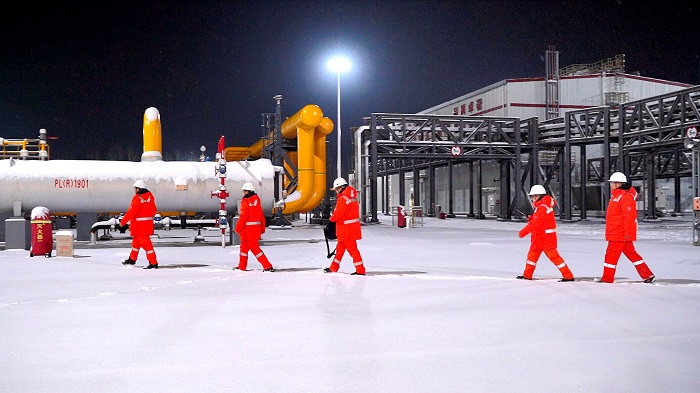
Core Viewpoint - The Shaanxi-Beijing pipeline system of the National Pipeline Network Group has successfully transported over 800 billion cubic meters of natural gas since its commissioning, significantly contributing to public welfare and regional coordinated development [1] Group 1: Pipeline System Overview - The Shaanxi-Beijing pipeline system spans a total length of 5,599 kilometers, covering over 70 cities in Beijing, Tianjin, and other provinces, and serving thousands of large and medium-sized enterprises [1] - The annual natural gas transportation volume of the Shaanxi-Beijing pipeline system has reached 97.2 billion cubic meters, effectively supporting the coordinated development of the Beijing-Tianjin-Hebei region [1] Group 2: Operational Performance - The average daily gas transmission volume of the Shaanxi-Beijing pipeline system is approximately 200 million cubic meters, with a maximum daily transmission volume exceeding 309 million cubic meters, ensuring over 95% of Beijing's natural gas demand [1] - The system has achieved "28 years of uninterrupted" safe and stable operation, with a cumulative delivery of 800 billion cubic meters of natural gas equivalent to replacing about 1.07 billion tons of standard coal, resulting in a reduction of 1.17 billion tons of carbon dioxide emissions, showcasing significant environmental benefits [1]

石化化工供大于需风险产品清单发布
Zhong Guo Hua Gong Bao· 2026-02-27 02:02
Core Viewpoint - The China Petroleum and Chemical Industry Federation has released a list of 15 products at risk of oversupply in the petrochemical industry, emphasizing the need for industry self-regulation and expectation management [1] Group 1: Industry Overview - The petrochemical industry is a crucial foundational and pillar industry for the national economy, playing a significant role in stabilizing economic growth and ensuring energy and supply chain security [1] Group 2: Risk Assessment - A detailed analysis was conducted on current capacities, production, apparent consumption, imports and exports, planned capacities, and market demand over the next five years for various chemical raw materials and new chemical materials [1] - The analysis identified 15 products with a risk of supply exceeding demand, categorized into high-risk and relatively high-risk levels [1] Group 3: Specific Products at Risk - Twelve products were classified as high-risk: - Epoxy Propane - Epoxy Chloropropane - Acrylonitrile - Polyvinyl Chloride - Chlorinated Paraffin - Polysiloxane - Acrylonitrile-Butadiene-Styrene (ABS) - Polybutylene Adipate Terephthalate (PBAT) - Polyether Polyol - 1,4-Butanediol (BDO) - Nylon 66 - Vinyl Acetate [1] - Three products were classified as relatively high-risk: - Polypropylene - Soda Ash - Titanium Dioxide [1]
三代人的“心”征程 | 2026新春走基层
Zhong Guo Hua Gong Bao· 2026-02-27 01:58
Core Viewpoint - The article highlights the evolution of Juhua Group through three generations, each representing a different aspect of innovation and commitment, emphasizing the importance of historical legacy and continuous improvement in the chemical industry. Group 1: Historical Context and Legacy - Juhua Group, established in 1958, is recognized for its pioneering spirit, having built the first acetylene furnace in China from scratch, showcasing the determination of its founders [1][4] - The site of the original acetylene production facility has been preserved as a historical site, symbolizing the company's roots and the dedication of its employees over the decades [1][4] - The first generation's focus was on creating something from nothing, which laid the foundation for the company's growth and success [7] Group 2: Technological Advancements - The second generation, represented by employees like Dong Xiaoyan, has focused on making production processes more automated, achieving a "zero manual" operation in the R22 unit, significantly reducing manual intervention [2][3] - The automation efforts led to a 50% reduction in the number of operators needed per shift, allowing workers to engage in more creative tasks [2] - The third generation, led by figures like Wan Jinru, is leveraging data to enhance operational efficiency, aiming to optimize processes and reduce energy consumption further [3][7] Group 3: Future Aspirations and Goals - The company aims to continue its digital transformation and green development, with specific targets for improving automation and data integration in production processes [4][3] - Plans include the development of a digital twin system and training personnel skilled in both operational and data analysis to support long-term stability [3][4] - The overarching goal is to ensure that every resource is utilized efficiently, contributing to the company's sustainable growth and innovation [3][4]

石化企业纷纷开展“开工第一课”
Zhong Guo Hua Gong Bao· 2026-02-27 01:57
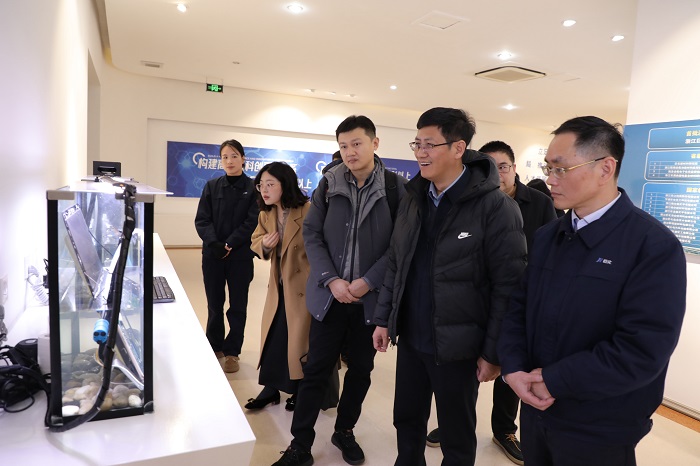
Group 1 - The oil and chemical companies are initiating "first class after the Spring Festival" activities to motivate employees and ensure a strong start for 2026 [1][2][3] - Companies emphasize the importance of safety production and transitioning from holiday mode to work mode, addressing the potential for accidents post-holiday [1][2][3][4] - Specific companies like Qilu Petrochemical and Jinan Refining are conducting safety training and management to enhance operational efficiency and safety awareness [1][2] Group 2 - Sinopec's subsidiary, CNOOC Refining, is launching a "Quality and Efficiency Deepening Year" initiative to improve operational quality and adapt to market uncertainties [2] - Companies are focusing on creating a disciplined and efficient work atmosphere to achieve first-quarter goals, with a strong emphasis on safety and productivity [2][3] - The importance of aligning employee mindset and responsibilities with corporate goals is highlighted, with various companies conducting motivational sessions to ensure readiness for the year ahead [3][4]
48亿元!这家化企拟实施纯碱装置提质改造工程
Zhong Guo Hua Gong Bao· 2026-02-26 09:11
Core Viewpoint - Shandong Haihua plans to invest 4.837 billion yuan in a project aimed at upgrading its soda ash production facility to enhance efficiency and environmental sustainability, with a construction period of 24 months [1] Group 1: Project Details - The existing soda ash production line, which has been in operation for over 30 years, is outdated and has high energy consumption, necessitating an upgrade [1] - The project will replace the old 1.2 million tons per year Solvay (ammonium carbonate) soda ash capacity with a new capacity of 1 million tons per year, following a 1.2:1 capacity replacement ratio [1] - The new setup includes a 400,000 tons per year ammonia synthesis unit and a 1 million tons per year combined soda ash unit, producing 400,000 tons of light soda ash, 600,000 tons of heavy soda ash, and 1.03 million tons of ammonium chloride as a byproduct [1] Group 2: Environmental Goals - The project focuses on green and low-carbon energy transformation, aiming to establish a green low-carbon technology system through "green electricity substitution" and "direct supply cost reduction" [1] - This initiative is aligned with national industrial policies and supports the company's goals for carbon peak and carbon neutrality, promoting a green low-carbon transition for the enterprise [1]

今年我国聚乙烯产能将突破4500万吨
Zhong Guo Hua Gong Bao· 2026-02-26 01:49
Core Viewpoint - The domestic polyethylene market is expected to reach a significant milestone in 2026, with total production capacity surpassing 45 million tons, leading to a shift from scale expansion competition to value enhancement competition, indicating a structural adjustment in the industry [1] Group 1: Capacity Growth and Structure - The new polyethylene production capacity in 2026 is projected to be between 6.15 million and 7.29 million tons, with a growth rate of 15% to 18.5% [2] - The production rhythm shows a "low in the front, high in the back" characteristic, with limited new capacity in the first half of the year and increasing supply in the second half [2] - New capacity is primarily from oil-based facilities, with significant contributions from major refining enterprises like Huajin Amoco and China National Petroleum [2] - The product structure is optimizing, with the planned production of high-density polyethylene (HDPE) at 2.05 million tons and linear low-density polyethylene (LLDPE) growth slowing to an estimated 4% in 2026, down from 24% in 2025 [2] Group 2: Cost Trends and Profitability - The cost of polyethylene is showing significant differentiation, with profit margins varying greatly among companies based on production processes [4] - Oil-based polyethylene, which constitutes nearly two-thirds of total capacity, is closely tied to international oil prices, with expected pressure on profit margins due to high oil prices and declining polyethylene spot prices [4] - Coal-based polyethylene, accounting for about 20% of total capacity, is expected to benefit from a moderate decline in coal prices, maintaining profitability [4] - Light hydrocarbon processes are favored for their high yield and low cost, but face challenges due to high dependence on imported ethane, with an expected import dependency exceeding 95% [4] Group 3: Demand Dynamics - Domestic polyethylene apparent consumption is expected to reach approximately 41.5 million tons in 2026, reflecting a year-on-year growth of 7.8%, which is still lower than the growth rate of production capacity [5] - Traditional demand sectors such as packaging films and pipes are experiencing slow growth, with operating rates generally between 30% and 55% [5] - Emerging industries like photovoltaic backsheet films and lithium battery separators are seeing increased demand, but their overall consumption share remains low [6] Group 4: Export Trends - The compound annual growth rate of polyethylene exports from China over the past five years has been 34.5%, with steady growth expected in 2026 [7] - The share of polyethylene exports to Southeast Asia is increasing, with high-end product exports growing faster than general materials [7] - Factors such as infrastructure upgrades in Belt and Road Initiative countries and reduced shipping costs are creating favorable conditions for polyethylene exports [7]
深化“AI+制造”,各地如何布局?——透视地方两会上的智造热点
Zhong Guo Hua Gong Bao· 2026-02-25 09:20
Group 1 - The central economic work conference in December 2025 emphasized the deepening and expansion of "Artificial Intelligence+" as a policy direction for the 14th Five-Year Plan [2] - Local government reports have increasingly included "Artificial Intelligence+" as a key focus, indicating its importance in driving industrial upgrades [2] - The AI industry has rapidly developed and integrated with traditional manufacturing sectors, becoming a crucial driver for industry upgrades [2] Group 2 - Various provinces are implementing policies to enhance traditional industries, with Anhui Province focusing on tailored strategies for sectors like steel and chemicals, aiming for over 1,200 major technical transformation projects [3] - The integration of AI in new materials can significantly reduce research and development cycles and costs by simulating material properties and optimizing production processes [3] - AI is expected to enhance supply chain management by integrating data across production and logistics, improving responsiveness to market demands [3] Group 3 - Local government reports are incorporating "AI for Science" initiatives, with regions like Guangxi and Henan focusing on building AI research platforms and innovation ecosystems [4] - Suggestions include expanding public computing power services to support research teams and small enterprises, emphasizing the importance of domestic AI chip usage [4] - Enhancing foundational research capabilities is seen as essential for national technological independence and global competitiveness [4] Group 4 - Achieving a systemic transition to "smart manufacturing" in traditional industries requires deep integration of industry chains, value chains, and innovation chains, with a focus on the digital transformation of small and medium-sized enterprises [5] - Local governments are promoting digital transformation initiatives for SMEs, with regions like Yunnan and Chongqing supporting cost-effective computing power solutions [5] - Recommendations include creating a comprehensive guide for AI applications in SMEs and establishing a special fund to support their transformation efforts [5]

降价44亿元!这起化工并购案有变动
Zhong Guo Hua Gong Bao· 2026-02-25 09:05
Group 1 - Honeywell announced a revised agreement to acquire Johnson Matthey's catalyst technology business, reducing the total purchase price by £475 million (approximately RMB 4.4 billion) to £1.325 billion [1] - The final deadline for the acquisition has been extended to July 21, 2026, with the possibility of further extension to August 21, 2026, if specific conditions are met [1] - Johnson Matthey's catalyst technology business employs approximately 1,900 people and holds a strong position in the syngas sector, which includes methanol, ammonia, hydrogen, and formaldehyde [1] Group 2 - The transaction is expected to generate £1.6 billion in cash revenue for Honeywell [1] - As of March 31, 2025, the total asset value of the catalyst technology business is reported to be £1.56 billion, with a base EBITDA of £119 million and a base operating profit of £92 million [1] - Johnson Matthey, established in 1817, is a global specialty chemicals company and a leading supplier of catalysts and precious metal products, planning to restructure into a more focused and streamlined entity after the sale [1]
