Zhong Guo Hua Gong Bao

Search documents
高温尼龙和PEEK聚合项目,签约!
Zhong Guo Hua Gong Bao· 2025-10-29 10:15
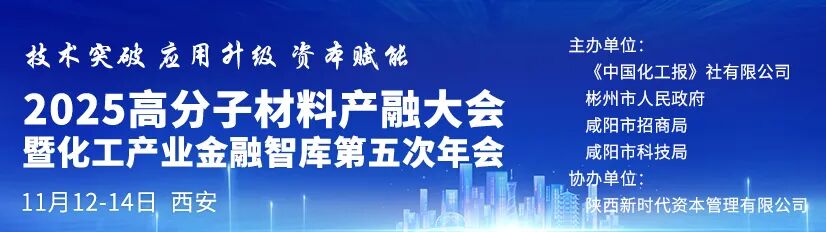
Group 1: Company Developments - 会通新材料股份有限公司 signed a lease agreement to establish a wholly-owned subsidiary in Shanghai, focusing on the "high-temperature nylon and PEEK polymerization project" with a total leased area of approximately 7644.87 square meters [1] - The total investment for the high-temperature nylon and PEEK polymerization project is 81 million yuan, aiming for an annual production capacity of 3000 tons of high-temperature nylon and 600 tons of PEEK [1] - The project will be constructed in three phases, with the first phase planned to produce 500 tons of high-temperature nylon and 200 tons of PEEK, requiring an investment of about 30 million yuan and a construction period of 12 months [1] Group 2: Market Outlook - According to reports, the domestic demand for PEEK is expected to exceed 5000 tons by 2027, with a market capacity exceeding 16.7 billion yuan, indicating a promising development outlook [2] - The company aims to enhance PEEK product performance through proprietary formulation design and polymerization process optimization, catering to the specific customization needs of downstream customers [2] Group 3: Industry Trends - The polymer materials sector is a crucial foundational industry for the national economy and is also a strategic emerging industry within the petrochemical sector, serving as essential materials for various strategic emerging industries [4] - The upcoming Polymer Materials Industry Integration Conference will focus on high-performance, functional, intelligent, and sustainable development of polymer materials, highlighting investment opportunities in the sector [4][5] Group 4: Conference Details - The Polymer Materials Industry Integration Conference will take place from November 12-14 in Xi'an, with themes centered around technological breakthroughs, application upgrades, and capital empowerment [4][6] - The conference will feature discussions on national policies, market opportunities, and technological advancements in high-performance engineering plastics and other innovative materials [7][8]


抚顺石化乙烯改造项目冷却塔中交
Zhong Guo Hua Gong Bao· 2025-10-29 05:16
Core Insights - The project led by China Kunlun Engineering Co., Ltd. has reached a significant milestone with the completion of the cooling tower renovation for the ethylene plant at Fushun Petrochemical, enhancing water treatment capacity by 32.4% to no less than 4,900 cubic meters per hour [1] Group 1: Project Overview - The renovation project focuses on the cooling water system, which is crucial for determining the production capacity of the ethylene facility [1] - The upgrade involved comprehensive optimization of key components such as internal packing and spray systems while retaining the original concrete structure [1] Group 2: Project Management - The company implemented a "single tower attack, phased commissioning" strategy, dividing the 12 cooling towers into three construction units to minimize production disruption [1] - A real-time scheduling mechanism for "personnel, machinery, and materials" was established, reducing equipment delivery time by 10% [1] Group 3: Safety and Quality Control - The company adheres to a daily coordination meeting system to clarify safety requirements among owners, supervisors, and construction units [2] - A "three-inspection system" is enforced for quality control, ensuring that all cooling towers pass acceptance tests on the first attempt [2]
东德氢能发布PowerMax超级氢电站
Zhong Guo Hua Gong Bao· 2025-10-29 05:00
Core Insights - Dongde Hydrogen Energy launched the PowerMax Super Hydrogen Power Station, which integrates off-grid power supply, rapid construction, fast charging, and green energy consumption into a single solution, addressing challenges in the energy sector such as grid connection difficulties and low efficiency [1][2] Group 1: Product Features - PowerMax features a compact design that integrates all functional modules into a single unit, allowing for easy deployment and operation similar to everyday appliances [1] - The station is capable of delivering 480 kW of power per charging gun, enabling a charging speed of 8 kWh in one minute, which can fully charge a household electric vehicle in approximately five minutes [1] Group 2: Safety and Technology - The station is equipped with an "AI Safety Brain" that utilizes an intelligent monitoring system and a network of thousands of monitoring points to provide 24-hour risk prediction and emergency response [2] - The project team conducted over 200 system integration tests to overcome technical challenges related to energy coordination, system stability, and safety risk management [2] Group 3: Market Context - Dongde's PowerMax is the world's first off-grid super charging hydrogen power station, addressing the limited number of public charging stations in China, which currently has only 4.3 million charging piles and 37,000 high-power charging facilities [2] - The PowerMax station offers a "hydrogen-electric coupling" solution that allows for both hydrogen refueling and hydrogen energy generation, reducing reliance on grid electricity [2]
中国石油福建LNG项目2号储罐气顶升
Zhong Guo Hua Gong Bao· 2025-10-29 04:53
Core Insights - The successful gas lifting operation of the 2nd storage tank at China Petroleum's Fujian LNG receiving station marks a significant milestone in the project's construction progress [1][2] - The operation utilized advanced technologies, including laser ranging and high-precision Beidou positioning systems, ensuring precise monitoring and control during the lifting process [1] Group 1: Project Details - The steel dome of the 2nd storage tank, weighing nearly 1,000 tons, was lifted to a design height of nearly 50 meters with millimeter-level precision [1] - The gas lifting operation is identified as the most complex and highest risk procedure in LNG storage tank construction [1] - A leadership team and command center were established to oversee the gas lifting process, ensuring comprehensive planning and execution [1] Group 2: Preparatory Measures - In the 20 days leading up to the lifting, the project team worked through national holidays to confirm over 100 critical conditions, including concrete strength and sealing systems [1] - A cross-industry expert team conducted multiple rounds of verification on key parameters such as meteorology, structural mechanics, and fluid dynamics [1] Group 3: Monitoring and Control Systems - The project implemented a comprehensive monitoring network using nearly 30 sets of pulley systems to create a "dynamic balancing" control system, integrating real-time data on posture, height, tilt, and pressure differences [1] - The use of drones for inspection and a command center display contributed to the overall monitoring and control of the lifting operation [1]

“三大需求”引领石化业AI应用
Zhong Guo Hua Gong Bao· 2025-10-29 02:47
助力企业沉淀专业知识 10月23日,2025中国国际石油化工大会工业AI论坛在浙江宁波举行。与会嘉宾从人工智能(AI)在工业特 别是石油化工领域应用的技术、政策、实战案例出发,讨论如何推动工业AI走向更深入、更广泛的应 用。专家认为,石化行业对AI有三大需求:一是数据沉淀与决策辅助,二是价值链重塑与优化,三是 安全监测与防护。 高风咨询公司合伙人、董事总经理介一凡认为,AI智能体的长处在于能力的固化。对石油化工领域而 言,它的强项在于能够将很多非结构化数据或老专家的专有知识、隐含知识总结提炼出来,实现能力的 固化、系统化、结构化。这种体系将帮助员工迅速获得岗位能力。 近年来,AI热潮席卷全球,大模型、智能体在数据分析领域展现出显著的技术突破与应用潜力。如何 利用大模型的超强分析能力赋能各行各业,成为论坛上的热门话题。 艾斯本技术北京有限公司大中华区总经理丁少杰在会上介绍了公司研发的AVA虚拟专家技术,即利用生 成式AI对自然语言的输入输出进行解读与推理,结合现场工程数据,实时指导工程师进行生产操作和 设备运维。 "我们怎么定义工业AI?所谓的工业AI是'两个结合',即把AI和领域专业知识有效结合起来,把企业在 ...
渤海钻探管具井控公司精细控压业务进入海洋市场
Zhong Guo Hua Gong Bao· 2025-10-29 02:37
Core Insights - The Bohai Drilling Tools and Well Control Company has officially launched a precision pressure control drilling service project at the CNOOC Zhenhai platform, marking a significant step in expanding its marine pressure control drilling market [1][2] Group 1: Project Launch and Significance - The project is seen as a crucial breakthrough for the company in the marine pressure control drilling market, utilizing its self-developed BH-MPD precision pressure control system as the core technology [1] - The project is viewed as a "propeller" for expanding into new marine markets, with a strong emphasis on responsibility and meticulous preparation [1][2] Group 2: Preparation and Team Formation - Following the bid win, the project entered a phase of organized preparation, focusing on coordinating personnel, materials, and equipment to ensure seamless service delivery [2] - A specialized project service team was formed, consisting of experienced technical personnel, and specific training was conducted to meet the unique requirements of marine operations [2] Group 3: Equipment and Risk Management - The company established a special scheduling mechanism for the BH-MPD precision pressure control system, ensuring thorough inspection, debugging, and calibration of core equipment [2] - Multiple coordination meetings were held to refine operational processes, clarify responsibilities, and identify potential risks, aiming for a "zero oversight" standard in preparation [2]
内蒙古拟推新型储能产权登记制度
Zhong Guo Hua Gong Bao· 2025-10-29 02:05
Core Viewpoint - The Inner Mongolia Autonomous Region has introduced a management plan for the registration and transfer of new energy storage projects, aiming to standardize the operation of the energy storage market and address issues such as multiple certifications and inefficiencies in project management [1][2] Group 1: Registration and Management - The plan establishes a unified registration and management system for new energy storage projects, requiring a single code and certificate for the entire lifecycle of the projects [1] - A specialized agency will be responsible for the unified registration of energy storage projects, creating a database for property rights and ensuring transparency [1][2] Group 2: Project Registration Process - New energy storage entities must register project information through the designated system to obtain an initial registration code, which is essential for acquiring the energy storage property certificate [2] - The energy storage property certificate will categorize projects into three types: self-built (C1), co-built (C2), and independent storage (C3), covering key information such as land, equipment, and ownership [2] Group 3: Market Participation and Asset Management - The energy storage property certificate will be a prerequisite for participating in the electricity market, ensuring standardized operations in trading and market entry [2] - The specialized agency will draft operational guidelines for asset transfer and establish a process for property rights transactions, providing comprehensive services for energy storage entities [2]
让“石化之花”在北部湾畔绽放——中国化学工程第二建设公司参建广西恒逸120万吨/年己内酰胺项目纪实
Zhong Guo Hua Gong Bao· 2025-10-29 02:00
Core Insights - The Guangxi Hengyi project has reached a significant milestone with the successful feeding of materials into the caprolactam section, marking the transition to trial production [1] - The project is a key initiative in the Guangxi Zhuang Autonomous Region aimed at establishing a leading green chemical new materials industry [1][2] - The project team has demonstrated resilience and efficiency in completing critical tasks, including the installation of 33,600 tons of steel structures and the welding of over 2.47 million meters of pipelines [1][3] Project Overview - The Guangxi Hengyi project is part of the Guangxi-Brunei Economic Corridor, focusing on the integrated construction of refining and chemical fiber bases [2] - The project utilizes benzene as a raw material to produce high-value-added chemical new materials, specifically polyamide [2] Construction Challenges - The coal-to-hydrogen ammonia synthesis unit features a washing tower weighing 643 tons and standing 86.2 meters tall, presenting significant installation challenges [2] - The project team completed the installation of large equipment over four months, utilizing various heavy lifting machinery [2] Quality Control Measures - The project emphasizes quality management through a comprehensive system that includes regular inspections and a "weld joint ID" management system for traceability [4][5] - A quarterly quality incentive system is in place to recognize and reward outstanding teams and individuals, enhancing overall quality awareness among construction personnel [4] Innovation and Efficiency - The project has implemented an efficient construction model that includes real-time data updates and collaborative operations to address complex welding tasks [3] - Innovations in construction techniques, such as the development of low-temperature double-layer liquid ammonia storage tank welding processes, have improved construction efficiency and quality [7] Role of Party Leadership - The project benefits from strong party leadership, which has fostered a collaborative management model and empowered team members to tackle challenges effectively [7] - Party members are actively involved in identifying construction difficulties and taking responsibility for key tasks, contributing to the project's high-quality development [7]

全球单体最大!投产!
Zhong Guo Hua Gong Bao· 2025-10-28 12:50
10月19日,宁波巨化化工科技有限公司15万吨/年PDO/PTT(1,3-丙二醇/聚对苯二甲酸丙二醇酯)一体化装 置顺利投料试车并产出首批合格产品,实现一次开车成功,标志着我国在聚酯新材料领域打破了国外长 期技术垄断。 据了解,宁波巨化联合中国科学院大连化学物理研究所、上海寰球工程有限公司,经多年的潜心研究, 工程化多相催化乙烯氢甲酰化技术,并实现单原子催化剂的全球首次工业应用。项目采用先进的化学法 工艺,通过引进、消化、吸收、再创新,成功突破技术壁垒。相较国际主流的生物法路线,该技术在工 艺稳定性、原料供应保障等方面优势显著,不仅摆脱了对外技术依赖,更构建起全流程高效闭环的循环 生产体系。 PTT被誉为"聚酯之王",凭借优异的回弹性、染色性能和环保特性,广泛应用于高端纺织、工程塑料等 关键领域。此次宁波巨化建成的装置,是全球单体产能最大的PDO/PTT一体化生产装置。 ...
2030年我国绿氢产量有望超300万吨
Zhong Guo Hua Gong Bao· 2025-10-28 10:18
Core Insights - The 2025 China Hydrogen Industry Conference was held in Foshan, Guangdong, highlighting the rapid development of the green hydrogen industry in China, with expectations to exceed 3 million tons by 2030 [1][3] Industry Development - By the end of 2024, China is expected to have a green hydrogen production capacity of 120,000 tons, accounting for nearly 50% of the global total [3] - The "Hydrogen Industry Development Medium and Long-term Plan (2021-2035)" aims for renewable energy hydrogen production to reach 100,000 to 200,000 tons per year by 2025, which is anticipated to be achieved [3] - Currently, there are 27,000 hydrogen fuel cell vehicles in operation, representing 28.4% of the global total, and 540 hydrogen refueling stations have been established, making up 40% of the global count [3] Market Potential - Experts predict that by 2030, China's green hydrogen production could exceed 3 million tons, creating a market worth over 1 trillion yuan [4] - The demand for green methanol in the shipping industry is expected to surge from tens of thousands of tons annually to 30-40 million tons by 2030, significantly increasing the demand for green hydrogen [4] Challenges and Recommendations - Key challenges include the need for breakthroughs in core technologies, the geographical mismatch of renewable electricity supply, and the development of a comprehensive policy and standard system for hydrogen energy [4] - The industry is transitioning from being policy-driven to a dual-driven model of policy and market, emphasizing the importance of policy support for the development of hydrogen energy [4] - Recommendations include enhancing the utilization of green hydrogen across various sectors, particularly in industries such as power generation, petrochemicals, coal chemicals, and metallurgy [4]