Zhong Guo Chan Ye Jing Ji Xin Xi Wang

Search documents
丰倍生物:引领油脂资源综合利用新征程
Zhong Guo Chan Ye Jing Ji Xin Xi Wang· 2025-08-06 09:05
Core Viewpoint - The company Suzhou Fengbei Biotechnology Co., Ltd. is set to undergo its initial public offering (IPO) review on August 7, 2025, marking a significant milestone in its development and showcasing its solid strength and broad prospects in the waste resource utilization industry [1] Group 1: Business Focus and Product Offerings - Since its establishment in 2014, the company has focused on the comprehensive utilization of waste oil resources, creating a complete and promising industrial chain from waste oil to biodiesel and bio-based materials [2] - The core products of the company, particularly bio-based materials, are widely used in various sectors such as pesticides, fertilizers, mining, ink resins, textiles, and biomedicine, enhancing product performance and quality [2] - The company's biodiesel serves as a strategic alternative to fossil fuels, significantly reducing carbon dioxide emissions and contributing to global energy transition [2] Group 2: Product Advantages and Market Position - The company's bio-based materials, especially in pesticide adjuvants, improve the efficacy of pesticides while reducing environmental impact, leading to better crop yield and quality [4] - In the fertilizer sector, the company's products enhance nutrient absorption and reduce waste, resulting in improved soil fertility and crop growth [4] - The biodiesel produced by the company exhibits excellent combustion performance and compatibility with traditional diesel engines, contributing to lower emissions and improved air quality [4] Group 3: Research and Development Strength - The company boasts a strong R&D team with expertise in oil chemistry, bioenergy, and materials science, driving continuous technological upgrades [6] - Collaborations with renowned universities and research institutions enhance the company's innovation capabilities and accelerate product development [7] - Significant investments in R&D have led to breakthroughs in waste oil utilization technology and bio-based material preparation, securing multiple intellectual property rights [7] Group 4: Market Opportunities and Growth Potential - The waste resource utilization industry is experiencing unprecedented growth due to increasing global focus on environmental protection and sustainable development [8] - The domestic market for waste oil resource utilization is expected to expand rapidly, driven by stringent environmental policies and support for the circular economy [8] - The demand for bio-based materials is projected to surge as industries shift towards greener alternatives, with significant growth potential in agriculture, textiles, and other sectors [8] - The market share of biodiesel is anticipated to grow as clean energy demand rises, particularly in regions with high environmental standards [8] Group 5: Competitive Advantage and Future Outlook - The company has established a significant presence in the domestic market, forming stable partnerships with numerous well-known enterprises [9] - In the context of domestic substitution, the company aims to leverage its strengths to enhance product quality and expand market share, positioning itself as a leader in the waste resource utilization industry [9]
中昊芯英全自研 TPU 架构 AI 芯片与计算集群重磅亮相2025WAIC
Zhong Guo Chan Ye Jing Ji Xin Xi Wang· 2025-08-06 08:56
Group 1 - The WAIC 2025, held from July 26-29 in Shanghai, is the highest-level and most influential event in China's artificial intelligence sector, co-hosted by multiple national departments and the Shanghai municipal government [1] - Zhonghao Xinying showcased its self-developed high-performance TPU AI chip "Shan Na" and AI server "Tai Ze" at the event, highlighting its core competitiveness in domestic innovation in computing infrastructure [1][2] - The event featured a dual exhibition model that presented three core scenarios: computing hardware, solutions, and cloud platform experiences, attracting numerous professional audiences [2] Group 2 - Zhonghao Xinying's CMO shared insights on AI trends and the company's technological practices, emphasizing the declining value of CUDA and the advantages of AI-specific chips like TPU for future infrastructure [3] - The company’s chief solution architect discussed the importance of system-level aggregation and efficient scheduling in TPU architecture, showcasing its full-stack AI infrastructure platform [3] - Zhonghao Xinying has collaborated with various sectors, including finance, healthcare, and education, to promote the application of AI technology [3] Group 3 - At the K&H Data Computing Infrastructure Forum, Zhonghao Xinying participated in strategic partnerships with multiple companies across the AI and IT service sectors, aiming to build a more comprehensive AI industry ecosystem [4] - The "North China Computing New Engine" event highlighted the challenges of computing power for large parameter models and how the GPTPU architecture can reshape AI computing efficiency [5] - The Tianjin Mobile TPU Intelligent Computing Center was inaugurated during WAIC, marking a significant collaboration among Tianjin Mobile, Zhonghao Xinying, and other partners to establish a new benchmark for domestic computing power [6][7] Group 4 - The collaboration among Tianjin Mobile, Taiji Co., Zhonghao Xinying, and Bozhong Intelligence aims to enhance AI computing power and contribute to the high-quality development of national computing infrastructure [7] - Zhonghao Xinying's commitment to promoting domestic TPU architecture and its determination to drive the industrialization of AI were emphasized during the event [7]
规则对接与数字互联,构建区域贸易便利化新框架
Zhong Guo Chan Ye Jing Ji Xin Xi Wang· 2025-08-06 08:55
Core Viewpoint - The China-ASEAN economic and trade relationship is increasingly close, with cross-border e-commerce emerging as a new engine for bilateral trade growth, driven by the implementation of the Regional Comprehensive Economic Partnership (RCEP) and the conclusion of negotiations for the China-ASEAN Free Trade Area 3.0 [1] Group 1: Current Development Status of Cross-Border E-Commerce - Cross-border e-commerce has become a significant force in promoting trade growth between China and ASEAN, with transaction volume exceeding 600 billion RMB in 2023, maintaining double-digit growth for three consecutive years [2] - The implementation of tariff reciprocity pilot programs has significantly improved customs clearance efficiency, with average declaration times reduced by 30%-40% and tariff costs for some product categories decreased by over 15% [2] - The "Single Window" platform has been rapidly developed, with 77 new service functions added by the end of 2023, covering 875 services across 23 categories, supporting over 600,000 enterprises in Shanghai alone [3] Group 2: Challenges in Cross-Border E-Commerce Development - Fragmentation of tariff systems and differences in tax classification and origin rules among ASEAN countries complicate the implementation of policies, leading to increased risks of misclassification and compliance issues for enterprises [5][6] - The lack of interoperability between "Single Window" platforms across ASEAN countries hinders data sharing and operational efficiency, requiring enterprises to operate across multiple systems [7] - Many small and medium-sized enterprises (SMEs) face challenges in understanding and utilizing policies effectively, leading to low participation rates in tariff reciprocity programs [8] Group 3: Recommendations for Enhancing Cross-Border E-Commerce - Establish a "Three Mutuals" tariff governance system to innovate tax recognition mechanisms and improve consistency in tax classification through AI and cloud platforms [9] - Optimize the application of origin rules by promoting blockchain-based certificate management systems to enhance the interoperability of origin certificates across ASEAN [9] - Develop an intelligent collaborative "Single Window" platform by standardizing data and protocols with ASEAN countries, enhancing operational efficiency and reducing redundancy for enterprises [11]
国泰海通助力上海畅途租赁成功发行全国首单融资租赁贴标“两新”ABN
Zhong Guo Chan Ye Jing Ji Xin Xi Wang· 2025-08-06 08:21
Core Insights - Shanghai Changtu Leasing successfully issued the third phase of its 2025 directional asset-backed notes (ABN) with a scale of 815 million yuan, marking a significant achievement in utilizing innovative financial tools to support the "two new" policy and empower the high-quality development of private enterprises [1][2] Company Overview - Shanghai Changtu Leasing, established in August 2014 with a registered capital of 1.5 billion USD, focuses primarily on passenger car financing transactions and aims to provide diverse automotive financing leasing solutions [1] - The company has shown continuous growth in its financing leasing and loan facilitation businesses, demonstrating strong competitiveness in the automotive financing leasing sector [1] Asset Details - The underlying assets for this issuance consist of 8,634 automotive financing leasing debts, with 59.30% of the assets being second-hand vehicle leasing, aligning with the government's policy to support the circulation of second-hand goods [2] - This ABN is notable for being among the first to implement detailed information disclosure for underlying assets, enhancing product transparency and protecting investor rights [2] Industry Impact - Guotai Junan is actively innovating multi-level financial tools, leveraging directional asset-backed notes to revitalize existing assets in the financing leasing industry and create a virtuous cycle of financing, investment, and asset revitalization [2] - The company aims to broaden financing channels for private enterprises and will continue to leverage its expertise to implement customized financial solutions that align with national strategies for high-quality development [2]


四川大决策投顾:AI算力需求激增带动下,液冷行业高景气可期
Zhong Guo Chan Ye Jing Ji Xin Xi Wang· 2025-08-06 07:59
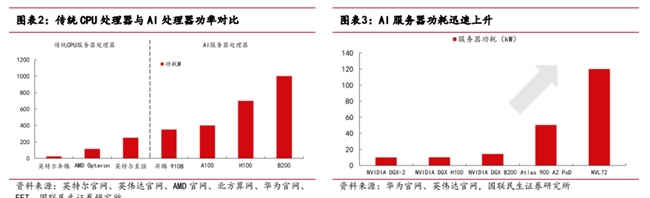
Core Insights - The rapid growth in AI computing power is driving the demand for advanced cooling solutions, with liquid cooling becoming a necessary standard due to the limitations of traditional air cooling systems [1][14] - The period from 2025 to 2027 is identified as a critical window for technology penetration and performance realization in the liquid cooling market [1][14] Group 1: Cooling Demand and Technology Trends - The demand for cooling solutions is increasing due to the exponential growth in computing power driven by AI technologies, leading to significant rises in chip thermal design power [2][11] - Traditional air cooling is inadequate for high-power density data centers, with liquid cooling expected to see increased penetration as a result of its superior thermal management capabilities [5][12] - The cooling methods for data centers vary based on power density, with air cooling suitable for low-density centers and liquid cooling becoming essential for high-density environments [6] Group 2: Market Growth and Projections - The global data center capacity using liquid cooling is projected to increase significantly, with net additions expected to reach 2.82 GW by 2025 and 9.10 GW by 2028, reflecting a compound annual growth rate (CAGR) of 47.78% [11] - The liquid cooling market in China is forecasted to grow from 149.8 billion yuan to 347.4 billion yuan between 2025 and 2027, with an overall CAGR of 52.3% [12][14] - The market for newly constructed liquid cooling systems is expected to grow from 11.69 billion yuan in 2025 to 30.51 billion yuan by 2027, with a CAGR of 61.6% [12] Group 3: Industry Ecosystem - The liquid cooling industry ecosystem includes upstream component suppliers, midstream IT equipment manufacturers, and downstream users such as telecom operators and third-party IDC service providers [8] - Key components in the liquid cooling supply chain include quick disconnects, cooling distribution units, and various cooling liquids and systems [8] Group 4: Investment Opportunities - Companies such as Inspur (曙光数创), High Cloud (高澜股份), and others are positioned to benefit from the growth in the liquid cooling market, driven by the increasing demand for efficient cooling solutions in data centers [14]




红杏产业 “突围”,解锁乡村振兴密码
Zhong Guo Chan Ye Jing Ji Xin Xi Wang· 2025-08-06 07:21
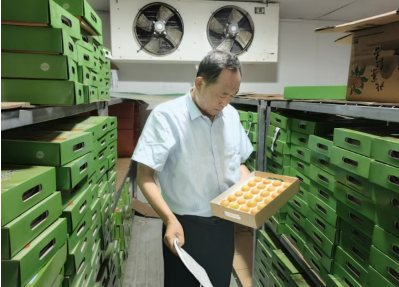
在北京市平谷区东北部燕山余脉的褶皱里,北寨村的古杏林沐浴着晨光。这个因明长城烽火台得名的古 村落,保存着华北地区最完整的百年红杏古树林。 刘福东抽检红杏质量 平谷地区有记载的杏树种植历史始于西汉初年。1978年,在北寨村庙沟先后发现了两颗北寨红杏的祖 树,一棵是甜核,被称为"红杏王",另一棵是苦核,被称为"幸运树",其中甜核的杏树就是北寨红杏最 早嫁接育苗的主要种源,对北寨红杏的发展做出了巨大贡献。北寨村以红杏为主导产业,7000余亩的年 产量约120万斤。北寨村通过优化村经济结构,着力提升集体经济"造血"功能与质量,以差异化战略克 服产业同构与同质化竞争,打造区域品牌,因地制宜抱团发展做强做优做大村集体产业。 北寨村通过召开壮大集体经济组织动员会宣传入股合作社的政策及优势,引导村民主动入股合作社,截 止目前入社农户达99.7%以上,基本实现村民即社员。通过村民入社也能实现村民收益与村规民约挂 钩,把村民自治公约和入社章程与社员年中发放福利分红直接挂钩,对违反人居环境治理,私搭乱建, 损坏集体公益设施等违反公序良俗的行为,全部纳入入社签约管理,违反入社公约的在年底一律减免部 分分红,实现村庄的规范性治理。 未 ...
施耐德电气发布Lexium 18ME系列伺服驱动器和BEH18系列伺服电机
Zhong Guo Chan Ye Jing Ji Xin Xi Wang· 2025-08-06 07:08
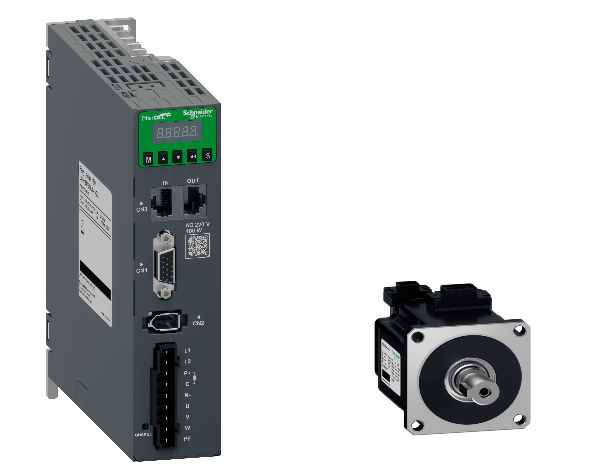
Core Viewpoint - Schneider Electric has launched the Lexium18ME series servo drives and BEH18 series servo motors as part of its new generation machine motion control "Golden Four Set" solution, focusing on enhancing productivity and efficiency while reducing production costs in various industries [1][3]. Group 1: Product Features - The Lexium18M series achieves an optimized balance between productivity, efficiency, and cost reduction, providing effective motion control solutions for industries such as semiconductors, electronics, material processing, and packaging [3]. - The series adheres to Schneider Electric's high standards for research and testing, ensuring stability, reliability, and precision in response, meeting the demands of continuous high-precision production [3]. - The Lexium18ME supports EtherCAT communication protocol and includes features like position comparison, friction compensation, and mechanical characteristic analysis, simplifying the debugging process and enhancing system response speed [4][5]. Group 2: Market Adaptation - The product offers a wide range of power supply options, supporting AC220V (200W~750W) and AC380V (1kW~7.5kW), aligning with domestic user needs [4]. - The design considers installation convenience, allowing for installation without additional transformers, thus reducing costs and space requirements [4]. - The BEH18 motor has a more compact design compared to previous generations, supporting multiple cable installation directions for enhanced user convenience [4]. Group 3: Local Innovation and Application - The Lexium18M series was developed with local market needs in mind, providing various options such as 23-bit optical or 17-bit magnetic encoders, allowing customers to select products based on specific application scenarios [5]. - In high-precision applications, the series has demonstrated significant improvements, such as achieving a machining precision of ±0.01mm and a positioning delay of 60ms [5]. - The Lexium18ME and BEH18 products, along with Altivar305 variable frequency drives and Harmony ET5 human-machine interfaces, form a comprehensive solution to meet the high-efficiency operational needs of industries like logistics, packaging, and textiles [5][6]. Group 4: Future Outlook - Schneider Electric emphasizes its commitment to local innovation and meeting market demands, aiming to enhance its product offerings in industrial automation to support efficient transformation and high-quality development for enterprises [6].
武昌营销部加速“9233”移动拜访平台核心指标落地
Zhong Guo Chan Ye Jing Ji Xin Xi Wang· 2025-08-06 07:04
市场部执行,精耕细作。各市场部以"精准指导—动态优化—资源保障"为核心,推动服务落地。在一次 专项提升行动中,某市场部针对低执行率客户重新规划了拜访路径。客户经理通过平台分析客户需求, 将原本分散的拜访点整合为高效路线,一周内完成优先级客户全覆盖。这一改进也获得了客户的积极回 应。武汉某医药连锁店的采购主管陈经理感慨:"以前客户经理来拜访总是'打游击',现在他们带着数 据和方案上门,我们的合作更高效了。市场部还通过灵活调整人员分工,确保服务无死角。 为深化客户经理职能转型,武昌营销部围绕"9233"移动拜访平台中的三大核心指标——服务策略执行 率、拜访覆盖率以及拜访预警异常情况,从区营销部统筹、市场部执行到客户经理落实三个层面齐心协 力,构建了一个从目标分解到过程管控直至闭环优化的工作机制,助力营销服务质量提升。 营销部引领,精准导航。区营销部通过将核心指标纳入年度考核体系,为一线人员提供了明确的目标方 向。在"周通报+月总结"的动态监测机制下,客户经理的服务效率显著提升。此外,区局组织的"平台操 作演练会"也收获了好评。客服部用PPT演示派单逻辑,手把手教会营销人员如何通过平台反馈需求。 现在客户经理能精准 ...
AI重构睡眠经济 喜临门以脑电科技开启睡眠健康管理新时代
Zhong Guo Chan Ye Jing Ji Xin Xi Wang· 2025-08-06 07:02
Core Insights - The Chinese government has approved a plan to implement "Artificial Intelligence +" actions, marking a new phase for AI applications in the country, particularly benefiting the sleep industry, which intersects health and home sectors [1] - The smart sleep technology market is projected to grow from $15 billion in 2022 to $62.1 billion by 2031, with a compound annual growth rate (CAGR) of 17.4% [1] - Company Xilinmen is transitioning from a traditional mattress manufacturer to a comprehensive health management service provider, leveraging EEG technology and ecosystem partnerships [1] Group 1: Technological Advancements - Xilinmen has partnered with BrainCo to launch the "宝褓BrainCo" smart mattress, utilizing non-invasive EEG technology to capture brainwave signals and create medical-grade sleep profiles [2] - The system can reduce average sleep onset time from 70 minutes to 30-35 minutes and significantly increase deep sleep duration [2] - Xilinmen has achieved a technological leap with the launch of the AISE宝褓 series and the establishment of a joint research center with Tsinghua University focusing on emotional AI systems [2][3] Group 2: Market Validation - Since its launch, Xilinmen's AI mattress has gained market recognition, with sales exceeding 100 million yuan in 2024 and a successful opening of an AI sleep experience center in Changchun [4] - The "aise宝褓" series is now available in over 200 stores nationwide and has expanded into Southeast Asia and the Middle East, providing personalized mattress recommendations to over 130,000 users [4] - The company's transformation has led to a significant increase in product pricing and the integration of sleep data with health management services [4] Group 3: Future Prospects - As brain-computer interface and generative AI technologies mature, Xilinmen's "AI companionship" strategy will evolve, offering customized sleep solutions based on user data [5] - The collaboration with BrainCo will extend beyond mattresses to include smart sleep pillows and other products, enhancing supply chain and channel cooperation [5] - Xilinmen aims to leverage a vast sleep data database and partnerships with top institutions to transition from "smart" to "intelligent" systems, striving for the vision of "no one sleepless tonight" [6]

从潜力商家的流量扶持到能力成长,“天猫千星计划”第三季度再升级
Zhong Guo Chan Ye Jing Ji Xin Xi Wang· 2025-08-06 06:59
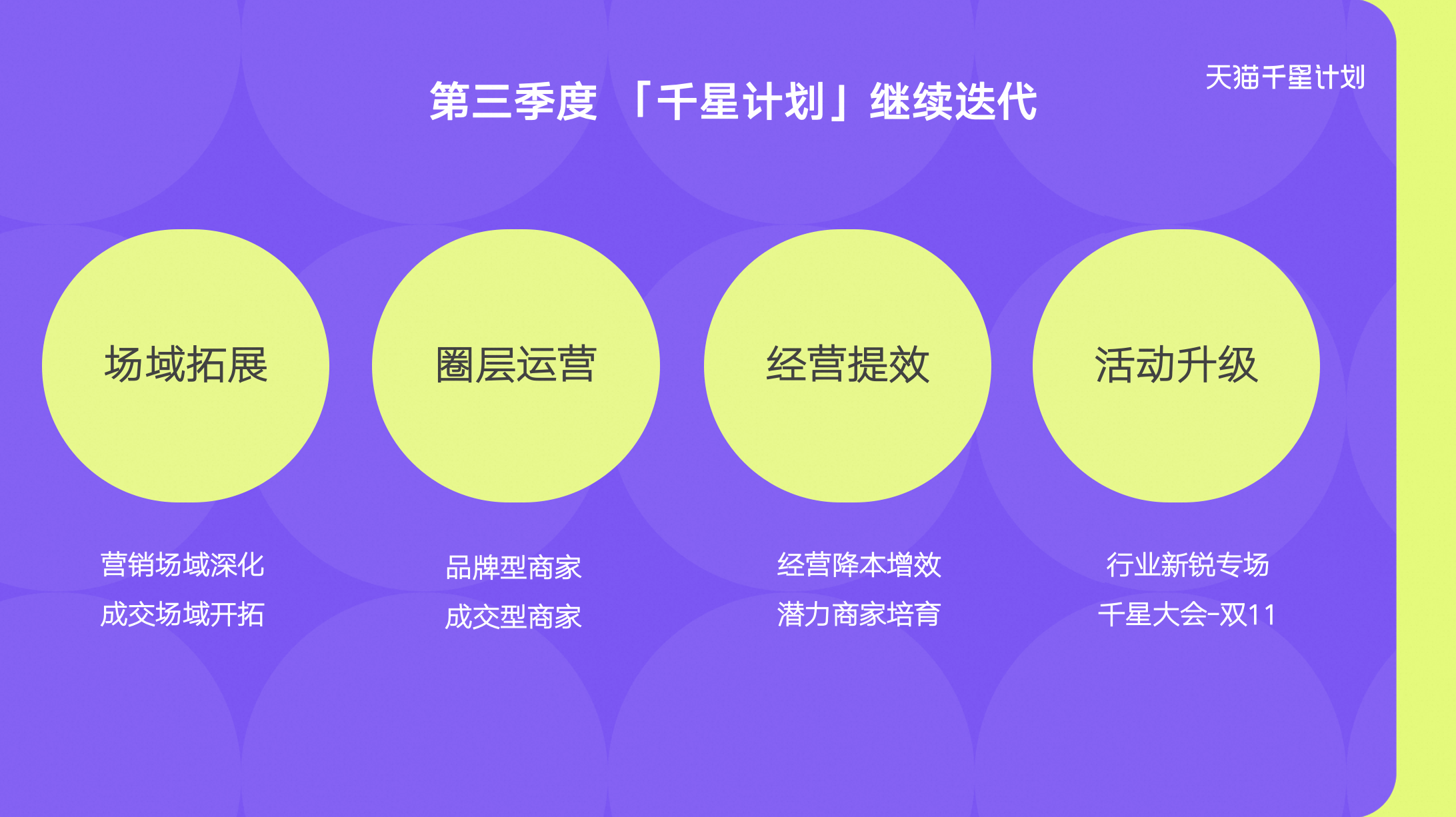
Core Insights - The "Tmall Qianxing Plan" has been upgraded in Q3, focusing on supporting mid-tier potential merchants through various innovative strategies, including traffic support and capability growth [1] - In Q2, the plan significantly boosted merchant performance, with 317 merchants achieving over 30% year-on-year sales growth, and 41 merchants surpassing 10 million in quarterly sales for the first time [1] Group 1: Field Expansion - Marketing field enhancement includes collaboration with Tmall U First, Tmall Treasure New Brands, and Tmall New Product Innovation Center to create tailored mechanisms for Qianxing merchants [3] - Sales field expansion involves partnerships with Taobao live-streaming influencers and establishing dedicated areas for potential brands to facilitate efficient collaboration [3] Group 2: Layered Operations - Brand-driven merchants receive continuous support from dedicated staff to assess resources and develop brand enhancement plans, leveraging marketing resources from Tmall [4] - Product-driven merchants focus on rapid growth and efficiency, with strategies to expand sales channels and enhance conversion rates through various resources and training [4] Group 3: Operational Efficiency - Cost reduction and efficiency improvements are achieved through collaboration with the Lingyang team, offering free resources and exclusive discounts to lower operational costs [5] - Capability enhancement is facilitated through specialized training programs aimed at improving merchants' operational skills and data application abilities [5] Group 4: Activity Upgrades - Regular closed-door meetings for emerging brands provide opportunities for merchants to share experiences and explore market trends [6] - The annual Qianxing Conference focuses on the Double 11 sales event, providing merchants with insights into platform resource policies and marketing strategies [6] - Participating merchants can also engage in a competitive ranking event to validate their growth and potentially earn operational incentives [6]