Bei Jing Ri Bao Ke Hu Duan

Search documents
西芒杜将重塑全球铁矿石供应格局
Bei Jing Ri Bao Ke Hu Duan· 2025-11-12 00:39
Core Insights - The commissioning of the Simandou iron ore mine in Guinea is expected to reshape the global iron ore supply landscape, with an initial annual production capacity of 120 million tons [1][2] - Guinea is poised to become the world's third-largest iron ore supplier after Australia and Brazil, potentially altering the supply and pricing structure of iron ore globally [2][3] - The high-grade iron ore from Simandou, with a content of approximately 66%, offers higher smelting efficiency and aligns with the steel industry's need to reduce emissions [1][3] Industry Impact - The development of the Simandou project is anticipated to double Guinea's GDP and create thousands of jobs, fostering economic corridors around railways and ports [3] - The project is a significant milestone in China-Guinea mining cooperation, enhancing Guinea's sustainable and inclusive development [2][3] - The diversification of iron ore imports through Simandou will strengthen China's supply chain security and reduce reliance on Australia and Brazil, enhancing China's bargaining power in the iron ore market [4]



中国奥委会签约一家官方赞助商
Bei Jing Ri Bao Ke Hu Duan· 2025-11-12 00:07
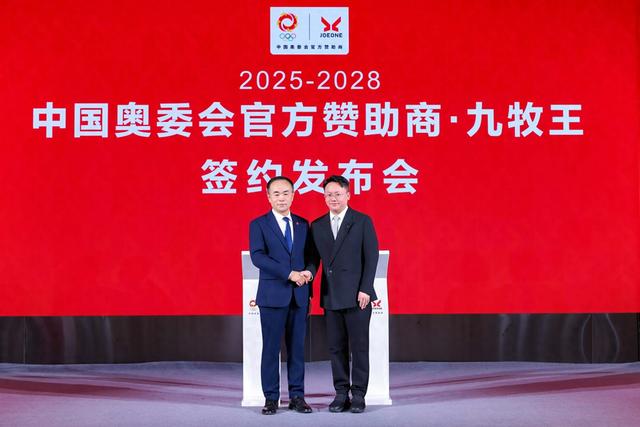
Group 1 - The core viewpoint of the articles highlights the partnership between the Chinese Olympic Committee and Jiumuwang Company, marking a significant upgrade in their collaboration as Jiumuwang becomes the official sponsor of the Chinese Olympic Committee [1][3] - The partnership aims to provide superior ceremonial attire and service support for the Chinese sports delegation, reflecting the responsibility of national brands in supporting national strategies and showcasing modern corporate innovation [1][3] - The collaboration will span from 2025 to 2028, coinciding with major international events such as the 2026 Aichi-Nagoya Asian Games and the 2028 Los Angeles Olympics, emphasizing the integration of traditional Chinese culture in the design of the sports delegation's attire [3] Group 2 - A design competition for the ceremonial attire of the Chinese sports delegation for the Aichi-Nagoya Asian Games has been launched, aiming to discover new design talents and promote diverse expressions of Chinese culture [3] - The involvement of Olympic medalists in the signing event underscores the significance of this partnership in the context of Chinese sports and national pride [3]

那是辽阔的草原,那里有“嗨皮”的“村排”
Bei Jing Ri Bao Ke Hu Duan· 2025-11-12 00:00
Core Viewpoint - The rise of volleyball in Inner Mongolia, particularly in the Etuoke Qianqi region, has transformed local culture and community engagement, with over 400 volleyball events held annually and significant participation from the local population [1][2]. Group 1: Volleyball Events and Participation - Etuoke Qianqi has become a hub for volleyball, hosting more than 400 events each year, with over 85% of villages and communities participating in volleyball competitions [1][2]. - In 2025, a series of volleyball events are scheduled, including the first rural farmer volleyball competition in May and a national amateur volleyball championship in August [2]. Group 2: Historical Context and Development - The popularity of volleyball in the region can be traced back to 1968 when knowledge youth from Nanjing introduced the sport to local communities, leading to the establishment of the first women's volleyball team in 1971 [2]. - The establishment of the "Village Volleyball Office" by local authorities has facilitated the organization of events and the construction of volleyball facilities, resulting in over 336 outdoor courts and 22 indoor gyms [3]. Group 3: Community Engagement and Lifestyle Changes - Volleyball has become a new leisure activity for local herders, replacing traditional pastimes like playing mahjong, and fostering a sense of community and enjoyment [4]. - The sport has attracted participants of all ages, with facilities being used by both young children and elderly community members, indicating a broad appeal across generations [3][4].
人形机器人、脑机接口、6G将如何改变生产和生活?
Bei Jing Ri Bao Ke Hu Duan· 2025-11-11 23:21
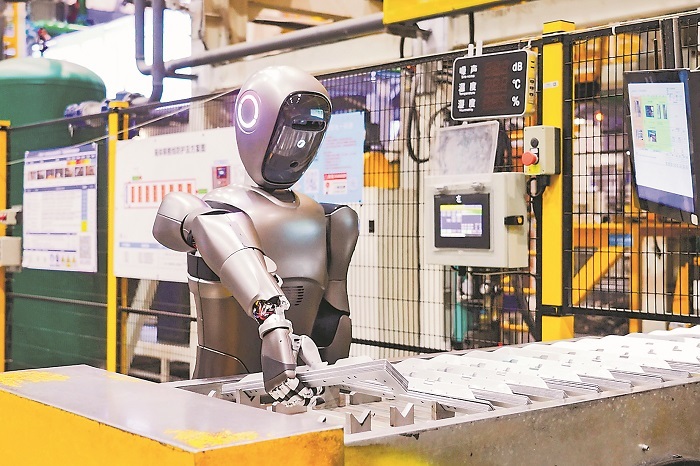
Core Insights - The article discusses the rapid advancements in various future industries in China, particularly focusing on humanoid robots, brain-computer interfaces, and 6G technology, highlighting their potential to drive economic growth and improve quality of life [2][5][6]. Group 1: Humanoid Robots - The humanoid robot "Mei Luo" is capable of autonomous decision-making and performing quality inspections in manufacturing settings, showcasing the integration of embodied intelligence in industrial applications [3]. - The humanoid robot market in China is projected to reach 870 billion yuan by 2030, indicating significant growth potential in this sector [3]. - Midea Group is leveraging its manufacturing capabilities to transition humanoid robots from experimental phases to practical applications, creating a closed-loop system with factory operations [3][4]. Group 2: Brain-Computer Interfaces - Brain-computer interface technology is moving from research to clinical applications, with a market size expected to exceed 3.8 billion yuan by 2025, reflecting its growing importance in healthcare [6]. - The technology offers innovative solutions for conditions like Alzheimer's disease, providing new hope for intervention and treatment [6]. - Companies in the brain-computer interface sector are expected to achieve breakthroughs in core technologies, enhancing their commercial applications in rehabilitation and treatment of neurological disorders [6]. Group 3: 6G Technology - The transition from 5G to 6G is marked by the introduction of 5G-A technology, which enhances communication reliability and supports various industrial applications, including autonomous driving and smart manufacturing [7][8]. - The 6G market in China is anticipated to surpass 1.2 trillion yuan by 2030, indicating a substantial opportunity for growth and innovation in telecommunications [8]. - 6G technology is expected to significantly improve performance in multiple areas, including real-time data processing for autonomous vehicles and enhanced industrial internet capabilities [8].

中关村如何继续做创新的破风者?
Bei Jing Ri Bao Ke Hu Duan· 2025-11-11 22:27
Core Insights - Zhongguancun is recognized as a leading hub for technological innovation in China, maintaining its top position among 178 national high-tech zones, with nearly 10 trillion yuan in total revenue, accounting for about one-sixth of the national high-tech zone revenue [1] Innovation and Transformation - The number of invention patents authorized per 10,000 employees in Zhongguancun reached 174.7 in 2024, which is 1.8 times that of 2020, indicating a significant increase in innovation output [1] - The logic of innovation results transformation is changing, requiring a shorter transformation chain that includes both concept and value validation to assess commercial viability earlier [2][3] Talent and Education - Zhongguancun boasts a concentration of top-tier talent, with major universities and research institutions located in the area, which is seen as a core advantage for technological innovation [4] - New educational institutions like Beijing Zhongguancun Academy and Shanghai Chuangzhi Academy are being established to better align talent cultivation with the needs of technological and industrial transformation [5] Industry Dynamics - Major industry players are beginning to vertically integrate to control the development of the industry, as seen with OpenAI's establishment of its own infrastructure [2] - Companies are increasingly recognized as key players in innovation, with the ability to connect market needs with talent, technology, and capital [6] Government Role - Government departments need to adapt their regulatory approaches to keep pace with rapid innovation, moving away from solely relying on foreign experiences [3] - A supportive environment that encourages risk-taking and tolerates failure is essential for fostering innovation [6] Competitive Landscape - The gap between Zhongguancun and global innovation hubs like Silicon Valley and Cambridge is narrowing, with advantages in talent systems, innovation atmosphere, and reform measures [7]

当巴西总统走下比亚迪
Bei Jing Ri Bao Ke Hu Duan· 2025-11-11 15:55
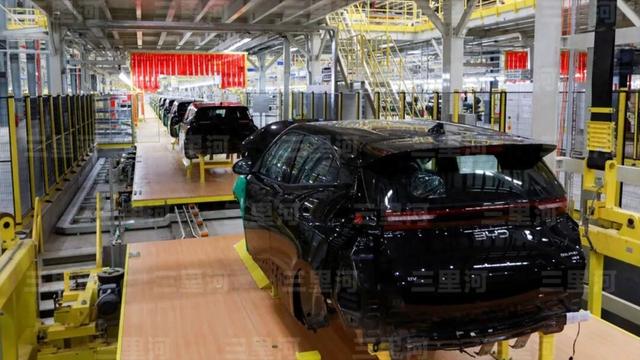
Group 1 - The COP30 conference opened in Belem, Brazil, highlighting the country's commitment to climate change issues, with President Lula arriving in a BYD electric SUV, symbolizing the shift towards electric vehicles as a key solution to climate change [1][3] - This year's conference features Chinese electric vehicle brands like BYD and Great Wall as official vehicles, marking a significant presence in the local transportation landscape [3] - BYD's factory in Brazil has produced its 14 millionth new energy vehicle, showcasing the company's expansion in Latin America, while Great Wall has also established operations in a former Mercedes-Benz factory [4] Group 2 - The shift towards Chinese electric vehicles in Brazil reflects a broader trend of Chinese manufacturing taking root in the global automotive industry, particularly in the context of electric and connected vehicles [4] - The absence of a high-level U.S. representative at the conference indicates a shift in global leadership in climate technology, with other nations continuing to advance despite the lack of U.S. involvement [4] - China's recent white paper emphasizes the need for global cooperation in addressing climate change, advocating for a new, more equitable, and resilient low-carbon development model [6]

全球最大未开发铁矿投产,中企助力改写全球矿石供应格局
Bei Jing Ri Bao Ke Hu Duan· 2025-11-11 15:14
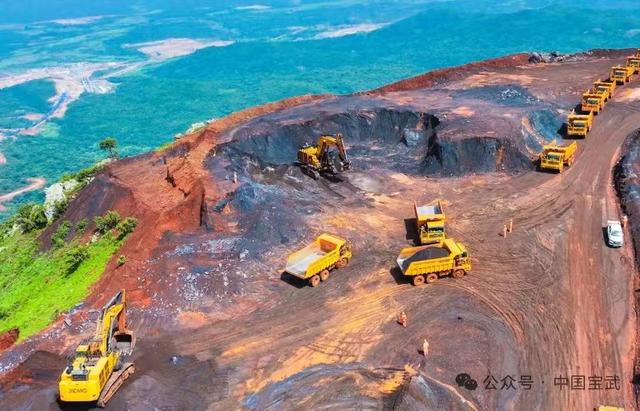
Core Viewpoint - Guinea's Simandou iron ore project, which is set to begin production, is expected to reshape the global iron ore supply landscape, with an initial annual output of 120 million tons, making Guinea a significant player in the iron ore market [1][3]. Group 1: Project Overview - Simandou iron ore has proven reserves of approximately 4.4 billion tons, with an estimated total of 5 billion tons, and a high grade of about 66%, significantly above the global average [3]. - The project is backed by Chinese companies, including China Aluminum and China Baowu, and is seen as a strategic partnership that will enhance Guinea's economic development [1][4]. - The successful development of the Simandou project is expected to create thousands of jobs and double Guinea's GDP, transforming its economy from a single-resource dependency [6]. Group 2: Economic Impact - The iron ore production from Simandou will position Guinea as the world's third-largest iron ore supplier after Australia and Brazil, altering the current supply and pricing structure dominated by a few multinational companies [3][4]. - Guinea's mining sector, which contributes about 35% to its GDP, has primarily relied on bauxite; the introduction of iron ore will diversify its economic base [4][6]. - The project is anticipated to strengthen China's iron ore supply chain security, reducing reliance on Australia and Brazil, and enhancing China's bargaining power in the global market [6]. Group 3: Infrastructure Development - Significant infrastructure challenges were overcome, including the construction of a modern railway and port facilities, which are crucial for the project's success [4][6]. - The development of the Maribaya port and the railway connecting Simandou is a testament to China's construction capabilities and has received recognition from the Guinean government [4]. Group 4: Regional Context - The political landscape in West Africa, including recent coups, has created both opportunities and risks for foreign investment, with Guinea's government pursuing a pragmatic economic policy [7][9]. - The historical ties between China and Guinea, established since 1959, have laid a foundation for ongoing cooperation in infrastructure and mining sectors [9].
“从历史展望未来的行程”,驻华使馆领事官员文旅体验活动走进海淀
Bei Jing Ri Bao Ke Hu Duan· 2025-11-11 13:17
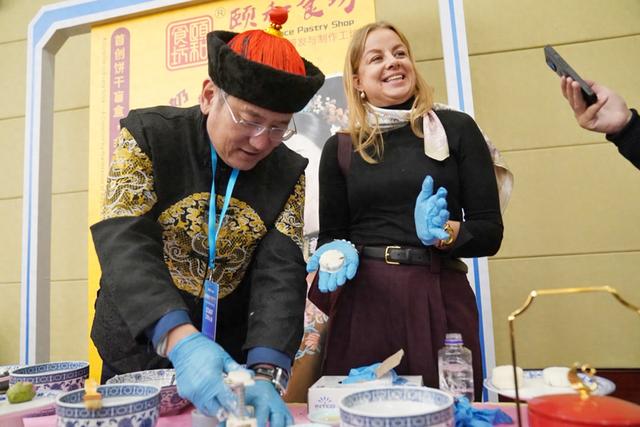
Group 1 - The event "Tech Pulse, New Visions in Culture and Tourism" was organized by the Ministry of Culture and Tourism, showcasing Beijing's dual identity as a center for technological innovation and a historical cultural city [3][5] - Participants included over 50 diplomats and consular officials from more than 30 countries, who experienced advanced technologies such as immersive CAVE spaces and 3D display technology at the Liad Group [3][5] - The event featured a historical exhibition showcasing artifacts from the Neolithic era to the Qing Dynasty, allowing international guests to appreciate Beijing's rich cultural heritage [3][5] Group 2 - The event highlighted over 490 core technological innovations, including humanoid robots and suborbital spacecraft, demonstrating China's advancements in various fields [3][5] - Cultural performances, such as the original classical dance drama "Cao Xueqin," were presented, emphasizing the blend of traditional art and modern technology [5] - The Ministry of Culture and Tourism reported that China has signed cultural cooperation agreements with over 150 countries, promoting a global network for cultural and tourism collaboration [6]
“京彩大创”大学生创投联盟成立,助力“金种子”从实验室走向市场
Bei Jing Ri Bao Ke Hu Duan· 2025-11-11 12:44
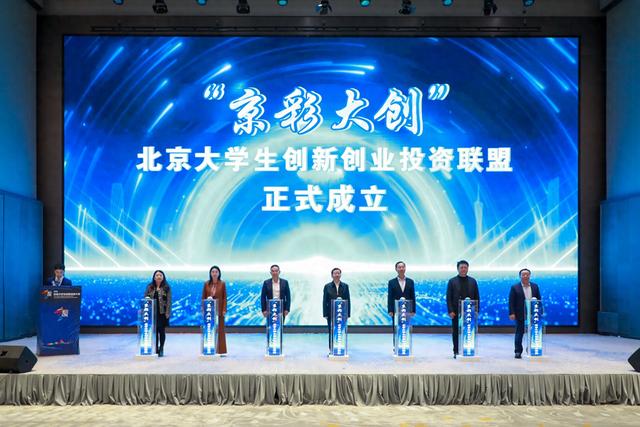
Core Points - The "Jingcai Dachuang" Beijing University Student Innovation and Entrepreneurship Investment Alliance was established to facilitate capital connection and empower the transformation of university scientific achievements [1][3] - The alliance aims to create opportunities for identifying promising projects, such as organizing closed-door roadshows and capital matching events for outstanding projects [3][5] - The initiative is part of a broader support system for university student innovation and entrepreneurship, integrating policies and resources to accelerate the commercialization of student projects [3][5] Group 1 - The alliance attracted participation from 40 financial institutions and leading enterprises [1] - The fourth "Jingcai Dachuang" Beijing University Student Innovation and Entrepreneurship Competition showcased six entrepreneurial teams competing with "hard technology" [3] - The alliance will provide a "financing express" and "resource connection" to support the growth of promising projects [3][5] Group 2 - Initial projects include high-tech innovations such as a robotic band and a space computing base aimed at addressing challenges in low Earth orbit [5] - The robotic hand developed by students can achieve 42 degrees of freedom and is applicable in various fields including industrial automation and scientific research [5] - The space computing base solution includes products like space servers and control computers, enhancing satellite data processing efficiency [5]
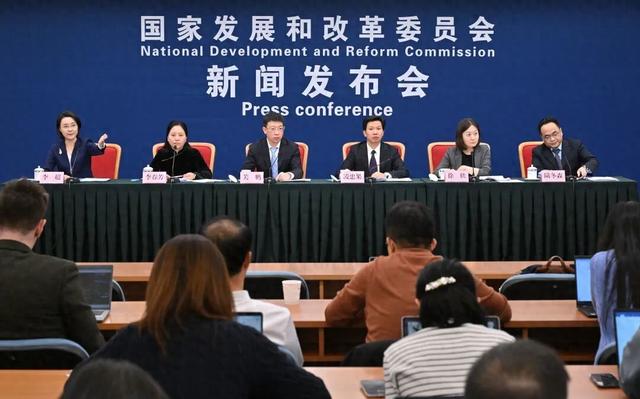
国家发改委新闻发布会,介绍进一步促进民间投资发展有关情况
Bei Jing Ri Bao Ke Hu Duan· 2025-11-11 12:34
Core Viewpoint - The National Development and Reform Commission (NDRC) has introduced measures to promote private investment, addressing challenges and enhancing the investment environment for private enterprises in key sectors [5][6][8]. Group 1: Background and Current Situation - Private investment is a crucial indicator of economic activity, significantly impacting growth, employment, and expectations [5]. - In 2023, private investment has slowed due to international environmental changes and real estate market adjustments, but private project investment excluding real estate has grown by 2.1% year-on-year in the first three quarters [5]. - Infrastructure private investment increased by 7%, and manufacturing private investment rose by 3.2%, indicating stable growth [5]. Group 2: Key Measures Introduced - The measures consist of 13 policies categorized into three areas: expanding access, removing obstacles, and strengthening support [6][7]. - In expanding access, the measures encourage private capital participation in key sectors like railways and nuclear power, with specific shareholding ratios [6][11]. - To remove obstacles, the measures focus on protecting the rights of private enterprises and supporting the establishment of major pilot platforms [7]. - Strengthening support includes increasing central budget investments for eligible private projects and enhancing financing policies [7][26]. Group 3: Focus on Specific Sectors - In the energy sector, private capital is encouraged to participate in nuclear power projects, with a target of 10% shareholding in 2024 and 10%-20% by 2025 [15][16]. - The digital economy is emphasized, with initiatives to support the digital transformation of industries, enhancing efficiency and reducing costs [19][20]. - The production service industry is identified as a key area for private investment, with plans to support capital flow into high-value service sectors [23][24]. Group 4: Investment and Financing Policies - The NDRC aims to enhance the coordination of investment, fiscal, and financial policies to better support private investment [26]. - Specific measures include increasing government procurement for small and medium enterprises and promoting the issuance of infrastructure REITs for private projects [26][38]. - The NDRC has recommended 105 projects for REITs, with 83 already issued, raising a total of 207 billion yuan, expected to drive over 1 trillion yuan in new investments [38][39]. Group 5: Implementation and Future Steps - The NDRC plans to establish a cross-departmental mechanism to ensure the effective implementation of these measures [8]. - Continuous communication with private enterprises will be maintained to address challenges and enhance investment services [30][31]. - The focus will be on creating a favorable environment for private investment in energy and digital sectors, ensuring compliance with regulations in bidding processes [34][47].