Si Chuan Ri Bao

Search documents
《四川省城乡历史文化保护传承体系规划(2024—2035年)(送审稿)》提请审议,至规划期末——国家历史文化名城数量达10座
Si Chuan Ri Bao· 2025-09-29 06:45
Core Viewpoint - The Sichuan Provincial Government has submitted a draft plan for the protection and inheritance of urban and rural historical culture from 2024 to 2035, which systematically categorizes and protects 583 cultural heritage sites and explores a pre-protection catalog management mechanism [1][2]. Group 1: Highlights of the Draft Plan - The draft plan integrates national strategies and systematically organizes cultural resources, addressing key tasks such as the Long River National Cultural Park (Sichuan section) and the Southern Silk Road [2][3]. - It establishes a comprehensive protection framework with a focus on "one core, four corridors, five zones, and multiple points," emphasizing the importance of historical cities, towns, and villages [3]. Group 2: Goals and Implementation - The plan sets phased goals for 2027 and 2035, aiming to establish a historical culture protection system by 2027 and a fully developed system by 2035, ensuring comprehensive protection and utilization of cultural heritage [4]. - Specific targets include reaching 10 national historical and cultural cities, a total of 40 historical cities, and 120 historical cultural districts by the end of the planning period [4].
建设国际旅游城市 宜宾抛出超169亿元机会清单
Si Chuan Ri Bao· 2025-09-29 06:45
Group 1 - The core viewpoint of the news is the announcement of a construction opportunity list for the Yibin International Tourism City, which includes 67 cultural and tourism opportunities with a total investment exceeding 16.9 billion yuan [1][2] - The Yibin government aims to establish itself as an international tourism city by developing various cultural and tourism landmarks, including humanistic landscapes, ecological resorts, wine culture sites, vibrant sports centers, fashion performance centers, and quality consumption centers [1] - Five key projects highlighted include the Yangtze River Music Street renovation, the Wuliangye wine tourism integration project, the Yibin urban sports and cultural complex, the Xianfeng Mountain resort project, and the Shunan Bamboo Sea scenic area performance project [1] Group 2 - The Yibin government plans to allocate over 200 million yuan annually for cultural and tourism development, along with over 2 billion yuan in tourism industry loans and more than 150 million yuan in consumption vouchers to support project implementation [2]
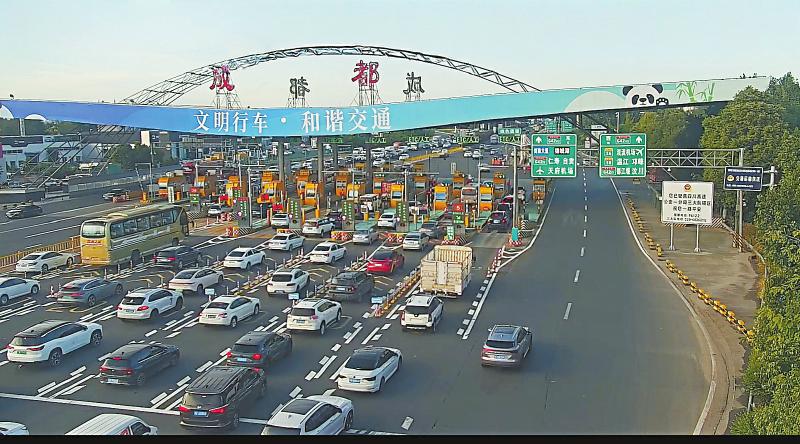
“四变八”成雅高速扩容启动 预计通行能力将提升约50%
Si Chuan Ri Bao· 2025-09-29 00:34
Core Points - The Chengya Expressway expansion project has officially entered the construction phase, marking a significant infrastructure development in Sichuan Province as part of the national "14th Five-Year Plan" [2] - The project involves a total estimated investment of nearly 30 billion yuan, with a planned completion date in 2029 [2] - The expansion will increase the expressway's capacity by approximately 50% by widening the lanes from a dual six-lane and four-lane configuration to a dual eight-lane configuration [3] Group 1: Project Overview - The Chengya Expressway, originally opened in 2000, will be expanded to approximately 159 kilometers, including a new Lu Mountain branch line of 24.367 kilometers [2] - The main line will undergo significant upgrades, including the reconstruction of 20 interchanges and the addition of 4 new interchanges [2] - The new Lu Mountain branch will reduce travel time between Lu County and Mingshan District from 1 hour to 20 minutes, addressing the lack of direct expressway connections [2] Group 2: Technological and Operational Enhancements - The expansion will incorporate smart highway features, enhancing operational management through digital and intelligent systems, including dynamic lane control and emergency response measures [3] - The project aims to create a safer, more convenient, and comfortable expressway experience for travelers, integrating tourism and transportation [3] Group 3: Construction Strategy - The construction will focus on minimizing traffic disruption by implementing design and traffic organization strategies, such as single-side widening and phased construction [4] - The project will ensure that the existing road base remains stable while integrating new construction, addressing potential settlement issues through advanced engineering techniques [4] - All construction units have commenced work on various segments of the project, with simultaneous development of supporting infrastructure to ensure effective logistics and support [5]

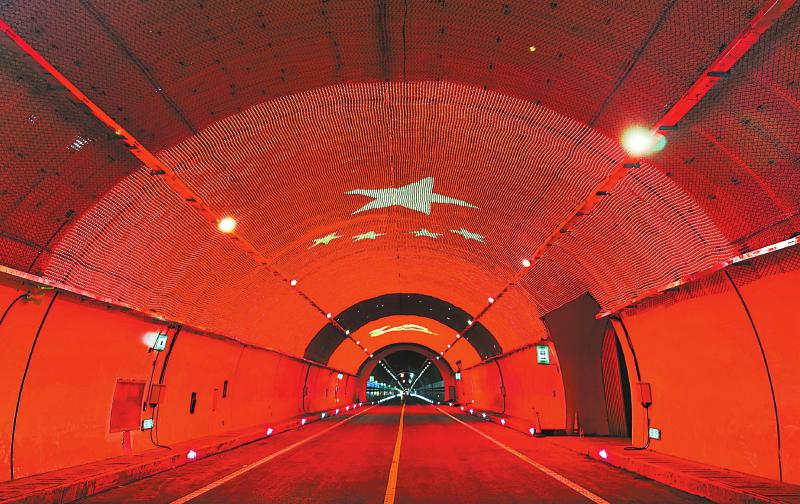
今年是中央红军长征翻越夹金山九十周年 夹金山隧道建成 一小时“翻越”变十分钟“穿越”
Si Chuan Ri Bao· 2025-09-29 00:34
Core Viewpoint - The completion of the Qiaojin Mountain Tunnel, the longest secondary highway tunnel in China, significantly reduces travel time across the mountain and addresses transportation challenges for 110,000 residents during winter snow closures [3][4]. Group 1: Project Overview - The Qiaojin Mountain Tunnel spans 10.07 kilometers, with the main tunnel measuring 9.35 kilometers and a parallel tunnel of 9.36 kilometers [6]. - The project was initiated on December 26, 2021, with a total investment exceeding 1.8 billion yuan [6]. - The tunnel is designed to accommodate a speed of 60 kilometers per hour, adhering to secondary highway technical standards [6]. Group 2: Environmental Considerations - The tunnel's construction was mindful of the ecological impact, particularly as it is located within a giant panda national park [4]. - To minimize ecological disruption, the design of the ventilation and smoke exhaust system was modified from conventional shafts to parallel tunnels [4]. Group 3: Construction Achievements - The project utilized a Tunnel Boring Machine (TBM) for the first time in the construction of a national highway, achieving remarkable progress rates: 50 meters per day, 736 meters per month, and 1,000 meters over 40 consecutive days [4]. - The TBM used for the Qiaojin Mountain Tunnel was repurposed from a previous project, significantly reducing costs [4]. Group 4: Historical Significance - The tunnel is located at an average altitude of 3,000 meters and serves as a critical route for emergency rescue operations during natural disasters, such as the Wenchuan and Lushan earthquakes [4]. - The historical context of the area is highlighted by its association with the Long March, where key leaders of the Red Army traversed the mountain [3].
算力突破、大模型进深水区、机器人走入千家万户、智能终端百花齐放——四川人工智能向“新”奔腾
Si Chuan Ri Bao· 2025-09-29 00:34
Group 1 - The core viewpoint of the news highlights the rapid development of the artificial intelligence (AI) industry in Sichuan, with significant investments and a focus on enhancing computing power and AI applications [1][2][4] - Sichuan's AI industry chain office announced 10 computing power demands, including a proposed investment of 2 billion yuan in the Mianyang Economic Development Zone AI Computing Center and 330 million yuan for the Meishan Big Data Center transformation project [1][2] - The "Tianfu Gathering Strength, Smart Chain Future" AI industry conference attracted over 1,000 participants, showcasing advancements in AI technologies and products, including robots for various applications [1][4] Group 2 - The demand for computing power is increasing rapidly in the robotics industry, with a focus on expanding computing infrastructure to reduce application costs and accelerate deployment [2][3] - A "computing power supermarket" concept was introduced, allowing enterprises to select cost-effective computing solutions tailored to different AI training and inference scenarios [3] - The integration of AI technologies with industry needs is emphasized as a key to future development, with plans for collaboration between enterprises, universities, and research institutions [4][6] Group 3 - AI agents, capable of perceiving environments and taking actions to achieve specific goals, are identified as a significant trend in 2023, with a focus on their autonomous and interactive capabilities [5][6] - The combination of large models and AI agents is driving industry transformation, with applications in e-commerce and industrial production to enhance efficiency [6] - Sichuan is accelerating its layout in AI agents, with numerous projects identified in the supply-demand list, indicating a push towards new heights in artificial intelligence [6]

宜宾抛出超169亿元机会清单
Si Chuan Ri Bao· 2025-09-28 22:42
Core Insights - Yibin is launching a comprehensive plan to develop its international tourism city, with a total investment exceeding 16.9 billion yuan across 67 cultural and tourism opportunities [1] - The city aims to enhance its cultural tourism identity through five key projects, including the renovation of the Yangtze River Music Street and the integration of Wuliangye's wine tourism [1] Group 1: Project Overview - The five highlighted projects include: 1. Yangtze River Music Street Renovation Project 2. Wuliangye Wine Tourism Integration Project 3. Yibin Urban Sports and Culture Complex Operation Project 4. Xianfeng Mountain Resort and Health Retreat Project 5. Shunan Bamboo Sea Scenic Area Performance Project [1] Group 2: Investment and Funding - Yibin plans to allocate over 200 million yuan annually for cultural tourism development, alongside more than 2 billion yuan in tourism industry loans and 150 million yuan in consumption vouchers to support project implementation [2]
四川港投:挺起内陆开放高地“硬脊梁”
Si Chuan Ri Bao· 2025-09-28 22:41
Core Viewpoint - Sichuan Port Investment Group (四川港投) has established itself as a key player in supporting the open economy of Sichuan province, leveraging its logistics and trade capabilities to enhance the province's connectivity and trade efficiency in the context of national strategies like the Belt and Road Initiative and the Western Land-Sea New Corridor [11][12][13]. Group 1: Company Development and Achievements - Sichuan Port Investment Group has been recognized as one of the top 500 Chinese enterprises, with 17 companies from Sichuan making the list in 2025 [11]. - Since its establishment, the asset scale of Sichuan Port Investment Group has doubled, and it has maintained its position as the leading provincial enterprise in foreign trade for three consecutive years [12]. - The company has developed nearly 50 direct shipping routes to Japan, South Korea, and Southeast Asia, and operates over 6,000 cross-border truck services [12]. Group 2: Strategic Initiatives - The company has implemented a "one carrier, four platforms" development strategy, focusing on building a comprehensive logistics and trade service platform [11]. - Sichuan Port Investment Group has invested in the construction of the Chengdu South Collection and Distribution Center, aiming for an annual output value of 10 billion yuan and an import-export volume of 2 billion yuan [12]. - The company has established a multi-modal transport digital platform that has reduced cargo matching time from days to minutes, cutting logistics costs by 15% to 30% [12]. Group 3: Infrastructure and Logistics Network - Sichuan Port Investment Group has become the main force in water transport construction in the province, accounting for over 70% of water transport investment and 90% of container throughput [11][12]. - The company is actively developing a multi-dimensional transportation network that integrates rail, road, and air transport, enhancing the logistics capabilities of Sichuan [12]. - The company has built a comprehensive logistics data interaction system, utilizing AI and big data to optimize logistics operations [12][13]. Group 4: Social Responsibility and Innovation - Sichuan Port Investment Group has been recognized for its contributions to social responsibility, including helping underdeveloped areas and promoting sustainable practices [13]. - The company has initiated innovative projects such as a zero-carbon smart logistics park, which aims to reduce carbon emissions significantly [13]. - Sichuan Port Investment Group is committed to integrating logistics with technology and finance, creating a new model for the logistics industry [13].
四川液冷产业整体处于快速增长阶段 重点做好新技术研发和融入算力生态
Si Chuan Ri Bao· 2025-09-28 22:36
Core Insights - The liquid cooling market is experiencing rapid growth due to the increasing demand for AI computing power and the performance enhancement of computing chips [1][2] - By 2025, the liquid cooling server market in China is projected to reach $3.39 billion, with a compound annual growth rate (CAGR) of approximately 48% from 2025 to 2029 [1] - The demand for liquid cooling is closely linked to the development of high-power domestic chips, which will transition liquid cooling from an optional to a necessary solution [1][2] Industry Overview - The primary technologies for cooling in data centers are liquid cooling and air cooling, with liquid cooling gaining traction in recent months [1] - The current liquid cooling technology landscape includes cold plate, immersion, and spray cooling methods, with cold plate technology expected to dominate the market for the next 3-5 years due to its cost-effectiveness and maturity [1][2] - The liquid cooling market is anticipated to reach a scale of 100 billion RMB by 2030, indicating significant growth potential [2] Company Insights - Sichuan Chuanrun Co., Ltd. has developed automated production lines for liquid cooling products, with an annual capacity of up to 1GW [1] - The company expects its liquid cooling-related revenue to exceed 350 million RMB by 2025, with a projected 300% year-on-year growth in data center liquid cooling revenue [1] - Currently, about 80% of the company's revenue comes from overseas markets, highlighting the global demand for liquid cooling solutions driven by AI computing needs [1][2] Market Dynamics - The rapid increase in AI computing power, particularly from NVIDIA's high TDP chips, is driving the demand for liquid cooling solutions [1] - Domestic data centers primarily utilize air cooling due to lower power density, with liquid cooling penetration expected to reach around 10% by 2025 [1] - The liquid cooling industry faces challenges such as a lack of standardization and compatibility issues among different manufacturers, which could hinder growth [2]

扩容和配额
Si Chuan Ri Bao· 2025-09-28 22:33
Group 1 - The core viewpoint of the news is that China's carbon market is experiencing significant growth, with the annual transaction value of carbon emission allowances reaching 18.114 billion yuan in 2024, marking a new high since the market's launch in 2021 [1] - The carbon market serves as a crucial tool for incentivizing low-carbon economic growth by increasing the costs of carbon-intensive goods and services, thereby encouraging a shift towards low-carbon alternatives [1] - The World Bank's report indicates that nearly two-thirds of the global economy has implemented carbon taxes or emissions trading systems, highlighting the global trend towards carbon pricing [1] Group 2 - China's carbon market is still in its early stages, having launched the national carbon emissions trading market in 2021 and the voluntary greenhouse gas reduction trading market in 2024 [1] - The carbon market is expected to accelerate its development during the 14th Five-Year Plan period, with key factors such as management changes and effective price signaling influencing long-term investment decisions by companies [1] - The expansion and allocation of carbon allowances are critical components in the growth of the carbon market [1] Group 3 - The national carbon market has recently expanded to include the steel, cement, and aluminum industries, which together account for over 60% of the country's total carbon dioxide emissions [3] - The Civil Aviation Administration of China is also working on a plan to include the aviation industry in the national carbon market, indicating a broader scope for carbon trading [3] - The central government's guidelines aim for the carbon market to cover major industrial sectors by 2027, accelerating the decarbonization process for industries such as chemicals, petrochemicals, and paper [3] Group 4 - The guidelines propose a shift from intensity-based control of carbon allowances to total quantity control, prioritizing stable industries for total quantity control by 2027 [3] - This approach will involve determining the total emissions for an industry first, followed by the allocation of allowances to individual companies, with an annual reduction in total emissions to enhance the scarcity of carbon allowances [3] - The anticipated decrease in total emissions is expected to signal rising carbon prices in the market, influencing corporate expectations and behaviors [3]
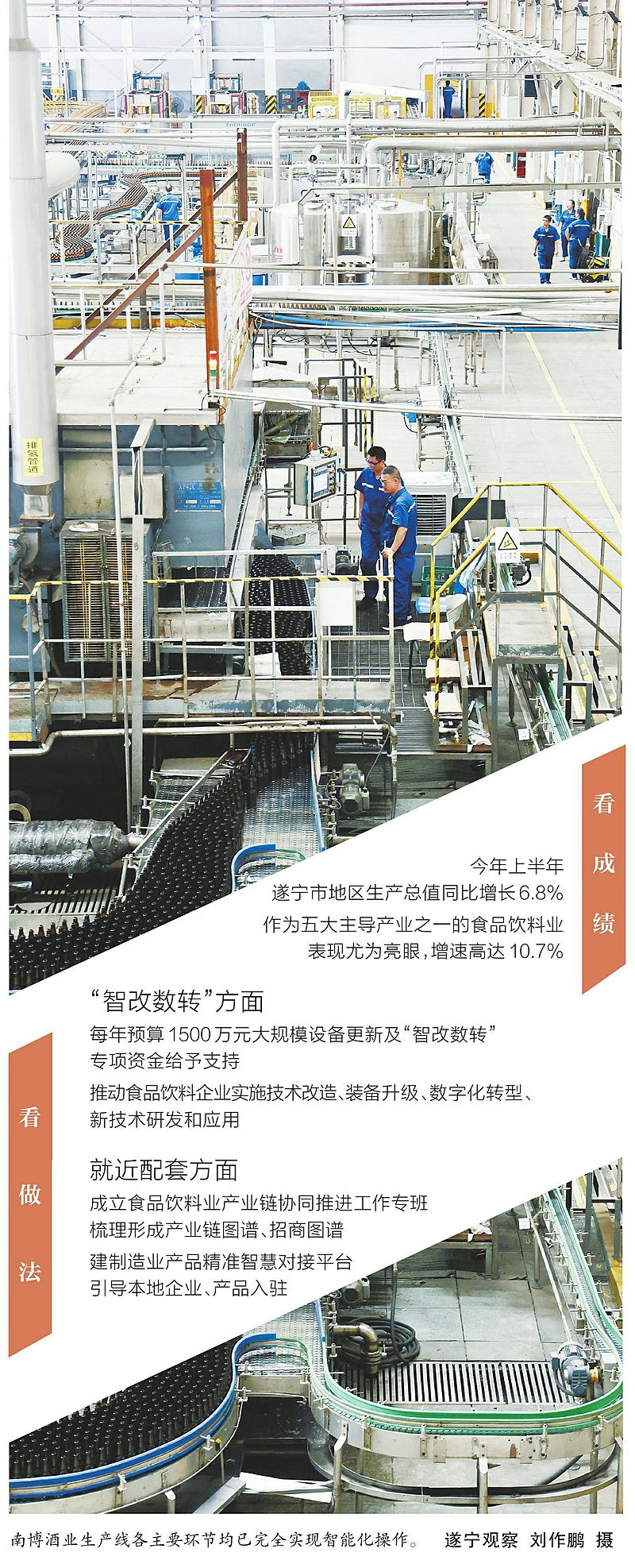
“智改数转”+就近配套 遂宁食品饮料业“风生水起”
Si Chuan Ri Bao· 2025-09-28 06:25
Core Viewpoint - The food and beverage industry in Suining is experiencing significant growth, with a GDP increase of 6.8% in the first half of the year and a remarkable 10.7% growth rate in the food and beverage sector [3][5]. Group 1: Industry Growth and Development - Suining's GDP reached 921.8 billion yuan in the first half of the year, reflecting a year-on-year growth of 6.8% [3]. - The food and beverage industry, one of the five main industries in Suining, has shown a strong performance with a growth rate of 10.7% [3]. - The construction of a new beer production base by Sichuan Nanbo Brewery, which will increase annual beer production capacity to 300,000 tons, exemplifies the rapid development in the sector [3]. Group 2: Technological Advancements - The beer production process has undergone significant automation, reducing the workforce needed from 100-150 workers to about 10 due to smart technology implementation [4]. - The introduction of advanced technologies in meat processing, such as robotic arms and smart quality inspection systems, has led to over 30% savings in labor costs [4]. - AI quality inspection systems in food production have reduced error rates to one in ten thousand, achieving nearly 60% savings in labor costs [4]. Group 3: Policy Support and Investment - The Suining government has launched initiatives to support the digital transformation and technological upgrades in the manufacturing sector, including a budget of 15 million yuan annually for equipment updates [5]. - The 2025 Suining Food and Beverage Industry Promotion Plan aims to enhance production efficiency through technology upgrades and research collaborations [5]. - In the past year, the food and beverage industry in Suining achieved a technological transformation investment of 97 million yuan [5]. Group 4: Local Collaboration and Supply Chain - A recent industry networking event in Suining facilitated connections between over 40 local food and beverage companies, promoting local sourcing and cost-sharing [6]. - Local companies have reported significant reductions in inventory costs and improvements in production efficiency through partnerships with nearby suppliers [6]. - The establishment of a collaborative working group by the Suining government aims to enhance local supply chain integration and support the growth of key enterprises [7].