Guo Ji Jin Rong Bao

Search documents
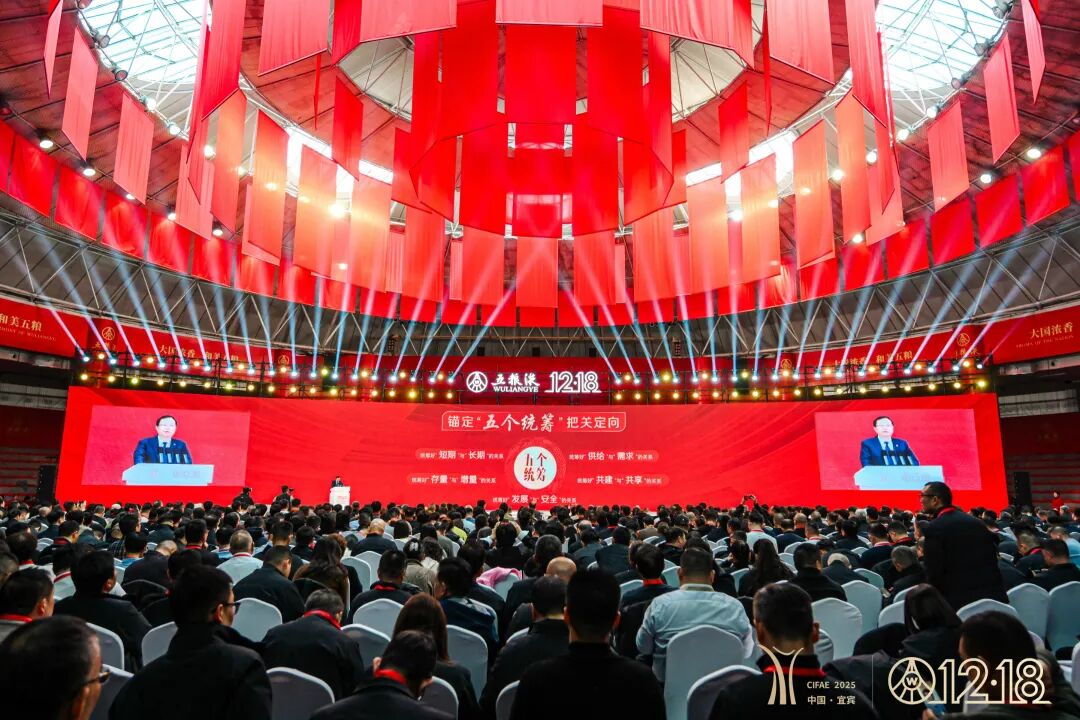
新品爆款+渠道发力!五粮液2026锚定“营销守正创新年”
Guo Ji Jin Rong Bao· 2025-12-20 08:51
Core Viewpoint - The 29th 12.18 Consensus Conference held by Wuliangye serves as a significant industry event, showcasing the company's commitment to stable development and its role as a leader in navigating the challenges of the liquor industry [3][10]. Group 1: Company Performance and Achievements - Wuliangye has demonstrated robust development through various achievements, including maintaining a quality management system that earned the EFQM Global Quality Award with a record score of 733 points [5]. - The brand's visibility reached 32.1 billion exposures through various activities, and several products received prestigious design awards, reinforcing its strong brand value [5]. - The launch of the youth-oriented product "29° Wuliangye. One Glance in Love" achieved sales exceeding 100 million yuan within two months, indicating successful market penetration [5]. - The company expanded its distribution network by adding 474 new stores, enhancing its market presence in 20 core cities [5]. Group 2: Strategic Planning for Future Growth - Wuliangye's strategic focus for 2026 includes a "Three Channels Harmonization" approach, emphasizing core brands, new beverage categories, and sustainable practices [6]. - The company aims to target new demographics, including younger consumers and women, while developing a modernized channel system that integrates traditional and emerging sales channels [6]. - Marketing strategies for 2026 are centered on innovation and effective market execution, with a clear goal of increasing market share [6]. Group 3: Collaboration with Partners - The conference emphasized the importance of collaboration between manufacturers and distributors, with awards recognizing outstanding partners and promoting a shared growth philosophy [7]. - Feedback from distributors highlighted confidence in Wuliangye's strategies and the potential for growth in new consumer segments [7]. Group 4: Product Innovation - The launch of the Wuliangye Year of the Horse Zodiac liquor, featuring unique design and craftsmanship, adds to the high-end product lineup and enhances brand value through cultural significance [9].


从“管资金”到“创价值” 数字化司库赋能企业新生态
Guo Ji Jin Rong Bao· 2025-12-19 17:43
Core Insights - The digital transformation of treasury management is crucial for enhancing core competitiveness in the context of the deepening digital economy [1] - The establishment of a treasury system is a key component of the national digital economy strategy and the financial digital transformation of enterprises [1] Group 1: Treasury System Development - The State-owned Assets Supervision and Administration Commission (SASAC) has issued guidelines to accelerate the construction of treasury systems in central enterprises, emphasizing a "unified management, hierarchical authorization" model [1] - Various regions, including Shandong, Hainan, Hunan, Jiangsu, and Guizhou, have introduced detailed rules to clarify the direction and requirements for building a digital treasury system [1] Group 2: Challenges in Financial Management - Enterprises face unprecedented challenges in financial management due to globalization and the expansion of business scale, including the difficulty of unified management and real-time monitoring of funds across multiple accounts and currencies [2] - Traditional financial management relies on manual operations, leading to cumbersome processes and low efficiency in fund settlement and allocation, which do not meet the real-time requirements of enterprises [2] - The lack of intelligent risk warning and interception mechanisms increases the risk of fund loss due to the dispersed nature of financial data and the slow update of information [2] Group 3: Digital Solutions - To address these challenges, the company developed the "Xingye Guanjia Financial Management Platform," which was launched in 2021, focusing on system warnings, user experience, and intelligent decision-making [2] - As of now, the platform has onboarded over 4,900 clients, with transaction amounts exceeding 5.2 trillion yuan [2] - The company plans to continue upgrading the platform's functionality to further support the digital transformation of enterprise finance [2]
从“管资金”到“创价值”,数字化司库赋能企业新生态
Guo Ji Jin Rong Bao· 2025-12-19 17:36
Core Insights - The digital transformation of financial management has become crucial for enterprises to enhance their core competitiveness as the digital economy evolves [1][2] - The construction of a treasury system is now a significant part of the national digital economy strategy and an essential component of enterprises' financial digital transformation [1] Group 1: Treasury System Development - The State-owned Assets Supervision and Administration Commission (SASAC) has issued guidelines to accelerate the construction of treasury systems in central enterprises, emphasizing a "unified management, hierarchical authorization" model [1] - Various regions, including Shandong, Hainan, Hunan, Jiangsu, and Guizhou, have introduced detailed rules to clarify the direction and requirements for building a digital treasury system [1] Group 2: Challenges in Financial Management - Enterprises face unprecedented challenges in financial management due to globalization and the expansion of business scale, including the difficulty of unified management and real-time monitoring of funds across multiple accounts and currencies [2] - Traditional financial management relies on manual operations, leading to cumbersome processes and low efficiency in fund settlement and allocation, which fails to meet the real-time demands of enterprises [2] - The lack of intelligent risk warning and interception mechanisms increases the risk of fund loss due to the dispersed nature of financial flows and risk points [2] - Dispersed and outdated financial data hampers the ability to provide real-time and accurate decision support for enterprises [2] Group 3: Digital Financial Management Solutions - To address these challenges, there is a growing demand for digital and intelligent financial management solutions among enterprises [2] - The "Xingye Guanjia Financial Management Platform" was developed by Xingye Digital Finance in 2020 and officially launched in 2021, focusing on system warning, user experience, and intelligent decision-making [2] - As of now, the platform has served over 4,900 clients, with transaction amounts exceeding 5.2 trillion yuan, and plans for continuous upgrades to enhance its functionality [2]
对新股战略配售应从严把关
Guo Ji Jin Rong Bao· 2025-12-19 17:32
Core Viewpoint - The introduction of strategic placements in IPOs aims to attract long-term, stable strategic shareholders, but the current practice has allowed non-strategic investors to benefit, potentially undermining the original intent of the system [1][2][3] Group 1: Strategic Placement Mechanism - New IPOs have generated significant wealth effects, with some investors seeing profits exceeding 240,000 yuan on the first day of trading [1] - Strategic investors are allocated 20% of new shares at the IPO stage, with some receiving more shares than traditional institutional investors [1] - The intention behind strategic placements is to bring in investors with important strategic resources that can enhance the company's competitiveness and long-term value [2] Group 2: Current Issues with Strategic Placement - Current practices have allowed entities that do not meet the criteria of strategic investors, such as financial investors and related parties, to participate in strategic placements [2] - This situation raises concerns about the potential for strategic placements to become a channel for利益输送 (benefit transfer), rather than serving the intended purpose of supporting the company's development [2] - There is a call for stricter regulations to ensure that only genuine strategic investors are allowed to participate in strategic placements, thereby protecting the interests of smaller investors and maintaining market fairness [3]
日本股市投资机会向更广泛板块拓展
Guo Ji Jin Rong Bao· 2025-12-19 17:32
Group 1 - The Japanese stock market is experiencing a strong rise, with the Tokyo Stock Price Index surpassing 3000 points and the Nikkei 225 Index exceeding 50000, driven by optimistic sentiments following the election of Prime Minister Sanae Takaichi and her growth-promoting policies [1] - The implementation of "Sanaenomics," which includes loose fiscal and monetary policies to stimulate domestic demand and enhance Japan's industrial competitiveness, is crucial for investors in 2026 [1] - Despite significant nominal wage increases driven by the "Shunto" labor negotiations, real wage growth remains below expectations due to inflationary pressures, particularly from rising food prices [1] Group 2 - Household consumption is gradually stabilizing, contributing to GDP growth and indicating rising wage growth expectations, supported by ongoing policy measures [2] - The anticipated "wage-price" cycle is expected to emerge, driven by labor shortages and increased participation of elderly and female workers, which will support domestic demand and household consumption in 2026 [2] - The Tokyo Stock Exchange has accelerated market restructuring since 2023 to enhance capital efficiency and improve stock prices, with a focus on growth markets and startups starting in 2025 [2] Group 3 - The Financial Services Agency of Japan is revising the Corporate Governance Code to strengthen accountability and effective capital allocation, which is expected to improve capital efficiency and profitability in the long term [3] - The Japanese stock market's rise has been primarily driven by AI and semiconductor-related stocks, with a few companies dominating the returns of the Nikkei 225 Index [3] - A market rotation is anticipated, shifting focus from overheated stocks to individual companies' fundamentals, with investment opportunities expected to arise from companies with robust long-term profit prospects across various sectors [4]
全方位创建供求适配机制 引发更强消费增长势能
Guo Ji Jin Rong Bao· 2025-12-19 17:32
Group 1 - The central economic work conference emphasizes the importance of boosting consumption as a primary support for expanding domestic demand, with a plan to create three trillion-level consumption sectors and ten hundred-billion-level consumption hotspots by 2027 [1] - The trillion-level sectors include elderly products, smart connected vehicles, and consumer electronics, while the hundred-billion-level hotspots cover baby products, smart wearables, cosmetics, fitness equipment, outdoor products, pet food, civilian drones, trendy toys, jewelry, and domestic fashion [1] - By 2030, the goal is to establish a high-quality development pattern characterized by a virtuous interaction between supply and consumption [1] Group 2 - The latest data from the National Bureau of Statistics shows that the total retail sales of consumer goods in the first three quarters of 2025 increased by 4.5% year-on-year, contributing 53.5% to economic growth, which is a 9% increase compared to the previous year [3] - There is a noticeable trend towards quality and personalized consumption among residents, shifting from "universal functionality" to "spiritual recognition" [3] Group 3 - The supply side is adjusting in terms of both quantity and quality, with over 230 million types of consumer goods available, and a significant increase in the supply of innovative products such as smart home devices and drones [5] - Despite improvements, there remains a mismatch between supply and demand, particularly in terms of personalized and high-end products, leading to a situation where desired products are not available [6] Group 4 - The current mismatch in supply and demand is characterized by three main issues: standardized products failing to meet personalized demands, a lack of high-end quality supply, and insufficient supply in emerging hotspots [6] - The new plan aims to address these mismatches by enhancing product variety, quality, and responsiveness, marking a shift from passive adaptation to proactive leadership in policy [6] Group 5 - The plan promotes flexible manufacturing and customization, encouraging the establishment of a digital system that connects user demand with intelligent design and flexible production across various industries [9] - The integration of artificial intelligence is highlighted as a key factor in reducing supply-demand mismatches and enhancing consumer experience [10] Group 6 - The plan emphasizes the importance of diversifying and personalizing supply in emerging sectors, particularly in rural areas, where there is a growing demand for high-quality products [12] - Innovations in leisure, sports, and health products are identified as new consumption opportunities, with a focus on multi-functional smart fitness equipment and health management products [13] Group 7 - The plan also aims to enhance the influence of traditional culture by promoting historical classic products and supporting the development of local specialty foods and traditional crafts [14] - New consumer interests in areas such as pets, anime, and trendy products are addressed, with strategies for expanding low-altitude tourism and automotive-related consumption [15]
购置税退坡在即!车企奋力“兜底”,难挽年末市场降温……
Guo Ji Jin Rong Bao· 2025-12-19 17:28
Core Viewpoint - The exemption policy for new energy vehicle purchase tax, in place for ten years, will end on December 31, 2025, transitioning to a 50% tax reduction starting January 1, 2026, with the maximum exemption amount decreasing from 30,000 yuan to 15,000 yuan [1] Group 1: Policy Changes - The new purchase tax rate for new energy vehicles will be 5% after the adjustment, down from full exemption [1] - For vehicles priced at 300,000 yuan, the tax payable will be 15,000 yuan, while for those priced at 500,000 yuan, the tax will be 35,000 yuan after applying the maximum exemption [1] Group 2: Industry Response - Over twenty car manufacturers, including Li Auto, NIO, Chery, and others, have introduced "purchase tax guarantee" subsidy plans to mitigate consumer hesitation due to the policy change [4] - Xiaomi Auto has launched a year-end purchase tax subsidy plan, promising up to 15,000 yuan for users who lock in orders by November 30, 2023, if delivery is delayed to 2026 [4] - GAC Group and XPeng have also announced similar subsidy plans, with varying deadlines and subsidy amounts [4] Group 3: Market Trends - Despite the introduction of subsidy plans, the expected surge in market activity has not materialized, with a reported 8.1% year-on-year decline in retail sales of passenger vehicles in November [8] - The retail sales of fuel vehicles dropped by 22%, while pure electric vehicle sales increased by 9.2% [8] - Sales personnel have noted a general slowdown in consumer activity, attributing it to the cessation of national subsidies and a wait-and-see attitude regarding future policies [8] Group 4: Sales Performance - Some manufacturers are facing challenges in meeting their sales targets, with companies like NIO and Li Auto showing low completion rates of 62.6% and 56.6%, respectively [10] - In contrast, XPeng has met its annual sales target, while other companies like Leap Motor and BYD have exceeded 90% of their targets [10]


停止接受多项新业务!安心财险收罚单 5人遭禁业
Guo Ji Jin Rong Bao· 2025-12-19 16:20
Regulatory Actions - The China Banking and Insurance Regulatory Commission (CBIRC) has imposed strict penalties on Anxin Property Insurance Co., Ltd. for multiple violations, including failure to use approved insurance terms and rates, and submitting false claims data [1] - Anxin Insurance is prohibited from accepting new credit guarantee insurance business for 36 months, short-term health insurance for 24 months, and vehicle insurance for 6 months [1] - A total of 14 individuals received warnings and fines amounting to 770,000 yuan, with several individuals banned from the insurance industry for periods ranging from 6 to 11 years [1] Financial Performance - Anxin Insurance's business income from 2016 to 2021 showed significant fluctuations, with net losses recorded each year, culminating in a loss of 276 million yuan in 2021 [2] - The company has faced stagnation in business development, with negative insurance income reported in 2022, 2023, and the first three quarters of 2024 [2] - As of the end of Q3 2024, Anxin Insurance reported a net asset value of -735 million yuan and a solvency ratio of -871.59%, indicating severe financial distress [2] Corporate Changes - In March 2024, Anxin Insurance relocated its registered office from Beijing to Suzhou, Jiangsu Province, amid speculation of potential state-owned enterprise involvement [2] - In September 2024, the CBIRC approved the establishment of Suzhou Dongwu Property Insurance Co., Ltd., which is believed to be related to the risk management efforts concerning Anxin Insurance [3] - Dongwu Insurance has a registered capital of 2 billion yuan and will operate under the supervision of the Jiangsu Financial Regulatory Bureau, with a broad range of insurance services planned [3]
停止接受多项新业务!安心财险收罚单,5人遭禁业
Guo Ji Jin Rong Bao· 2025-12-19 16:11
Regulatory Actions - The Financial Regulatory Bureau has imposed penalties on Anxin Property Insurance Co., Ltd. for multiple violations, including failure to use approved insurance terms and rates, and submitting false claims data [1] - Anxin Insurance is prohibited from accepting new credit guarantee insurance business for 36 months, short-term health insurance for 24 months, and vehicle insurance for 6 months [1] - A total of 14 individuals received warnings and fines totaling 770,000 yuan, with several individuals banned from the insurance industry for periods ranging from 6 to 11 years [1] Company Performance - Anxin Insurance has experienced stagnation in business development, with insurance revenue and net losses fluctuating significantly from 2016 to 2021, culminating in a net loss of 276 million yuan in 2021 [2] - In recent years, the company reported negative insurance revenues and continued net losses, with figures of -17.86 million yuan in 2022, -4.3 million yuan in 2023, and -0.134 million yuan in the first three quarters of 2024 [2] - As of the end of Q3 2024, Anxin Insurance's net assets were -735 million yuan, with a core solvency ratio of -871.59%, indicating severe insolvency [2] Corporate Restructuring - In March 2024, Anxin Insurance relocated its registered office from Beijing to Suzhou, with market speculation about potential state-owned capital involvement [2] - In September 2024, the Financial Regulatory Bureau approved the establishment of Suzhou Dongwu Property Insurance Co., Ltd., which is believed to be related to the risk management of Anxin Insurance [3] - Dongwu Insurance has a registered capital of 2 billion yuan and is set to operate under the supervision of the Jiangsu Financial Regulatory Bureau, with a wide range of insurance services planned [3]
明确监管指标和指标阈值!保险公司资产负债管理办法征求意见
Guo Ji Jin Rong Bao· 2025-12-19 16:11
Core Viewpoint - The Financial Regulatory Bureau is seeking public opinion on the draft "Insurance Company Asset-Liability Management Measures" to enhance asset-liability management capabilities and regulatory oversight in the insurance industry [1]. Group 1: Asset-Liability Management Goals and Principles - Insurance companies must assume primary responsibility for asset-liability management, adhering to principles of comprehensive coverage, reasonable matching, prudent stability, and coordinated management to effectively prevent asset-liability mismatch risks [5]. Group 2: Governance Structure - The governance structure for asset-liability management should include a board of directors with ultimate responsibility, senior management leading directly, and a coordinating department for asset-liability management, with functional departments collaborating and internal audit overseeing [5]. Group 3: Policies and Procedures - Insurance companies are required to develop asset-liability management plans that enhance linkage across business planning, product development, pricing, insurance management, asset allocation policies, and major investments, including conducting stress tests and back-testing [5]. Group 4: Regulatory and Monitoring Indicators - New regulatory indicators will be established, including effective duration gap, comprehensive investment yield coverage ratio, net investment yield coverage ratio, and liquidity coverage ratio under stress scenarios, with clear threshold values [7]. Group 5: Supervision and Management - The measures will enhance supervision by clarifying information reporting, third-party audits, and capability assessments, allowing regulators to take necessary actions or impose administrative penalties as needed [5][7]. Group 6: Changes Compared to Previous Regulations - The new measures integrate previous regulations into a more complete regulatory framework, addressing the evolving external environment and internal conditions of the insurance industry, with new accounting standards set to be implemented by 2026 [6].