Huan Qiu Wang Zi Xun

Search documents
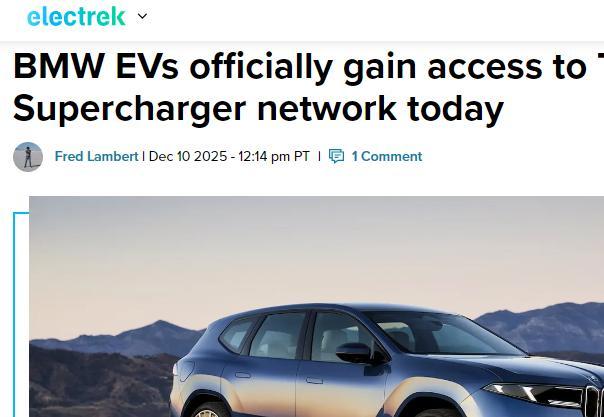
美股道指创新高,甲骨文跌近11%
Huan Qiu Wang Zi Xun· 2025-12-12 00:45
Market Performance - The Dow Jones Industrial Average rose by 1.34% to close at 48,704.01 points, marking a new historical high [1] - The S&P 500 index increased by 0.21% to 6,901 points, while the Nasdaq Composite fell by 0.25% to 23,593.86 points [1] Technology Sector - Most major U.S. tech stocks closed lower, with the Wande American Technology Seven Giants Index down by 0.71% [3] - Notable declines included Google down over 2%, Nvidia nearly 2%, and Tesla over 1% [3] - Microsoft rose over 1% and Facebook increased by 0.40% [3] Banking Sector - Bank stocks collectively rose, with JPMorgan Chase up over 2%, Goldman Sachs up more than 2%, and Citigroup up by 0.59% [3] Semiconductor Sector - Semiconductor stocks mostly declined, with the Philadelphia Semiconductor Index down by 0.75% [3] - ARM fell over 3%, Micron Technology down over 1%, and Intel down over 3% [3] Chinese Stocks - Chinese stocks showed mixed results, with the Nasdaq China Golden Dragon Index up by 0.05% and the Wande Chinese Technology Leaders Index down by 0.17% [3] - Notable gainers included Atlassian Solar up over 3% and Pony.ai up over 3%, while Kingsoft Cloud fell over 5% [3] Oracle Corporation - Oracle's stock dropped nearly 11% after reporting quarterly revenue below expectations and raising spending forecasts, raising concerns about its debt situation [3] Unemployment Claims - The number of initial jobless claims in the U.S. was reported at 236,000, higher than the expected 220,000 [4] - The four-week average of claims increased to 216,750 from the previous 214,750 [4] Trade Deficit - The U.S. trade deficit decreased to $52.8 billion in September, the lowest level since mid-2020, driven by increased exports [5] European Market Performance - European stock indices all rose, with the FTSE 100 up by 0.49%, CAC 40 up by 0.79%, and DAX up by 0.68% [5] Oil Prices - WTI crude oil futures fell by 1.47% to $57.60 per barrel, while Brent crude futures dropped by 1.49% to $61.28 per barrel [5]


可在多种环境执行任务,堪称“六边形战士”,国产“九天”无人机首飞成功
Huan Qiu Wang Zi Xun· 2025-12-11 22:54
来源:环球时报 强大的载荷能力是优势 据了解,作为我国自主创新的大型通用无人机平台,"九天"无人机的机长达16.35米,翼展25米,最大 起飞重量16吨,最大任务飞行高度1.5万米,最大飞行速度每小时700公里,航时达12小时,转场航程达 7000公里,载荷能力达6吨,性能指标位居同类产品前列。 "九天"无人机的首次亮相是在2024年的第十五届珠海航展上,当时该型无人机凭借庞大的体型、丰富的 挂载能力,成为当届航展上的明星展品之一。《环球时报》记者在航展现场看到,该型无人机的机头设 计有一个尺寸较大的雷达罩,雷达罩下方还配有光电吊舱,体现出该型无人机态势感知手段丰富。此 外,该型无人机的两个机翼上共有8个外挂点,分别挂有空对空导弹、反舰导弹、空对地导弹、滑翔炸 弹等有人驾驶战斗机所携带的常规武器装备。 "九天无人机起飞重量达到了16吨,这已超过美国的'全球鹰'战略无人侦察机。"中国军事专家傅前哨12 月11日在接受《环球时报》记者采访时表示。根据公开指标来看,在全球无人机家族中,虽然"九天"无 人机在航时上不及美国的"全球鹰",但"九天"优势在于强大的载重能力,而这一点是"全球鹰"不具备 的。 【环球时报报道 ...

汽车“出海”交了学费,学到了什么?
Huan Qiu Wang Zi Xun· 2025-12-11 09:57
Core Viewpoint - China's automobile exports have seen a significant increase of 22% year-on-year in the first ten months of this year, surpassing last year's total export volume, marking a new high for automobile exports [1] Group 1: Achievements in Automobile Exports - The growth in China's automobile exports is attributed to the industry's accurate prediction of the electrification trend and a speed-driven strategy [1] - The Chinese automobile industry has evolved from technology introduction to independent research and innovation, particularly in the fields of new energy vehicles and intelligent connectivity, establishing a complete supply chain [1] - China's automobile export market has expanded from Southeast Asia to Europe, the Middle East, Africa, and South America, with an increasing share in overseas markets [1] Group 2: Challenges in International Markets - The international market presents multiple challenges for Chinese automobile exports, including increased policy barriers and compliance thresholds due to rising global trade protectionism [2] - The European Union has initiated anti-subsidy investigations and raised tariffs on Chinese electric vehicles, along with new regulations requiring detailed disclosures about battery production and carbon footprints [2] - Technical certifications have emerged as new non-tariff barriers, necessitating Chinese companies to overhaul their data management systems to comply with regulations like the EU's General Data Protection Regulation (GDPR) [2] Group 3: Adaptation to Local Markets - Differences in consumer needs, usage habits, and cultural backgrounds across countries require Chinese brands to make adaptive adjustments [3] - In the UK, consumers are particularly sensitive to electric vehicle range due to inadequate charging infrastructure, while in Southeast Asia, vehicles must be designed to withstand high humidity and flooding [3] - In Western markets, consumers prefer established brands with a strong reputation, posing a challenge for Chinese electric vehicle brands to build their image [3] Group 4: Internal Challenges and Strategic Needs - Many Chinese automobile companies are still in the product export phase, lacking comprehensive global strategies and overseas market management experience [4] - Some companies rely on low-price strategies, resulting in insufficient brand premium capabilities and difficulties in entering the mid-to-high-end overseas market [4] - The profit margins of Chinese export products are significantly lower than those of multinational brands like Toyota and Volkswagen, indicating a substantial gap [4] Group 5: Localization and Talent Development - Chinese automobile companies need to enhance their localized marketing and service systems in overseas markets, as their service network coverage is less than one-third of that of Japanese and Korean companies [4] - The lack of localized marketing and service systems hampers the establishment of deep connections with local consumers, affecting brand value transmission [4] - There is a need to accelerate the cultivation and introduction of international composite talents and strengthen overseas intellectual property arrangements to avoid legal challenges [4]
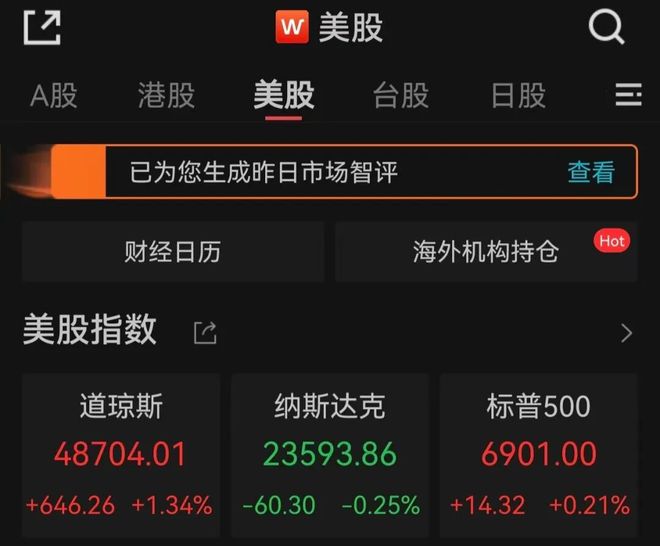
四川1ms城市算网加速成型 重塑算力运载新格局
Huan Qiu Wang Zi Xun· 2025-12-11 06:24
Core Insights - The article emphasizes the importance of computing power as a core driver for urban smart transformation and industrial upgrading in the context of the booming digital economy [1] - The implementation of the "1ms Urban Computing Network" is highlighted as a key initiative to enhance efficient computing power transportation, aligning with national strategies and reshaping urban development models [1][2] Group 1: Development Plans and Strategies - The "High-Quality Development Action Plan for Computing Power Infrastructure" aims to improve the efficient transportation capacity of computing power, with latency requirements set at no more than 1ms for major urban computing infrastructures and 5ms for national hub nodes [1] - Sichuan province is leveraging the "East Data West Computing" national strategy to break regional computing barriers and transform computing resources into public services for cities [1][2] Group 2: Technological Innovations - Sichuan's 1ms Urban Computing Network integrates advanced technologies such as all-optical switching (OXC), 400G transmission, and intelligent scheduling to achieve direct access to computing resources [4] - The network's architecture includes a three-tier structure (core, inner ring, outer ring) to create a unified computing network across Chengdu and 20 other cities, achieving latency under 1ms for major data centers [6] Group 3: Role of Telecom Operators - Major telecom operators are leading the construction of the 1ms Urban Computing Network, utilizing their extensive network resources and technical capabilities to ensure comprehensive coverage and efficient scheduling of computing resources [5] - Sichuan Telecom plans to invest approximately 180 million yuan to build 300 PFLOPS of domestic computing power by 2025, with a goal to exceed 1 EFLOPS by 2026 [7] Group 4: Industry Applications and Impact - The 1ms Urban Computing Network significantly empowers various industries, enabling real-time data collection, analysis, and feedback in smart manufacturing scenarios [9] - The network supports advanced manufacturing processes, as demonstrated by the success of companies like Lynk & Co, which utilizes low-latency networks for quality management and production efficiency [11][12] Group 5: Future Directions - Despite the achievements, there is a call for continued efforts to build a low-latency, high-reliability, and secure computing network development system [14] - Future initiatives will focus on enhancing service capabilities, promoting technological innovations, and fostering collaborative ecosystems among government, enterprises, academia, and research institutions [14]
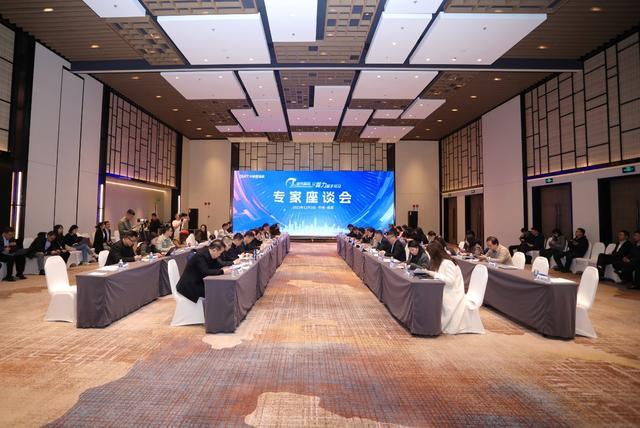
地面不够用了?科技巨头扎堆太空建AI数据中心,贝佐斯马斯克再掀竞逐
Huan Qiu Wang Zi Xun· 2025-12-11 03:40
Core Insights - Blue Origin, owned by Jeff Bezos, has been developing core technologies for space-based AI data centers for over a year, while SpaceX is also advancing its own initiatives in this area with upgraded Starlink satellites [1][4] - The competition between these two aerospace giants highlights the strategic value of space data centers, driven by the limitations of terrestrial AI data centers in terms of power and cooling requirements [4] Group 1 - Blue Origin is focusing on the research and development of core technologies for data centers in space, having invested significant time into this endeavor [1][4] - SpaceX plans to leverage its existing Starlink satellite network to deploy AI computing payloads, which has become a key selling point in its equity financing discussions [1][4] - SpaceX's valuation could potentially reach $800 billion if its financing efforts succeed, although Elon Musk has denied rumors regarding this valuation [4] Group 2 - The development of space data centers is seen as a solution to the increasing power and cooling demands of ground-based AI data centers, with Bezos predicting that gigawatt-level data centers will emerge in space within the next 10 to 20 years [4] - SpaceX aims to raise over $25 billion through an IPO planned for 2026, with a target valuation exceeding $1 trillion, which could provide substantial funding for its space AI initiatives [4] - The competition between Blue Origin and SpaceX is expected to reshape the future landscape of the technology industry as both companies intensify their focus on space as a new frontier for AI infrastructure [4]
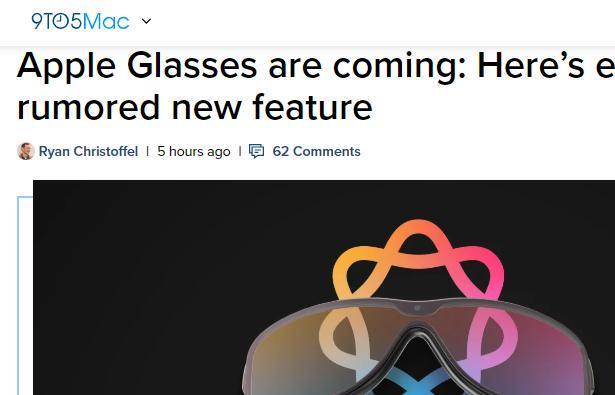
无显示屏、靠Siri控场?苹果首款眼镜核心功能全曝光
Huan Qiu Wang Zi Xun· 2025-12-11 03:40
Core Insights - Apple's first smart glasses, "Apple Glasses," have entered a critical development phase, with an expected launch in 2026 and mass production starting in 2027 [1] - Unlike the Vision Pro headset, the new product will focus on a "no display + AI-driven" core positioning, emphasizing deep integration with the iPhone ecosystem [1] Product Features - The glasses will feature a custom chip based on the Apple Watch S series, optimizing power consumption and driving multiple cameras [4] - These cameras will support basic photography and video recording, serving as the core for "visual intelligence" functions, similar to the current iPhone's visual recognition but tailored for everyday wear [4] - Upgraded Siri will act as the main control interface, allowing users to execute commands and media playback via voice, with compatibility for AirPods and other Apple audio accessories [4] Design and Health Monitoring - The product is positioned as an "extension accessory" for the iPhone, with some computational tasks offloaded to the phone, maintaining a lightweight design philosophy similar to the Apple Watch [4] - Health monitoring features are in development, although specific functionalities have not been disclosed, and the design will reflect a variety of styles to suit daily wear [4]

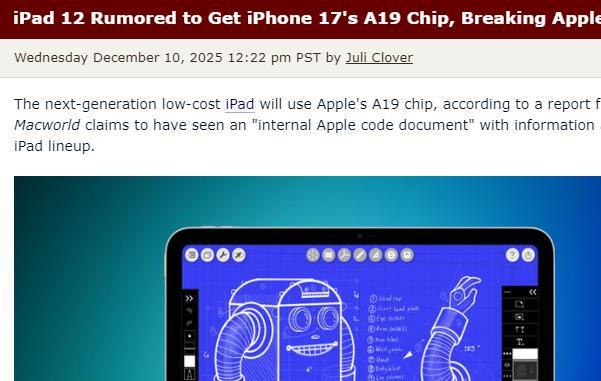
打破惯例!iPad 12被曝或搭载iPhone 17同款A19芯片
Huan Qiu Wang Zi Xun· 2025-12-11 03:40
Group 1 - The core point of the article is that the upcoming 12th generation entry-level iPad, expected to launch in 2026, may feature the A19 chip, similar to the iPhone 17, breaking Apple's long-standing product strategy of using older chips for entry-level models [1][4] - Historically, Apple has not used the latest A-series chips in entry-level iPads, a practice that has been consistent since the iPad 5 in 2017, which used the A9 chip from the iPhone 6s [4] - If the iPad 12 indeed uses the A19 chip, it would be the first entry-level iPad to feature Apple's current flagship chip since the iPad 4 in 2012 [4] Group 2 - The report also mentions that the 2026 iPad Air may be equipped with the M4 chip, and both the iPad series and iPad Air will include Apple's self-developed N1 network chip, aligning with the trend of iPad Air using previous generation chips from the iPad Pro [5] - The new iPad and iPad Air are expected to be released in early 2026 [5]
谷歌慌了?欧盟拿苹果当标尺,应用商店整改不达标将挨重罚
Huan Qiu Wang Zi Xun· 2025-12-11 03:40
Core Viewpoint - The European Commission is using Apple's App Store compliance measures as a benchmark to evaluate Google's App Store compliance, with potential hefty fines for Google by Q1 2025 if it fails to meet standards [1][4]. Group 1: Regulatory Context - The regulatory developments stem from the implementation of the Digital Markets Act, which led to a €500 million fine imposed on Apple earlier this year for violations [4]. - Apple's comprehensive App Store reform plan has become an "invisible benchmark" for regulatory compliance in the industry, despite not being officially recognized by the EU [4]. Group 2: Google's Compliance Measures - Google's reform measures announced in August were criticized for being insufficient, as the EU believes they do not meet core requirements such as allowing developers to direct users to third-party payment channels [4]. - Although Google reduced the initial acquisition fee for developers from 10% to 3% and introduced a tiered fee structure, the EU still sees gaps in compliance compared to Apple's approach [4]. Group 3: Implications for the Industry - The EU's stance indicates a shift towards a "benchmarking" phase in app store regulation, with Apple transitioning from a "penalized entity" to a "reference point" for compliance [4]. - This development is expected to accelerate Google's reform process and provide a new direction for global app store compliance reforms, making Google's ability to implement additional measures a key focus in antitrust regulation within the tech industry [4].

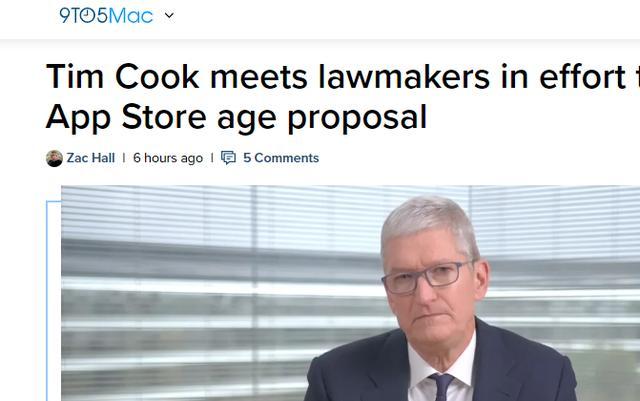
苹果反对应用商店年龄验证立法,库克称将威胁数百万用户隐私
Huan Qiu Wang Zi Xun· 2025-12-11 03:40
Group 1 - Apple's CEO Tim Cook recently met with members of the House Energy and Commerce Committee to lobby against the "Age Verification Responsibility" clause in the proposed "App Store Accountability Act," arguing it would harm user privacy and advocating for parental control over children's account age management [1][4] - If the bill is enacted, Apple would be required to collect user information through the App Store for age verification, which the company claims would force businesses to gather sensitive documents from minors, violating privacy principles [4] - Apple emphasizes that parents should provide age information when creating children's accounts, and that age verification should only confirm the creator is an adult, rather than excessively collecting user data [4] Group 2 - Apple has made two key requests: first, that the App Store and developers should not retain any age determination-related information; second, that parents should have the authority to decide whether to share their child's age range with developers [4] - Apple's global privacy head, Hillary Vail, previously communicated to the committee that the bill would require millions of adults to submit personal information just to download apps, asserting that Apple's existing age verification features can ensure children's safety without relying on sensitive information collection [4] - The company has established mechanisms to comply with related regulations, including an age rating system in the App Store and support for detailed age range settings for children's accounts, having already adapted policies for the Texas Child Safety Law effective January 1, 2026 [4]
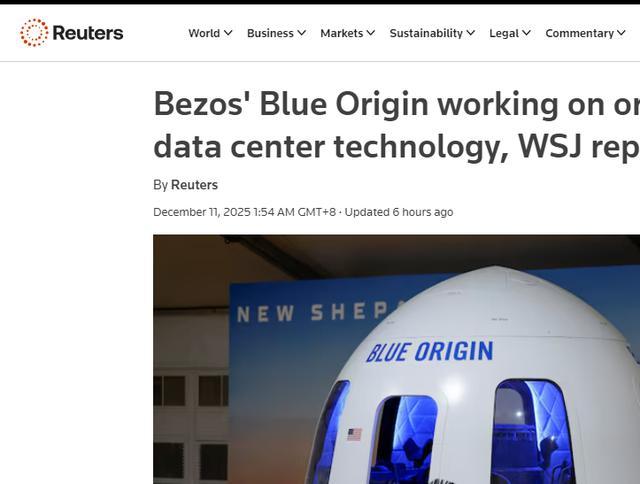
宝马电动车主能充特斯拉超充桩了,2.5 万个站点可用
Huan Qiu Wang Zi Xun· 2025-12-11 03:40
Group 1 - BMW officially announced that its electric vehicles will access Tesla's Supercharger network in North America, becoming another mainstream automaker to adopt the North American Charging Standard (NACS) [1] - Starting immediately, BMW i4 and iX owners in the U.S. can use over 25,000 Tesla Supercharger stations, significantly expanding their charging options [1] - Currently, BMW electric vehicles equipped with CCS connectors require an adapter to use Tesla's V3 and V4 Superchargers, with the official adapter expected to be available in Q2 2026 [1] Group 2 - The 2026 BMW i5 M60 will be the first model to feature a native NACS connector, with subsequent models like the new generation iX3 to follow, eliminating the need for adapters [4] - BMW's user experience improvements include an "easy plug and charge" feature compatible with Tesla stations, allowing users to complete billing through the "My BMW" app without needing the Tesla app [4] - Charging costs for BMW owners will be based on Tesla's non-member rates, which are higher than those for Tesla vehicle owners [4]