
Huan Qiu Wang Zi Xun

Search documents
财经观察:AI眼镜:巨头争抢的下一个“智能手机”?
Huan Qiu Wang Zi Xun· 2025-12-11 02:35
Core Insights - The global AI glasses market is experiencing a surge, with major companies like Google and Meta intensifying their efforts to capture market share. Google plans to launch its first AI-driven smart glasses by 2026, marking its return to a previously unsuccessful venture in this space [1][2]. Group 1: Market Dynamics - Google is re-entering the AI glasses market after learning from past failures, emphasizing advancements in AI technology and supply chain management that were lacking during its initial attempt [1][2]. - Meta's collaboration with EssilorLuxottica to produce Ray-Ban Meta glasses has seen remarkable success, capturing approximately 73% of the global smart glasses market in the first half of 2025, with a year-on-year shipment increase of 110% [2]. - The global smart glasses shipment is projected to reach 12.8 million units by 2025, with a 26% year-on-year growth, and China is expected to lead with over 2.75 million units, reflecting a 107% increase [3]. Group 2: Technological Advancements - Key breakthroughs in AI glasses development are attributed to advancements in large model technology and hardware upgrades, enhancing functionalities like real-time translation and voice assistance [3]. - The design of upcoming AI glasses is shifting towards a more user-friendly approach, with expectations for lighter models weighing between 20 to 30 grams, significantly improving comfort for prolonged use [4][7]. Group 3: Competitive Landscape - The AI glasses market is forming a competitive structure with three tiers: the first tier led by Meta, the second tier comprising Chinese companies like Quark and Xiaomi, and the third tier focusing on niche functionalities [4]. - Over 80% of the global smart glasses supply chain is based in China, indicating a significant role of Chinese manufacturers in the industry [5][6]. Group 4: Future Outlook - The potential for AI glasses to become a mainstream product hinges on factors such as weight reduction, battery life improvement, and the identification of unique use cases that differentiate them from existing devices like smartphones [6][7]. - The current pricing of AI glasses, typically between 3,000 to 4,000 yuan, suggests there is room for price reduction to enhance market penetration [7].



自主研制!我国超高温热泵技术取得新突破
Huan Qiu Wang Zi Xun· 2025-12-11 02:22
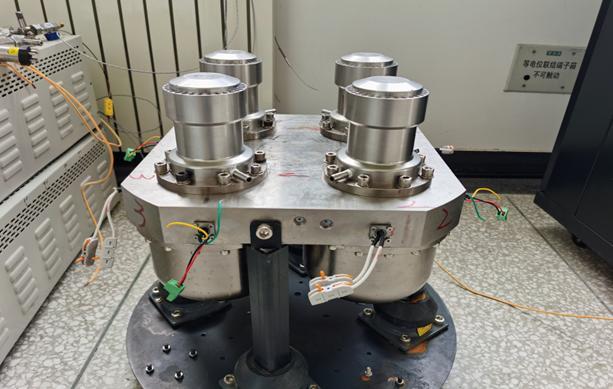
记者10日从中国科学院理化技术研究所获悉,研究团队在超高温工业热泵技术上取得系列重要进展,自 主研制出国际首台泵热温度超过200℃的双作用自由活塞型热声斯特林超高温热泵原型样机,为造纸、 印染、陶瓷、冶金等大量耗热工业领域提供了一种潜在的绿色高效供热新路径。相关成果已发表于《自 然·能源》《应用物理快报》等国际权威期刊。 研究团队近期取得双重突破:一方面,他们创新提出"反相运行"的声场调控机制,成功研制出国际上首 台泵热温度超过200℃的双作用自由活塞式热声斯特林超高温热泵样机,巧妙规避了超高温压缩机研制 的世界性难题。 ◎科技日报记者 陆成宽 另一方面,团队研发了完全无运动部件的热声热泵样机,仅依靠热能驱动,即可将约140℃的低温废热 提升至270℃以上再利用,实现了热能的"搬运"与升级。 来源:科技日报 图片来源:中国科学院理化所 这些突破表明,热声斯特林技术有望发展成为新一代超高温热泵的核心,助力工业领域替代化石燃料供 热,减少碳排放。研究团队还对超高温热泵未来的关键材料与技术发展方向进行了展望。 ...

“前店后仓+基地”模式激活果品电商新生态
Huan Qiu Wang Zi Xun· 2025-12-11 02:02
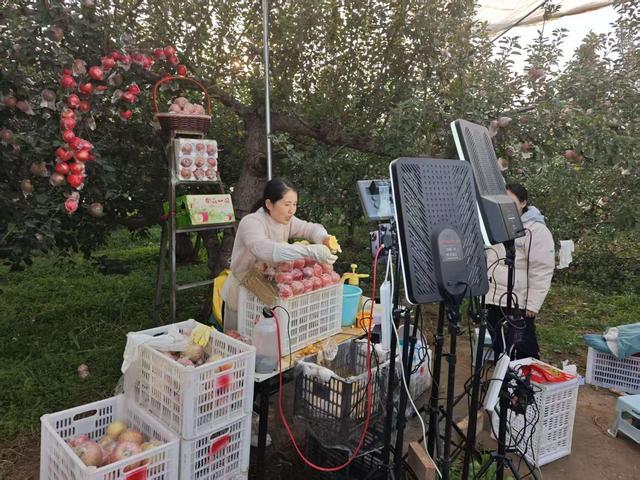
御品一园的直播现场 在"前店后仓+基地"模式引领下,御品一园、绿丰源等一批龙头电商企业发展壮大,有效整合了种植、 仓储、销售等各个环节,推动临猗逐步向北方果品物流中心的目标迈进,并发挥示范引领作用,带动了 更多果农和合作社投身电商领域。目前全县已有1000余家各平台网店,已成为临猗各类果品销售的主要 渠道。 来源:科技日报 科技日报记者 马爱平 走进位于山西省临猗县北辛乡的御品一园农作物种植专业合作社分拣包装中心,高效运转的智能分拣线 上,搭载着高清视觉检测与近红外光谱技术的智能系统,有条不紊地对每个苹果的大小、色泽、糖度等 关键指标进行精准识别与分拣,确保每一颗苹果都能达到相应的品质标准。据了解,该合作社每天的订 单量稳定在7万—8万单,其中苹果订单占比将近70%。 近年来,临猗县创新打造"前店后仓+基地"的电商发展模式,构建起完善的果品销售体系。其中,"前 店"指的是积极支持各类经营主体在主流电商平台开设网店,通过多平台布局,建立起立体化的销售网 络;"后仓"则是大力建设中转包装基地和涉农冷库,目前已建成1000多家中转包装基地、452家涉农冷 库,吸纳本地及周边省市的时令水果;"基地"则依托全县110万 ...
全国首个具身智能机器人大卖场亮相成都
Huan Qiu Wang Zi Xun· 2025-12-11 02:02
来源:中国新闻网 中新社记者 安源 摄 12月10日,全国首个具身智能机器人生态平台核心载体——"机器人大世界"一期(具 身智能机器人大卖场)在成都锦江区亮相。整个卖场总建筑面积840平方米,共有百余种机器人,以"具 身智能机器人大卖场"为核心定位,精准对接"B端产业赋能"与"C端消费升级"双重需求,构建起集"展 示、销售、体验、服务"于一体的一站式采购平台,真正实现了科技产品从"橱窗展示"到"日常应用""产 业落地"的双重突破,为市民带来沉浸式科技消费新体验,为企业提供定制化智能解决方案。图为机器 人在进行舞蹈表演。 中新社记者 安源 摄 12月10日,全国首个具身智能机器人生态平台核心载体——"机器人大世界"一期(具 身智能机器人大卖场)在成都锦江区亮相。整个卖场总建筑面积840平方米,共有百余种机器人,以"具 身智能机器人大卖场"为核心定位,精准对接"B端产业赋能"与"C端消费升级"双重需求,构建起集"展 示、销售、体验、服务"于一体的一站式采购平台,真正实现了科技产品从"橱窗展示"到"日常应用""产 业落地"的双重突破,为市民带来沉浸式科技消费新体验,为企业提供定制化智能解决方案。图为参观 者与机器人 ...


杭州机器人乐队“出圈” 旺季月均五六场表演
Huan Qiu Wang Zi Xun· 2025-12-11 02:02
Group 1 - The "Hexuan" robot band, originating from the Hangzhou Human-Robot Innovation Center in Yuhang District, has gained popularity this year, performing at major events such as the Third Liangzhu Forum, the Eighth China International Import Expo, and the 2025 World Internet Conference in Wuzhen [2][8] - The band schedules five to six performances each month during peak seasons, generating nearly 1 million RMB in revenue from these shows [2][8] Group 2 - The performances feature various robotic musicians, including a pianist and a drummer, showcasing the technological advancements in robotics and entertainment [4][6]

吕本富:在良性竞争中共同拓展AI边界
Huan Qiu Wang Zi Xun· 2025-12-10 23:08
Core Insights - The article discusses the strategic advancements in the AI sector by both China and the United States, highlighting a competitive yet complementary relationship that is shaping the global AI landscape [1][4]. Group 1: AI Development Strategies - China has implemented policies to accelerate the cultivation of 22 key AI application scenarios, building on the "AI+" initiative, while the U.S. has launched the "Genesis Project," marking a significant mobilization of federal scientific resources since the Apollo program [1]. - The U.S. tends to adopt a closed-source approach focusing on general capabilities and maintaining commercial advantages through technological barriers, whereas China combines open-source and closed-source strategies, emphasizing the integration of technology with real-world applications [1][4]. Group 2: Competitive Dynamics - The article argues that the U.S. underestimates China's AI innovation capabilities, as evidenced by Chinese models like DeepSeek-V3.2 and Baidu's ERNIE-5.0-Preview, which have achieved competitive performance despite U.S. restrictions on advanced GPUs [3]. - The competition in AI is evolving from controlling single supply chain segments to a comprehensive integration of chips, frameworks, models, and application services, emphasizing the need for systemic innovation and ecosystem development [3]. Group 3: Unique Aspects of China's AI Path - China's AI development is uniquely driven by real-world scenarios, allowing it to define technological needs and create new model architectures that address challenges not encountered in Western lab environments [4]. - The article posits that the competition between the U.S. and China can lead to a beneficial coexistence, where breakthroughs in one country can provide valuable insights for the other, necessitating collaboration in key areas to mitigate risks and accelerate technological progress [4][5]. Group 4: Future of AI and Global Cooperation - The future of AI requires significant investment across the entire stack, and no single entity can maintain a leading edge independently, highlighting the importance of technology flow and market openness [5]. - The article emphasizes that AI safety, ethics, and governance are global challenges that require dialogue and cooperation between the U.S. and China, advocating for a rules-based competitive environment to manage risks effectively [5][6].
美国对中国大陆芯片出口抽成25%,台湾又要“接盘”?
Huan Qiu Wang Zi Xun· 2025-12-10 22:55
Group 1 - The U.S. government has allowed Nvidia to export H200 chips to mainland China, imposing a 25% fee, raising concerns in Taiwan about who will bear this cost [1][2] - The H200 chip, which has a larger high-bandwidth memory compared to its predecessor H100, is primarily manufactured by TSMC, with other Taiwanese companies also involved in the supply chain [2][3] - The 25% fee is expected to be treated as an import tax when the chips are shipped from Taiwan to the U.S., circumventing legal issues related to export taxes [1][2] Group 2 - TSMC's U.S. subsidiary reported a significant drop in profits, indicating challenges in its operations in the U.S. [2] - The construction of TSMC's large facility in Phoenix, Arizona, has faced systemic issues such as bureaucratic hurdles, labor shortages, and rising costs [3][4] - TSMC has had to bring over 500 technicians from Taiwan to support operations in the U.S., facing criticism from local unions regarding labor practices [4]


新加坡学者撰文:战略、规模和效率助力中国创新药物迅猛发展
Huan Qiu Wang Zi Xun· 2025-12-10 22:55
Core Insights - The article discusses the competitive landscape of innovative pharmaceuticals, highlighting that while the U.S. leads in original innovation, China is rapidly advancing through strategy, scale, and efficiency, shaping the future of the global pharmaceutical industry [1][2] Group 1: U.S. and China's Competitive Landscape - The U.S. has maintained its dominance in innovative pharmaceuticals due to strong foundational research and a mature venture capital ecosystem [1] - China's biomanufacturing industry has developed rapidly over the past decade, driven by policy and capital, leading to a comprehensive competition between the U.S. and China that extends beyond market share to key technologies and global health strategies [1][2] Group 2: China's Strategic Approaches - China's biomanufacturing development is a result of national strategic vision, a large market, and regulatory reforms, with its population providing unique advantages for patient recruitment and clinical trials [2] - Differentiated competition is a key strategy for China, focusing on diseases common in Asia, such as liver cancer and dengue fever, allowing companies to leverage local knowledge into global advantages [2] - The competition in innovative pharmaceuticals reflects the broader U.S.-China tech rivalry, with the potential for healthy competition to accelerate drug development and reduce costs for patients globally [2] Group 3: Future Outlook - For Chinese biopharmaceutical companies, achieving differentiated breakthroughs in specific disease and technology areas is a more realistic path forward [2] - A global perspective in research strategies and high-quality international collaborations is essential for China to secure an indispensable position in the global landscape [2]
瞬雨:手机追求极致智慧化,数据安全是基石
Huan Qiu Wang Zi Xun· 2025-12-10 22:42
近期,一款搭载了某AI助手的工程样机限量发售,引发热议。凭借深度系统集成的AI助手,使用者可 以通过语音指令完成发消息、点外卖甚至控制智能车载系统等复杂任务,新颖的体验令这款手机的二手 市场价格一度翻番。不少用户还开发出"游戏刷分""自动投简历"等新奇应用场景。 然而没过几天,包括多家金融机构在内的众多主流App纷纷将这款手机列为"风控重点对象",采取限制 登录、禁用部分功能等措施,甚至直接拒绝服务。 笔者认为,该款手机所展现的手机交互升级,确实具有划时代意义。当人工智能(AI)助理能够理解 复杂意图、绕过繁琐的前台交互,直接抵达服务核心时,将给用户体验带来前所未有的提升。但此次风 波背后,更为根本的命题是:追求极致效率与智慧化的AI助手,是否会动摇数据安全的基石? 来源:环球时报 最后,是生态规则重塑可能引发的系统性风险。颠覆式创新往往伴随着对旧有规则的强力冲击。从算法 推荐重塑信息分发伦理、"大数据杀熟",到如今AI助手试图重构人机交互与应用访问范式,若缺乏有效 制衡,可能留下长期风险与治理难题。 面对日新月异的技术革新,我们必须为其提前划清安全与伦理的边界。具体包括: 以"最小权限""持续验证"为原则, ...
张颐武:共建学习型社会,让“终身学习”成生活常态
Huan Qiu Wang Zi Xun· 2025-12-10 22:42
Core Viewpoint - Lifelong learning is evolving from an ideal pursuit to a practical norm that shapes individual experiences and social connections in a knowledge-rich society [1][4] Group 1: Importance of Lifelong Learning - Lifelong learning is driven by rapid technological advancements and the increasing desire for personal development and fulfillment [1][2] - The evolution of knowledge and technology is permeating various fields, requiring individuals to continuously adapt and upgrade their skills [1][2] Group 2: Social and Emotional Aspects - Lifelong learning is becoming a significant avenue for self-actualization, social connection, and emotional satisfaction, especially among the elderly [2] - New learning formats such as community classes and online platforms emphasize equal participation and community belonging, enhancing the emotional value of learning [2] Group 3: Technological Impact - Technology accelerates the transition to lifelong learning by enabling large-scale, low-cost sharing of quality resources and personalized learning paths [2][3] - The development of virtual reality and immersive technologies is expected to enhance learning experiences and social interactions [2] Group 4: Building a Learning Society - To establish a learning society, there is a need for collaborative efforts in resource supply, mechanism design, and scenario construction [3] - Key tasks include digitizing educational resources and creating an open, accessible network that supports lifelong learning for all demographics [3] Group 5: Innovative Practices - Emerging practices such as community night schools and online co-learning camps provide valuable examples for building a lifelong learning ecosystem [3] - These initiatives not only stimulate public interest in learning but also optimize the distribution of educational resources [3]