Chang Jiang Shang Bao

Search documents
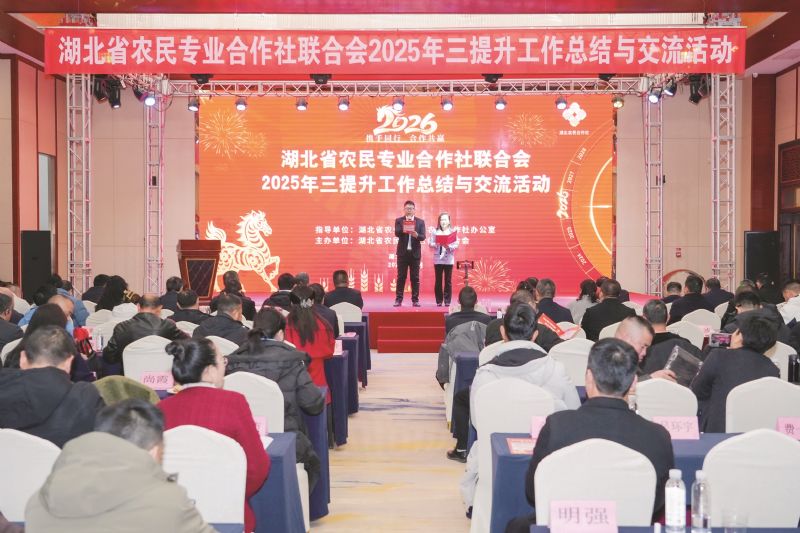
打造中国现代农业合作社正逢其时 力争为农业强国提供“湖北样本”
Chang Jiang Shang Bao· 2025-12-28 23:15
Core Insights - The conference held in Wuhan focused on enhancing the innovation levels of agricultural cooperatives in Hubei, aiming to align with China's agricultural modernization goals [2][9] - Experts emphasized the importance of human resources in cooperative development, highlighting the need for leaders to prioritize community interests [2][3] - The Hubei Provincial Farmers' Cooperative Association aims to establish a robust framework for cooperative growth during the 14th Five-Year Plan, with a focus on financial standardization and digital management [5][6] Group 1: Conference Highlights - The "2025 Three Enhancements Work Summary and Exchange Seminar" was organized by the Hubei Provincial Farmers' Cooperative Association, featuring experts from various agricultural sectors [2] - Zhao Tieqiao, a former official from the Ministry of Agriculture, stressed the necessity of creating internationally competitive agricultural cooperatives [2] - The event served as a platform for sharing experiences and strategies to promote rural revitalization and cooperative development in Hubei [2][9] Group 2: Leadership and Vision - Zhang Long, the fourth president of the Hubei Provincial Farmers' Cooperative Association, expressed gratitude for the cooperative's growth over the past 15 years, highlighting its evolution from weak to strong [3][4] - The association plans to implement a "17+1(N)" cooperative model to enhance collaboration and achieve significant sales milestones [4][6] - Zhang emphasized the importance of nurturing cooperative leaders through training programs in partnership with universities [4][6] Group 3: Financial and Operational Strategies - The cooperative aims to address financial management challenges by promoting standardized accounting practices and developing financial software for members [5][6] - The focus for the 14th Five-Year Plan includes enhancing cooperative capabilities, fostering industry clusters, and integrating various agricultural sectors [6][7] - The association seeks to improve market access for cooperative products through online and offline sales platforms, ensuring farmers benefit from the entire value chain [6][7] Group 4: Support and Collaboration - Zhang called for continued support from government bodies for policies related to land transfer, financing, and project applications to facilitate cooperative growth [7] - The association aims to collaborate with research institutions and businesses to enhance technological support and create a strong public brand for local agricultural products [7][8] - Emphasizing a patient and steady approach, Zhang highlighted the importance of leadership integrity and community engagement in achieving long-term goals [8]

央行发布2025金融稳定报告 金融风险整体收敛、总体可控
Chang Jiang Shang Bao· 2025-12-28 23:15
Core Viewpoint - The People's Bank of China released the "China Financial Stability Report (2025)", summarizing the economic and financial development in 2024 and outlining systematic deployments for the "14th Five-Year Plan" period [1] Economic Performance - In 2024, China's GDP reached 134.9 trillion yuan, growing by 5% year-on-year, with steady development of new productivity and enhanced economic strength [1] - Employment and prices remained stable, with international balance of payments roughly balanced and foreign trade reaching a historical high [1] - Foreign exchange reserves exceeded 3.2 trillion USD, indicating a robust financial system [1] Monetary Policy - The monetary policy was precisely targeted, with two reductions in the reserve requirement ratio totaling 1 percentage point and two cuts in policy interest rates totaling 0.3 percentage points [1] - These measures effectively guided the downward trend in deposit and loan rates, reducing financing burdens for market entities [1] - Support policies were enhanced in key areas such as technology, green finance, inclusive finance, elderly care, and digital finance [1] Real Estate Market - A series of measures were introduced to address issues in the real estate market, including lowering down payment ratios and canceling the national mortgage rate floor [2] - The establishment of a financial policy system for housing rental and the promotion of a new development model for the real estate industry were also highlighted [2] Financial Stability and Risk Management - The central and local governments collaborated to reform small financial institutions, significantly reducing the number of high-risk institutions [2] - The deposit insurance fund and financial stability guarantee fund were continuously strengthened, with legislative progress on financial stability laws [2] - In the first half of 2025, the central bank rated 3,529 banking institutions, showing overall stability and controllable financial risks [2] Banking Sector Performance - By the end of 2024, the total assets of the banking sector reached 444.57 trillion yuan, growing by 6.54% year-on-year, with a non-performing loan ratio of 1.50% [2] - The capital adequacy ratio remained at a reasonable level of 15.74%, with large commercial banks enhancing their loss absorption capacity through various measures [2] Financial Market Overview - The financial market operated smoothly, with a significant increase in the level of openness [3] - In 2024, various bonds worth 79.3 trillion yuan were issued, a year-on-year increase of 11.7% [3] - The stock market rebounded with the Shanghai Composite Index rising by 12.7% [3] - The foreign exchange market showed resilience, with the hedging ratio increasing to 26.8% [3] - The gold market was active, with prices rising by 28.2% year-on-year, reflecting a balance between risk aversion and market diversification [3] Future Outlook - The central bank aims to maintain a stable growth trajectory and implement proactive macro policies during the "14th Five-Year Plan" period [3] - Emphasis will be placed on promoting stable economic growth and reasonable price recovery as key considerations for monetary policy [3]
研讨交流“头雁”群飞“纽带”牢固 全国专家学者为湖北农业强省赋能
Chang Jiang Shang Bao· 2025-12-28 23:15
Core Viewpoint - The conference highlighted the importance of agricultural cooperatives in modernizing agriculture in China, emphasizing the need for strong collaboration among cooperatives to enhance competitiveness and achieve agricultural modernization [1][3]. Group 1: Agricultural Cooperatives Development - The number of agricultural cooperatives in China is projected to reach 2.035 million by 2024, but the growth rate has turned negative in recent years, indicating a decline in the number of cooperatives [1]. - Agricultural cooperatives play a crucial role in increasing farmers' organization levels, enhancing agricultural modernization, and boosting competitiveness [1][7]. - The cooperative model is evolving from a focus on quantity to prioritizing quality, with a strong emphasis on developing new industries and business models [1][4]. Group 2: Strategic Directions and Innovations - Future development strategies for cooperatives include internal collaboration with strong agricultural companies and external partnerships with villages to support small farmers [2][6]. - The "17+1" business model proposed aims to address market access challenges for high-quality agricultural products, facilitating resource sharing and brand development [9]. - The establishment of a financial management system for cooperatives is expected to enhance operational efficiency, with anticipated improvements in compliance rates and financing capabilities [8]. Group 3: Achievements and Goals - Over the past year, cooperatives in Hubei have made significant progress in standardization, service capabilities, and overall effectiveness, contributing to rural revitalization [6][7]. - The "Hubei practice" has emerged as a model for integrating small farmers into modern agricultural development, with a focus on innovation and technology [7]. - The goal of the cooperative movement is to promote high-quality agricultural products beyond Hubei, aiming for national and global market reach [11].
沪渝蓉沿江高铁武宜段开通运营 湖北高铁总里程跃升全国第五
Chang Jiang Shang Bao· 2025-12-28 23:15
Core Viewpoint - The opening of the Wuhan to Yichang section of the Yangtze River High-Speed Railway significantly enhances connectivity in Hubei province, reducing travel time between Wuhan and Yichang to as little as 69 minutes, marking a major advancement in the region's transportation infrastructure [1][2]. Group 1: Infrastructure Development - The Yangtze River High-Speed Railway (Wuhan to Yichang section) spans 314 kilometers with a design speed of 350 km/h, featuring eight stations, including both existing and newly constructed ones [1]. - With the new railway, Hubei's total high-speed rail mileage reaches 2,585 kilometers, elevating its national ranking from 13th to 5th, just 9 kilometers behind Jiangsu province [1][2]. Group 2: Economic Impact - The new high-speed rail line creates a "Golden Triangle" high-speed rail network among Wuhan, Xiangyang, and Yichang, allowing for direct travel between Xiangyang and Yichang, reducing travel time from 3-4 hours to approximately 1 hour [2]. - By 2025, the addition of the Xiangjing High-Speed Railway and the completion of the Yangtze River High-Speed Railway will increase Hubei's high-speed rail mileage by 429 kilometers, positioning it as the leader in new high-speed rail mileage in the country [2].
国家创业投资引导基金启动 3只区域基金与首批49只子基金正式签约
Chang Jiang Shang Bao· 2025-12-28 23:12
Core Viewpoint - The National Venture Capital Guidance Fund has officially commenced operations, aiming to leverage central government funding to attract a wide range of investments for strategic emerging industries and future industries [1][2][3] Group 1: Fund Structure and Investment Strategy - The Guidance Fund is structured with a three-tier system: guidance fund company, regional funds, and sub-funds, with a total government investment of 100 billion yuan [1][2] - The fund aims to establish over 600 sub-funds across three regions, focusing on early-stage investments in innovative and disruptive technologies [1][2][3] - The fund will prioritize seed-stage, early-stage, and mid-stage enterprises, with a minimum investment in these categories set at 70% of the total fund size [5][6] Group 2: Investment Focus and Market Impact - The fund emphasizes "early, small, long-term, and hard technology" investments, targeting companies with valuations below 500 million yuan and ensuring individual investments do not exceed 50 million yuan [5][6] - The fund's 20-year lifespan, with a 10-year investment period and a 10-year exit period, allows for a longer-term capital supply, fostering the growth of "little giants" and "unicorns" [2][5] - The launch of the Guidance Fund has contributed to a recovery in the venture capital market, with fundraising amounts increasing by 8% and investment amounts by 9% in the first three quarters of 2025 [4] Group 3: Management and Risk Mitigation - The fund will implement a management system that focuses on overall effectiveness and post-investment empowerment, rather than evaluating success based on individual project outcomes [6] - A dual monitoring system will be established to identify and address risks early, ensuring effective compliance and risk management [6] - The fund aims to diversify exit strategies to enhance the safety of investments, collaborating with private equity secondary market funds and regional equity markets [6]

“两新”标准实施成效显著 前11月家电以旧换新超1.28亿台
Chang Jiang Shang Bao· 2025-12-28 23:09
长江商报消息●长江商报记者 徐靓丽 国家市场监管总局近日通过"两新"标准提升行动工作成效专题新闻发布会发布消息,2025年1至11月, 中国家电以旧换新超1.28亿台,带动相关商品销售额超2.5万亿元。家具智能等级评定等标准,助推行业 智能升级,龙头企业加速推出中高端智能家具产品,市场规模达100亿元以上,成为家具消费升级的新 增长点。 2024年市场监管总局等七部门印发《以标准提升牵引设备更新和消费品以旧换新行动方案》,聚焦加快 能耗排放技术标准升级、强化产品质量安全标准提升、加大回收循环利用标准供给3方面重点任务,部 署制修订13个重点领域294项国家标准。 中国轻工业联合会相关负责人表示,"两新"重要标准的实施不仅为消费品以旧换新政策落地见效提供了 坚实支撑,更有效驱动轻工行业实现转型升级。统计数据显示,2025年1至10月,轻工业累计实现营业 收入19万亿元,同比增长1.9%;实现利润1.14万亿元,同比增长1.6%。轻工业以占全国工业13%的资 产,实现全国工业16.7%的营业收入和19.2%的利润,为国民经济平稳增长作出了积极贡献。 在以旧换新方面,截至2024年底,中国冰箱、洗衣机、空调等家电保 ...
两部门出台境外上市资金管理新规 四大维度助力企业境外金融市场融资
Chang Jiang Shang Bao· 2025-12-28 23:09
近日,中国人民银行、国家外汇管理局联合发布《关于境内企业境外上市资金管理有关问题的通知》 (以下简称《通知》),《通知》构建了"便利化+规范化"并重的管理框架,核心内容涵盖四大维度,系 统性优化境内企业境外上市资金管理政策,进一步便利企业在境外金融市场高效融资,为资本市场高水 平开放注入强劲动力。该通知自2026年4月1日起实施,标志着境内企业境外上市资金管理进入新阶段。 管理程序简化提升办理效率 管理程序简化是本次新政的一大亮点。《通知》将境外上市相关登记的办理主体由外汇管理部门调整为 银行直接办理,大幅提升业务办理效率。同时放宽登记时限要求,发行上市、增发登记时限由15个工作 日延长至30个工作日,减持登记时限由拟减持前20个工作日调整为减持后30个工作日,有效缓解企业操 作压力。 在募集资金规范管理方面,《通知》坚持"原则汇回、例外留存"的原则。明确境外上市募集资金、减持 或转让股份所得资金原则上应及时调回境内,股东因增持汇出的资金如有剩余或交易未达成,须及时汇 回且不得改变用途。同时兼顾企业实际需求,允许在境外上市前已获得发改、商务等部门批复或备案文 件的企业,将募集资金留存境外用于境外直接投资、境外 ...
长城汽车推持股计划绑定核心人员 前11月售车120万辆2026年挑战180万
Chang Jiang Shang Bao· 2025-12-26 02:53
Core Viewpoint - Great Wall Motors has announced an employee stock ownership plan for 2025, aiming to enhance corporate governance and align core personnel with the company's long-term value [2][4]. Group 1: Employee Stock Ownership Plan - The employee stock ownership plan is set at a maximum scale of 80 million yuan, covering up to 50 core personnel, including directors and senior management [2][3]. - The performance assessment targets for 2026 include a sales volume of no less than 1.8 million units and a net profit of no less than 10 billion yuan [3][4]. - The plan includes a dual assessment mechanism at both the company and individual levels, with sales volume and net profit each accounting for 50% of the evaluation [3]. Group 2: Performance Pressure - As of November 2025, Great Wall Motors' sales reached 1.1997 million units, a year-on-year increase of 9.26%, indicating significant pressure to meet the 1.8 million unit target for 2026 [5][7]. - The company's revenue for Q3 2025 was 61.25 billion yuan, a year-on-year increase of 20.51%, while net profit declined by 31.23% to 2.298 billion yuan [6]. - Increased sales expenses, which rose by 55.52% to 7.948 billion yuan in the first three quarters of 2025, contributed to the profit decline [6].


国货航2.83亿募资转投飞机引进 拥有货机23架进一步扩张运力
Chang Jiang Shang Bao· 2025-12-26 00:24
Core Viewpoint - The company, Guohang Airlines, is focusing on expanding its cargo capacity by reallocating funds originally intended for logistics enhancement to aircraft acquisition projects, specifically the purchase of Boeing B777F freighters and Airbus A350F freighters [1][2][3]. Group 1: Financial Performance - For the first three quarters of 2025, Guohang Airlines reported a revenue of 16.636 billion yuan, representing a year-on-year increase of 16.92% [3]. - The net profit attributable to shareholders reached 1.836 billion yuan, showing a significant year-on-year growth of 66.21% [3][4]. - The company's net profit excluding non-recurring items was 1.793 billion yuan, which is a 64.05% increase compared to the previous year [3]. Group 2: Strategic Decisions - Guohang Airlines decided to terminate its comprehensive logistics capability enhancement project due to a reassessment of feasibility and expected returns, reallocating the 283 million yuan originally planned for this project to aircraft acquisition [1][2]. - The company plans to invest approximately 9.316 billion yuan (equivalent to 1.311 billion USD) to acquire three Boeing B777F freighters [2]. Group 3: Fleet Expansion - Currently, Guohang Airlines operates a fleet of 23 long-range freighters, including models such as B747, B777, and A330 [3]. - The company has signed a confirmation order for six Airbus A350F freighters, becoming the first customer in mainland China for this model, with deliveries expected between 2029 and 2031 [3][4]. - Guohang Airlines is actively optimizing its capacity structure by opening new cargo routes, enhancing supply chain resilience [3].
高争民爆与关联方5.1亿收购民爆企业 聚焦主业力争2025年实现营收18.1亿
Chang Jiang Shang Bao· 2025-12-26 00:22
Core Viewpoint - The company Gaozheng Minbao announced a significant acquisition to enhance its production capacity in key regions, acquiring 100% of Heilongjiang Overseas Minbao Equipment Co., Ltd. for a total price of 510 million yuan, reflecting an appreciation rate of 831.80% [1][3]. Group 1: Acquisition Details - The acquisition involves Gaozheng Minbao purchasing 67% of the target company for 342 million yuan, funded by its own resources and acquisition loans, while its controlling shareholder, Tibet Cangjian Investment Co., Ltd., will acquire the remaining 33% for 168 million yuan [2]. - The transaction is classified as a related party transaction and does not constitute a major asset restructuring [2]. - Following the acquisition, Gaozheng Minbao will gain control over Overseas Minbao, which will be included in the company's consolidated financial statements [2]. Group 2: Production Capacity and Market Position - The acquisition will add 31,000 tons per year of explosive production capacity, representing a 140.91% increase, significantly enhancing the company's competitive edge in the Tibet explosive market [1][3]. - Gaozheng Minbao is recognized as a leading enterprise in the Tibet explosive industry, focusing on strengthening its core business and integrating its industrial chain [1][3]. Group 3: Financial Performance - Gaozheng Minbao's revenue for the first three quarters of 2025 reached 1.26 billion yuan, a year-on-year increase of 13.68%, marking a record high for the same period [7]. - The company aims to achieve a revenue target of 1.81 billion yuan and a total profit of 210 million yuan for the year 2025 [7]. - The company's revenue has shown consistent growth, increasing from 756 million yuan in 2020 to 1.692 billion yuan in 2024, with a growth rate of approximately 124% [7]. Group 4: Research and Development - Gaozheng Minbao has maintained a research and development expense ratio above 2% from 2020 to 2024, with R&D expenses increasing by 15.31% to 28.49 million yuan in the first three quarters of 2025 [7]. - The company has established a collaborative innovation system involving production, learning, and research, focusing on new products and technologies in the high-altitude explosive materials sector [6].