
Jin Rong Shi Bao

Search documents
英大信托国网新源抽蓄电站专项服务信托项目获评“2025绿色信托十大案例”
Jin Rong Shi Bao· 2025-12-22 08:57
经过中国信托业协会绿色专业委员会及外部专家的多轮严格评审和实地调研,英大信托"国网新源抽蓄 电站专项服务信托项目"凭借在经济效益、环境效益和社会效益方面的卓越表现,在众多申报项目中脱 颖而出。该项目是英大信托创新产融协同模式,深化业务数智化转型,利用信托工具做好"绿色金融大 文章"的标志性案例。展望未来,英大信托将坚守产业金融发展定位,深耕细作"五篇大文章",推动绿 色金融高质量发展,为经济社会发展贡献信托力量。 12月16日,中国信托业协会、中国经济信息社新华财经在北京联合发布了2025绿色信托十大案例,英大 信托国网新源抽蓄电站专项服务信托项目获评"2025绿色信托十大案例"。相关部门领导参加发布会并致 辞。 英大信托总经理、党委副书记吕阳作为中国信托业协会绿色信托专业委员会主任委员发布十大案例并讲 话。他表示,本次为信托业三分类新规后绿色信托案例的首次发布。近年来,信托业依托资产独立、风 险隔离、长期存续的制度特性与定制化服务优势,在服务绿色产业升级、助力生态保护修复、推动低碳 转型实践中精准发力。未来要加大绿色信托创新力度,共同推动绿色转型再上新台阶。 ...
事关信用修复政策!必看操作指南
Jin Rong Shi Bao· 2025-12-22 08:20
12月22日,央行发布了一次性信用修复政策。很多人都关心,还款的时候要注意啥?怎么确认自己能不 能享受政策?今天就把官方权威解答翻译成大白话,分两大块给大家讲清楚,跟着做就能少走弯路~ 一、怎么确认自己符合政策?记住"一查二问三认" 这次政策是"免申即享",不用你跑网点、填材料,系统会自动识别符合条件的人。但想知道自己能不能 享受、有没有成功修复,按这三步来就行~ 1. 第一步:查——线上线下都能查,优先选线上更方便 想知道自己有没有符合条件的逾期记录,先查个人信用报告就行。如果报告里没有逾期信息,就不用再 操心啦。 查询渠道很便捷,分为线上方式和线下方式: 线上查询:7*24小时可用,全程免费,无需跑腿排队。可通过部分商业银行手机银行APP、网上银行、 银联云闪付APP、人民银行征信中心官网办理。 线下查询:为了兼顾不同人群的查询需求,不熟悉线上操作或有特殊需求的信息主体可以到线下服务网 点查询。具体网点和渠道可以登录征信中心的微信公众号或者网站查询。 2. 第二步:问——有疑问找贷款银行,最准确 如果查了报告还有疑问,直接找当初给你放贷的银行咨询。银行会告诉你逾期的具体情况,以及你是否 符合修复条件。 要 ...
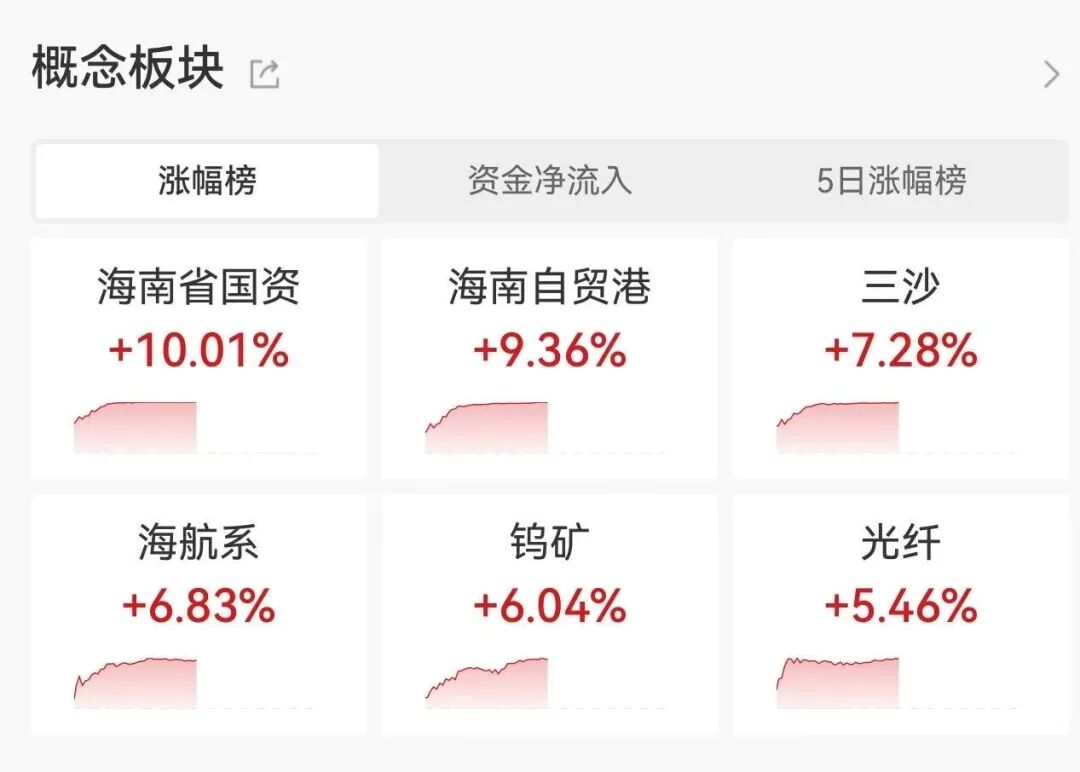
海南概念股再度密集涨停!
Jin Rong Shi Bao· 2025-12-22 06:51
政策面上,12月18日,海南自由贸易港正式启动全岛封关,实施以"'一线'放开、'二线'管住、岛内自由"为基本特征的自由化便利化政策制度。 12月22日早盘,海南省国资、海南自贸港、三沙、海航系等概念板块集体走强,海南机场(600515)、中国中免(601888)、神农种业(300189)、海峡 股份(002320)等近20只个股涨停。 截至午间收盘,海南省国资、海南自贸港两大概念板块分别收涨10.01%、9.36%;海运、贸易等行业也涨幅居前,均收涨2.11%。下午开盘后相关板块继 续维持强势表现。 国泰海通证券交运首席分析师岳鑫也认为,"零关税、低税率、简税制"将加速区域经济与相关产业发展,有望拉动客货流动。 据三亚市商务局数据,封关首日全市免税销售额达1.18亿元;据海口海关统计,首日"一线"进口"零关税"享惠货物3.6亿元,主要为原油、航空器材 等,"二线"监管内销加工增值免关税货物1468.9万元,免征关税80.8万元,涉及医疗器械、药品、食品等品类。 "制度层面的降本增效将持续改善经营主体成本结构,提升货物贸易自由化与便利化水平,并增强市场活跃度。"开源证券分析师黄泽鹏表示,从消费端 看,政策红利将 ...




央行征信管理局局长答《金融时报》记者问
Jin Rong Shi Bao· 2025-12-22 05:12
Core Viewpoint - The People's Bank of China has implemented a one-time credit repair policy aimed at addressing issues related to personal credit reports and combating fraudulent activities by illegal intermediaries [1][3]. Group 1: Policy Implementation - The one-time credit repair policy is completely free and does not require individuals to apply or engage third parties for assistance [4]. - The policy is designed to objectively reflect personal credit information, including both timely repayment and overdue information, as per the Credit Reporting Management Regulations [3]. Group 2: Market Regulation and Fraud Prevention - The People's Bank of China, in collaboration with law enforcement and regulatory agencies, is actively combating illegal intermediaries that exploit individuals' desire to remove overdue information [3]. - There is a warning against fraudulent activities where intermediaries claim to offer services like "credit washing" or "debt restructuring," which can lead individuals into debt traps [4].

建立健全市县自主财力可持续增长机制
Jin Rong Shi Bao· 2025-12-22 05:09
Core Viewpoint - The article emphasizes the need to enhance local fiscal autonomy through reforms in the fiscal and tax system, aiming for a clearer division of responsibilities and financial coordination between central and local governments, ultimately leading to sustainable growth in local fiscal capacity [1][2]. Group 1: Constraints on Local Fiscal Autonomy - Local fiscal autonomy reflects the ability of local governments to independently manage financial resources, which is influenced by the efficiency of intergovernmental fiscal relations and the division of responsibilities [2]. - Local fiscal capacity is primarily derived from general public budgets, government fund budgets, and state capital operation budgets, excluding social insurance funds [2]. - Current challenges include an under-optimized fiscal system at the provincial level, inefficient financial allocation mechanisms at the city and county levels, and insufficient governance capabilities [2][3]. Group 2: Optimization of Fiscal Systems - The fiscal system below the provincial level requires further optimization to align with the goals of modernizing China's economy, necessitating reforms in the division of fiscal responsibilities and expenditure [3]. - The transfer payment system needs improvement in terms of scientific accuracy and efficiency, with a focus on increasing the proportion of general transfer payments [4]. - Local tax systems are inadequate, with a heavy reliance on shared taxes and short-term revenue sources like land sales, which undermines fiscal stability [4]. Group 3: Governance Capacity Enhancement - Local governments face systemic shortcomings in fiscal governance, including reliance on outdated practices and insufficient capacity for zero-based budgeting reforms [5]. - The implementation of performance management systems is lacking, affecting the efficiency of fiscal resource allocation [5]. - There is a need for improved digital finance applications and enhanced professional capabilities among local fiscal staff [5]. Group 4: Sustainable Growth Mechanism for Local Fiscal Autonomy - A sustainable growth mechanism for local fiscal autonomy should be established through institutional reforms and enhanced governance capabilities [6]. - Key strategies include deepening fiscal reforms at the provincial level, optimizing financial allocation mechanisms, and improving fiscal management practices [7]. - Specific recommendations include clarifying the division of responsibilities between central and local governments, fostering stable local tax sources, and enhancing the structure of transfer payments [8][9]. Group 5: Financial Resource Utilization - Local governments should actively utilize existing assets and resources to enhance fiscal efficiency, including the management of idle assets and the promotion of market-oriented approaches [11][12]. - Establishing a comprehensive asset database and promoting competitive mechanisms for resource allocation can maximize fiscal resource value [12]. - The integration of digital technologies in fiscal management can improve oversight and efficiency in resource allocation [15].
我国数字金融发展为金融强国建设提供坚实支撑 金融“十四五”回顾与“十五五”展望系列综述之三
Jin Rong Shi Bao· 2025-12-22 05:04
"十四五"时期是我国数字经济蓬勃发展的五年,也是数字金融与实体经济深度融合的五年。中国人民银 行等七部门联合印发的《推动数字金融高质量发展行动方案》,明确提出了以数据要素和数字技术为关 键驱动,到2027年底,基本建成与数字经济发展高度适应的金融体系。这五年间,我国数字金融发展呈 现出快速演进、全面深化的良好态势,为金融强国建设提供了坚实支撑。 当前,我国正站在从"金融大国"迈向"金融强国"的历史新起点上。随着"十四五"规划圆满收官,"十五 五"时期已成为我国向基本实现社会主义现代化迈进的关键五年。在这一承前启后的关键节点,系统回 顾数字金融在"十四五"期间的发展成就,科学展望"十五五"时期的发展趋势与挑战,对构建与中国式现 代化相匹配的现代金融服务体系、在全球金融竞争中赢得主动具有重要意义。 "十四五"数字金融发展回顾:规模、质量与生态的全面跃升 "十四五"期间,我国数字金融凭借政策框架的不断健全、技术应用的深度渗透与监管体系的逐步完善, 构建起覆盖支付、信贷、保险、征信等多领域的数字化金融生态,发展成就位居全球前列。 首先,政策框架体系逐步健全。在国家战略层面,《中华人民共和国国民经济和社会发展第十四个五 ...
加快完善多层次、广覆盖、可持续的普惠金融体系
Jin Rong Shi Bao· 2025-12-22 05:04
2025年中央经济工作会议提出"引导金融机构加力支持中小微企业等重点领域",明确了金融机构未来的 信贷投放重点,将中小微企业置于与扩大内需、科技创新同等重要的位置。中小微企业是普惠金融最主 要的服务群体。会议要求金融机构"加力支持",意味着未来在信贷资源、产品创新和服务模式上,都会 向这一群体倾斜。这为新时代普惠金融发展指明了根本方向,提供了根本遵循。普惠金融作为现代金融 体系的关键组成部分,其核心使命在于通过制度创新、技术赋能与政策协同,使传统上被排除在正规金 融服务之外的弱势群体能够以合理成本获取便捷、有效的金融服务,在支持实体经济、缓解贫困、推动 乡村振兴和实现共同富裕等方面发挥着日益重要的作用。 (四)生态优化:构筑可持续发展的基础设施与保护屏障。"十四五"期间,我国金融基础设施的功能支 撑作用至关重要。支付体系建设方面,重点聚焦农村地区支付环境的优化升级,为农村市场提供了兼具 安全性与可靠性的支付服务;信用信息系统建设方面,成功构建了多层级的信用档案平台与共享机制, 实现了公共信用信息与银行信贷流程的深度融合,促进普惠信贷的高效发放。普惠金融生态建设中,金 融消费者权益保护是不可忽视的重要环节。随着 ...
让现金支付不再“碰壁” 央行等三部门发布新规为你“撑腰”
Jin Rong Shi Bao· 2025-12-22 05:02
Core Viewpoint - The People's Bank of China, along with other regulatory bodies, has established the "Regulations on Cash Payment and Service of Renminbi" to enhance the cash payment environment amidst the growing trend of digital payments, ensuring that cash remains a viable payment option for all demographics [1][2]. Group 1: Principles of the Regulations - The regulations adhere to five fundamental principles: prioritizing financial services for the public, addressing emerging issues in cash transactions, implementing comprehensive measures, promoting collaborative governance, and enforcing legal penalties against entities that refuse cash payments [2]. Group 2: Requirements for Payment Scenarios - The regulations specify that cash payments must be supported in scenarios involving face-to-face services and transactions that can be completed in person, while also mandating clear signage regarding payment methods in self-service environments [3][4]. - Entities that conduct all transactions online must publicly disclose their payment methods in advance, respecting the public's right to know and choose [3]. Group 3: Banking Sector Obligations - Banks are required to facilitate cash deposit and withdrawal services, ensuring that their branches and ATMs are accessible to meet diverse customer needs, while also managing cash flow to prevent the circulation of unfit currency [5]. - In cases of cash payment refusal, the public is encouraged to negotiate with the service provider and report any discriminatory practices through official channels, with the central bank and relevant authorities committed to addressing such complaints [5].
《消费者金融素养问卷调查报告》发布
Jin Rong Shi Bao· 2025-12-22 05:00
Core Insights - The report indicates that the national consumer financial literacy index for 2025 is 67.61, with average scores in financial skills at 69.30, financial attitudes at 70.62, financial behaviors at 54.28, and financial knowledge at 76.25 [1][2] Group 1: Overall Financial Literacy - Consumers generally possess good capabilities in handling basic financial matters but need to enhance new skills to adapt to the increasingly digital and complex financial environment [1] - The overall financial attitudes of consumers reflect a healthy and prudent financial value system, along with a strong willingness to learn financial knowledge and improve financial skills [1] Group 2: Financial Behavior and Knowledge - Consumers exhibit stable financial behaviors and have a good grasp of basic knowledge, but there is room for improvement in the diversified use of financial tools and asset allocation strategies [1] - Knowledge related to complex calculations or inter-temporal decision-making remains relatively weak among consumers [1] Group 3: Demographic Analysis - Financial literacy distribution shows a U-shaped curve by age, with the highest literacy in the 30-39 age group (70.11) and the lowest in those aged 60 and above (62.16) [2] - Urban consumers score higher in financial literacy (69.92) compared to rural consumers (63.23) [2] - Among regions, the eastern area has the highest financial literacy score (68.45), followed by the central (67.51), northeastern (67.21), and western regions (66.99) [2] Group 4: Purpose of the Report - The report aims to comprehensively understand the financial literacy levels of consumers in China and enhance the targeted effectiveness of financial education and publicity efforts [2]
探索“金币+”更多可能 助力建设金融强国 访中国金币集团有限公司党委书记、董事长焦瑾璞
Jin Rong Shi Bao· 2025-12-22 03:57
Core Viewpoint - The 20th National Congress of the Communist Party of China has set the strategic goal of "accelerating the construction of a financial power" as one of the key objectives for the next five years, emphasizing the importance of cultural prosperity as a hallmark of Chinese modernization [1] Group 1: Financial Power Construction - The construction of a financial power should be based on a strong economic foundation, possessing leading global economic, technological, and comprehensive national strength, along with key financial elements such as a strong currency, central bank, financial institutions, international financial center, regulation, and talent [1] - China Gold Coin Group, as the only state-owned enterprise authorized to operate precious metal commemorative coins, plays a crucial role in the currency issuance system and aims to contribute to the construction of a financial power during the 14th Five-Year Plan [1][2] Group 2: Cultural Mission - China Gold Coin Group serves as a "national strategic cultural messenger" and is committed to integrating its operations with national financial work while fulfilling its cultural mission through the issuance of commemorative coins [2] - The issuance of commemorative coins for significant events, such as the centenary of the Communist Party and the 70th anniversary of the founding of New China, reflects the nation's rise and the prosperity of its people [3] Group 3: Strategic Planning and Internationalization - In the next five years, China Gold Coin Group will focus on enhancing the global recognition and credibility of the Renminbi, expanding its international presence while promoting cultural exchange and cooperation with foreign minting institutions [5][6] - The company plans to leverage its Hong Kong subsidiary and other overseas channels to build a marketing network, facilitating the import of commemorative coins and enhancing cultural exchange [6] Group 4: Market Challenges and Opportunities - The changing external environment has affected market demand for non-essential products like commemorative coins, while rising gold prices have increased the investment appeal of products like the Panda gold coin [7] - China Gold Coin Group aims to focus on high-quality development, optimize policy supply, and stimulate market demand to navigate the challenges posed by the evolving market landscape [7] Group 5: Operational Strategies - The company will enhance its sales channel construction, improve transparency in the issuance of commemorative coins, and expand its membership system to increase industry participation [7] - It will also deepen supply-side structural reforms, innovate in design and production, and accelerate digital transformation to ensure sustainable industry development [7] - Efforts will be made to cultivate new consumer demands through product innovation and cross-industry collaboration, aiming to broaden the appeal of commemorative coins from niche collections to mainstream cultural consumption [7]