Jin Rong Shi Bao

Search documents
锚定金融强国目标 以证券力量护航“十五五”高质量发展
Jin Rong Shi Bao· 2025-12-03 01:24
"十五五"时期是基本实现社会主义现代化的关键时期。随着党的二十届四中全会审议通过"十五 五"规划建议,清晰的战略路径已然铺就。在这一历史进程中,金融血脉如何更精准地服务实体经济, 资本市场如何更高效地赋能新质生产力,成为关系全局的重要议题。 "截至2025年10月末,中信建投证券累计服务国家级专精特新及制造业单项冠军企业超2100家,'小 巨人'IPO保荐数量稳居市场前列,北交所IPO保荐数量及承销金额持续领先。未来,我们还将继续加大 投入,为新质生产力发展贡献更大力量。"正值中信建投证券股份有限公司(以下简称"中信建投证 券")成立20周年之际,《金融时报》独家专访了中信建投证券股份有限公司党委副书记、总经理金剑 华。这份服务科技创新的高质量"成绩单",是中信建投证券过往成果的总概括,也是未来继续深耕科创 金融、服务国家战略决心的体现。 围绕证券行业如何理解并践行"十五五"规划建议的战略指引,在加快建设金融强国的目标下证券公 司如何找准定位并系统发力,以及服务新质生产力将如何重塑行业发展模式、核心能力与价值创造方式 等关键问题,金剑华对记者系统阐述了他的思考。 《金融时报》记者:结合当前国内外发展环境,您认 ...



中国工商银行助力中越二维码支付互联互通第一阶段功能上线
Jin Rong Shi Bao· 2025-12-03 01:24
Core Viewpoint - The launch of the first phase of the China-Vietnam QR code payment interconnectivity allows Chinese consumers to use various payment platforms in Vietnam, marking a significant step in bilateral financial cooperation [1] Group 1: Project Launch - The China-Vietnam QR code payment interconnectivity was officially announced on December 2 in Hanoi, Vietnam [1] - The service enables Chinese consumers to make payments at merchants accepting the VietQR code using the Industrial and Commercial Bank of China (ICBC) mobile banking app and other compatible wallets [1] Group 2: Strategic Significance - This initiative coincides with the 75th anniversary of diplomatic relations between China and Vietnam and the "China-Vietnam Cultural Exchange Year" [1] - The project is part of a broader effort to enhance bilateral financial infrastructure and strengthen the strategic partnership between the two countries [1] Group 3: Institutional Role - ICBC serves as the clearing bank for this initiative and has been actively involved in facilitating China-Vietnam cooperation [1] - The bank has established a significant presence in Vietnam with a branch in Hanoi and a representative office in Ho Chi Minh City, making it the largest Chinese financial institution in the country [1]

招银投资在深圳揭牌成立
Jin Rong Shi Bao· 2025-12-03 01:24
Core Insights - The establishment of China Merchants Bank's financial asset investment company, Zhaoyin Investment, marks a significant step in supporting technology innovation and the development of emerging industries [1][2] - Zhaoyin Investment aims to become a leading investment institution by enhancing its research, investment management, risk management, technological, and innovative capabilities [1] - The company will focus on market-oriented debt-to-equity swaps and participate in pilot equity investment projects under regulatory guidance to empower technological innovation [2] Group 1 - Zhaoyin Investment was officially launched on December 2, with key figures from Shenzhen and China Merchants Group present at the ceremony [1] - The company received approval for establishment on July 3 and for operation on November 21 [1] - The initiative aligns with the regulatory framework that encourages commercial banks to establish financial asset investment companies to support technology-driven enterprises [1] Group 2 - Zhaoyin Investment's mission includes enhancing its role in supporting high-level technological self-reliance and focusing on new and future industries [1] - The company emphasizes value investment and aims to create a new ecosystem of investment and lending [1] - Zhaoyin Investment plans to leverage the advantages of its parent company and strengthen collaboration with various investment sectors and branches [1][2]
“共同成长”破局民企融资
Jin Rong Shi Bao· 2025-12-03 01:19
Core Insights - Wanhao Energy has transformed from a traditional energy-saving and environmental protection company to a key player in the field of natural gas liquefaction, showcasing the potential of private enterprises in technological innovation and green development [1][2] - The "Common Growth Plan" initiated by the People's Bank of China in Anhui Province has been crucial in providing financial support for innovative companies like Wanhao Energy, facilitating their transformation and growth [1][3] Group 1: Company Transformation - In 2013, Wanhao Energy faced skepticism during its transition from an energy-saving company to one focused on utilizing waste gas from oil and gas fields, which was traditionally seen as a domain for state-owned enterprises [2] - The company endured six years without revenue, relying on profits from traditional business to fund research and development, ultimately leading to the production of its first intelligent natural gas liquefaction equipment in 2019 [2][3] - This equipment has significantly contributed to reducing carbon emissions, with one project in Sichuan recovering approximately 200 million cubic meters of natural gas annually and cutting carbon emissions by 240,000 tons [2] Group 2: Financial Innovation - Wanhao Energy's second transformation into the bioenergy sector required substantial funding, which was made possible by the proactive support from banks, particularly the Industrial and Commercial Bank of China (ICBC) [3][4] - The "Common Growth Plan" allows for long-term, high-amount loans without traditional collateral requirements, enabling companies to secure financing based on their growth potential [3][6] - By September 2025, the plan had supported over 15,000 enterprises with loans exceeding 210 billion yuan, demonstrating its effectiveness in fostering innovation [3][6] Group 3: Policy and Ecosystem Development - The "Common Growth Plan" has evolved to address the challenges faced by technology-driven enterprises, providing a framework for dynamic risk and benefit balance between banks and companies [6][11] - The introduction of the 2.0 version of the plan includes a "stock option income swap," allowing banks to share in the growth of enterprises without holding equity, thus enhancing financial support for companies like Wanhao Energy [8][10] - Wanhao Energy's projects, such as the biogas liquefaction and carbon capture facility, exemplify the successful integration of financial support and technological innovation, contributing to a circular economy [11][12]

基础设施REITs扩围 资产图谱不断丰富完善
Jin Rong Shi Bao· 2025-12-03 01:08
Core Viewpoint - The National Development and Reform Commission (NDRC) has issued the "Industry Scope List for Infrastructure Real Estate Investment Trusts (REITs) Projects (2025 Edition)," significantly expanding the asset categories included in infrastructure REITs, reflecting the internal demand for economic transformation and the public's desire for a better life [1][2]. Group 1: Expansion of Asset Categories - The new list includes high-quality asset categories such as sports venues, commercial travel and cultural sports complexes, four-star and above hotels, commercial office facilities, and urban renewal facilities, marking a major breakthrough in the scope of infrastructure REITs [1][2]. - Since the launch of infrastructure REITs in 2020, the market has continuously expanded, now covering 12 major industries and 52 asset types, with 18 asset types from 10 industries already achieving their first issuance [2][3]. Group 2: Consumer Infrastructure and Sports Consumption - The expansion of the scope to include consumer infrastructure signifies a shift in understanding, moving from merely providing shopping spaces to offering high-quality living and service experiences [2][3]. - The inclusion of sports venues supports the national strategy for public fitness and expands new spaces for sports consumption, aligning with government efforts to enhance financial support for the sports industry [3][4]. Group 3: Commercial Office Facilities - The list allows independent commercial office facilities to issue REITs for the first time, which aligns with international REIT market practices and is a cautious decision based on China's national conditions [4][5]. - This move is expected to significantly expand asset scale and attract a broader range of investors, while also providing stable operating spaces and quality business environments for the real economy [4][5]. Group 4: Urban Renewal Facilities - Urban renewal facilities have been included as an independent category, providing strong financial support for national urban renewal strategies [5]. - The introduction of infrastructure REITs is seen as a solution to challenges such as large investment scales and long recovery periods in urban renewal projects, promoting a sustainable operational model and enhancing the long-term vitality of updated areas [5].
中国信保出具全国首张海外投资保险境外经贸合作区统保模式保单
Jin Rong Shi Bao· 2025-12-03 01:08
中国信保表示,将积极联合相关机构,进一步完善出口信贷、供应链和贸易应收款融资、境外销售 风险保障、物流服务账期支持、数字化海外资信调查等若干服务措施,持续优化合作区金融服务生态, 为我国境外经贸合作区高质量发展贡献信保力量。 责任编辑:袁浩 本报讯 记者王笑报道 近日,中国信保为中方投资的柬埔寨西哈努克港经济特区项目出具全国首张 海外投资保险境外经贸合作区统保模式保单。据了解,中国信保创新推出境外经贸合作区统保模式,在 一张海外投资保险保单项下就可以同时为建园企业和多家入园企业提供风险保障,较大提升了投保便利 性。 中国信保早在2017年就承保了中企投资柬埔寨西哈努克港经济特区项目。如今,该保单的出具标志 着中国信保为推动我国境外经贸合作区高质量发展、提升合作区整体抗风险能力迈出了坚实的一步。 ...
个人养老金制度实施三周年:制度升级 产品丰富 吸引力仍待增强
Jin Rong Shi Bao· 2025-12-03 01:08
Core Insights - The personal pension system has been implemented for three years, with over 150 million accounts opened and 1,245 products available, indicating steady growth and diversification in offerings [1][2][4] - The system aims to transition residents from savings-based to investment-based retirement planning, addressing the challenges of an aging population [2][3] - Future enhancements are expected to focus on increasing participation rates and optimizing support policies and product systems [1][3][6] System Design and Optimization - The personal pension system has evolved significantly, expanding from 36 pilot cities to nationwide implementation, with a focus on market-driven operations and individual account management [2][4] - The annual contribution limit is currently set at 12,000 yuan, with all workers eligible to participate, emphasizing the voluntary nature of the system [2] - The product range includes savings deposits, financial products, pension insurance, public funds, and savings bonds, catering to diverse investor needs [2][4] Product Supply and Performance - The current market features 1,245 personal pension products, with notable performance in fund categories, where 96% of funds have positive returns since inception [4] - Despite the growth in product offerings, there remains a mismatch between supply and investor demand, particularly for low to medium-risk products [4][6] - The inclusion of electronic savings bonds in the product range starting in June 2026 will further diversify offerings and enhance system attractiveness [5] Enhancing Investor Participation - As of June 2025, over 150 million personal pension accounts have been opened, but the actual funding and product allocation remain low, indicating a need for improved engagement strategies [6] - Recommendations include tax incentives, adjustments to contribution limits, and the introduction of more tailored products to attract a broader investor base [6][7] - A comprehensive approach integrating financial services with healthcare and community support is suggested to enhance the overall pension ecosystem [7]
中国太平全力支援 香港大埔火灾保险理赔及善后
Jin Rong Shi Bao· 2025-12-02 12:18
Group 1 - The core viewpoint of the article highlights China Taiping Group's commitment to supporting the aftermath of a severe fire incident at Hong Fu Court in Tai Po, Hong Kong, in line with President Xi Jinping's directives [1] - China Taiping Insurance (Hong Kong) Co., Ltd. has underwritten the relevant insurance for Hong Fu Court and is actively coordinating with reinsurers to establish a rapid claims and pre-claims mechanism to assist affected residents in returning to normal life [1] - The company has donated 10 million HKD to the "Tai Po Hong Fu Court Assistance Fund" set up by the Hong Kong SAR government to provide aid to impacted residents [1] Group 2 - China Taiping has arranged for 60 housing units (130 beds) at its "China Taiping. Guangzhou Muxian Community" to offer free accommodation for three months to disaster-affected residents [1] - The company expresses confidence in its ability to handle the insurance claims related to the Hong Fu Court fire, emphasizing its role as an economic "shock absorber" and a social "stabilizer" in Hong Kong [1]

六大行已全面停售5年期大额存单
Jin Rong Shi Bao· 2025-12-02 12:10
Core Viewpoint - Major state-owned banks in China have completely stopped offering 5-year large denomination certificates of deposit (CDs), with some joint-stock banks and city commercial banks also following suit by reducing long-term deposit products [1][9]. Group 1: Changes in Deposit Products - The six major state-owned banks have significantly shortened the maturity structure of their large denomination CDs, now only offering products with maturities of 1 month, 3 months, 6 months, 1 year, 2 years, and 3 years [3][9]. - The interest rates for the 3-year large denomination CD is 1.55%, while the 1-year and 2-year products have interest rates of 1.20% [3]. Group 2: Withdrawal of 5-Year CDs - The 5-year large denomination CDs have been removed from the product offerings of several banks, including China Bank, Construction Bank, and Postal Savings Bank, with no trace of 5-year products in Agricultural Bank's catalog from 2018 to 2025 [9][10]. - The withdrawal of 5-year large denomination CDs has been a gradual process, as evidenced by China Bank's earlier announcement in May 2023, which included 5-year products but was limited to specific customers [9][10]. Group 3: Availability of Other Maturities - The 3-year large denomination CDs have also become scarce this year, with banks like China Merchants Bank confirming that both 3-year and 5-year options are no longer available [11]. - The longest available term for large denomination CDs is now 2 years, with an interest rate of 1.40% [11].





刚刚,央行发布11月中央银行各项工具流动性投放情况
Jin Rong Shi Bao· 2025-12-02 11:56
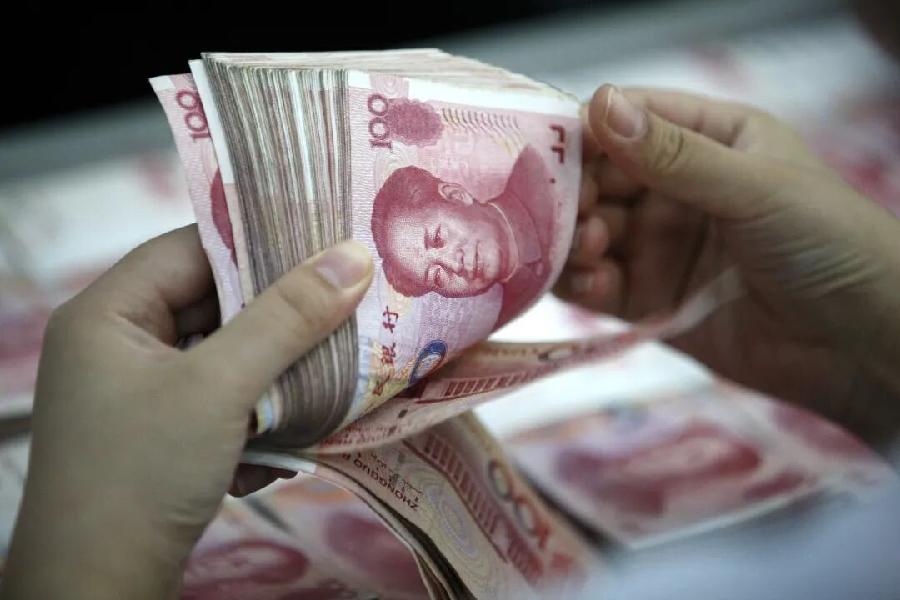
Summary of Key Points Core Viewpoint - The central bank's liquidity injection in November 2025 shows a mixed approach with net withdrawals in some areas and significant net injections in others, indicating a strategic balance in monetary policy to manage liquidity in the economy [1]. Group 1: Central Bank Loan Tools - The central bank's standing lending facility (SLF) had a net withdrawal of 3 million yuan, indicating a reduction in liquidity through this channel [2][3]. - The medium-term lending facility (MLF) saw a net injection of 1000 million yuan, reflecting an effort to provide longer-term liquidity support [2][3]. - The pledged supplementary lending (PSL) had a net injection of 254 million yuan, contributing positively to liquidity [2][3]. - Other structural monetary policy tools resulted in a net injection of 1150 million yuan, further enhancing liquidity in the market [2][3]. Group 2: Open Market Operations - The 7-day reverse repurchase agreements experienced a net withdrawal of 5562 million yuan, indicating a tightening of short-term liquidity [2][3]. - Other term reverse repos had a net injection of 5000 million yuan, suggesting a targeted approach to manage liquidity over different time horizons [2][3]. - The net injection from open market transactions in government bonds was 500 million yuan, contributing to overall liquidity management [2][3]. - Central treasury cash management operations resulted in a net injection of 800 million yuan, supporting the liquidity framework [2][3].