Qian Zhan Wang

Search documents
【行业深度】洞察2025:中国医美注射材料行业竞争格局及市场份额(附市场集中度、企业竞争力等)
Qian Zhan Wang· 2025-07-21 05:47
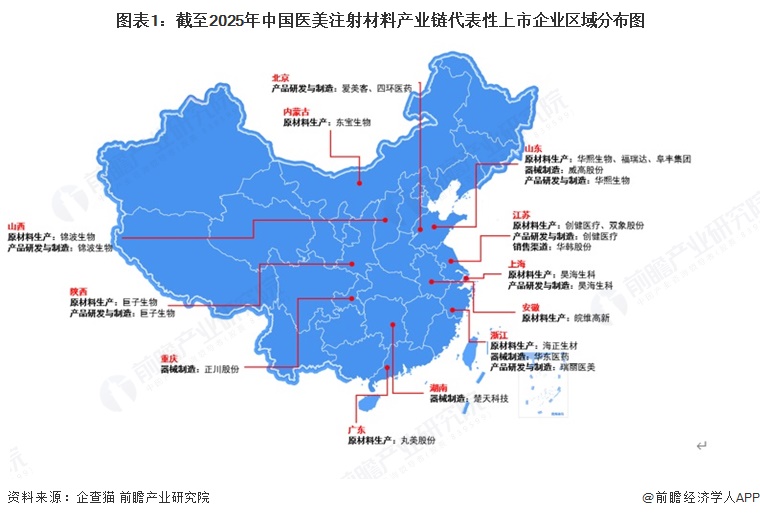
Group 1 - The core viewpoint of the article highlights the competitive landscape of the Chinese medical beauty injection materials industry, focusing on regional distribution, market competition, and domestic substitution [1][2][5][6][8]. Group 2 - In terms of regional competition, Shandong Province has the highest number of enterprises in the medical beauty injection materials industry, including raw material producers like Huaxi Biological and equipment manufacturers like Weigao [1]. - The main competitors in the medical beauty injection materials market include Huaxi Biological, Aimeike, and Haohai Biological for hyaluronic acid products, while Jinbo Biological and Juzhi Biological lead in collagen products [2]. - The market structure for medical beauty injection materials in 2024 shows that hyaluronic acid accounts for approximately 36% and botulinum toxin for about 29% of the market [5]. Group 3 - As of May 2025, the number of domestic approvals for hyaluronic acid is comparable to imports, while domestic approvals for regenerative materials exceed imports; however, domestic approvals for botulinum toxin and collagen are lower than imports [6]. - The competition in the industry is intense, with hyaluronic acid and botulinum toxin dominating the market; foreign companies hold an advantage in the high-end market, while domestic companies like Huaxi Biological and Aimeike lead in the mid-to-low-end market through cost-effectiveness and technological innovation [8]. - The threat of substitutes is significant, with non-surgical options like phototherapy and topical skincare products capturing part of the market demand [8].




2025年中国无人驾驶物流车产业最具潜力企业:新石器、白犀牛、行深智能、九识智能、行深智能、小马智行
Qian Zhan Wang· 2025-07-21 01:51
Core Insights - The logistics industry is facing unprecedented efficiency anxiety and cost challenges due to a 20% annual increase in e-commerce order volume and an 8% annual rise in labor costs. Autonomous delivery vehicles are emerging as a significant force driving industry transformation [2] Group 1: Industry Trends - The labor shortage crisis is particularly pronounced in the logistics sector, with the State Post Bureau reporting that daily express delivery volume is expected to exceed 500 million pieces by 2024, while the number of frontline workers has decreased by 12% compared to three years ago [2] - Autonomous delivery vehicles can operate 24/7, demonstrating remarkable efficiency in last-mile delivery. For instance, JD Logistics' pilot in Xiong'an New Area shows that autonomous delivery vehicles can handle three times the order volume of traditional methods, with delivery costs per order reduced by 45% [2] - Policy support is accelerating the implementation of technology, with the release of guidelines in late 2024 that include autonomous driving in pilot applications for intelligent transportation [2] Group 2: Industry Structure - The autonomous delivery vehicle industry chain is complex and highly integrated, consisting of upstream core technologies and components, midstream vehicle manufacturing and system integration, and downstream application scenarios and operational services [5] - Upstream components include perception layers (e.g., LiDAR, cameras), decision layers (e.g., AI chips), and execution layers (e.g., control chassis) [5] - Midstream development features both traditional automakers and tech companies pursuing two technological paths: incremental (led by automakers) and leapfrog (direct development by tech firms) [5] Group 3: Key Players - Notable companies in the autonomous delivery vehicle sector include: - **Xinshiqi**: Founded in 2018, it has raised over 2 billion RMB and is a leading player in the autonomous delivery vehicle market, with a production capacity of 10,000 vehicles per year [9][10] - **Bai Xiniu**: Established in 2019, it focuses on L4-level autonomous driving technology and has secured 200 million RMB in funding for product development and market expansion [11][13] - **Yika Zhiche**: Founded in 2017, it specializes in L4-level autonomous driving chassis technology and has raised over 500 million RMB for production capacity expansion [14][15] - **Jiushi Intelligent**: Established in 2021, it has delivered over 3,000 autonomous vehicles and has a market share exceeding 90% in vehicle sales [16][17] - **Xing Shen Intelligent**: Founded in 2017, it has developed multiple series of autonomous vehicles and has established partnerships with major companies like JD and Meituan [18][19] - **Pony.ai**: Founded in 2016, it has raised over 1.2 billion USD and is a global leader in autonomous driving technology, with significant advancements in commercial operations [22][23] Group 4: Market Dynamics - The autonomous delivery vehicle industry is experiencing a price war, with prices dropping from over 1 million RMB to around 19,800 RMB due to scale expansion and accelerated technological iteration [28] - The industry is projected to see a significant increase in value, with an estimated growth of 594.8 billion RMB by 2030 [28][30] - The cost of autonomous delivery vehicles is expected to align with that of conventional electric vehicles by 2024, indicating readiness for large-scale application [30]
【最全】2025年食用油行业上市公司全方位对比(附业务布局汇总、业绩对比、业务规划等)
Qian Zhan Wang· 2025-07-20 07:15
Core Insights - The edible oil industry in China is characterized by a complex supply chain that includes agricultural production, processing, packaging, and sales channels [1] - Major listed companies in the industry include Jinlongyu (300999.SZ), Shenliang Holdings (000019.SZ), and others, with Jinlongyu leading in revenue and market share [1][8] Industry Overview - The edible oil supply chain consists of upstream agricultural production, midstream processing companies, and downstream sales channels [1] - The industry has seen a decline in revenue across most listed companies in 2024, indicating increased competition and market pressure [8][15] Company Performance - Jinlongyu reported a revenue of 238.87 billion yuan in 2024, maintaining a leading position despite a decline of 10.37% in its feed raw materials and oil technology business [8][15] - Shenliang Holdings and Jinlongyu both experienced growth in net profit in Q1 2025, with increases of 42.97% and 11.24% respectively [9][10] - Other companies like Su Kuan Agricultural Development and Jingliang Holdings faced significant revenue declines in 2024 [10] Financial Metrics - As of May 27, 2025, Jinlongyu's total market capitalization reached 165.196 billion yuan, while other companies like Su Kuan Agricultural Development also exceeded 10 billion yuan [9][10] - The profit margins varied significantly among companies, with West King Food achieving a gross margin of 22.86%, while Jinlongyu and Shenliang Holdings reported margins below 3% [18] Business Strategies - Jinlongyu plans to expand into the health industry and enhance its product offerings through technological innovation [22][24] - Jingliang Holdings aims to strengthen its supply chain and marketing strategies to improve its trade business [22][24] - West King Food focuses on brand building and cost control to enhance competitiveness [22][24] Market Dynamics - The overseas revenue distribution among companies is uneven, with West King Food and others relying heavily on international markets, although some have seen declines in overseas sales [20][21] - The edible oil industry is facing challenges due to increased competition and market pressures, leading to varied performance among listed companies [15][18]




北斗导航产业招商清单:北斗星通、华测导航、四维图新等最新投资动向【附关键企业名录】
Qian Zhan Wang· 2025-07-19 03:40
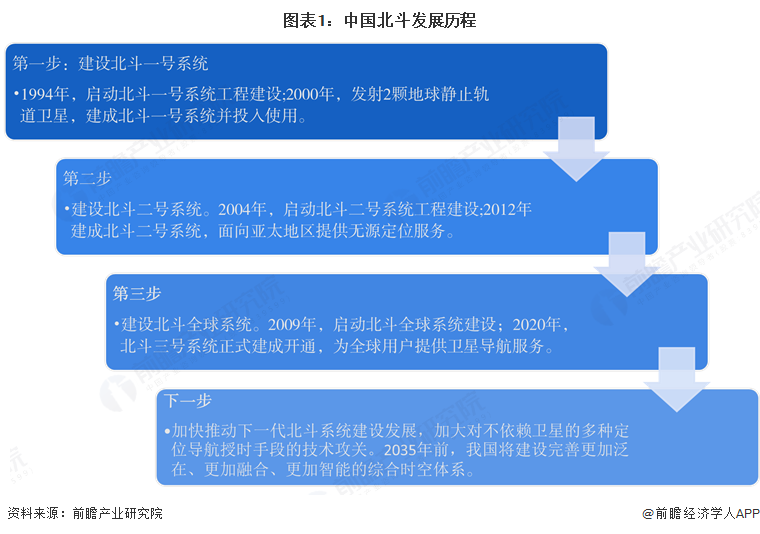
Core Viewpoint - The Beidou Navigation Industry is a crucial part of China's strategic emerging industries, experiencing rapid development and becoming a symbol of technological innovation and industrial upgrading in the country [1]. Group 1: Development and Achievements - The Beidou Satellite Navigation System is China's independently built and operated global satellite navigation system, with continuous breakthroughs in core technologies and steady progress in satellite networking, enhancing signal accuracy and coverage [1][3]. - By the end of 2020, the Beidou system achieved global coverage and interoperability with other global navigation systems, marking a significant milestone in its development [1]. - The successful launch of the 59th and 60th Beidou satellites on September 19, 2024, marked the completion of the Beidou-3 global satellite navigation system project, entering a new phase in global satellite navigation [1]. Group 2: Technological Advancements - Continuous technological breakthroughs have been the driving force behind Beidou's development, with significant improvements in satellite payloads, atomic clocks, and inter-satellite links, leading to positioning accuracy better than 10 meters and speed measurement accuracy better than 0.2 meters/second [3]. - The increasing domestic production rate of key components, such as Beidou chips, has enhanced the industry's self-control capabilities and improved the overall industrial chain [3]. Group 3: Market Penetration and Applications - As of the first half of 2024, the application scale of Beidou terminal devices (excluding consumer electronics) exceeded 27 million units, with a year-on-year growth of 17.4% and a penetration rate exceeding 50% in key industries [4]. - Beidou has transitioned from a "high-end configuration" to a "standard configuration" in consumer electronics, with over 98% of domestic smartphones supporting Beidou positioning [4]. - Beidou technology is being integrated into various emerging scenarios, such as smart cities and precision agriculture, significantly improving operational efficiency in sectors like fishing and agriculture [4]. Group 4: Policy Support and Industry Growth - The robust development of the Beidou industry is supported by national strategic planning and local policy implementation, with numerous policies issued since 2010 to encourage the development of Beidou navigation [5][8]. - More than 20 provinces and cities have included the Beidou industry in their "14th Five-Year Plan," aiming to establish national-level industrial bases and form trillion-yuan industrial clusters [8]. Group 5: Leading Enterprises - A number of competitive leading enterprises have emerged in the Beidou industry, with some exporting to over 120 countries and regions, particularly in areas related to the Belt and Road Initiative [10]. - Beijing Beidou Star Navigation Technology Co., Ltd. is identified as a leading enterprise in the Beidou navigation industry, focusing on becoming a global leader in intelligent location services and microwave ceramic components [14][17]. Group 6: Future Prospects - The total number of Beidou terminal devices is projected to exceed 1.4 billion units by the end of 2023, indicating a strong market presence [19]. - The core industry output value of Beidou navigation products is expected to exceed 170 billion yuan by 2029, driven by national and local policies promoting its application in various sectors [26].

【干货】奶酪产业链全景梳理及区域热力地图
Qian Zhan Wang· 2025-07-19 03:11
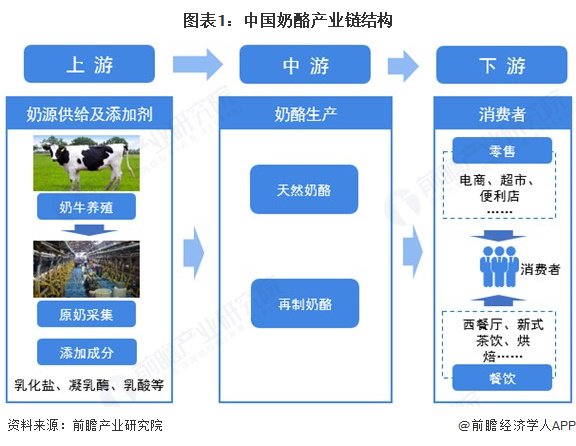
Core Insights - The cheese industry has a long supply chain that spans primary, secondary, and tertiary industries, with upstream focusing on milk supply and added ingredients, midstream on cheese production, and downstream on food service and retail channels [1][2][6] Industry Structure - The upstream segment consists of dairy farms and raw milk suppliers, with major players including YouRan Dairy, Modern Dairy, and others [2] - The midstream includes cheese manufacturers, with domestic participants like Mengniu, Yili, and Miaokelan Duo, and international brands such as Anchor and Kraft Heinz [2] - The downstream retail sector encompasses both online platforms like Taobao and JD.com, and offline supermarkets such as Walmart and Carrefour, as well as food service outlets like KFC and Starbucks [2][6] Regional Distribution - The upstream dairy supply is concentrated in regions like Inner Mongolia, Heilongjiang, and Shandong, while cheese production is primarily located in coastal areas [6] - Consumer demand is stronger in southern and coastal regions, indicating a north-south distribution pattern in the cheese industry [6] Cost Structure - The cost structure for processed cheese, such as cheese sticks, shows that raw material costs can exceed 50%, with packaging and processing costs accounting for approximately 17% and 28% respectively [9] - The cheese content in products often meets or exceeds 50%, impacting the overall cost structure [9] Price Transmission Mechanism - The cheese market price is influenced by supply-side costs, manufacturing costs, and consumer demand elasticity, creating a complex price transmission mechanism [12] - The final consumer price is affected by the cumulative costs from the supply chain, including raw material prices and brand premiums [12] Value Chain Analysis - The upstream segment has a higher profit margin, with companies competing for stable and quality milk supply [13] - Midstream cheese manufacturers like Miaokelan Duo have gross margins around 45%-50%, while downstream distributors have margins of 29%-33% [13]
2025年中国商业遥感卫星产业供应链十大代表性企业:航天电子、长光卫星、中国卫星、航天宏图、四维图新……
Qian Zhan Wang· 2025-07-18 07:58
Core Viewpoint - The commercial remote sensing satellite industry in China has rapidly developed into a significant part of the strategic emerging industries, transitioning from a "follower" to a "leader" in the global market, exemplified by the successful global networking of the Jilin-1 satellite constellation in 2023 [2] Industry Overview - Since the relaxation of policies in 2014 allowing private capital into the sector, the commercial remote sensing satellite industry has experienced significant growth [2] - The industry has established a complete value chain consisting of upstream manufacturing, midstream operation, and downstream application [2] - Upstream satellite launches and core component manufacturing are primarily dominated by state-owned enterprises, while private operators are emerging in the midstream [2][5] - The application scenarios for remote sensing data are extensive, covering meteorology, land, ocean, and disaster monitoring, driven by a dual model of "government guidance + enterprise leadership" [2] Regional Distribution - The industry is highly concentrated in Beijing, which serves as the core of the industry, while cities like Wuhan and Xi'an have developed regional centers based on research resources [5] Company Types and Characteristics - The industry features a clear distinction between military-civilian integration and soft-hard boundaries, with companies categorized into equipment manufacturers and operation service providers [8] - A report identifies ten representative companies in the commercial remote sensing satellite industry, each with unique strengths in technology research, product innovation, and market expansion [8] Key Companies - **Aerospace Electronics**: Leading in traditional fields such as aerospace measurement and control communication, with a projected revenue exceeding 20 billion RMB in 2024 [9][10] - **Changguang Satellite**: The first commercial remote sensing satellite company in China, with a focus on satellite and drone remote sensing services, and a significant satellite constellation providing global revisit capabilities [12][13] - **China Satellite**: Engaged in the development of small and micro-satellites, with a strong foundation in satellite manufacturing and application systems [14][15] - **Beidou Starlink**: The first listed company in China's satellite navigation industry, providing navigation and positioning solutions [16][17] - **Zhongke Xingtou**: Focused on space data systems and services, with a commitment to innovation and integration [18][19] - **Siwei Tuxin**: A leading enterprise in satellite internet, with a focus on remote sensing technology applications [25][26] - **Leike Defense**: Transitioned from traditional cooling business to high-tech military electronics, involved in major national projects [27] - **Weina Starry Sky**: A satellite manufacturing company with capabilities in satellite system design and integration [28][29] Industry Value Chain - The value chain of the commercial remote sensing satellite industry exhibits a "smile curve," with high profit margins in satellite manufacturing and data services, while system development yields lower profits [33][34] - Various business models include Data as a Service (DaaS), value-added services, and Satellite as a Service (SaaS), allowing companies to provide comprehensive satellite solutions [34] Market Trends and Future Outlook - The industry is characterized by a long and specialized supply chain, requiring companies to innovate and establish competitive products to succeed [37] - The establishment of an ecosystem for commercial remote sensing satellites is essential for fostering collaboration and achieving mutual benefits within the industry [37]


重磅消息!财政部调整超豪华小汽车消费税:起征点降至90万,乘联会崔东树:利于引导合理消费【附新能源汽车行业市场分析】
Qian Zhan Wang· 2025-07-18 07:13
Group 1 - The core viewpoint of the article is the significant adjustment in the consumption tax policy for ultra-luxury cars, lowering the tax threshold from 1.3 million yuan to 900,000 yuan (excluding VAT), which now includes various types of vehicles, including electric and fuel cell cars [2][3] - The adjustment aims to align the tax base with market prices, ensuring tax stability and avoiding "tax leakage," as the previous threshold was disconnected from actual transaction prices [2] - The inclusion of high-end new energy vehicles in the consumption tax policy indicates a shift from being a "policy-supported category" to becoming a "mainstream market participant" [3] Group 2 - The rapid development of China's new energy vehicle industry has positioned it as a significant force in the global automotive industry transformation, with a market penetration rate reaching 31.6% in 2023, up from the previous year [4] - By the first half of 2024, the total number of new energy vehicles in China reached 24.72 million, with 4.397 million newly registered vehicles, accounting for 7.18% of the total vehicle population [7] - As the penetration rate of new energy vehicles surpasses 40%, the timely adjustment of tax policies becomes increasingly important to reflect the changing dynamics of the automotive market [8]

0元购外卖?京东回应外卖补贴大战:好生意不靠烧出来更不靠刷出来,可持续才是真增长【附外卖行业市场分析】
Qian Zhan Wang· 2025-07-18 07:13
Group 1 - The core viewpoint of the article highlights a fierce subsidy war in the food delivery industry, with major platforms like Meituan, Taobao Flash, and JD launching aggressive promotional strategies to attract users, resulting in a 35% year-on-year increase in total industry subsidies [2] - Taobao Flash announced a subsidy plan of 500 billion yuan, while JD initiated a "Double Hundred Plan" to support benchmark brands with 10 billion yuan, and Meituan and Ele.me continued their classic strategies of discounts for new users [2] - The subsidy war has led to significant growth in order volumes, with Meituan's daily orders surpassing 150 million and Taobao Flash and Ele.me exceeding 8 million daily orders, indicating an exponential growth trend in the industry [2] Group 2 - JD expressed concerns about the "0 yuan purchase" and other aggressive subsidies as signs of severe internal competition, emphasizing that sustainable growth is more important than short-term gains from subsidies [2] - JD's strategy focuses on quality food categories, such as prepared meals and crayfish, aiming to provide targeted subsidies to meet effective demand and drive growth [2][8] - The food delivery business is viewed as a significant traffic entry point for e-commerce, with cross-purchase behavior observed among users, indicating that losses in the front-end can lead to profits in the back-end [8] Group 3 - In recent years, the food delivery market has been dominated by Meituan and Ele.me, with Meituan holding a market share of 68.2% and Ele.me at 25.4% as of mid-2020 [3] - The overall performance of the instant delivery market in 2020 was underwhelming, with three out of four segments reporting continuous losses, while the food delivery segment remained profitable, with Meituan's revenue reaching 66.27 billion yuan and operating profit at 2.83 billion yuan [4] - Future predictions indicate significant losses for Alibaba and JD's food delivery businesses, estimated at 41 billion yuan and 26 billion yuan respectively, while Meituan's EBIT is expected to decline by 25 billion yuan [5]




前瞻全球产业早报:今年二季度我国GDP达341778亿元
Qian Zhan Wang· 2025-07-18 02:02
Economic Data - In the second quarter of this year, China's GDP reached 341,778 billion yuan, representing a year-on-year growth of 5.2% [2] - The value added of the primary industry was 19,459 billion yuan, growing by 3.8% year-on-year; the secondary industry added 127,147 billion yuan, with a growth of 4.8%; and the tertiary industry contributed 195,172 billion yuan, increasing by 5.7% [2] Artificial Intelligence - NVIDIA CEO Jensen Huang stated that China's AI models are "world-class" and that open-source AI from China is a catalyst for global progress [3] - Huang emphasized that models developed by companies like DeepSeek, Alibaba, and Tencent are among the best globally, and AI has become a fundamental infrastructure akin to electricity [3] Technology and Manufacturing - Samsung Display is reportedly set to produce the first foldable iPhone screen for Apple, with mass production of flexible foldable screens expected to start later this year to meet the demand for a 2026 launch [4] - TSMC has initiated plans to build a second chip factory in Japan, with construction expected to continue in the second half of this year [12] Automotive Industry - Chongqing's economic and information committee is seeking opinions on a plan to enhance the smart connected vehicle industry, focusing on AI, core software, and high-end components [5][6] - Stellantis announced the termination of its hydrogen fuel cell technology development project, stating that employees at production sites will not be affected by this decision [15] Market Developments - JD.com has replaced its "20-minute free delivery" service with a new compensation model offering a 4 yuan coupon for late deliveries, indicating a shift in customer service strategy [10] - ByteDance clarified that it has not submitted a purchase application for NVIDIA's H20 chips, countering reports of interest from the company [8] Investment and Financing - "AutoArk" announced successful completion of Pre-A and Pre-A+ financing rounds, while XPeng HuiTian confirmed a $250 million Series B financing to support its flying car development [18] - MiniMax is reportedly nearing completion of a $300 million financing round, with a post-financing valuation exceeding $4 billion [18]


2025年中国智能手环发展现状分析:品牌出海发展势头迅猛
Qian Zhan Wang· 2025-07-17 11:33
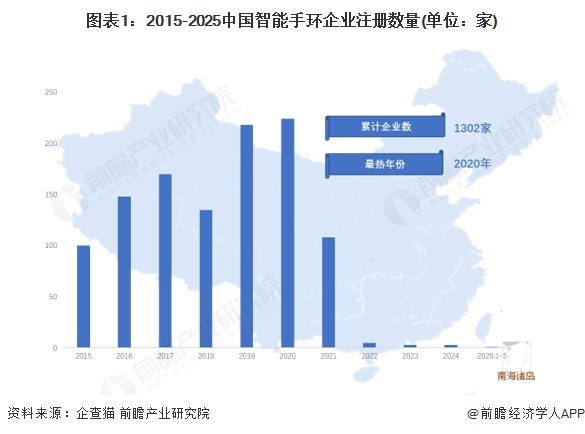
Group 1 - The number of registered smart wristband companies in China has significantly decreased since 2022, with only 1 company registered by May 2025, down from a peak of 224 in 2020 [1] - Guangdong province leads in the number of smart wristband companies, accounting for 90.63% of the total with 1,180 companies, while other provinces like Jiangsu, Anhui, Beijing, and Shandong have significantly fewer [2] Group 2 - In 2024, only Xiaomi among the top five smart wristband brands achieved sales growth, while Huawei's sales declined by 9.7%. Xiaomi's success is attributed to its product strategy, which includes maintaining previous pricing while upgrading materials and features [4] - Xiaomi and Huawei are rapidly expanding their overseas markets, with Xiaomi's shipments in the Middle East, Europe, and Latin America increasing by 125%, 34%, and 63% respectively, while Huawei's shipments in various regions saw increases ranging from 100% to 190% [7] Group 3 - The competition between smart wristbands and smartwatches is becoming increasingly blurred, with trends showing larger screens for wristbands and lighter designs for smartwatches, indicating a shift towards integrated functionalities and enhanced user experiences [10] - Smart wristbands primarily focus on fitness and health monitoring, while smartwatches offer a broader range of features, including voice assistants and third-party app support, highlighting the evolving landscape of wearable technology [11]