Qian Zhan Wang

Search documents
【投资视角】启示2025:中国生猪养殖行业投融资及兼并重组分析(附投融资事件、产业基金和兼并重组等)
Qian Zhan Wang· 2025-07-22 08:59
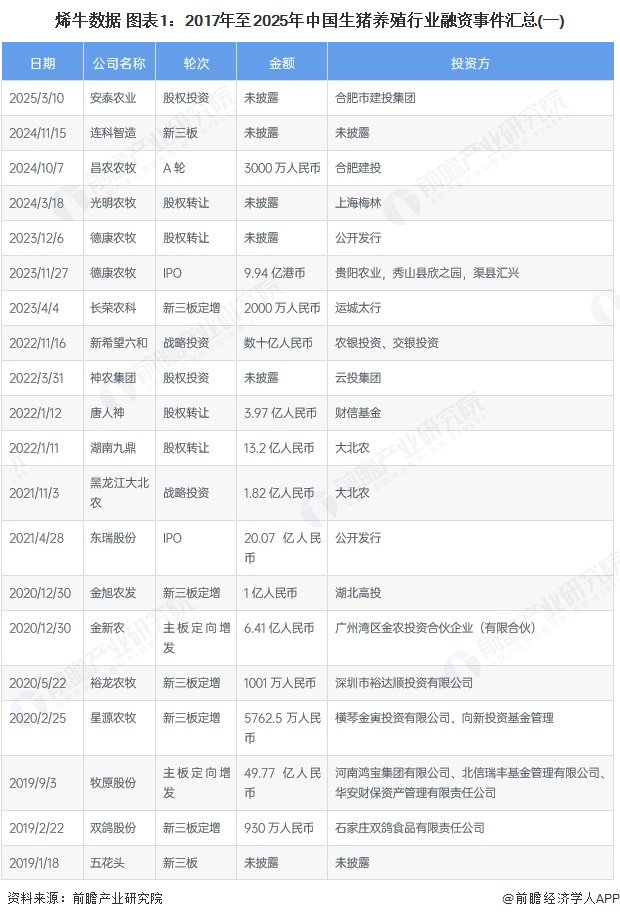
Group 1: Financing Status in the Swine Breeding Industry - From 2017 to June 2025, there were a total of 38 financing events in China's swine breeding industry, indicating a relatively mature investment stage with a majority of companies in the New Third Board and IPO phases [3][5][12] - The financing events are primarily concentrated in regions such as Sichuan, Hebei, and Henan, with Sichuan having 6 events, while Hebei and Henan each recorded 5 events [5][6] Group 2: External Investment Layout of Representative Companies - Major companies in the swine breeding industry, such as Muyuan Foods and Wens Foodstuff Group, have focused their external investments in the agricultural, forestry, animal husbandry, and fishery sectors, accounting for approximately 74% of their total investments [10][12] - The external investment activities of these companies are predominantly concentrated in Henan and Guangdong provinces [6][10] Group 3: Mergers and Acquisitions in the Industry - The swine breeding industry in China has seen a high level of merger and acquisition activity, primarily through horizontal mergers [12][14] - Notable merger and acquisition events from 2017 to 2025 include various horizontal mergers, with significant transactions such as Wens Foodstuff Group acquiring New Big Agriculture for 810 million RMB and New Hope Liuhe acquiring New Mu Breeding for 850 million RMB [14][15]




预见2025:《2025年中国医药流通行业全景图谱》(附市场现状、竞争格局和发展趋势等)
Qian Zhan Wang· 2025-07-22 08:49
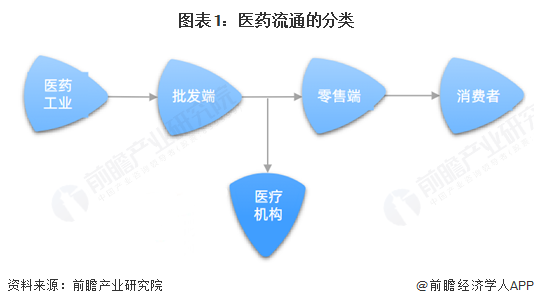
Industry Overview - Pharmaceutical distribution connects upstream manufacturers with downstream distributors and end customers, involving procurement from manufacturers and wholesale to distributors or direct sales to retail outlets like hospitals and pharmacies [1][3] - The distribution process is divided into two main segments: wholesale, characterized by large volumes and low margins, and retail, which has higher margins and sales costs [1] Industry Chain Analysis - The pharmaceutical distribution chain includes three segments: drug wholesale, retail enterprises, and hospital outpatient pharmacies, with hospital pharmacies holding a monopolistic position in the market [3] Industry Development History - The pharmaceutical distribution industry in China has undergone several transformations, from a planned economy system to a competitive regional structure, and now to a more concentrated market post "Two Invoice System" reform [6][7] Current Industry Status - The pharmaceutical circulation market has exceeded 3 trillion yuan, with a projected growth of 4.4% in 2024 [15] - State-owned enterprises dominate the pharmaceutical distribution sector, accounting for 61.8% of total revenue among reporting enterprises [20] - The B2B segment constitutes 50% of the pharmaceutical e-commerce market, indicating a significant focus on wholesale transactions [25] Competitive Landscape - The market is segmented into three tiers based on sales scale, with major national wholesalers like China National Pharmaceutical Group and Shanghai Pharmaceuticals leading the first tier [28] Future Development Trends - The pharmaceutical distribution market is expected to surpass 4 trillion yuan by 2030, driven by increased concentration, reduced distribution costs, and improved drug quality and safety [30] - The industry is moving towards greater integration and information technology adoption, enhancing service capabilities and efficiency [33]

2025年中国中硼硅玻璃细分市场分析 中性硼硅模制瓶市场份额占比高【组图】
Qian Zhan Wang· 2025-07-22 08:29
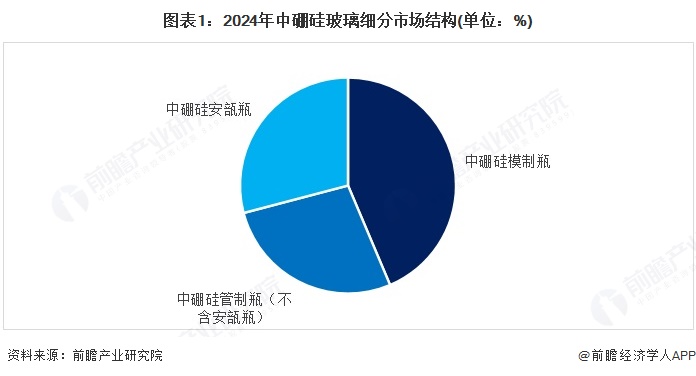
Core Insights - The molded bottle market holds a significant share in the borosilicate glass segment, accounting for approximately 44% of the market in 2024 [1] - The market for borosilicate ampoules is projected to grow from 600 million yuan in 2018 to 2.5 billion yuan in 2024 [2] - The market for neutral borosilicate molded bottles is expected to increase from 900 million yuan in 2018 to 3.8 billion yuan in 2024 [5] - The market for neutral borosilicate tubular bottles (excluding ampoules) is anticipated to grow from 600 million yuan in 2018 to 2.3 billion yuan in 2024 [6] - The strategic positioning of the borosilicate glass market indicates that neutral borosilicate molded bottles and ampoules are "star markets" with high growth potential and strong competitive positions [8] Market Analysis - The molded bottle segment is the largest within the borosilicate glass market, highlighting its importance in the pharmaceutical packaging industry [1] - The growth trajectory of the borosilicate ampoule market reflects increasing demand, with a substantial rise in market size over the years [2] - The neutral borosilicate molded bottle market is also experiencing significant growth, indicating a robust demand for this type of packaging [5] - The neutral borosilicate tubular bottle market, while growing, is currently positioned with moderate demand potential and competition [6] - The analysis using the Boston Matrix framework suggests that the borosilicate glass industry has promising segments that could attract investment and development [8]



2025年中国AI玩具行业需求分析:消费群体有望覆盖全年龄段
Qian Zhan Wang· 2025-07-22 08:19
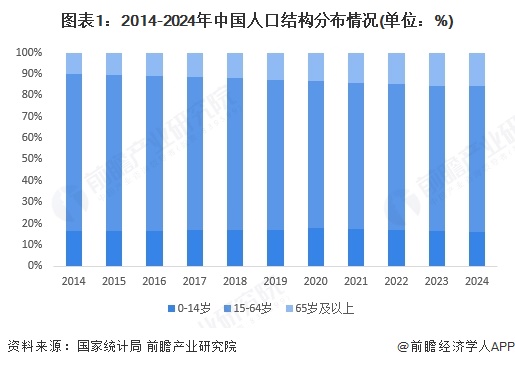
Group 1 - The changing population structure in China creates new opportunities for AI toys, as traditional toy markets shrink while demand for elderly toys expands, allowing AI toys to cater to all age groups [1] - AI toys can meet diverse consumer needs, including educational tools for children, emotional companionship for youth, and health monitoring for the elderly [1] - The integration of AI technology in toys enhances their interactive, companionship, and educational capabilities, potentially opening up a new market [1] Group 2 - China's toy export value showed steady growth from 2014 to 2022, but has faced a decline since 2023 due to global economic recovery issues, geopolitical conflicts, and rising trade protectionism [2] - The United States remains the largest export market for Chinese toys, with increasing export pressures due to reciprocal tariff policies [2] Group 3 - As of December 2024, 331 million people in China are aware of generative AI products, with the highest usage among the 20-29 age group at 41.5% [6] - AI interactive dialogue has emerged as a primary application scenario for AI toys, with 77.6% of users utilizing generative AI products for answering questions [7] Group 4 - Consumer demand for AI toys is diversifying, driven by educational needs, emotional companionship, and entertainment preferences [10] - Educational AI toys, such as programming robots and early education machines, are becoming essential in family education due to parental emphasis on education and the "double reduction" policy [11] - Emotional companionship AI toys are evolving to provide interaction and support, catering to changing family structures and the need for emotional connection [11] - The pursuit of immersive entertainment by Gen Z parents is pushing AI toys towards a virtual-physical integration, enhancing playability and engagement [11]






比亚迪日本扩张迅猛,年内门店将破百家,日媒感叹:比亚迪特斯拉主导日本电车转型
Qian Zhan Wang· 2025-07-22 04:46
Core Insights - Tesla and BYD are accelerating their expansion into the Japanese electric vehicle (EV) market, potentially leading the country's EV transformation [2] - Tesla plans to increase its store count in Japan from 23 to 50 by the end of 2026, with the possibility of expanding to 100 stores [2] - In the first half of 2025, Tesla's sales in Japan are expected to grow by 70% year-on-year to approximately 4,600 vehicles, showcasing strong growth momentum [2] - In contrast, Japan's domestic automakers are lagging behind, with the country's EV penetration rate being low compared to other developed nations [2] - Japan's EV sales in the first half of 2025 were only 27,321 units, a 7% year-on-year decline, marking two consecutive years of negative growth [2] - Japanese consumers have primarily favored hybrid vehicles, resulting in the lowest penetration rate for pure electric vehicles among developed countries [2] - The global EV market is increasingly dominated by a few key players, with Tesla leading through technological innovation and global presence, while BYD excels in the Chinese market and commercial vehicle sector [2] Company Profiles - **Tesla**: A globally recognized electric vehicle manufacturer based in the U.S., led by Elon Musk, focusing on clean energy and electric transportation. Tesla produces high-performance electric vehicles, including Model S, Model 3, Model X, and Model Y, and is involved in energy storage and solar power [2] - **BYD**: A leading Chinese electric vehicle manufacturer established in 1995, headquartered in Shenzhen. BYD produces a wide range of electric vehicles, including passenger cars and commercial vehicles, and has introduced the world's first electric bus [2] - **NIO**: A high-end electric vehicle manufacturer from China, focusing on luxury electric SUVs and innovative battery-swapping technology to address charging time concerns [2] - **Volkswagen Group**: The largest automotive manufacturer globally, headquartered in Germany, committed to electric vehicle production through its ID series, including ID.3, ID.4, and ID. BUZZ [2] - **Mercedes-Benz**: A high-end automotive brand under Daimler AG, known for its EQ series of electric vehicles, including EQC, EQA, EQB, and EQS, covering various market segments [2] Market Overview - The global electric vehicle market is characterized by a "dual-core" driving pattern led by China and the U.S. In 2022, global sales exceeded 10.52 million units, with China holding a 24.4% market share, followed by Europe at 17.3%. Japan and India have penetration rates below 5% [2]



2025年中国建筑节能行业材料发展现状 保温材料、Low-E玻璃、遮阳材料等的应用有利提升节能效率【组图】
Qian Zhan Wang· 2025-07-22 04:25
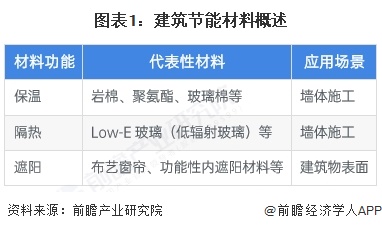
Core Insights - The article discusses the development and production of energy-saving building materials in China, highlighting their importance in reducing energy consumption and carbon emissions in the construction industry [1][3]. Group 1: Overview of Energy-Saving Building Materials - Energy-saving building materials are designed to improve insulation, heat resistance, and shading, thereby reducing energy consumption in buildings [1]. - Key applications include insulation and heat-resistant materials used primarily in wall construction, as well as shading materials for building exteriors [1][2]. Group 2: Production Statistics - The production of thermal insulation materials in China began to increase significantly from 2016, with a notable rise in 2017 due to government policies [3]. - In 2021, the production of thermal insulation materials reached approximately 8.5 million tons, representing a year-on-year growth of 10.4% [3]. - The production continued to rise to 8.65 million tons in 2022, but is expected to decline in 2023 before recovering to 2022 levels in 2024 [3]. Group 3: Classification of Insulation Materials - Building insulation materials in China are classified into four fire resistance levels: A (non-combustible), B1 (flame-retardant), B2 (combustible), and B3 (easily combustible) [4]. - A-level materials are primarily inorganic, including rock wool and glass wool, while B-level materials are organic [4][6]. Group 4: Low-E Glass Development - Low-E glass, or low-emissivity glass, features a multi-layer metal or compound coating that enhances thermal insulation and light transmission compared to traditional glass [8]. Group 5: Shading Materials Development - Building shading involves installing facilities that block or regulate sunlight entering buildings, crucial for managing indoor temperatures and energy loads [10]. - Shading facilities can be categorized into external, internal, and middle shading, each with distinct advantages and disadvantages [10].

终结28年“无冠”纪录!中国战队包揽机器人足球世界杯冠亚军【附人形机器人行业市场分析】
Qian Zhan Wang· 2025-07-22 03:48
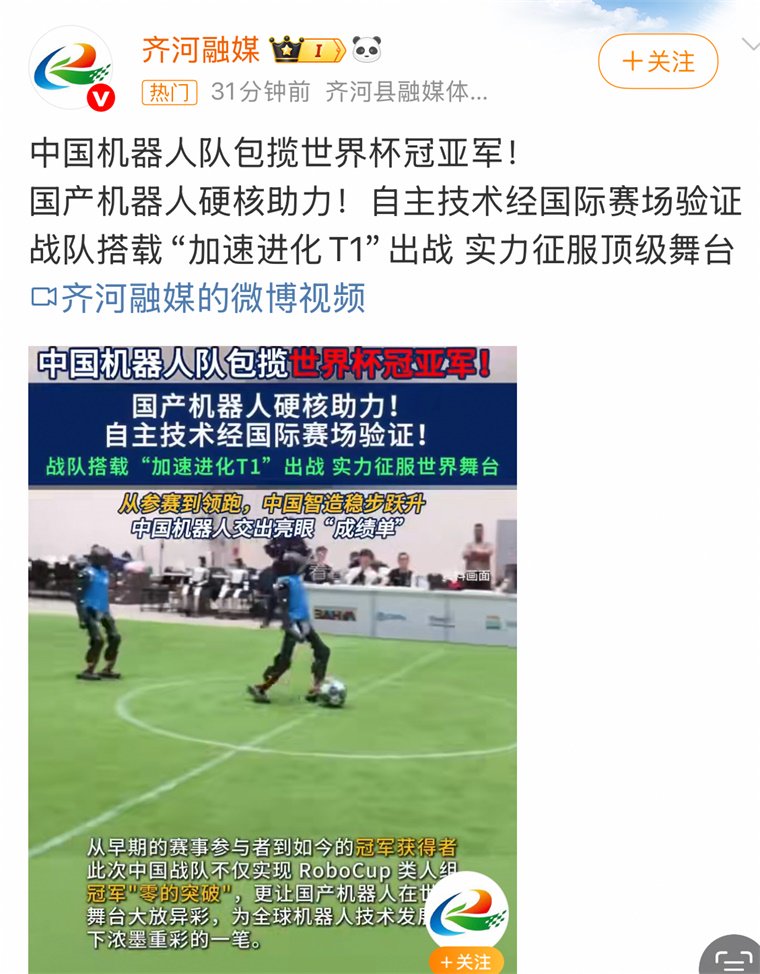
Group 1 - The RoboCup, known as the "Robot Football World Cup," was held in Salvador, Brazil, from July 15 to 21, 2025, where the Tsinghua Fire God Team won the championship, marking the first time a Chinese team has won in the humanoid category in 28 years [1] - The China Agricultural University Shanhai Team secured the runner-up position, both teams utilized the accelerated evolution T1 robot, showcasing China's rise in the humanoid robotics field [1] - This victory ends a 28-year "no championship" record for Chinese teams in this domain and highlights the comprehensive rise of China in humanoid robotics [1] Group 2 - The success in humanoid robotics is attributed to a decade of technological accumulation, with patent applications in humanoid robotics showing a fluctuating upward trend, reaching 2,903 published patents in 2023, indicating an explosive growth phase [3] - The humanoid robot industry chain in China includes upstream core component manufacturing, midstream body manufacturing, and downstream system integration and application services, which are continuously being optimized [3] - In the core component supply chain, China has achieved significant competitiveness in servo motors, control systems, and reducers, with the domestic production rate of servo motors exceeding 70% [3] Group 3 - The Pearl River Delta region is a major global hub for the humanoid robot supply chain, with leading technologies in control and servo systems, housing companies like UBTECH and Lajuj Robot [5] - Shenzhen has over 50 humanoid robot industry chain enterprises, ranking first in the country, making it the city with the most complete humanoid robot industry chain [7] Group 4 - The Ministry of Industry and Information Technology released the "Guiding Opinions on the Innovative Development of Humanoid Robots" in November 2023, stating that by 2027, the industry will accelerate towards large-scale development with richer application scenarios [9] - Humanoid robots are seen as the best carriers of embodied intelligence, expected to exhibit stronger autonomous learning, intelligent decision-making, and interaction capabilities, with significant application potential in healthcare, elderly care, services, and manufacturing [10]

前瞻全球产业早报:最严电动自行车国标即将实施
Qian Zhan Wang· 2025-07-21 12:41
Group 1 - The Ministry of Industry and Information Technology aims to promote innovation in future industries such as humanoid robots, the metaverse, and brain-computer interfaces, while accelerating the development of biomanufacturing and low-altitude industries [2] - The Ministry of Commerce plans to continue reducing restrictive measures in the service consumption sector during the 14th Five-Year Plan period, focusing on enhancing service quality and expanding supply in areas like healthcare and elderly care [3] Group 2 - A new mandatory national standard for electric bicycles, GB 17761—2024, will be implemented on September 1, 2025, setting a maximum design speed of 25 km/h and requiring automatic power cut-off for speeds exceeding this limit [4] - China's L2-level assisted driving penetration rate has surpassed 50%, leading globally, with parking assistance technology also seeing over 20% penetration in mid-to-high-end models [5] Group 3 - The humanoid robot company UBTECH has unveiled a groundbreaking technology that allows its robots to autonomously change batteries without shutting down, enhancing operational efficiency and reducing maintenance costs [6] - Xiaopeng Motors' CEO predicts that low-altitude flying vehicles will transform urban transportation within the next decade, with the company already having significant experience in this field [7] Group 4 - Starbucks China has formed a strategic partnership with Envision Group to develop a digital carbon management platform, aiming to measure and reduce the carbon footprint of its supply chain over the next three years [10] - Germany's total fertility rate has dropped to 1.35 in 2024, the lowest in 17 years, indicating demographic challenges [11] Group 5 - Meta has hired two AI researchers from Apple to enhance its capabilities in artificial intelligence [12] - OpenAI has launched ChatGPT Agent, a unified intelligent agent capable of autonomous thinking and tool selection for complex tasks [13] Group 6 - Uber plans to invest hundreds of millions of dollars in partnerships with Lucid and Nuro to launch autonomous taxis in the U.S. by 2026, with a goal of deploying at least 20,000 vehicles within six years [14] - Japanese semiconductor manufacturer Rapidus maintains its goal of mass production by 2027, focusing on 2nm technology [14] Group 7 - BP has agreed to sell its U.S. onshore wind energy business to LS Power [15] - Sanofi has completed the acquisition of Blueprint Medicines for over $9 billion, including a rare disease drug that has received regulatory approval [15]
2025年中国文旅融合行业细分市场分析之研学旅游 2024年自然生态、红色文化项目热度较高【组图】
Qian Zhan Wang· 2025-07-21 08:45
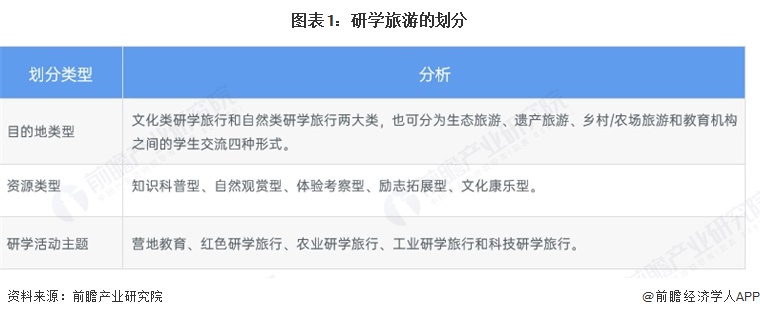
Core Insights - The article discusses the growth and potential of the "research-based travel" sector in China, highlighting its emergence as a new educational and tourism model since its mention in the 2013 National Tourism and Leisure Outline [1] Group 1: Definition and Development - "Research-based travel" was first mentioned in the 2013 National Tourism and Leisure Outline, marking its entry into the educational and tourism sectors as a new approach to educational reform and tourism transformation [1] - As of the end of 2024, most research-based travel companies are in a growth stage, indicating significant development potential [2] Group 2: Main Business Activities - The primary business of research-based travel companies is organizing or receiving school research teams, accounting for 52.72% of their operations, followed by the operation of research bases (camps) at 20.08% [4] Group 3: Market Trends - The most popular themes in the research-based travel market include natural ecology, red culture, labor practice, traditional culture, and technological innovation, with popularity percentages of 53.14%, 53.14%, 50.63%, 45.61%, and 30.96% respectively [6] Group 4: Consumer Demographics - In 2024, the main consumer groups for research-based travel products are from Beijing, Guangdong Province, and Shanghai, with consumption shares of 28.45%, 18.83%, and 13.39% respectively [10]


【干货】2025年口腔种植行业产业链全景梳理及区域热力地图
Qian Zhan Wang· 2025-07-21 08:44
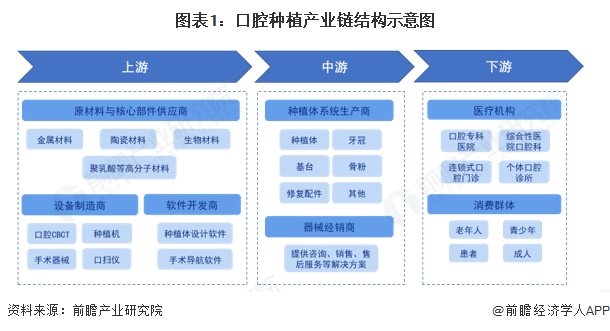
Group 1: Industry Overview - The oral implant industry in China consists of a comprehensive supply chain, including upstream raw material suppliers, equipment manufacturers, and software developers [1][4] - Upstream suppliers provide materials such as titanium and zirconia, while midstream includes implant manufacturers and distributors, and downstream consists of dental institutions offering implant services [1][4] Group 2: Regional Distribution - The distribution of companies within the oral implant industry is relatively dispersed, with Shandong province having a higher concentration of related enterprises [5] - Key companies in Shandong include Guocera Materials and Zhenghai Bio, while Guangdong has a concentration of upstream suppliers like Aierchuang and Dongfang Zirconium [5] Group 3: Representative Companies - Major companies in the oral implant sector include Tongce Medical, Aojing Medical, and Ruier Group, with varying revenue contributions from their implant services [9][10] - For instance, Yaboshi generated 816 million yuan from implant services, accounting for 51.75% of its total revenue [10] Group 4: Recent Developments - Yaboshi received an A-level rating in a comprehensive evaluation of dental institutions in Suzhou in April 2025 [12] - Tongce Medical acquired 80% of Hangzhou Haiyin Technology for 55.41 million yuan to enhance its dental product design and development capabilities [12] - Aojing Medical showcased its innovative dental products at the International Dental Exhibition in Cologne, Germany, receiving high praise from experts [12]